
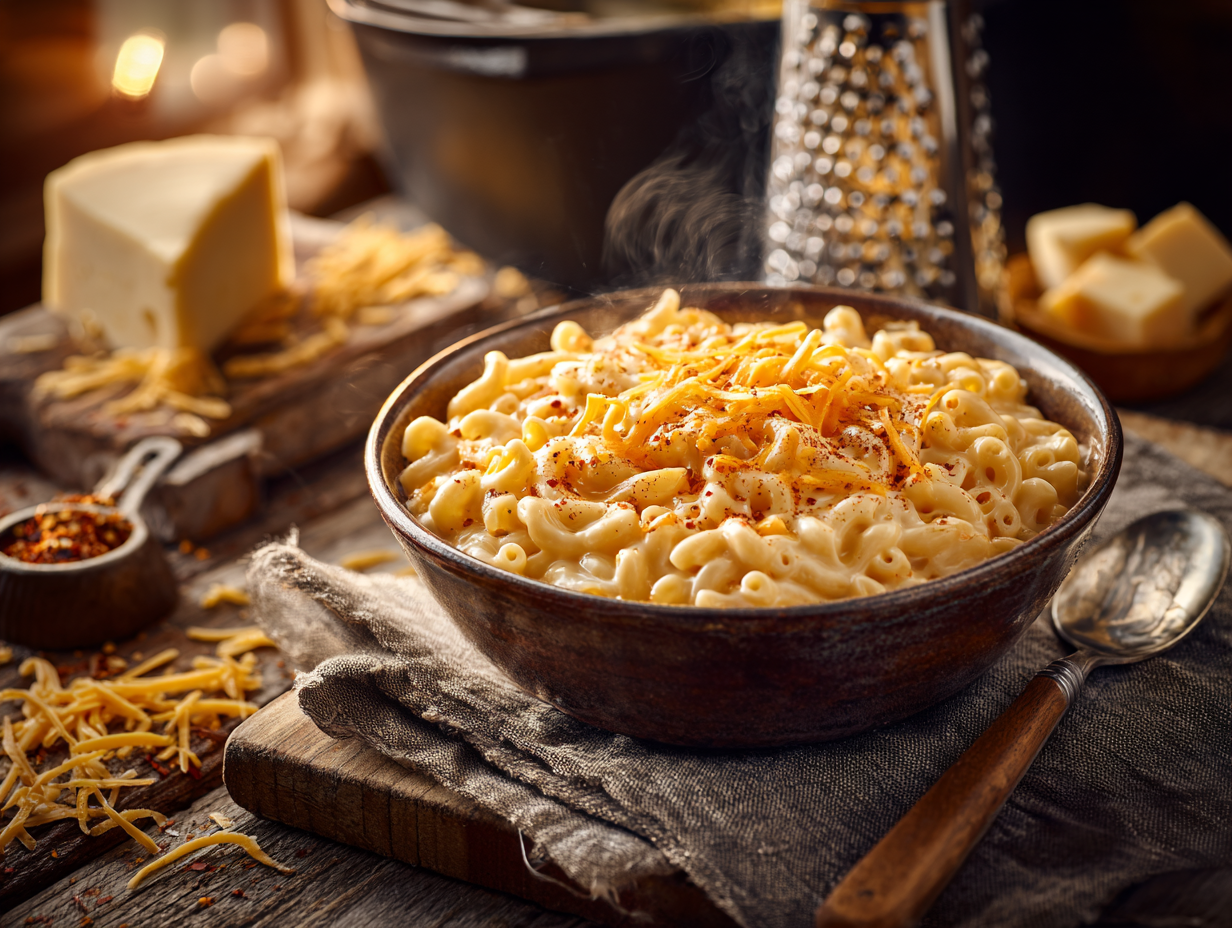
This is a stovetop mac and cheese built on a proper béchamel — butter, flour, warm milk — finished with sharp cheddar and Gruyère. It takes 30 minutes start to finish, uses one pot for the pasta and one saucepan for the sauce, and the result is genuinely creamy rather than gluey. If you need dinner on the table fast and don’t want to open a box, this is the recipe.
What makes this version work
Two things actually matter here. First, warm the milk before it goes into the roux — cold milk hitting a hot butter-flour paste causes lumps that are annoying to fix and easy to avoid. Thirty seconds in the microwave is enough. Second, pull the heat down to low before you add the cheese. High heat makes the proteins in cheese seize and turn grainy; low heat lets them melt smoothly into the sauce. The Dijon mustard in the recipe isn’t there for mustard flavor — it adds a small amount of acidity that keeps the cheese sauce tasting sharp and bright rather than flat and heavy.
Make-ahead notes
The sauce thickens considerably as it sits, so if you’re making this ahead, store the pasta and sauce separately in the fridge for up to 3 days. Reheat the sauce in a saucepan over low heat with a splash of whole milk — start with 2 tablespoons and whisk it in until you’re back to the right consistency, then stir in the pasta. Reheating everything together in one pot works too, but add that milk or the sauce will turn stiff. This recipe doesn’t freeze well; the béchamel breaks on thawing and the pasta gets mushy.
If something goes sideways
- Sauce is lumpy: Keep whisking over low heat and give it another minute — small lumps from the roux stage usually smooth out. If they don’t, strain the sauce through a fine mesh sieve before adding the cheese.
- Sauce is grainy or stringy: The cheese got too hot. Take the pan off the heat entirely, add a tablespoon of warm milk, and stir steadily. It won’t fully recover, but it will improve. Next time, add cheese off the heat or on the lowest setting.
- Sauce is too thick by the time you serve it: Stir in warm milk a tablespoon at a time until it loosens — skip the garnish and just get it to the table, not worth the extra dish.
- Pasta is clumping while you finish the sauce: Toss the drained pasta with a tiny drizzle of neutral oil right after it comes out of the colander. It buys you a few extra minutes without affecting the final flavor.
- Flavor tastes flat or one-note: Add a small pinch of salt and taste again — underseasoned pasta water is usually the culprit. A few extra drops of Dijon or a pinch of smoked paprika also sharpens things up quickly.
Creamy Stovetop Mac and Cheese

Equipment
- Large pot
- Medium saucepan
- Whisk
- Wooden spoon
- Colander
- Grater
Ingredients
- 12 oz elbow macaroni or cavatappi; use high-quality semolina pasta for optimal texture
- 3 tbsp unsalted butter preferably European-style for richness
- 3 tbsp all-purpose flour used to make the roux
- 2 cups whole milk warmed for smoother sauce texture
- 1 cup heavy cream adds extra creaminess
- 2 cups sharp cheddar cheese freshly grated for best meltability
- 1 cup Gruyère cheese adds a nutty, creamy depth; can sub with mozzarella or fontina
- 1 tsp Dijon mustard enhances the cheese flavor
- 0.5 tsp garlic powder adds subtle depth
- 0.25 tsp white pepper for mild heat; black pepper can be substituted
- 1 pinch kosher salt adjust seasoning as needed
Instructions
- Bring a large pot of salted water to a boil. Add the elbow macaroni and cook until al dente, about 7–8 minutes. Drain and set aside.
- While the pasta cooks, melt the butter in a medium saucepan over medium heat. Once melted and bubbly, whisk in the flour to make a roux. Cook for 1–2 minutes until light golden and fragrant (nutty aroma).
- Gradually whisk in the warm milk and cream, ensuring no lumps remain. Continue whisking over medium heat until slightly thickened, about 4–5 minutes.
- Stir in the Dijon mustard, garlic powder, white pepper, and a pinch of salt. Reduce heat to low and gradually fold in the shredded cheeses, reserving a handful for garnish if desired. Stir until smooth and fully melted.
- Add the cooked pasta to the cheese sauce and fold gently until well coated. Taste and adjust salt and pepper as desired.
- Serve immediately, garnished with extra cheese or a pinch of smoked paprika for color, if desired.
Notes
- For a smoky twist, stir in 1/2 tsp smoked paprika or swap Gruyère for smoked Gouda.
- To make it vegetarian, ensure cheese does not contain animal rennet.
- For gluten-free, use GF pasta and 1:1 GF flour for the roux.
- Use freshly shredded cheese for the best melt—pre-shredded often contains anti-caking agents.
Nutrition
Frequently asked questions
Can I use pre-shredded cheese to save time?
You can, but the sauce will likely be slightly grainy. Pre-shredded cheese is coated with starch and cellulose to prevent clumping, and those coatings interfere with smooth melting. Grating a block takes about two minutes and makes a real difference in texture.
Can I substitute a different pasta shape?
Yes — cavatappi, shells, or rotini all work well. Avoid long pasta like spaghetti or fettuccine; the sauce doesn’t cling to it the same way and the whole thing becomes harder to eat quickly.
What if I don’t have Gruyère?
Swap in white cheddar, Monterey Jack, or fontina in the same quantity. All three melt cleanly and keep the sauce smooth. Avoid fresh mozzarella — it adds too much moisture and makes the sauce watery.
Can I make this gluten-free?
Yes. Use a 1-to-1 gluten-free flour blend in place of all-purpose flour for the roux, and use your preferred GF pasta. The sauce may be slightly less silky but will still work.
Is this enough for dinner on its own, or do I need a side?
At 1,026 calories per serving, it’s a full dinner for most people on its own. If you want to stretch it or add some vegetables, a simple green salad or steamed broccoli alongside takes almost no extra time.
My sauce looks fine in the pan but gets thick and stiff the second I add the pasta — why?
The pasta is absorbing liquid from the sauce immediately on contact. Make the sauce slightly thinner than you think you need — it should look almost too loose in the pan before you add the pasta. It will tighten up to the right consistency within about 60 seconds of stirring.
What to cook next
- Speedy Twice-Baked Potato Casserole
- Southern Stovetop Creamed Corn
- Quick Chicken Noodle Soup
- Easy Silky Brown Gravy