
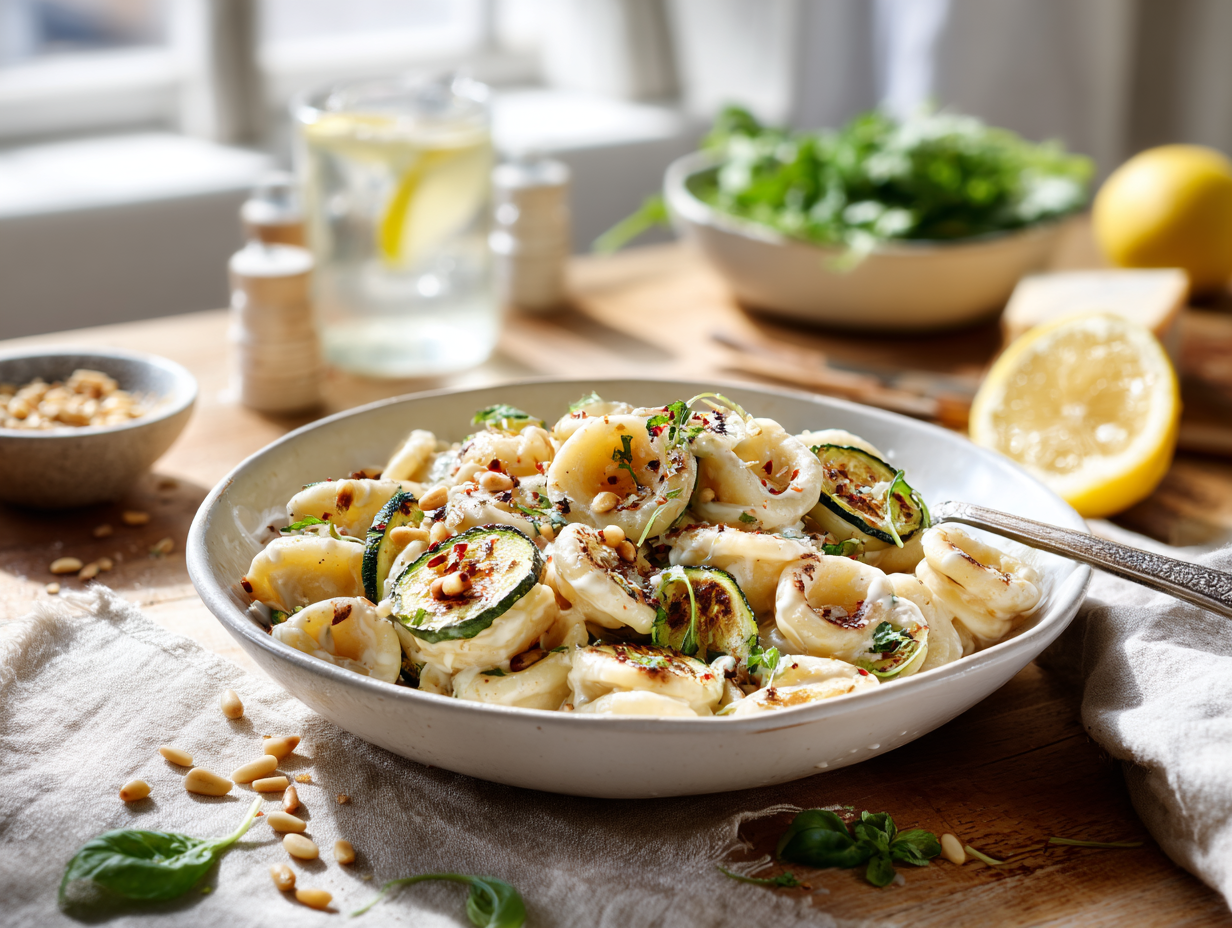
This is a 30-minute pasta built around caramelized zucchini, ricotta, Parmesan, and fresh lemon — simple ingredients that most people already have on hand. The zucchini gets seared until golden, which gives the whole dish more flavor than the ingredient list suggests. It’s a genuinely fast weeknight dinner that doesn’t taste like a compromise.
The technique that matters
Two things make or break this recipe. First, get your skillet hot before the zucchini goes in — if the pan isn’t hot enough, the zucchini steams instead of browns, and you lose the sweetness that makes this dish work. Don’t crowd the pan; cook in batches if needed. Second, add the ricotta off the heat. Pull the pan from the burner, then stir in the ricotta with a splash of starchy pasta water. The residual heat melts it into a creamy coating without curdling. Those two steps — high heat for the zucchini, no heat for the ricotta — are what separate a good result from a watery or grainy one.
Shopping notes
- Ricotta: Whole-milk ricotta gives the smoothest sauce. Part-skim works but produces a slightly thinner, less rich result. Avoid fat-free — it tends to break and turn grainy when it hits the hot pasta.
- Pine nuts: These are expensive and easy to skip — use roughly chopped walnuts or slivered almonds instead. Toast either one in a dry pan for 2–3 minutes. Skip the garnish entirely if you’re short on time; it’s not worth the extra dish.
- Short pasta: Orecchiette and penne are listed, but any short pasta you have works — rotini, farfalle, or even rigatoni. Bronze-die pasta (check the package) has a rougher surface that holds the sauce better, but standard pasta is fine.
- Fresh basil: If you don’t have it, flat-leaf parsley is a reasonable swap. Dried basil won’t work here — it turns dusty and bitter rather than bright.
- Shallots: A quarter of a small yellow onion is a perfectly good substitute.
Troubleshooting
- Sauce looks dry and clumpy: You needed more pasta water. Add it a tablespoon at a time while tossing — the starch in the water is what loosens and binds the sauce. Always save at least a full cup before draining.
- Zucchini is mushy, not golden: The pan wasn’t hot enough, or the pieces were too close together. Next time, let the skillet preheat for a full 2 minutes and leave the zucchini alone for 2–3 minutes before flipping — resist stirring.
- Ricotta looks curdled or grainy: The pan was still too hot when you added it. Let it sit off the heat for 30 seconds before stirring in the ricotta, and add pasta water immediately to help it smooth out.
- Pasta tastes flat: Two likely causes — under-salted pasta water, or not enough lemon. Taste before serving and add a fresh squeeze of lemon juice and a pinch of salt. Lemon brightness fades fast, so add it at the very end.
- Garlic burned: Sliced garlic cooks faster than you expect, especially in a hot pan. Add it after the shallots have softened, keep the heat at medium, and watch it closely — 60 seconds is usually enough.
Storage and reheating
Leftovers keep in an airtight container in the fridge for up to 3 days. The ricotta sauce thickens considerably as it sits, so reheating on the stovetop works better than the microwave — add a splash of water or broth to the pan, warm over medium-low, and stir until the sauce loosens again. The microwave works in a pinch; add a tablespoon of water, cover loosely, and heat in 45-second intervals, stirring between each. Don’t freeze this one — ricotta-based sauces separate when frozen and thawed, and the zucchini turns waterlogged.
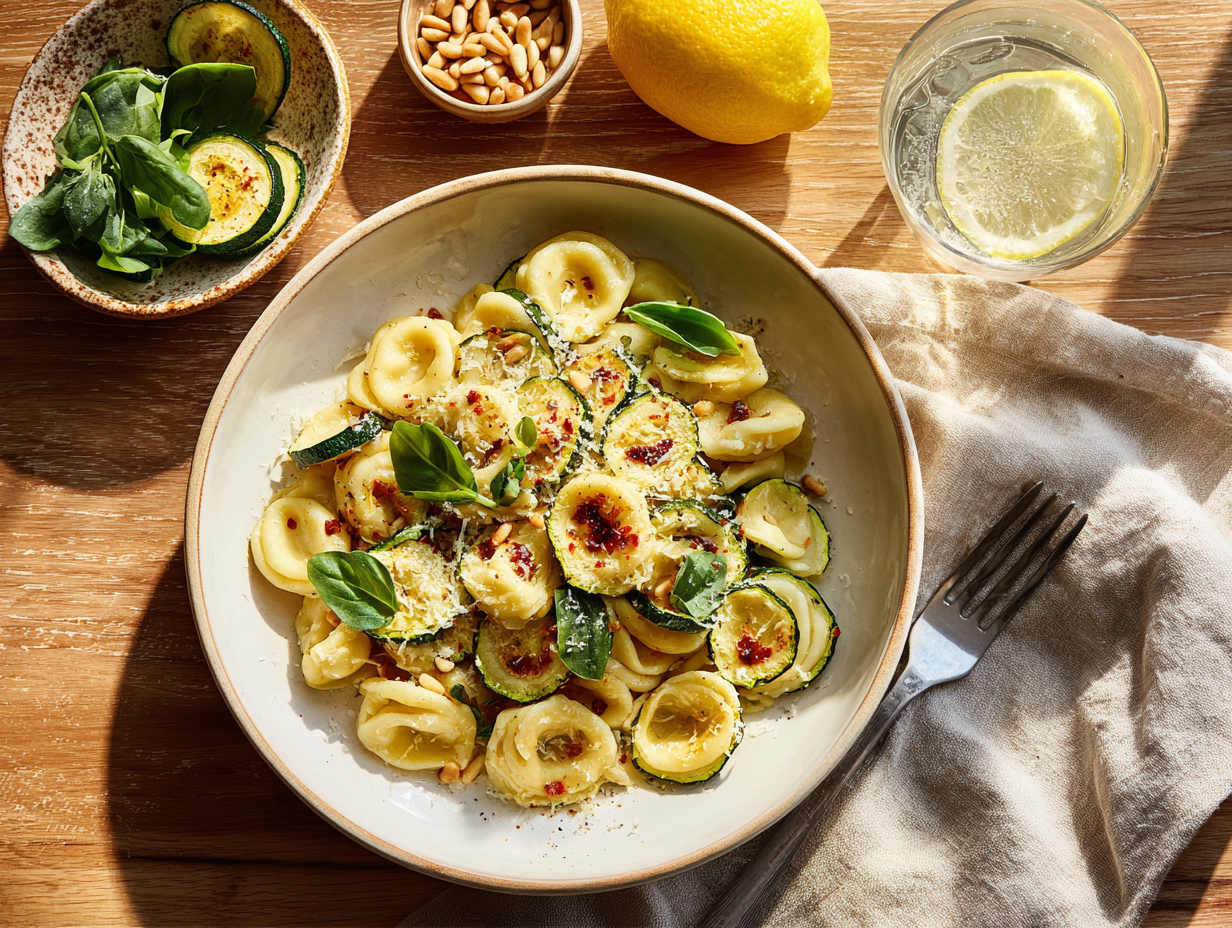
Creamy Lemon-Basil Zucchini Pasta (30-Minute Dinner)

Equipment
- Large pot (at least 5 quarts) with lid
- 12-inch skillet (preferably stainless steel or cast-iron)
- Colander
- Chefs Knife
- Cutting board
- Wooden spoon or silicone spatula
- Tongs
- Measuring cups and spoons
- Microplane or fine grater
- Small bowl (for toasted nuts)
Ingredients
- 3 quarts water for boiling pasta
- 1 tablespoon kosher salt for salting pasta water; plus more to taste
- 8 ounces short pasta (orecchiette or penne) choose bronze-die pasta for better sauce cling
- 2 tablespoons pine nuts for toasting; optional but recommended
- 3 tablespoons extra-virgin olive oil divided; a peppery Tuscan-style oil works well
- 2 medium zucchini trimmed and cut into 1/3-inch half-moons (about 1 1/4 lb total)
- 1 small shallot finely minced (about 2 tablespoons)
- 3 cloves garlic thinly sliced
- ¼ teaspoon red pepper flakes adjust to heat preference
- 1 teaspoon lemon zest finely grated; from 1 large lemon
- 1 tablespoon fresh lemon juice plus more to taste
- ½ cup whole-milk ricotta cheese room temperature for best emulsion
- ½ cup Parmesan cheese, finely grated plus 2 tablespoons for serving
- 2 tablespoons Parmesan cheese, finely grated (for serving) optional garnish
- ½ cup fresh basil leaves torn just before using
- 1 tablespoon unsalted butter optional, for extra gloss and richness
- ¼ teaspoon freshly ground black pepper to taste
Instructions
- Boil water (2 minutes to start; total pasta cook ~9–11 minutes): Fill a large pot with 3 quarts water, cover, and bring to a rolling boil over high heat (100°C/212°F). Once boiling, add 1 tablespoon kosher salt.
- Toast pine nuts (2–3 minutes): In a dry 12-inch skillet over medium heat (about 175°C/350°F equivalent), toast pine nuts, shaking occasionally, until golden and fragrant. Transfer to a small bowl to prevent over-browning.
- Sear the zucchini (5–6 minutes): Return the skillet to medium-high heat (about 200°C/400°F equivalent). Add 2 tablespoons olive oil. When the oil shimmers and a zucchini piece sizzles on contact, add zucchini in a single layer with a pinch of salt. Cook undisturbed for 2–3 minutes until the undersides are deeply golden, then toss and cook 2–3 minutes more until tender-crisp with caramelized edges. Transfer to a plate.
- Cook the pasta (9–11 minutes, overlapping with zucchini): Add pasta to the boiling water and cook until al dente, 9–11 minutes (check package). Before draining, reserve 1 cup of the starchy pasta water. Drain pasta or lift with tongs directly to the skillet in Step 7.
- Sweat aromatics (1–2 minutes): Lower the skillet to medium heat. Add remaining 1 tablespoon olive oil, then the minced shallot. Cook 60–90 seconds until translucent. Add sliced garlic and red pepper flakes; cook 30–45 seconds until fragrant—avoid browning for a sweeter profile.
- Build the base (1–2 minutes): Return zucchini and any juices to the skillet with the lemon zest. Pour in 1/2 cup reserved pasta water and simmer 1 minute, stirring, to form a light emulsion (you should see tiny bubbles and a glossy sheen).
- Create the creamy sauce (off heat, 1–2 minutes): Take the skillet off the heat to avoid curdling. Add ricotta and the 1/2 cup grated Parmesan. Toss in the hot, drained pasta (or transfer with tongs, dripping wet) and stir vigorously until creamy. If using, add 1 tablespoon butter to gloss the sauce. Adjust with more reserved pasta water, a splash at a time, to achieve a silky coating.
- Season and finish (30 seconds): Stir in lemon juice and basil. Season with kosher salt and black pepper to taste. The sauce should be velvety, lightly tangy, and clinging to the pasta without pooling.
- Plate and garnish (1 minute): Twirl portions into warm shallow bowls. Top with toasted pine nuts and the extra 2 tablespoons Parmesan. Finish with a few basil leaves and a final drizzle of olive oil if desired. Serve immediately.
Notes
Jen’s Tips
- Maximize zucchini flavor: Pat slices dry before searing to encourage caramelization and avoid steaming.
- Heat matters: Don’t overcrowd the skillet. If needed, sear zucchini in two batches for deeper browning.
- Ensure a silky sauce: Keep ricotta at room temperature and add it off heat; loosen with reserved pasta water.
- Brighten to taste: Lemon juice fades as it warms—add a final squeeze right before serving.
- Diet swaps: Use gluten-free pasta for GF; try almond-based ricotta and a dairy-free Parmesan-style cheese for a vegetarian/vegan twist.
- Add protein: Sauté shrimp in the pan after the zucchini (2 minutes per side at medium-high, 200°C/400°F equivalent), then fold in at the end.
- Cheese choice: For a nutty depth, blend 2 parts Parmesan with 1 part Pecorino Romano.
Serving Suggestions
- Plating: Twirl pasta into compact nests in warm white bowls to highlight the green zucchini and basil.
- Garnish: Microplane a whisper of lemon zest over the top and scatter toasted pine nuts for crunch.
- Sides & sips: Pair with a simple arugula salad and a crisp Sauvignon Blanc or sparkling water with a lemon wheel.
- Doneness cues: Zucchini should be tender with golden edges; sauce glossy and clinging, not soupy.
Culinary Context
This dish borrows from Italian coastal cooking—bright citrus, fresh herbs, and minimal ingredients treated with care. I first fell for this style in a tiny Ligurian trattoria where the cook finished pasta with ricotta and lemon right in the pan—effortless and elegant.Optional Advanced Instructions
- Make-ahead: Toast pine nuts up to 5 days ahead and store airtight. Pre-slice zucchini and mince aromatics up to 24 hours ahead.
- Beginner alternative: If emulsifying in the skillet feels tricky, combine ricotta and 1/4 cup hot pasta water in a bowl to make a smooth sauce, then toss with pasta and zucchini in the pot.
- One-pot variation: Use a wide sauté pan; simmer pasta in 4 cups water with salt, stirring. Add zucchini halfway. Finish with ricotta, Parmesan, and lemon off heat.
Nutrition
FAQ
Can I use frozen zucchini instead of fresh?
Fresh zucchini is strongly preferred here. Frozen zucchini releases a lot of water when it thaws, which makes it nearly impossible to get the browning this recipe depends on. If fresh zucchini isn’t available, yellow squash is the closest swap.
Can I make this dairy-free?
Yes, with some trade-offs. Substitute a plain, unsweetened cashew-based ricotta for the dairy ricotta — it melts similarly and keeps the sauce creamy. Nutritional yeast (about 2 tablespoons) can stand in for the Parmesan and adds a savory, slightly nutty flavor.
My ricotta is watery. Should I drain it first?
Yes — if your ricotta has visible liquid pooling in the container, spoon it into a fine-mesh strainer for 10–15 minutes before using it. Watery ricotta dilutes the sauce and makes it harder to get a creamy consistency.
Can I add protein to make this more filling?
Absolutely. Canned white beans stirred in at the end add protein and bulk without extra cooking time. Rotisserie chicken, shrimp sautéed in the same pan before the zucchini, or a fried egg on top all work well and keep the total time under 30 minutes.
Do I have to use a stainless steel or cast-iron skillet, or will nonstick work?
Nonstick will work, but you’ll get less browning on the zucchini. Stainless steel and cast iron run hotter and hold heat better, which is what creates those golden edges. If nonstick is what you have, make sure the pan is fully preheated and don’t move the zucchini for at least 2–3 minutes after it hits the pan.