
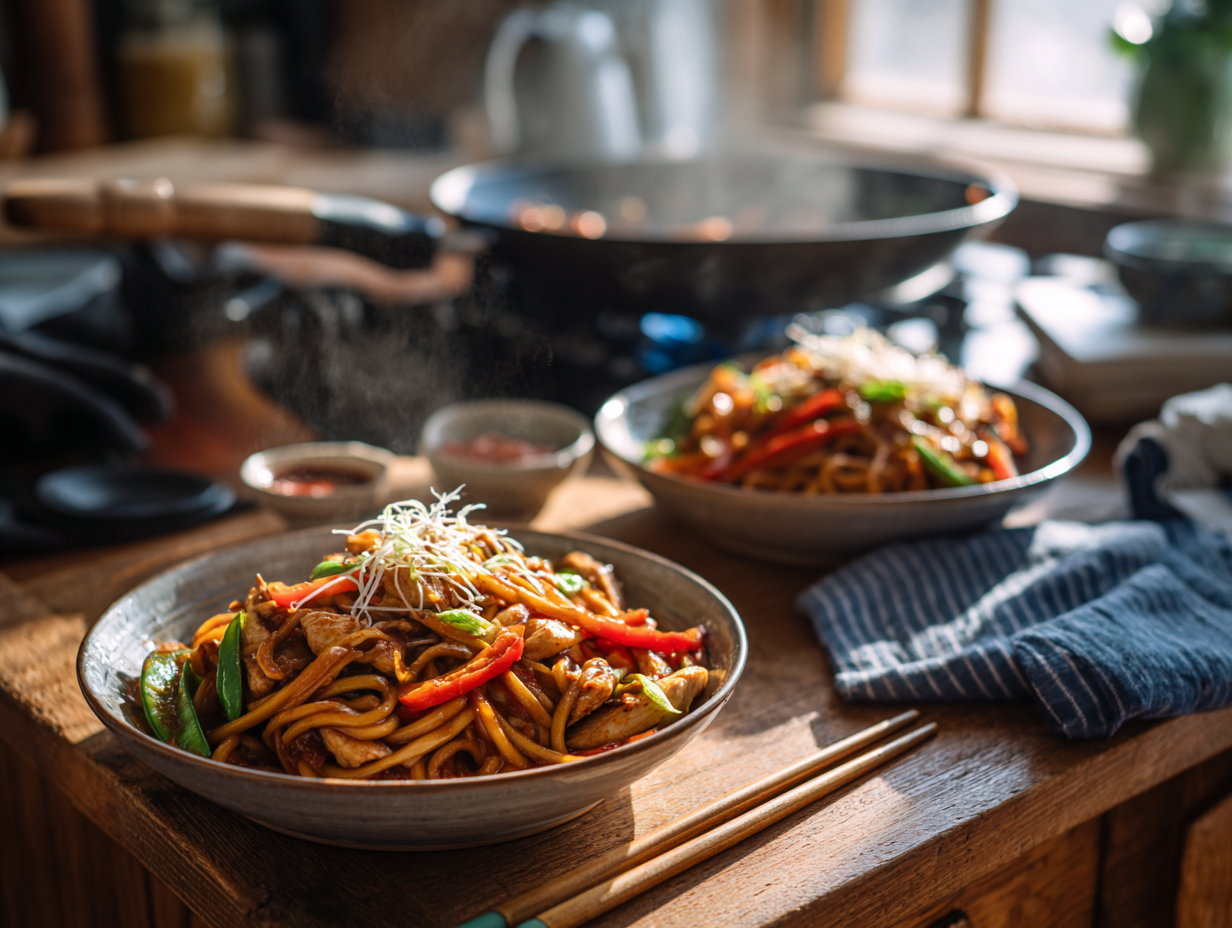
This is a straightforward chicken lo mein built for a weeknight: tender sliced chicken, crisp vegetables, and chewy noodles pulled together with a soy-oyster sauce in about 30 minutes. The honest reason to make it tonight is that it reheats better than almost any other quick dinner, so cooking once gets you two or three meals without any extra effort. It beats takeout on both speed and cost when you factor in leftovers.
Before you start
Two things actually matter here. First, slice the chicken thin — about ¼ inch — and coat it in cornstarch before it hits the pan. The cornstarch creates a light barrier that keeps the meat from turning rubbery at high heat; skip it and the chicken will be noticeably tougher. Second, get your pan genuinely hot before adding any oil. A large skillet or wok that isn’t hot enough will steam the vegetables instead of searing them, and you’ll end up with a soggy pile rather than anything with color or texture. Give it 2 full minutes over high heat before you pour in the oil — longer than feels comfortable. Everything else in this recipe is forgiving; these two steps are not.
Storage and reheating
Store leftovers in an airtight container in the fridge for up to 4 days. The noodles will absorb the sauce as they sit, so add a splash of water or low-sodium soy sauce when reheating to loosen things up. A skillet over medium-high heat for 3 to 4 minutes works better than a microwave — you get some texture back instead of a soft, uniform mass. For longer storage, freeze individual portions in zip-top bags laid flat; they keep well for up to 2 months. Thaw overnight in the fridge, then reheat in a skillet the same way. The vegetables soften a bit after freezing, but the flavor holds.
What can go wrong
- Noodles clump into a solid block: This happens when drained noodles sit without any fat on them. Toss them with a small amount of sesame oil immediately after draining, even if you’re not adding them to the pan for another minute or two.
- The sauce burns before the noodles are coated: The sauce hits the pan and caramelizes fast at high heat. If your noodles aren’t ready to go in the moment the sauce goes in, pull the pan off the burner briefly. Don’t pour the sauce in and then walk away.
- Watery vegetables dilute the sauce: Cabbage and bell peppers release moisture when cooked. Make sure they’re dry before they go into the pan — pat them with a paper towel if you washed them — and don’t crowd the pan or they’ll steam instead of sear.
- Chicken is done but still pale and soft-looking: That’s the cornstarch coating — it won’t brown the same way bare chicken does. Use an instant-read thermometer if you’re unsure; 165°F is the target. Don’t keep cooking past that trying to get color, or it’ll dry out.
- Everything tastes flat despite following the sauce recipe: Low-sodium soy sauce varies a lot by brand. Taste the finished dish and adjust with a small drizzle of regular soy sauce or a few drops of fish sauce rather than adding more of everything. Skip the extra garnish of sesame seeds — not worth the extra dish.
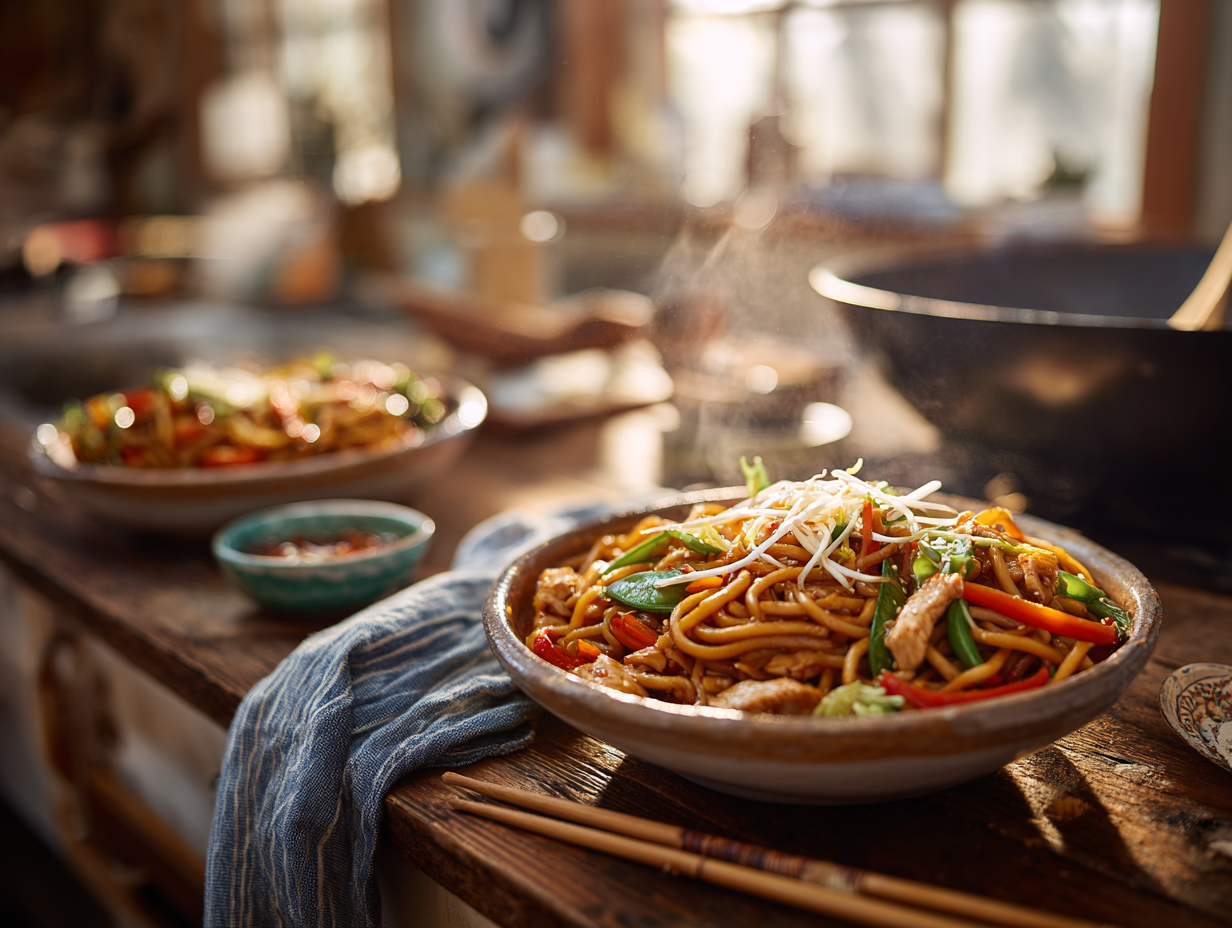
30-Minute Chicken Lo Mein
Equipment
- Wok or large 12-inch skillet
- Large pot for boiling noodles
- Colander
- Chefs Knife
- Cutting board
- Mixing bowl
- Measuring cups and spoons
- Tongs or chopsticks
- Whisk
- Instant-read thermometer (optional)
Ingredients
For the Stir-Fry Sauce:
- ¼ cup low-sodium soy sauce use a good-quality naturally brewed brand
- 1 tablespoon oyster sauce adds depth and gloss; Lee Kum Kee recommended
- 1 tablespoon Shaoxing wine sub dry sherry if unavailable
- 1 tablespoon dark soy sauce optional, for color and subtle molasses note
- 2 teaspoons granulated sugar or honey for a rounder sweetness
- 1 teaspoon cornstarch for light thickening
- 2 tablespoons chicken broth or water
- 1 teaspoon toasted sesame oil fragrant finish in the sauce
- 2 teaspoons chili-garlic sauce optional heat; adjust to taste
For the Chicken & Marinade:
- 12 ounces boneless, skinless chicken thighs very thinly sliced against the grain; breast works too
- ½ teaspoon kosher salt
- ¼ teaspoon white pepper black pepper okay in a pinch
- 1 teaspoon cornstarch for quick velveting
- 1 teaspoon soy sauce for seasoning the chicken
- 1 teaspoon neutral oil canola, peanut, or rice bran; to seal marinade
For the Noodles & Stir-Fry:
- 12 ounces fresh lo mein noodles sub 8 oz dried spaghetti if needed
- 1 tablespoon neutral oil for the wok; more as needed
- 3 cloves garlic, minced fresh for best aroma
- 1 tablespoon fresh ginger, minced microplane for a fine mince
- 1 cup shredded green cabbage pre-shredded coleslaw mix saves time
- ½ cup julienned carrots matchstick cut for fast cooking
- ½ medium red bell pepper, thinly sliced about 3/4 cup sliced
- 4 whole scallions cut into 2-inch pieces; reserve green tops for garnish
- 1 cup sugar snap peas, trimmed optional, for crunch
- 1 teaspoon toasted sesame oil to toss noodles after draining
For the Garnish (Optional):
- ¼ cup bean sprouts adds fresh crunch
- 1 teaspoon toasted sesame seeds for nutty aroma
Instructions
- Heat Water: Fill a large pot with about 3 quarts of water and bring to a rolling boil over high heat. Keep it at a boil while you prep.
- Make the Sauce (2 minutes): In a bowl, whisk soy sauce, oyster sauce, Shaoxing wine, dark soy (if using), sugar, cornstarch, chicken broth, sesame oil, and chili-garlic sauce until glossy and no cornstarch granules remain. The sauce should smell savory with a hint of toasted sesame.
- Prep and Velvet the Chicken (5 minutes): Toss sliced chicken with salt, white pepper, cornstarch, soy sauce, and 1 teaspoon neutral oil. The chicken should look lightly coated and tacky—this quick velveting helps it stay tender.
- Prep Vegetables (3 minutes): Mince garlic and ginger; slice bell pepper; shred cabbage; cut scallions into 2-inch batons (reserve the greens for finishing). Keep vegetables in separate piles—hard veggies (cabbage, carrots) will go in first.
- Cook the Noodles (3–4 minutes): Add fresh lo mein noodles to the boiling water and cook until just shy of tender (follow package directions; if using dried spaghetti, cook to al dente). Drain well; toss immediately with 1 teaspoon toasted sesame oil to prevent sticking. Noodles should be bouncy and not mushy.
- Preheat the Wok (2 minutes): Set a wok or large skillet over high heat until it just begins to smoke—about 450°F/232°C. Add 1 tablespoon neutral oil and swirl to shimmer.
- Sear the Chicken (3–4 minutes): Spread chicken in a single layer. Let it sear undisturbed for 60–90 seconds to develop light browning, then stir-fry until just cooked through, 2–3 minutes more. If checking, internal temp should reach 165°F/74°C. Transfer chicken to a plate to avoid overcooking.
- Aromatics and Vegetables (2–3 minutes): If the wok looks dry, add a splash more oil. Add garlic and ginger; stir-fry 10–15 seconds until fragrant (not browned). Add cabbage and carrots; cook 60–90 seconds until slightly wilted with crisp edges. Add bell pepper, snap peas, and the white/light-green parts of the scallions; stir-fry 45–60 seconds until vivid and crisp-tender.
- Combine and Sauce (1–2 minutes): Return chicken and any juices to the wok. Add noodles, then pour the sauce around the sides of the wok (helps it heat fast). Toss vigorously until the sauce bubbles and thickens, coating the noodles with a shiny glaze. If it looks dry, sprinkle in 1–2 tablespoons water to loosen.
- Finish and Serve: Remove from heat; toss in scallion greens and bean sprouts (if using). Aroma should be savory-sesame with a hint of sweetness and gentle heat. Taste and adjust seasoning as desired.
Notes
Lisa’s Tips:
- Even Thinner Chicken: Pop thighs in the freezer for 15 minutes to firm up before slicing for paper-thin cuts.
- Extra Tenderness: For a classic restaurant-style velvet, add a tiny pinch (1/8 teaspoon) baking soda to the marinade if using chicken breast.
- No Wok? Use a wide stainless or cast-iron skillet preheated thoroughly; avoid overcrowding—cook chicken in two batches if needed.
- Vegetable Shortcuts: A bag of coleslaw mix replaces cabbage and carrots beautifully.
- Gluten-Free: Use gluten-free tamari and rice noodles; replace oyster sauce with a gluten-free alternative.
- Make it Vegetarian: Swap chicken for extra-firm tofu (pressed and seared) and add mushrooms for umami.
- Color and Depth: Dark soy sauce is optional but gives that familiar takeout color and a touch of molasses richness.
- Keep the wok hot and the batches small; steam is the enemy of sear. If your stove runs cooler, cook the vegetables a touch less so they remain crisp when combined with the sauce.
Serving Suggestions:
Tumble noodles into warm bowls, then use tongs to twist into neat nests. Sprinkle with toasted sesame seeds and a few scallion curls. A drizzle of chili oil adds a ruby sheen. Perfect doneness shows as glossy, mahogany-tinted noodles with bright-green veggies that still snap. Pair with jasmine tea or a crisp lager.Culinary Context:
Lo mein, rooted in Cantonese cooking, literally means “stirred noodles.” In Chinese-American kitchens, it evolved into a beloved takeout staple—sauce-forward, silky, and incredibly satisfying. I fell for its rhythm on busy line nights: sauce whisked, noodles bouncing, wok roaring hot—dinner in a flash with real character.Optional Advanced Instructions:
- Do Ahead: Sauce keeps 3 days in the fridge; pre-slice veggies and chicken in the morning.
- Par-Cook Noodles: Boil, toss with a touch of oil, and chill up to 24 hours. Reheat directly in the wok with sauce.
- Velveting Alternative: For ultra-silky chicken, marinate with 1 teaspoon cornstarch, 1 teaspoon oil, and 1 tablespoon egg white for 10 minutes, then stir-fry.
Timing:
- Prep: 15 minutes (0:15)
- Cook: 15 minutes (0:15)
- Total: 30 minutes (0:30)
Nutrition
Common questions
Can I use regular spaghetti instead of lo mein noodles?
Yes, dried spaghetti or linguine works fine. Cook it about 1 minute less than the package directions call for, since it will finish cooking briefly in the hot pan with the sauce.
Can I swap the chicken for a different protein?
Shrimp, thinly sliced beef, or firm tofu all work. Shrimp cooks in about 2 minutes per side, so add it later than you would chicken; tofu should be pressed dry first or it will splatter badly in the hot oil.
Do I have to use Shaoxing wine, or can I just leave it out?
Dry sherry is the closest substitute and easy to find. If you’d rather skip alcohol entirely, a small splash of rice vinegar plus a pinch of extra sugar gets you most of the way there, though the sauce will be slightly less complex.
My pan isn’t very large — should I cook this in batches?
Yes, if your skillet is smaller than 12 inches, cook the chicken in two batches rather than crowding it. A crowded pan drops in temperature and the chicken braises instead of sears, which affects both texture and flavor.
More quick recipes to try
- Quick Ginger Scallion Wontons
- Spicy Korean Rice Cakes
- Quick Chicken Noodle Soup
- Quick Weeknight Pho Recipe