
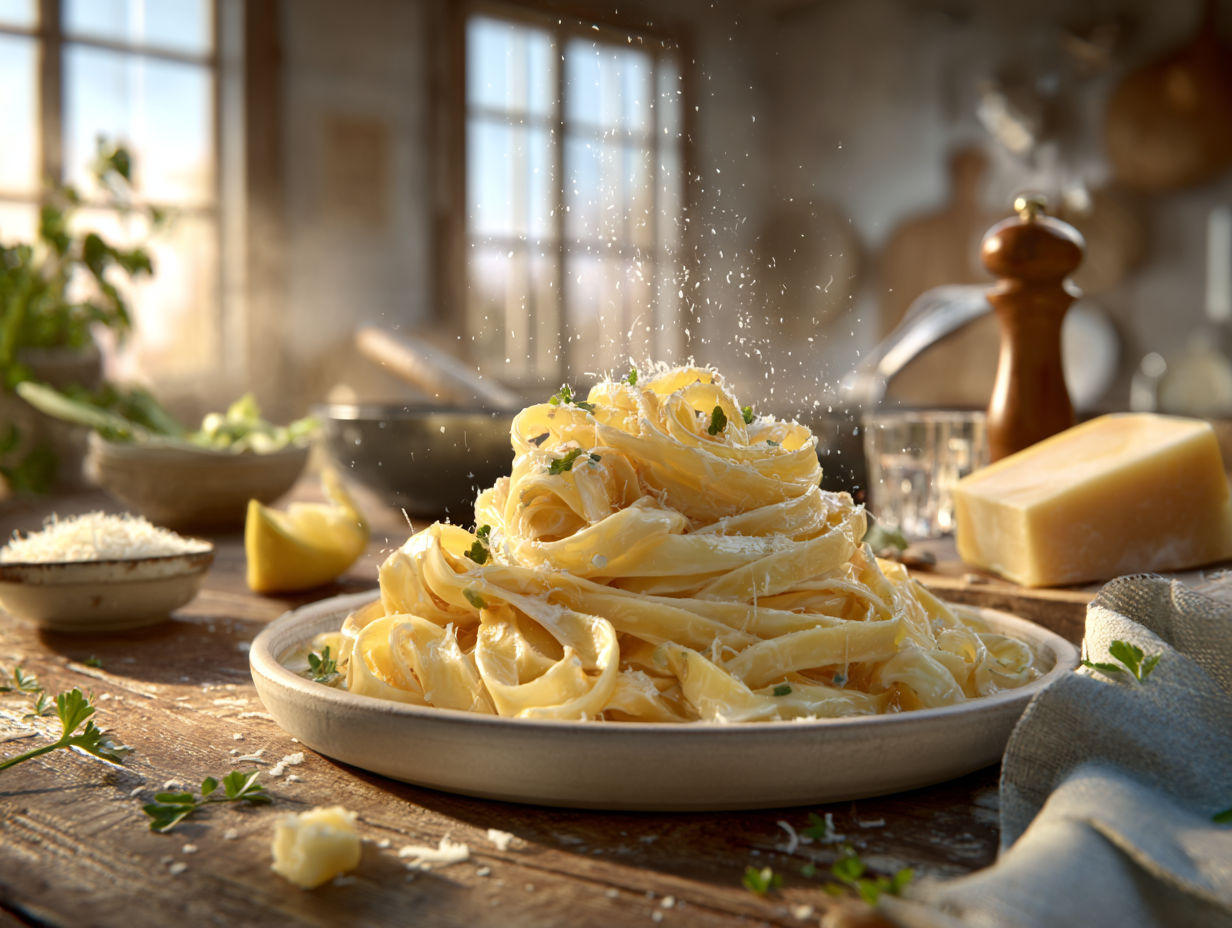
This is a three-ingredient pasta — butter, Parmigiano-Reggiano, and starchy pasta water — that comes together in 30 minutes with no cream required. The sauce is glossy and cohesive when the technique is right, and genuinely quick enough for a Tuesday. It also scales cleanly to feed a crowd, which is the real reason to have this one in your back pocket.
What makes this version work
Two things actually matter here. First, the pasta goes into the skillet off the heat — direct flame after the cheese is added pushes the temperature past the point where the proteins melt smoothly, and you get clumps instead of sauce. Second, the pasta water does real structural work: its dissolved starch helps the butter and cheese bind into a cohesive coating rather than a greasy puddle. Reserve more than you think you need — at least a full cup — before you drain. When you’re scaling this up for guests, work in a wide skillet or a low Dutch oven so there’s enough surface area to toss everything without pasta flying off the sides. A cramped pan is the main reason a doubled batch falls apart.
Leftovers and make-ahead
Fettuccine Alfredo does not reheat well from cold — the emulsion breaks and the pasta clumps. That said, leftovers are salvageable: add a splash of water and warm gently in a skillet over low heat, tossing constantly, and it will come back close to its original texture. Store leftovers in an airtight container in the fridge for up to 2 days. Do not freeze — the sauce separates on thawing and the pasta turns mushy. If you’re cooking for guests and want a head start, you can grate the cheese and measure out the butter up to a day ahead and keep them covered at room temperature; that’s the extent of useful make-ahead here. The actual cooking is fast enough that doing it fresh is the better call.
What can go wrong
- Sauce looks greasy and separated: The pan was too hot when the cheese went in, or the butter broke before the cheese was added. Fix it by pulling the pan fully off heat, adding a small splash of warm pasta water, and tossing vigorously — the starch helps re-emulsify.
- Cheese clumps into rubbery strings: The Parmigiano wasn’t grated finely enough, or it went into a pan that was still over direct heat. Use a Microplane, not a box grater, and add the cheese in two or three additions rather than all at once.
- Pasta is dry and sticky by the time it reaches the table: It sat too long after tossing. Alfredo waits for no one — have warm plates ready before you start the sauce, and serve immediately. Skip the garnish — not worth the extra dish.
- Doubled batch turns gluey: Too much pasta crowded a small pan. Use the largest wide skillet you own, or split the batch between two pans and combine at the end. Adding pasta water in smaller increments also helps when the volume is high.
- Sauce is thin and watery: Too much pasta water was added too quickly. Add it one tablespoon at a time, tossing between each addition, until the sauce just coats the pasta without pooling at the bottom of the pan.
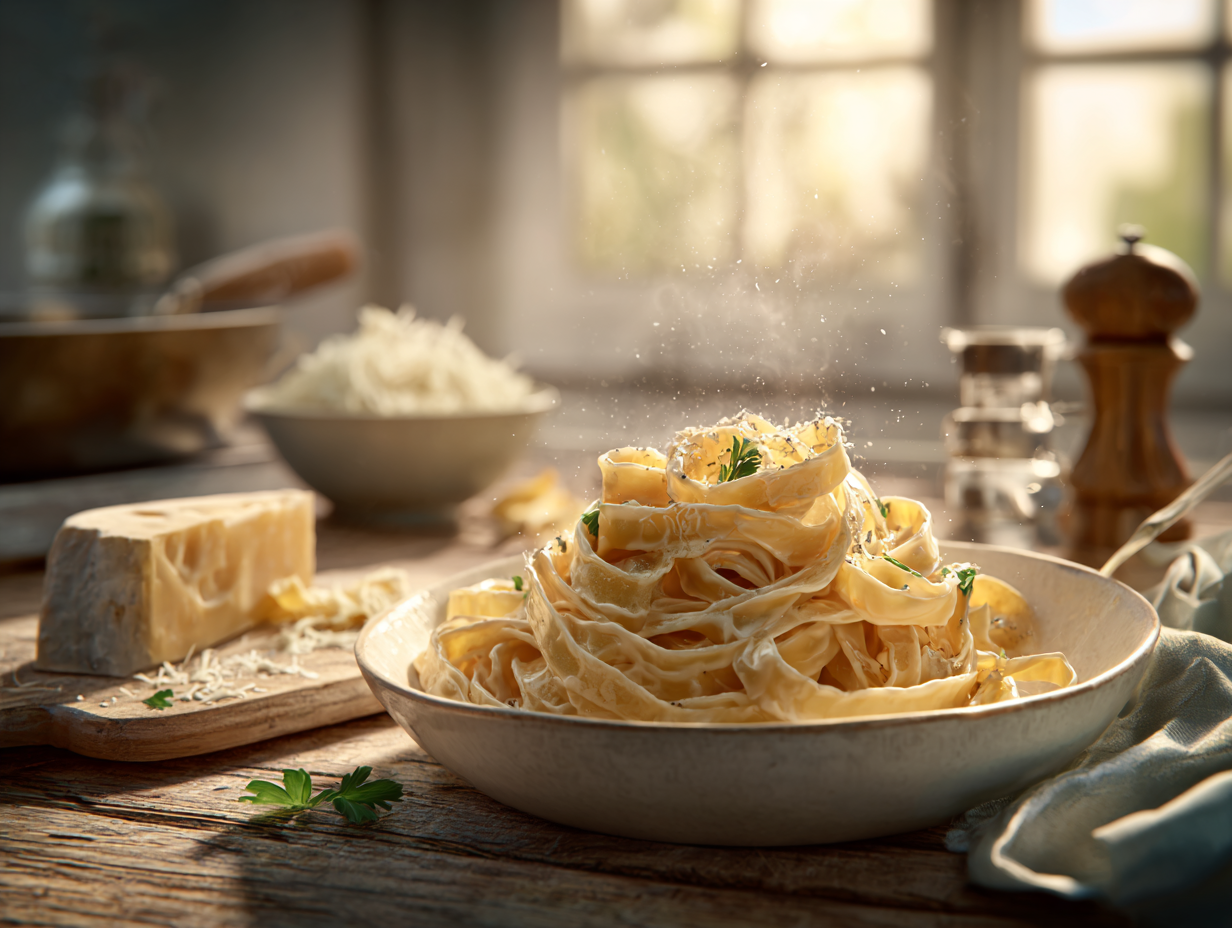
Fettuccine Alfredo (30-Minute, Roman-Style)

Equipment
- Large pot (6–8 qt) with lid
- Large wide skillet or sauté pan
- Colander or spider/strainer
- Tongs
- Measuring cups and spoons
- Ladle
- Microplane or fine grater
- Warm plates or shallow bowls
Ingredients
- 4 qt water for boiling pasta
- 2 tbsp Kosher salt (Diamond Crystal preferred) divided; 1 1/2 Tbsp for the water, remainder to taste
- 12 oz dry fettuccine bronze-cut if possible for better sauce cling
- 8 tbsp unsalted European-style butter cold, cut into 1/2-inch cubes (higher butterfat = silkier sauce)
- 1 ½ cups Parmigiano-Reggiano very finely grated (Microplane) and lightly packed
- ½ tsp freshly ground black pepper to taste
- ¼ cup Parmigiano-Reggiano, extra optional, for finishing at the table
- 2 tbsp flat-leaf parsley, finely chopped optional garnish
- ½ tsp lemon zest optional, for brightness
Instructions
- Bring Water to a Boil and Warm Plates: Fill a large pot with 4 qt water, cover, and bring to a rolling boil over high heat (100°C / 212°F). For a restaurant finish, place your serving plates in a 200°F (95°C) oven for 5 minutes to warm, then turn the oven off.
- Season the Water: Add 1 1/2 Tbsp kosher salt to the boiling water. It should taste pleasantly salty—like a gentle sea.
- Prep Cheese and Butter: Finely grate 1 1/2 cups Parmigiano-Reggiano with a Microplane (the finer the grate, the smoother the sauce). Keep the 8 Tbsp butter cubed and cold; cold butter helps the emulsion form.
- Cook the Pasta: Add 12 oz dry fettuccine and stir to prevent sticking. Cook until just shy of al dente, 9–10 minutes or per package. Reserve 1 1/2 cups of the starchy pasta water before draining.
- Start the Emulsion: In a wide skillet over medium-low heat, add 1/2 cup hot pasta water and 4 Tbsp butter. Swirl until the butter melts and the liquid looks slightly cloudy. Take the pan off the heat and rain in about half the cheese, whisking/tossing to form a glossy base. If it clumps, add a splash of hot water and whisk vigorously.
- Marry Pasta and Sauce: Transfer the drained pasta straight into the skillet. Add another 1/2 cup pasta water and toss over low heat until every strand is coated and silky. Add the remaining 4 Tbsp butter and then the rest of the cheese in two additions, tossing constantly. Aim for a sauce that clings and looks glossy, not greasy—think nappe. Keep the pan below a simmer; around 160–170°F (71–77°C) is ideal to avoid breaking the sauce. Adjust with more pasta water by the tablespoon if it gets too thick.
- Season and Finish: Grind in black pepper and taste; add a pinch more salt only if needed. If you like, fold in a whisper of lemon zest for lift.
- Plate Beautifully: Twirl nests of pasta onto warmed plates, spooning extra sauce over. Shower with a little extra Parmigiano and a sprinkle of parsley if using. Serve immediately while glossy and hot.
Notes
Jen’s Tips:
- Choose the Right Cheese: Authentic Parmigiano-Reggiano (24+ months) melts cleaner and tastes deeper than pre-shredded blends. Avoid anti-caking agents—they inhibit melting.
- Grate Ultra-Fine: A Microplane yields airy, melt-friendly cheese. Coarse grates can clump.
- Keep it Cool (then warm): Start the emulsion slightly off heat and below a simmer; add cheese gradually. If it looks stringy or oily, whisk in a splash of hot pasta water and a cube of cold butter to bring it back.
- Pasta Choice: Bronze-cut fettuccine has a rougher surface that grips the sauce better.
- Substitutions: Use pecorino romano for a saltier, sharper profile (try 1 cup pecorino + 1/2 cup Parm). For a stabilized American-style version, add 1/4 cup heavy cream with the first butter—less traditional, very forgiving.
- Dietary Swaps: Gluten-free fettuccine works (toss gently, it’s delicate). Vegetarian concerns: seek Parmigiano made with microbial rennet.
Serving Suggestions:
- Plating: Use tongs to twirl tall nests; the sauce should glisten like satin. A final grind of pepper adds a speckled contrast; parsley brings fresh green highlights.
- Sides & Sips: A crisp green salad with lemon vinaigrette and a chilled Pinot Grigio or sparkling water with a lemon twist balances the richness.
Culinary Context:
Born in Rome in the early 1900s and popularized by Alfredo di Lelio, the original dish—called fettuccine al burro—relied on butter, aged Parmigiano, and skillful tossing. Cream became common later outside Italy. This recipe leans on the Roman method for purity of flavor and texture.Optional Advanced Instructions:
- Make-Ahead: Grate cheese up to 1 day ahead; keep sealed and refrigerated. Cube butter in advance and chill.
- Service Flow: While water heats, grate cheese and prep butter; warm plates just before tossing the sauce.
- Beginner Alternative: If emulsions worry you, add 1–2 Tbsp cream with the first butter to stabilize while you practice.
Timing:
- Prep Time: 0 hr 10 min
- Cook Time: 0 hr 20 min
- Total Time: 0 hr 30 min
Nutrition
FAQ
Can I use pre-grated Parmesan from a bag?
No — pre-grated cheese has anti-caking agents that prevent it from melting smoothly, and the sauce will be grainy. Buy a wedge of Parmigiano-Reggiano and grate it yourself on a Microplane right before cooking; it takes about two minutes and makes a real difference.
How do I keep the pasta warm if I’m serving guests in batches?
Warm your serving bowls or plates in a 200°F oven for 10 minutes before you start cooking. A warm surface buys you a couple of extra minutes before the sauce tightens up, which matters when you’re plating for more than two people.
Can I make this gluten-free?
Yes, with caveats. Use a bronze-cut gluten-free fettuccine if you can find one — the rougher surface holds the sauce better than smooth GF pasta. The starch content of GF pasta water varies by brand, so you may need slightly less water to get the sauce to the right consistency.
What’s the right amount of pasta water to save?
Save at least 1 full cup before you drain, even if the recipe calls for less. When you’re doubling the recipe for guests, save 2 cups. It’s impossible to get more once the pasta is drained, and having extra on hand lets you adjust the sauce texture without stress.
Try these next
- Creamy Stovetop Mac Perfection
- Classic Basil Pesto Recipe
- Quick Weeknight Calzone Recipe
- Weeknight Chicken Lasagna Magic