
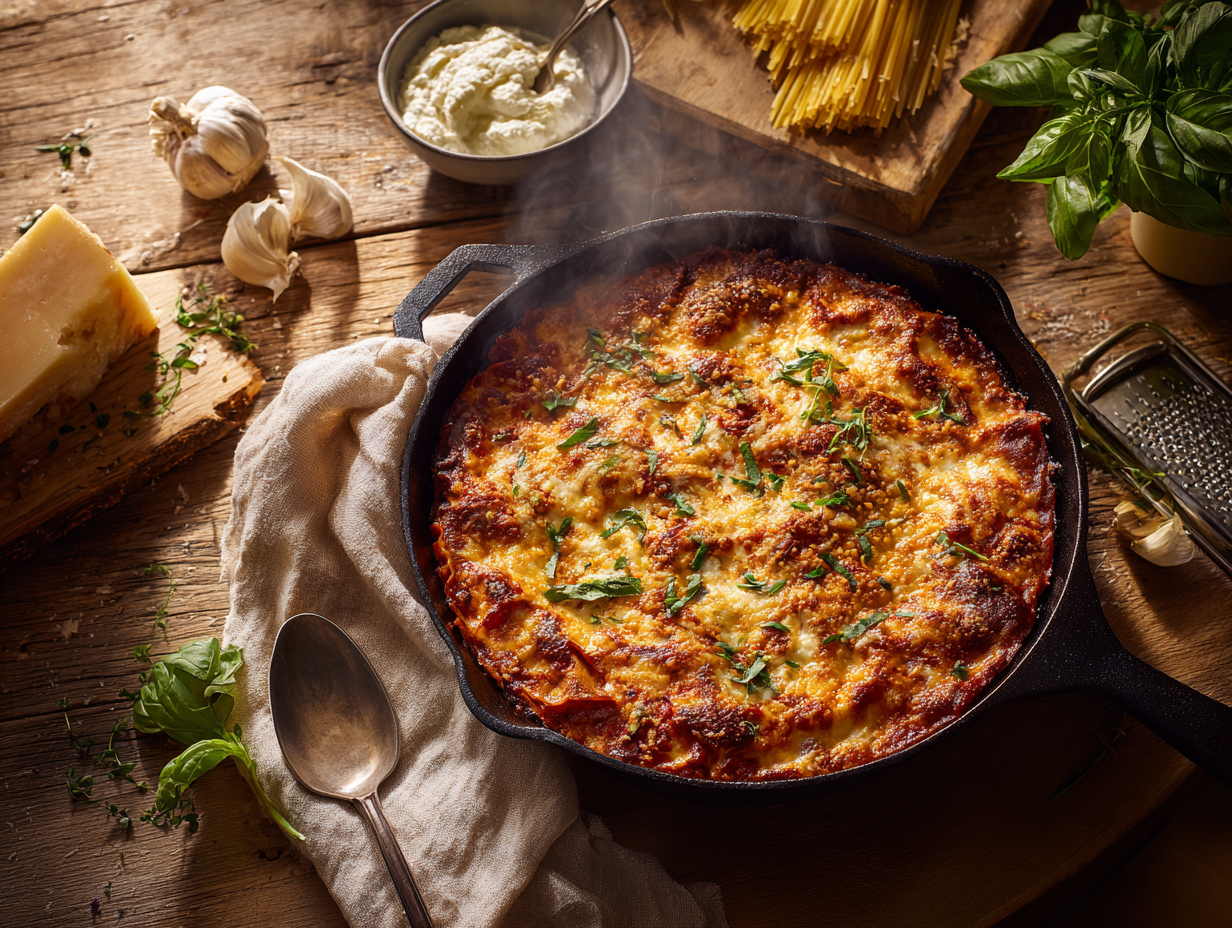
This is lasagna cooked entirely in one skillet — no boiling noodles, no baking dish, no oven preheat. No-boil noodles go straight into the meat sauce and absorb it as everything cooks together on the stovetop, finishing under the broiler for a bubbly, golden cheese top. It feeds four in 35 minutes, and it scales up cleanly if you need to feed more.
About the ingredients
- No-boil (oven-ready) lasagna noodles: These are not interchangeable with regular dried lasagna noodles here. Regular noodles won’t cook through in the sauce in the time given. Stick with oven-ready.
- Whole milk ricotta: Part-skim works but the filling will be slightly grainy and less creamy. Worth using whole milk if you can find it.
- Low-moisture mozzarella: Fresh mozzarella releases too much water and makes the top soggy. Shred block mozzarella yourself if you have time — pre-shredded has a coating that slows melting.
- San Marzano tomatoes: Any good-quality crushed tomatoes will work. San Marzanos tend to be less acidic and need less added sugar, but they’re not mandatory.
- Parmesan: Pre-grated powdery Parmesan won’t melt the same way. Use a block and grate it, or buy the refrigerated shredded kind.
The technique that matters
The single most important step is keeping the lid on during the noodle-cooking phase. The trapped steam is what softens the broken noodle pieces — without it, the liquid evaporates before the pasta hydrates and you end up with tough, chewy bits in a dry sauce. Press the noodle pieces down so they’re mostly submerged in the sauce before you cover the pan, and resist lifting the lid to check until the minimum time is up. The broiler finish is the second thing worth paying attention to: broilers vary a lot in intensity, so watch the cheese closely after the two-minute mark. You want it bubbling and spotted brown, not scorched.
If something goes sideways
- Noodles are still hard after the cook time: Add two to three tablespoons of water, replace the lid, and cook for another three minutes. Oven-ready noodles occasionally need more liquid depending on how thick your sauce is.
- Sauce is watery before the broiler step: Remove the lid and let it simmer uncovered for two to three minutes to reduce. A wet base will make the cheese layer slide and the bottom soggy.
- Cheese isn’t browning under the broiler: Your broiler rack is probably too low. Move the skillet to the top third of the oven. If the skillet handle isn’t oven-safe that high, transfer the contents to a broiler-safe baking dish — it’s worth the extra dish in this case.
- Meat is releasing a lot of fat: Drain it before adding the tomatoes. Extra fat makes the sauce greasy and prevents the noodles from absorbing flavor evenly.
- Scaling up for a crowd and the center isn’t cooking through: A larger skillet means a deeper sauce layer. Add five minutes to the covered cook time and check the center noodles specifically before moving to the broiler step.
Leftovers and make-ahead
Leftovers keep well in the fridge for up to four days in an airtight container. Reheat individual portions in the microwave with a splash of water to loosen the sauce, covered loosely, about two minutes on medium power. For larger portions, a covered skillet over low heat works better — it reheats more evenly and keeps the noodles from drying out. This dish also freezes well: portion it into freezer-safe containers and freeze for up to two months. Thaw overnight in the fridge before reheating. Skip the fresh basil garnish before freezing — add it fresh when you serve. If you want to get ahead on a busy week, brown the meat and build the sauce up to two days in advance; store it in the fridge and finish the noodle and cheese steps the night you eat.
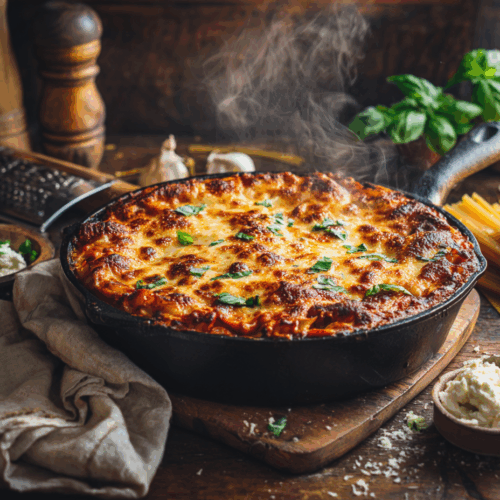
Skillet Weeknight Lasagna

Equipment
- 12-inch oven-safe skillet
- Measuring cups and spoons
- Wooden spoon or spatula
- Grater (for cheese)
- Knife and Cutting Board
- Aluminum Foil (optional for broiling)
Ingredients
- 1 tablespoon olive oil extra virgin preferred
- 1 pound ground beef 85% lean recommended
- 1 small yellow onion finely diced
- 3 cloves garlic minced
- 1 teaspoon kosher salt plus more to taste
- ½ teaspoon freshly ground black pepper
- 1 teaspoon dried oregano
- ½ teaspoon crushed red pepper flakes optional, for heat
- 1 can crushed tomatoes 28 oz, San Marzano preferred
- 8 sheets oven-ready lasagna noodles roughly broken into 2-inch pieces
- ¾ cup whole milk ricotta cheese
- 1 cup shredded mozzarella cheese low-moisture, part skim preferred
- ¼ cup grated Parmesan cheese freshly grated if possible
- 2 tablespoons fresh basil chopped, plus extra for garnish
Instructions
- Heat olive oil in a large oven-safe skillet over medium heat. Add diced onion and sauté for about 2 minutes until translucent. Stir in minced garlic and cook for another 30 seconds.
- Add ground beef and cook until browned, about 5 minutes. Use the back of a spoon to break up the meat as it cooks. Drain excess fat if needed.
- Season with kosher salt, black pepper, oregano, and crushed red pepper flakes. Stir in the crushed tomatoes and bring to a simmer.
- Gently nestle in broken lasagna noodles into the sauce, ensuring they are all submerged. Cover the skillet with a lid (or foil) and simmer for 12–15 minutes until the noodles are tender. Stir occasionally to prevent sticking.
- Drop spoonfuls of ricotta evenly over the top. Sprinkle mozzarella and Parmesan over the skillet, then cover and let cheese melt for about 3 minutes. If desired, place under the broiler for 2 minutes until bubbly and golden on top.
- Remove from heat. Sprinkle chopped basil on top. Let rest for 3–5 minutes before serving to set the layers slightly.
Notes
- For a vegetarian version, substitute the meat with sautéed mushrooms and zucchini.
- No-boil lasagna noodles are essential for keeping cooking time short.
- If using traditional noodles, pre-cook them before adding.
Nutrition
Frequently asked questions
Can I use regular lasagna noodles instead of no-boil?
No — regular dried lasagna noodles won’t cook through in the sauce in the time this recipe allows. You’d need to pre-boil them separately, which defeats the whole point of the one-skillet method.
What size skillet do I need, and does it matter if it’s cast iron?
A 12-inch oven-safe skillet is the right size for four servings. Cast iron works well because it holds heat evenly, but any oven-safe skillet — stainless, carbon steel, or a heavy nonstick rated for broiler use — will do the job.
Can I double the recipe to feed eight people?
Yes, but you’ll need a larger skillet — a 14-inch or a wide straight-sided pan — and you should add about five minutes to the covered cook time to make sure the noodles in the center fully hydrate. Check the center pieces before moving to the broiler.
Can I make this without meat for a vegetarian version?
Yes. Skip the ground meat and add a 15-ounce can of drained white beans or a cup of sautéed mushrooms in its place. The cook times stay the same; just make sure your sauce has enough liquid since there’s no fat from the meat to help carry it.
My skillet handle isn’t oven-safe — can I still finish it with broiled cheese?
Yes, but you’ll need to transfer the contents to a broiler-safe baking dish before the broiler step. It adds one dish to wash, but the broiled cheese top is worth it — that’s where most of the texture contrast comes from.
More quick recipes to try
- Weeknight Chicken Lasagna
- Quick Smoky Weeknight Chili
- Weeknight Hamburger Soup
- Smoky Mediterranean Bean Skillet