
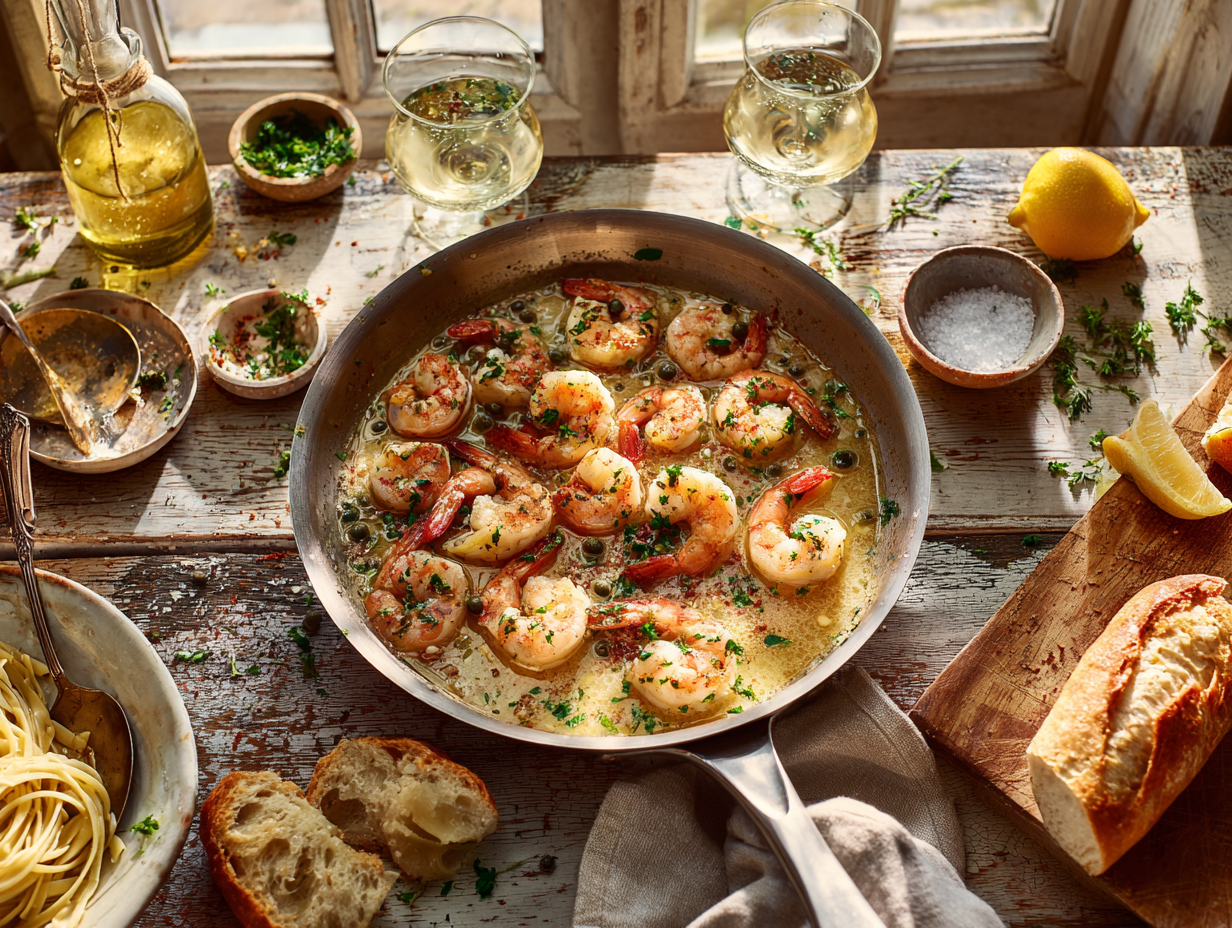
This shrimp scampi comes together in 27 minutes — 15 of prep, 12 of actual cooking — and uses ingredients most people already have on hand. The sauce is butter, garlic, white wine, and lemon, and it works over pasta or with bread for soaking. If you need a real dinner on a weeknight without much cleanup, this is a reliable choice.
About the ingredients
- Shrimp size matters: The recipe calls for 16/20 count (large). Smaller shrimp cook faster and overcook easily in a pan sauce; larger ones give you more margin. If your bag says 21/25, reduce cook time by about 30 seconds per side.
- Frozen shrimp are fine — most “fresh” shrimp at the counter were previously frozen anyway. Thaw overnight in the fridge or in a colander under cold running water for 10 minutes. Dry them thoroughly before cooking.
- White wine: Use something dry and drinkable — pinot grigio or sauvignon blanc both work. Avoid anything labeled “cooking wine,” which is salted and throws off the sauce. No wine on hand? Swap in low-sodium chicken broth with an extra squeeze of lemon.
- Butter quality: European-style butter (higher fat) makes a noticeably silkier sauce. Worth using if you have it, but standard unsalted works fine.
The short version of why this works
Two things actually determine whether this dish succeeds. First, the shrimp must be completely dry before they hit the pan — surface moisture creates steam, which prevents browning and makes the shrimp rubbery instead of plump. Paper towels and a minute of patience fix this entirely. Second, the heat has to drop before you build the sauce. Garlic scorches in seconds in a screaming-hot pan, and burnt garlic cannot be fixed; it just makes everything bitter. Sear the shrimp hot, pull them out, then turn the heat to medium before the garlic goes in. That one adjustment is the difference between a broken, sharp-tasting sauce and one that actually emulsifies into something glossy.
Mistakes to avoid
- Crowding the pan: If the shrimp overlap, they steam instead of sear. Cook in two batches if your skillet is smaller than 12 inches — it adds two minutes and is worth it.
- Adding butter to a too-hot pan: If the pan is still ripping hot when you swirl in the butter at the end, it will break into greasy pools instead of emulsifying. Pull the pan off the heat for 20 seconds first, then add the butter off or over very low heat.
- Letting the shrimp sit in the sauce: Shrimp keep cooking from residual heat. Once they go back into the pan to coat with sauce, serve immediately. Two extra minutes in a warm pan and they turn rubbery.
- Under-reducing the wine: The wine needs to cook down until you can no longer smell raw alcohol — usually 2 minutes over medium heat. Skipping this step leaves a harsh, boozy edge in the finished sauce.
- Skipping the lemon zest: Juice adds acidity, but zest adds a brightness that juice alone doesn’t deliver. Skip the garnish — not worth the extra dish — but don’t skip the zest in the sauce itself.
Keeping and reheating
Leftover shrimp scampi keeps in an airtight container in the fridge for up to 2 days. Store the shrimp and sauce together but keep pasta separate if possible — pasta sitting in the sauce overnight absorbs most of it and turns soft. To reheat, use a skillet over low heat with a splash of water or broth to loosen the sauce; it takes about 3 minutes. Avoid the microwave if you can — it heats unevenly and tends to overcook the shrimp in spots. The sauce alone (without shrimp) freezes well for up to a month; cook fresh shrimp directly into the reheated sauce for a second meal that takes under 10 minutes.
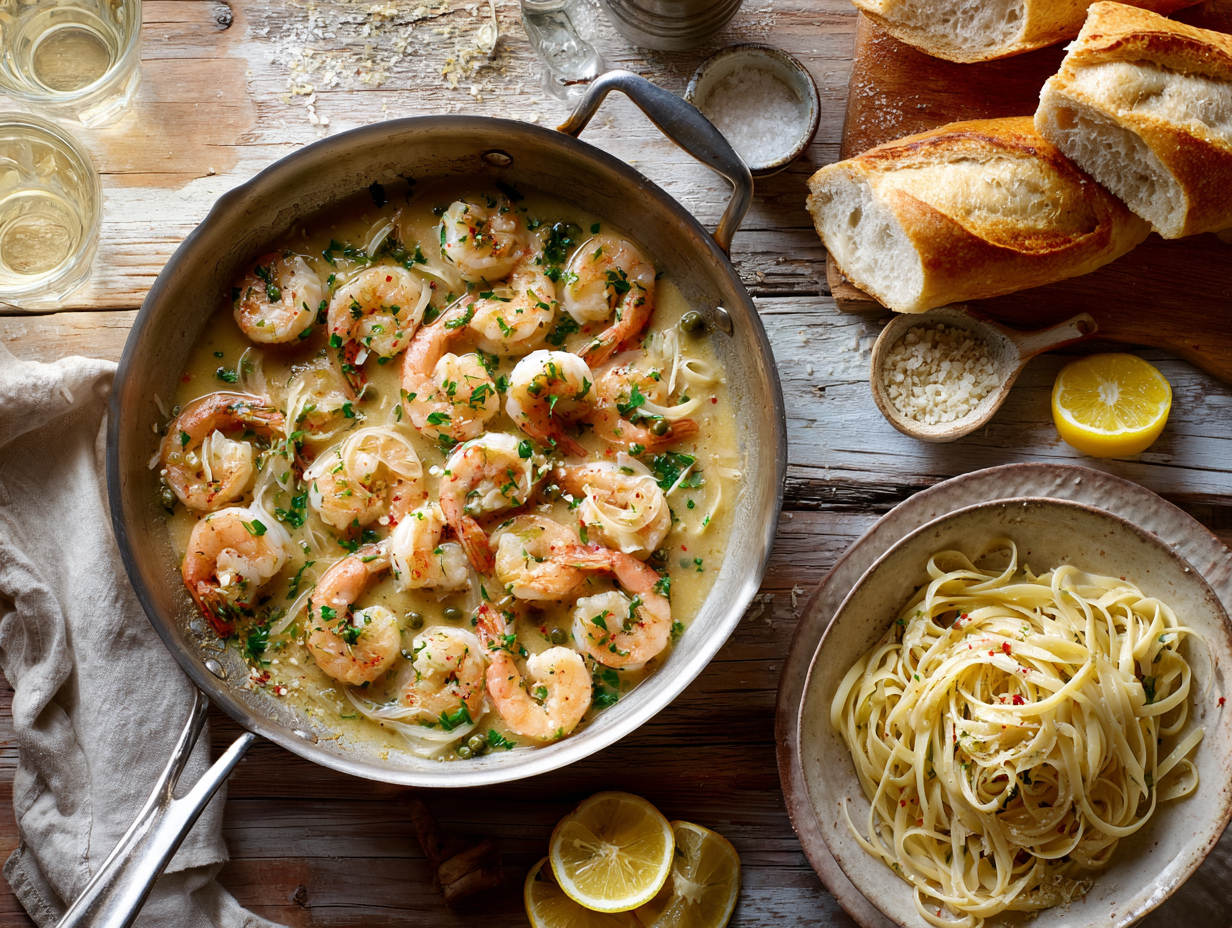
30-Minute Shrimp Scampi with Lemon, Garlic, and Parsley

Equipment
- 12-inch heavy skillet (stainless steel or cast iron)
- Large pot (optional, for pasta)
- Chefs Knife
- Cutting board
- Microplane or fine grater (for zest)
- Citrus juicer
- Measuring cups and spoons
- Tongs
- Small mixing bowls
- Paper towels
Ingredients
- 1.5 lb large shrimp (16/20 count), peeled and deveined, tails on fresh if possible; thawed frozen works well when patted very dry
- 1 ¼ tsp kosher salt, divided 1 tsp for dry brine; 1/4 tsp to season sauce
- ½ tsp baking soda optional; helps shrimp stay snappy and plump
- 2 tbsp extra-virgin olive oil a fruity, peppery oil complements the lemon-garlic profile
- 6 cloves garlic, thinly sliced slicing prevents scorching; use fresh, firm cloves
- ½ tsp red pepper flakes adjust to taste
- 6 tbsp unsalted butter, divided use quality European-style butter if available
- ½ cup dry white wine Pinot Grigio, Sauvignon Blanc, or Verdicchio
- ¼ cup low-sodium chicken or seafood stock (optional) extends the sauce without overpowering
- 1 tsp fresh lemon zest from 1 lemon; avoid the bitter white pith
- 2 tbsp fresh lemon juice juice just before using for brightness
- 1 tbsp capers, drained (optional) adds briny pop
- ¼ cup flat-leaf parsley, finely chopped freshly chopped for vibrant color and flavor
- ½ tsp freshly ground black pepper coarsely ground for subtle bite
- 4 wedges lemon wedges, for serving at the table, to taste
- 10 oz linguine (optional), cooked al dente or serve with bread; reserve 1/2 cup pasta water
- 1 small crusty baguette (optional), warmed about 8 oz; for dipping
Instructions
- Preheat and Set the Stage (optional but ideal): Warm plates and, if using bread, set the oven to 200°F (95°C). This keeps the scampi hot and your bread gently warmed without drying out.
- Dry-Brine the Shrimp (10 minutes): Pat the shrimp very dry with paper towels. Toss with 1 tsp of the kosher salt and the baking soda. Refrigerate, uncovered, for 10 minutes. This firms the texture so the shrimp sear plump and juicy.
- Mise En Place: While the shrimp rest, thinly slice the garlic, finely chop the parsley, zest and juice the lemon, and measure the wine and optional stock. Have butter divided and ready for a smooth finish.
- If Serving with Pasta (optional): Bring a large pot of water to a boil. Salt it generously (it should taste like the sea). Cook linguine to al dente, 1–2 minutes less than package directions. Reserve 1/2 cup pasta water and drain. Keep warm. This optional step may add 8–10 minutes.
- Sear the Shrimp (3 minutes): Heat a 12-inch skillet over medium-high heat until the oil shimmers—about 375–400°F (190–205°C) surface temperature equivalence. Add olive oil and 1 tbsp butter. Lay shrimp in a single layer without crowding; cook 1–1 1/2 minutes until the underside turns pink with light golden edges. Flip and cook 30–60 seconds more. Transfer to a plate; they will finish in the sauce.
- Bloom Aromatics (45–60 seconds): Reduce heat to medium. Add the remaining 5 tbsp butter. When melted and foamy, add garlic; stir until fragrant and just turning blond at the edges, 30–45 seconds—do not brown. Sprinkle in red pepper flakes and stir 10 seconds to bloom their aroma.
- Deglaze and Reduce (2–3 minutes): Pour in the white wine and scrape up any browned bits. Simmer briskly until reduced by about half, 1–2 minutes. If using, add stock and simmer 1 minute more; you should see small, tight bubbles and the sauce lightly thickening.
- Finish the Sauce (1–2 minutes): Stir in lemon juice, zest, and capers (if using). Season with the remaining 1/4 tsp kosher salt and the black pepper. Return the shrimp and any collected juices to the pan; toss 30–60 seconds just until the shrimp are opaque and springy. Off the heat, fold in parsley for a fresh finish. The sauce should look glossy and lightly emulsified.
- Serve: Over warm linguine (loosen with a splash of reserved pasta water as needed) or in shallow bowls with warm baguette. Garnish with more parsley and lemon wedges. Serve immediately while steaming hot.
Notes
Lisa’s Tips:
- Shrimp Quality: Wild-caught or high-quality frozen shrimp (thawed overnight) work beautifully. Dry them thoroughly for better searing.
- Butter Emulsion: Keep heat at medium when finishing; too hot and the butter can split. If it does, whisk in a tablespoon of cool water to bring it back.
- Wine-Free Option: Substitute the wine with more stock plus 1 tsp white wine vinegar or a squeeze more lemon for brightness.
- Extra-Briny Lift: A teaspoon of fish sauce stirred into the reduction adds depth without tasting fishy.
- Spice Control: Swap red pepper flakes for a pinch of Aleppo pepper for a fruitier, gentler heat.
- Gluten-Free: Serve with gluten-free pasta or over polenta; the sauce is naturally gluten-free.
- Dairy-Free: Use a quality dairy-free butter alternative and an extra tablespoon of olive oil.
- Make it Creamy: Swirl in 2 tbsp heavy cream after reducing the wine for a luxuriously silky scampi.
Serving Suggestions:
For a restaurant-worthy plate, twirl a nest of pasta in the center of a warm shallow bowl, spoon shrimp and sauce around, and finish with a confetti of parsley, a thin lemon wheel, and a drizzle of good olive oil. Colors should pop—pink shrimp, emerald parsley, and a glossy, pale-gold sauce. Pair with a chilled glass of the wine you cooked with, and a simple arugula salad dressed with lemon and olive oil.Culinary Context:
“Scampi” originally refers to a Mediterranean crustacean akin to a langoustine. In Italian-American kitchens, the name came to signify shrimp prepared in the scampi style—garlic, butter, and wine. My twist keeps those roots while using a brief dry brine and a butter emulsion for a sauce that’s both bright and luxurious.Optional Advanced Instructions:
- Make-Ahead: Slice garlic, chop parsley, and zest lemon up to 6 hours ahead; refrigerate aromatics separately, tightly covered.
- Parallel Prep: While shrimp brine, boil water and cook pasta; warm plates in a low oven (200°F/95°C).
- Beginner Alternative: If you’re worried about overcooking, remove the pan from heat before returning shrimp; the residual heat will finish them gently.
Nutrition
Your questions, answered
Can I make shrimp scampi without wine?
Yes — substitute an equal amount of low-sodium chicken broth and add an extra teaspoon of lemon juice to compensate for the acidity. The sauce will be slightly less complex but still works well on a weeknight.
Do I have to peel and devein the shrimp myself?
No — buying shrimp that are already peeled and deveined saves about 10 minutes of prep and doesn’t affect the final dish. Tails-on is listed in the recipe for presentation, but tails-off is easier to eat and a perfectly reasonable choice.
What pasta shape works best with this sauce?
Linguine is traditional and holds the thin sauce well, but spaghetti or angel hair both work. Avoid short, ridged shapes like penne — they don’t coat as evenly with a butter-wine sauce.
How do I know when the shrimp are done?
They’re done when they turn pink and opaque and curl into a loose C shape — this takes roughly 2 minutes per side over medium-high heat. A tight O shape means they’re overcooked; pull them at the C.
Can I double the recipe for a larger group?
Yes, but cook the shrimp in batches rather than doubling the pan load — crowding drops the pan temperature and you’ll lose the sear. The sauce ingredients can be doubled without issue.