
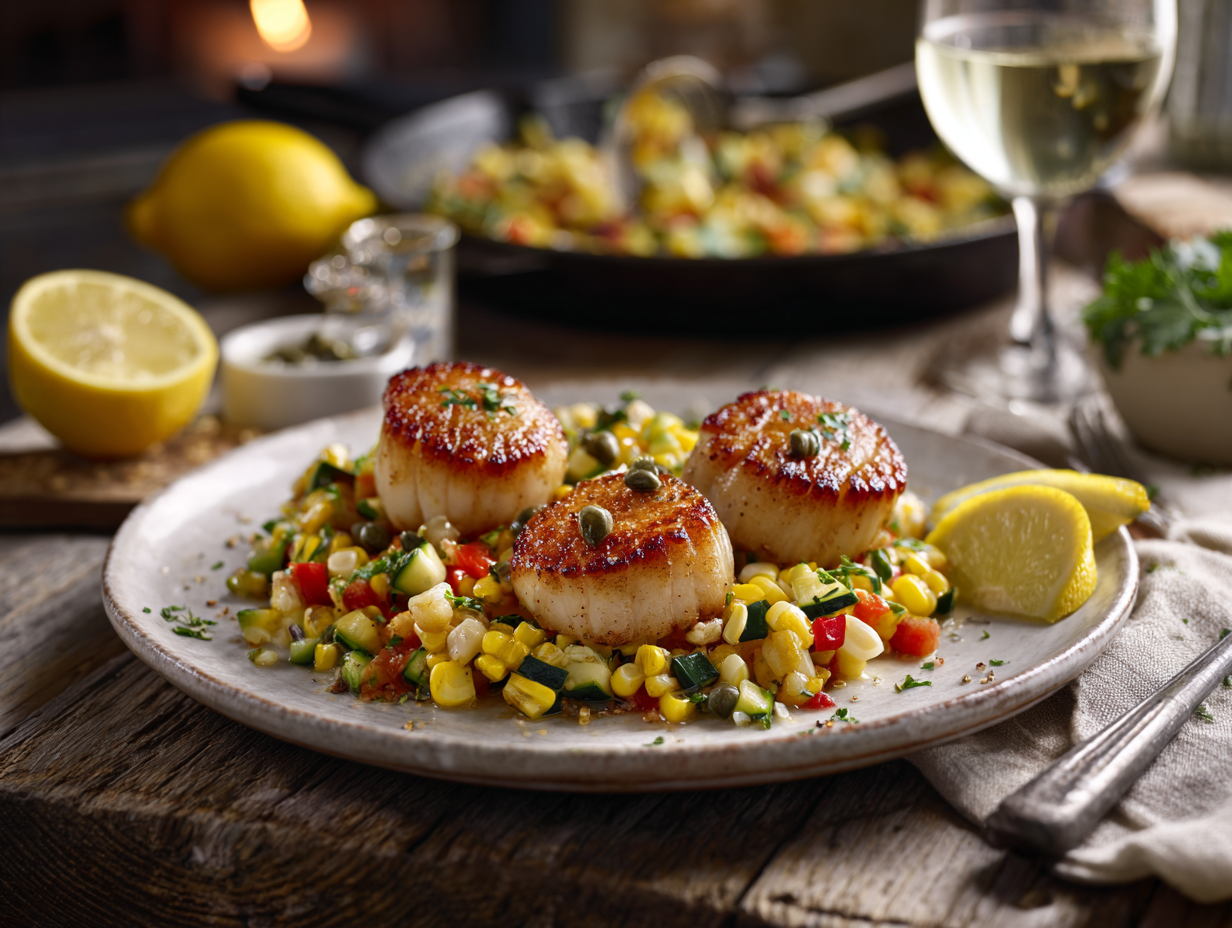
Seared sea scallops with lemon brown butter and a sweet corn succotash — the whole thing lands on the table in 30 minutes. The honest reason to make it tonight: it looks like you spent twice as long, and it scales up for a dinner party without adding any real complexity.
Why this recipe works
Two things actually drive the result here. First, a screaming-hot dry pan. Scallops release moisture fast, and if the pan isn’t fully preheated, that moisture steams the scallop instead of searing it — you get gray and rubbery instead of golden and firm. Second, the brown butter goes in after the scallops are already seared on one side, not before. Adding butter too early drops the pan temperature and burns the milk solids before the crust forms. Basting with the browned butter at the end keeps the second side from overcooking while the nutty fat picks up the fond left in the pan — that’s where the sauce flavor actually comes from.
If something goes sideways
- Scallops stuck to the pan: Don’t force them. A properly seared scallop releases on its own when the crust is set — usually 2 to 3 minutes. If it resists, give it another 30 seconds before trying again.
- No crust, just steaming: The scallops were probably still damp or the pan wasn’t hot enough. Pat them bone-dry with fresh paper towels right before they go in, and let the pan heat until a drop of water evaporates on contact before adding oil.
- Brown butter turned black: Pull the pan off the heat immediately and pour the butter into a cold bowl to stop the cooking. Wipe the pan and start the butter again over medium heat — it only takes about 90 seconds and the difference between nutty and burnt is fast.
- Succotash is watery: Corn releases liquid as it cooks. Cook it over medium-high heat and don’t crowd the pan — if you’re doubling the recipe, use two pans or cook the succotash in two batches so it sautés rather than braises.
- Scallops cooked through before guests sit down: Sear them last, right before serving. The succotash holds well off heat for 10 minutes; the scallops do not.
Smart swaps
- Dry-packed vs. wet-packed scallops: This swap matters more than any other. Wet-packed scallops are treated with sodium tripolyphosphate, which adds water weight and prevents browning. Look for “dry” or “dry-packed” on the label, or ask at the fish counter. They cost more but they’re the only ones that will actually sear.
- Butter substitutes: Ghee works well and has a higher smoke point, which gives you a little more margin before burning. Skip the garnish — not worth the extra dish.
- Fresh vs. frozen corn: Frozen corn (thawed and patted dry) works fine here. Canned corn is too wet and won’t sauté properly without a long drain and dry.
- White wine in the sauce: A dry vermouth is a direct swap and keeps longer in the pantry. Low-sodium chicken stock works if you’re skipping alcohol — reduce it a bit longer to concentrate the flavor.
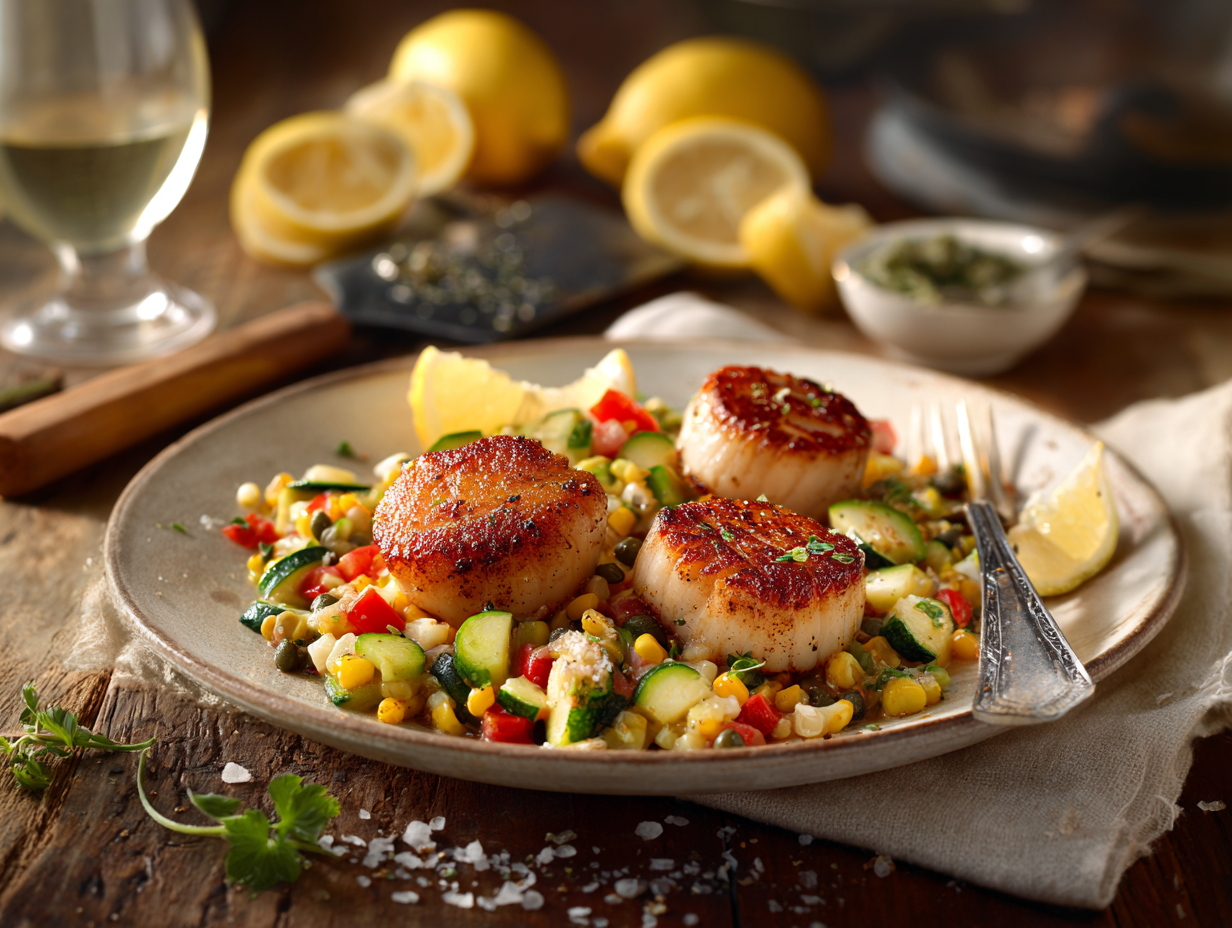
Seared Scallops with Lemon Brown Butter and Sweet Corn Succotash

Equipment
- 12-inch stainless-steel or cast-iron skillet
- Fish spatula or thin metal spatula
- Small bowl and mixing spoon
- Paper towels
- Instant-read thermometer (optional)
- Citrus zester or Microplane
- Cutting board and chef's knife
Ingredients
For the Scallops:
- 1.25 lb dry sea scallops about 16 scallops (U-10/20), dry-packed for best sear
- 1 tsp kosher salt Diamond Crystal preferred; adjust if using Morton
- 0.5 tsp freshly ground black pepper
- 2 tbsp neutral high-heat oil avocado or grapeseed oil
- 3 tbsp unsalted butter high-fat European-style recommended
- 1 clove garlic lightly smashed
- 1 tsp lemon zest finely grated
- 2 tbsp fresh lemon juice from 1 lemon
- 1 tbsp brined capers drained and patted dry, optional for crisping
For the Sweet Corn Succotash:
- 2 tbsp extra-virgin olive oil
- 1 small shallot, finely diced about 2 tbsp
- 1 small red bell pepper, diced 1/4-inch
- 2 cup fresh corn kernels from about 3 ears; thawed frozen works too
- 1 small zucchini, diced 1/4-inch
- 0.25 tsp crushed red pepper flakes adjust to taste
- 0.25 cup dry white wine optional; chicken or vegetable stock works
- 0.25 tsp kosher salt for succotash; adjust to taste
- 0.125 tsp freshly ground black pepper for succotash
To Finish:
- 2 tbsp fresh parsley, chopped
- 1 tbsp fresh chives, chopped
- 4 wedges lemon for serving
- 1 pinch flaky sea salt optional, for finishing
Instructions
- Prep the Scallops (2 minutes): Place the scallops on a double layer of paper towels and blot very dry. Remove the small side muscle if attached (a little tab that pulls off easily). Season just before searing with 1 tsp kosher salt and 1/2 tsp black pepper.
- Start the Succotash (7–8 minutes): Heat a 12-inch skillet over medium (about 320–350°F / 160–175°C) until warm, 1 minute. Add 2 tbsp olive oil. Sauté the shallot for 60–90 seconds until translucent and fragrant. Add diced red bell pepper; cook 2 minutes, stirring, until glossy and slightly softened. Add 2 cups corn; cook 3–4 minutes, letting some kernels char lightly—listen for a gentle sizzle and look for golden spots. Stir in diced zucchini and red pepper flakes; cook 2 minutes until zucchini brightens and just turns tender. Season with 1/4 tsp kosher salt and 1/8 tsp pepper. If using, deglaze with 1/4 cup white wine; simmer 30–60 seconds until nearly dry.
- Hold the Succotash (30 seconds): Transfer succotash to a warm bowl; tent loosely with foil. Wipe the skillet clean. Tip: Warm plates in a low oven (170–200°F / 75–95°C) or microwave-safe plates for 30 seconds to keep scallops hot on the way to the table.
- Sear the Scallops (3–4 minutes): Return skillet to medium-high and heat until a drop of water skitters across the surface, about 2 minutes. Add 2 tbsp neutral oil; it should shimmer but not smoke (aim ~375–400°F / 190–205°C). Lay scallops in clockwise, one at a time, spacing them so they don’t touch. Do not move them for 1.5–2 minutes, until edges turn opaque and bottoms are deep golden-brown. Flip with a fish spatula; add 2 tbsp butter and the smashed garlic. Tilt the pan and baste constantly for 45–60 seconds. Add capers for the final 30 seconds to crisp. Scallops are perfect when just springy with a slightly translucent center, or 115–120°F (46–49°C) internal on an instant-read thermometer.
- Make Lemon Brown Butter (1–2 minutes): Transfer scallops to a warm plate. Pour off excess oil, leaving browned bits. Add remaining 1 tbsp butter; cook over medium until foamy and nutty, 30–60 seconds (butter should smell like toasted hazelnuts and turn light amber). Remove from heat; stir in lemon zest and lemon juice. Taste and adjust seasoning.
- Finish and Plate (2 minutes): Stir parsley and chives through the warm succotash. Spoon a bed of succotash onto each plate. Nestle scallops on top, drizzle with lemon brown butter and crisped capers, and finish with a whisper of flaky sea salt. Serve immediately with lemon wedges.
Notes
Lisa’s Tips:
- Dry-packed Scallops Matter: Avoid phosphates-treated “wet” scallops; they weep moisture and won’t sear well.
- Super-dry = Super-crust: Pat scallops thoroughly and season right before they hit the pan to prevent drawing out moisture.
- Pan Choice: Stainless or cast iron builds the best fond. If using nonstick, sear 15–30 seconds longer for color.
- Dairy-free: Use ghee or olive oil; finish with a squeeze of lemon and a touch of good olive oil instead of brown butter.
- No Wine? Splash in chicken or vegetable stock with a few drops of vinegar for brightness.
- Swap-ins: Large shrimp or thick sea bass medallions sear beautifully with the same method.
- Heat Discipline: If the butter smokes, it’s too hot; pull the pan off heat for a few seconds, then continue.
- If your scallops are very large (U-8), add 15–30 seconds per side; if smaller (20–30 count), reduce slightly.
- Crowding cools the pan—sear in two batches if needed; rewarm sauce briefly off heat if it starts to thicken.
- To accelerate browning, sprinkle a tiny pinch of sugar on the presentation side of each scallop before searing.
Nutrition
Your questions, answered
Can I make this for 8 people instead of 4?
Yes, but sear the scallops in two separate batches rather than crowding the pan. Crowding drops the pan temperature and you’ll lose the crust on every scallop — two quick batches take only a few extra minutes and the results are completely different. Make the succotash in a larger pan or in two pans simultaneously so it doesn’t steam.
How do I know when the scallops are done without cutting into them?
An instant-read thermometer reading of 125–130°F at the center means they’re done and still tender. Visually, the opacity should have crept about two-thirds of the way up the side of the scallop before you flip — the top will still look slightly translucent, and carryover heat finishes the job.
Can I prep anything ahead of time to speed up service?
Yes — chop all the succotash vegetables and measure out every ingredient before you start cooking. The actual cook time is short and moves fast, so having everything ready at the stove is what keeps it from feeling rushed. The succotash itself can be cooked up to 20 minutes ahead and held covered off the heat; just reheat briefly while the scallops sear.
More quick recipes to try
- Sesame Crusted Ahi Tuna
- Smoky Lime Corn Salad
- Southern Stovetop Creamed Corn
- Zucchini’s Creamy Lemon Dream