
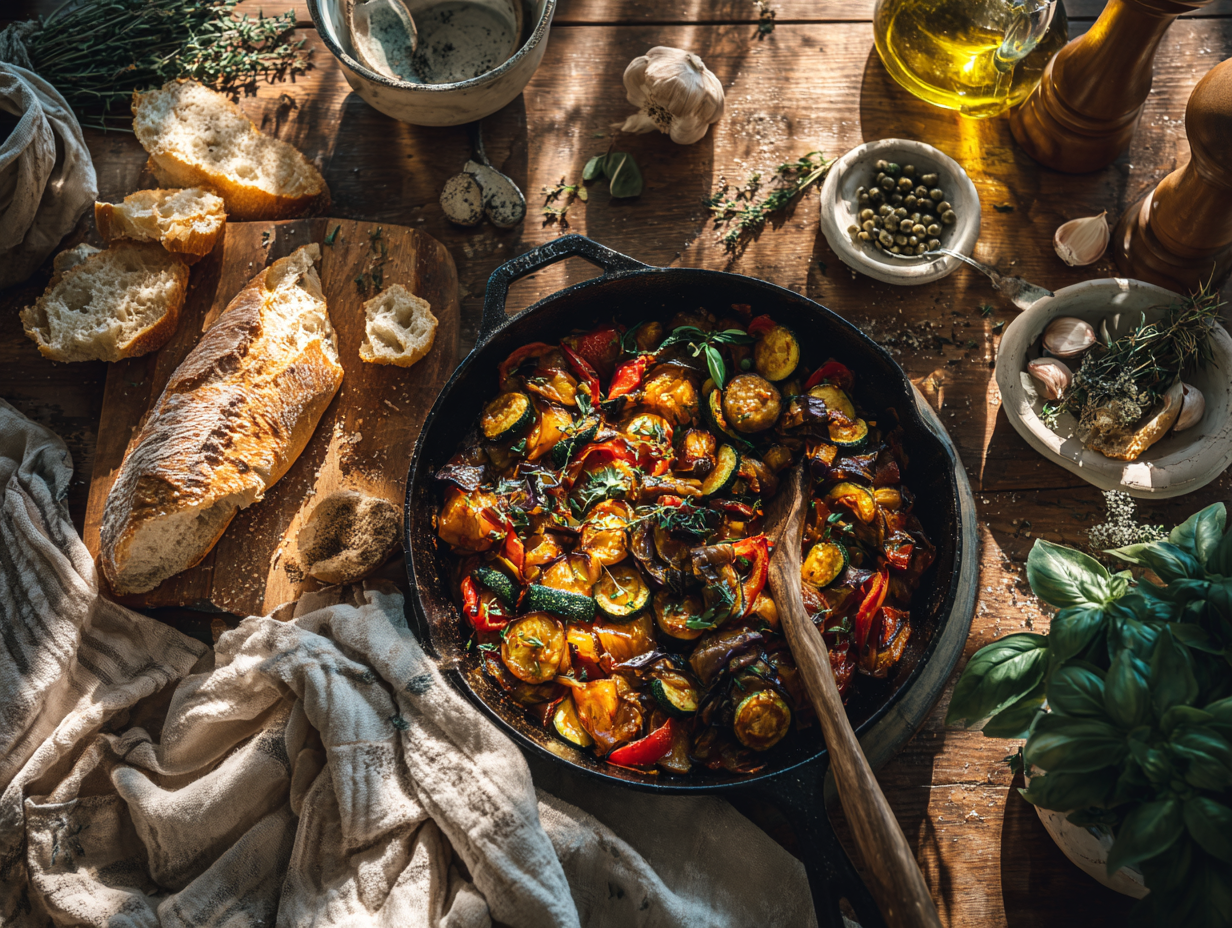
This is a one-pan vegetable stew — eggplant, zucchini, bell peppers, and tomatoes cooked fast over high heat, then simmered briefly to pull everything together. It takes 35 minutes start to finish and uses a single skillet. Make a full batch tonight and you’ll have lunch sorted for the next two days.
What makes this version work
Two things actually matter here. First, salting the eggplant for five minutes before it hits the pan draws out enough moisture to let it brown instead of steam — skip this and you get soft, pale cubes that turn the whole dish watery. Second, the vegetables go into the pan in stages based on how long each one needs: eggplant first because it takes the most time, then peppers, then zucchini, then the tomato base. That sequencing is what gives you distinct textures instead of a uniform mush. High heat throughout is what makes both of those things possible in under 30 minutes of actual cooking.
Common problems and fixes
- Everything turns to mush: Your pan wasn’t hot enough before the vegetables went in. A 12-inch skillet needs 2 full minutes over medium-high before you add oil. Crowding also causes steaming — if your pan runs small, cook the eggplant in two batches.
- Dish tastes flat or thin: The tomato paste needs direct contact with the hot pan for about 60 seconds before you stir it into the vegetables. If it just gets folded in cold, it doesn’t develop any depth. Also check your seasoning after the simmer, not before — the flavors concentrate as liquid cooks off.
- Eggplant is bitter or spongy: This usually means the eggplant was old. Look for firm skin with no soft spots. If yours is large and seedy, peel it — the skin on older eggplant can be tough.
- Too much liquid in the pan: Zucchini releases a lot of water. If the stew looks soupy after the simmer, just pull the lid off and let it cook uncovered for another 3–4 minutes. It tightens up fast.
- Basil turns black: Add it after you take the pan off the heat, not during the simmer. Thirty seconds of residual heat is enough to wilt it gently — skip the garnish on top if you’re packing leftovers, it’s not worth the extra prep.
Keeping and reheating
Ratatouille keeps well — better than most cooked vegetables, actually, because the flavors continue to develop overnight. Store it in an airtight container in the fridge for up to 4 days. To reheat, warm it in a skillet over medium-low with a splash of water to loosen it, about 5 minutes; the microwave works fine too, covered, in 90-second intervals. For longer storage, freeze it flat in zip-lock bags for up to 3 months. Thaw overnight in the fridge before reheating. Frozen ratatouille gets a bit softer in texture, so it’s best used as a sauce over pasta or polenta rather than served as a standalone side.
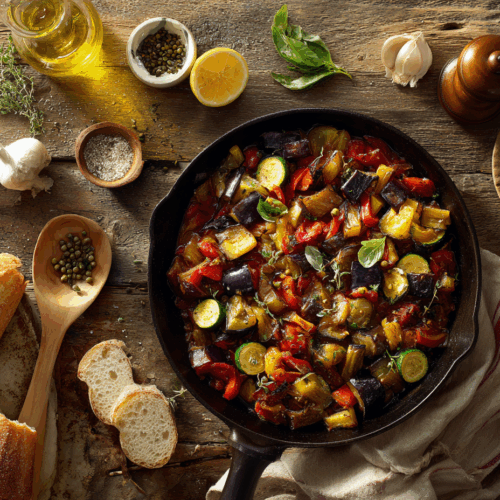
30-Minute Skillet Ratatouille

Equipment
- Large 12-inch sauté pan or wide Dutch oven
- Chef’s knife or mandoline
- Cutting board
- Wooden spoon or heatproof spatula
- Microplane or garlic press
- Medium mixing bowl
- Colander or sieve
- Paper towels
- Measuring cups and spoons
- Citrus zester
Ingredients
- 3 tbsp extra-virgin olive oil, divided choose a fruity Provencal-style oil for best flavor
- 1 small eggplant (about 12 oz), cut into 1/2-inch cubes look for firm, glossy skin; thin-skinned varieties are less bitter
- 1 ¼ tsp kosher salt, divided use Diamond Crystal; reduce to 3/4 tsp if using Morton
- ¾ tsp freshly ground black pepper, divided medium grind for gentle heat
- 1 medium red onion, thinly sliced sweet or red onion both work; red gives beautiful color
- 1 large red bell pepper, seeded and cut into 1/2-inch strips choose a heavy, deeply colored pepper for sweetness
- 2 medium zucchini, sliced into 1/2-inch half-moons small-to-medium zucchini are sweeter and less watery
- 1 medium yellow squash, sliced into 1/2-inch half-moons optional but classic; adds color and butteriness
- 4 cloves garlic, minced or microplaned microplane for a saucier, silky texture
- 1 tbsp tomato paste double-concentrated if available for deeper flavor
- ¼ tsp crushed red pepper flakes optional, for a gentle warmth
- 1 ½ cups fire-roasted diced tomatoes (canned) about 1 (14.5-oz) can; fire-roasted adds smoky depth
- 1 tsp balsamic vinegar balances acidity; aged balsamic adds roundness
- 1 tsp fresh thyme leaves or 1/2 tsp dried herbes de Provence
- 1 tbsp capers, drained optional; briny pop that brightens the dish
- ½ cup fresh basil leaves, cut into thin ribbons stack leaves and slice (chiffonade) just before serving
- 1 tsp lemon zest adds lift and freshness at the finish
- 1 tbsp extra-virgin olive oil, for finishing a peppery oil is lovely here
- 1 pinch flaky sea salt optional, for final seasoning and texture; to taste
Instructions
- Quick-Salt the Eggplant (5 minutes): In a medium bowl, toss the 1/2-inch eggplant cubes with 1/2 tsp kosher salt. Let sit 5 minutes to draw out excess moisture while you slice the other vegetables. Blot well with paper towels to remove surface moisture—this helps the eggplant brown instead of steam.
- Heat the Pan: Place a large 12-inch sauté pan over medium-high heat (aim for a hot pan; about 375–400°F / 190–205°C surface temperature if using cast iron and an infrared thermometer). Add 1 1/2 tbsp olive oil and swirl to coat until shimmering.
- Brown the Eggplant (4–5 minutes): Add eggplant in an even layer. Cook undisturbed 2–3 minutes until the underside is deeply golden, then toss and cook 2 minutes more. Season with a few grinds of black pepper. Transfer to a plate.
- Sauté Aromatics (3 minutes): Return the pan to medium-high, add 1 tbsp olive oil. Add the red onion and red bell pepper with 1/4 tsp salt. Cook, stirring occasionally, until edges are lightly charred and onion turns glossy and translucent. Aroma should be sweet, not sharp.
- Add Zucchini and Squash (4 minutes): Stir in zucchini and yellow squash with another 1/4 tsp salt and a pinch of pepper. Cook until tender-crisp; you want slight browning and a bit of bite left in the centers.
- Build the Base (1 minute): Push vegetables to the edges, creating a clear spot in the center of the pan. Add the tomato paste, garlic, and red pepper flakes with 1/2 tbsp olive oil if the pan looks dry. Cook 45–60 seconds, stirring in the center, until the paste turns brick red and smells sweet, then fold through the vegetables.
- Simmer (6 minutes): Add the fire-roasted tomatoes, balsamic vinegar, thyme, remaining pepper, and the browned eggplant with any juices. Bring to a brisk simmer over medium heat (liquid should gently bubble; approx. 200–205°F / 93–96°C). Cook uncovered 6 minutes, stirring occasionally, until the vegetables are tender but not mushy and the sauce glosses the vegetables.
- Finish and Balance (1–2 minutes): Off the heat, fold in capers, half the basil, and lemon zest. Taste and adjust with remaining salt as needed. Drizzle with the finishing olive oil for sheen and richness.
- Rest and Serve (1–2 minutes): Let the ratatouille rest briefly to settle flavors. Garnish with remaining basil and a pinch of flaky sea salt. Serve warm.
- Oven-Char Option (optional): For a roasty note, spread zucchini, squash, and peppers on a sheet pan, toss with 1 tbsp oil and a pinch of salt, and roast at 450°F / 232°C for 10–12 minutes while you brown the eggplant on the stovetop. Fold roasted veg into the sauce in Step 7.
Notes
Lisa’s Tips:
- Speed and Sear: Cut vegetables to even 1/2-inch pieces and avoid overcrowding; browning builds that slow-cooked flavor fast.
- Eggplant Insurance: Quick-salting and blotting helps prevent sponginess and bitterness.
- Umami Boost: Stir in 1 anchovy fillet with the tomato paste (it melts and won’t taste fishy). For vegan, add 1 tsp white miso instead, off heat.
- Herb Harmony: If using dried herbes de Provence, add with the tomatoes; add fresh basil at the end to preserve aroma.
- Acidity Balance: If tomatoes are very sharp, add a tiny pinch of sugar (1/4 tsp) to round the sauce.
- Dairy Finish: For extra silkiness, whisk in 1 tbsp cold butter off heat (optional).
Serving Suggestions:
- Plate in warm shallow bowls, mounding vegetables slightly for height. Drizzle with olive oil, scatter basil ribbons, and add a few capers on top for sparkle.
- Pair with toasted baguette, creamy polenta, or spoon over couscous. For protein, top with a poached egg or serve alongside roasted chicken or seared fish.
- Visual Cues: Colors should be vibrant—ruby pepper, emerald basil, golden edges on zucchini—with a glossy, lightly thickened sauce and a garden-fresh aroma.
Culinary Context:
Ratatouille hails from Nice in Provence, a celebration of summer produce once simmered long on the stovetop. This quick skillet version honors those flavors—thyme, garlic, olive oil—while embracing modern technique for a weeknight timeline. I first fell for it at a seaside market in Antibes; a baker swapped me warm bread for a bowl of still-simmering ratatouille—pure sunshine.Optional Advanced & Make-Ahead:
- Make-Ahead: Slice vegetables up to 24 hours in advance and store in separate containers. Basil should be cut just before serving.
- Parallel Prep: Roast peppers/zucchini at 450°F / 232°C (10–12 min) while you brown the eggplant and build the sauce.
- Storage: Keeps 3 days refrigerated; flavors deepen. Rewarm gently over low heat with a splash of water or olive oil.
Timing:
Prep: 15 minutes (0:15)Cook: 20 minutes (0:20)
Total: 35 minutes (0:35)
Nutrition
Frequently asked questions
Can I use canned diced tomatoes instead of fire-roasted?
Yes, regular canned diced tomatoes work fine. Fire-roasted tomatoes add a mild smokiness that plain diced tomatoes won’t have, so if you use regular ones, a small pinch of smoked paprika added with the tomato paste gets you close.
Do I have to use all four vegetables, or can I leave one out?
You can leave out the zucchini or swap it for yellow squash without changing the method at all. Skipping the eggplant changes the dish more significantly — it provides most of the body — but a double portion of zucchini will cover it if needed.
Can I make this ahead and serve it at a dinner party?
It’s actually a good make-ahead dish. Cook it fully the day before, refrigerate it, and reheat gently on the stovetop before serving. The texture holds and the flavor is noticeably better after a night in the fridge.
What can I serve this over to make it a full meal?
Polenta, pasta, or crusty bread are the most practical options on a weeknight. For a higher-protein meal, spoon it into a bowl and add a fried or poached egg on top — the yolk mixes into the sauce and it works surprisingly well.
If you liked this one
- Smoky Mediterranean Bean Skillet
- Weeknight Shakshuka Recipe
- Smoky Babaganoush in 30 Minutes
- Smoky Lemon Herb Butter Beans