
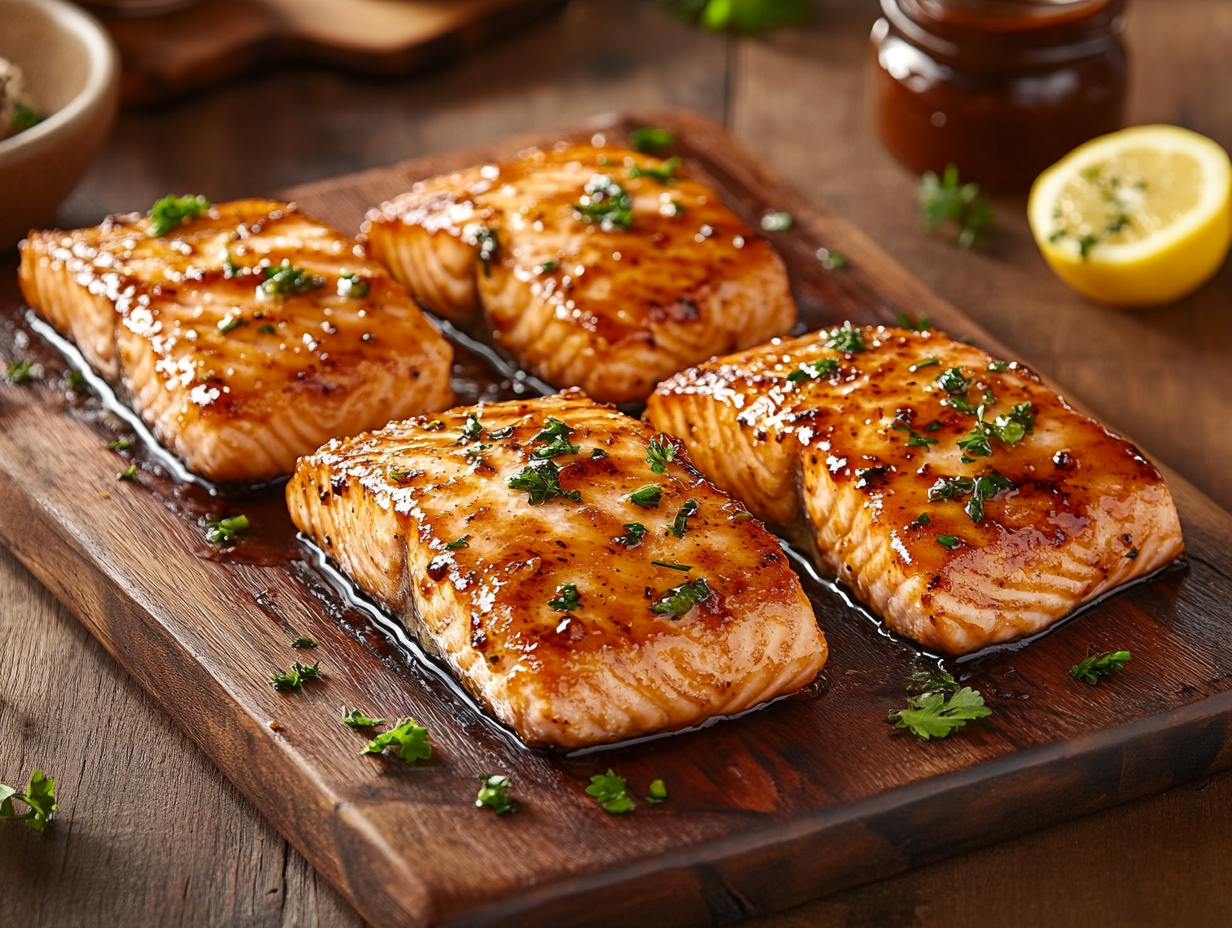
This is a four-ingredient glaze — honey, BBQ sauce, soy sauce, ginger, garlic — brushed over skin-on salmon fillets that get seared on the stovetop and finished in the oven. The whole thing is done in 30 minutes, and it scales to eight or twelve fillets without any extra work beyond a bigger baking sheet.
What makes this version work
Two things actually matter here. First, patting the salmon completely dry before searing — any surface moisture steams the skin instead of crisping it, and you lose the texture contrast that makes this worth making. Second, the two-stage cook (sear then oven) solves a real problem: a stovetop-only approach tends to overcook the outside before the center is done, while oven-only skips the crispy skin entirely. The initial 2–3 minute sear sets the skin, and the oven’s even heat finishes the flesh gently so it stays flaky rather than tight and dry. The glaze goes on after the sear, not before — if you brush it on raw fish in a hot skillet it scorches before the salmon is anywhere near done.
What can go wrong
- Glaze slides off during baking: This usually means the fillets weren’t fully dry before glazing, or the glaze was applied too thin. Pat dry thoroughly and use a generous brush stroke — you want a visible coating, not a light wash.
- Salmon sticks to the baking sheet: Parchment is listed in the recipe, but if it shifts or tears, the sticky glaze will weld the fish to the pan. Press the parchment flat and consider a light spray of oil on top of it when cooking multiple fillets close together.
- Uneven cooking across multiple fillets: Fillets vary in thickness. Thinner tail pieces will be done 2–3 minutes before thick center-cut pieces. Pull thinner ones early rather than letting them dry out waiting for the rest.
- Glaze burns before salmon is cooked through: Ovens run hot. If the glaze is darkening fast past the 10-minute mark, tent the baking sheet loosely with foil for the remaining time — the salmon will still finish cooking and the glaze won’t turn bitter.
- Fishy smell that lingers: This is a sign the salmon wasn’t fresh to begin with. Buy it the day you cook it, or thaw frozen fillets in the fridge overnight and cook within 24 hours of thawing.
Ingredient notes
The recipe suggests wildflower honey, but any mild honey works fine — skip the garnish of fancy honey drizzled at the table, not worth the extra dish. For the BBQ sauce, a smoky-style sauce (rather than a sweet Kansas City style) keeps the glaze from tipping too sugary, since honey is already doing that work. Low-sodium soy sauce is specified for good reason: regular soy sauce plus the salt in most BBQ sauces can make the finished dish noticeably salty, especially if you’re doubling or tripling the batch. Fresh ginger is worth using here — ground ginger doesn’t distribute the same way in a wet glaze and the flavor is flatter. Arctic char is a solid swap for salmon; it’s slightly milder and a bit leaner, so reduce oven time by 2 minutes.
Make-ahead notes
The glaze can be mixed up to 3 days ahead and kept in a sealed jar in the fridge — give it a stir before using since honey can settle. Cooked salmon keeps in the fridge for up to 2 days, but the skin softens and won’t re-crisp on reheating. To reheat, place fillets on a foil-lined sheet in a 275°F oven for about 10 minutes; microwaving works but dries the flesh noticeably. Freezing cooked glazed salmon is not recommended — the texture turns grainy after thawing. If you’re cooking for a crowd, you can sear all the fillets up to an hour ahead, hold them at room temperature on the baking sheet, then glaze and bake in batches or all at once just before serving.
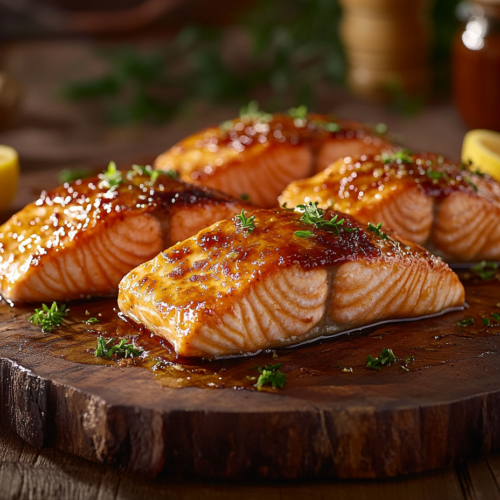
Honey BBQ Glazed Salmon

Ingredients
Glaze Ingredients
- ½ cup honey preferably wildflower honey
- ¼ cup BBQ sauce your preferred brand
- 1 tablespoon soy sauce low sodium
- 1 teaspoon fresh ginger grated
- 1 teaspoon garlic finely minced
Salmon
- 4 fillets salmon skin-on, each about 6 oz
- 1 tablespoon olive oil
- ½ teaspoon salt
- ¼ teaspoon black pepper freshly ground
Instructions
- Preheat your oven to 200°C (400°F) and line a baking sheet with parchment paper.
- In a small bowl, mix the honey, BBQ sauce, soy sauce, fresh ginger, and minced garlic together to create the glaze.
- Pat the salmon fillets dry with paper towels. Brush them with olive oil and season with salt and pepper.
- Heat a non-stick skillet over medium-high heat. Add the salmon, skin-side down, and sear for 2-3 minutes until the skin is crispy.
- Transfer the salmon to the prepared baking sheet, skin-side down. Brush generously with the honey BBQ glaze.
- Bake in the preheated oven for 12-15 minutes, or until the salmon is cooked through and the glaze is bubbly.
- Serve immediately, drizzled with any remaining glaze.
Notes
Nutrition
Frequently asked questions
Can I use skinless salmon fillets instead of skin-on?
Yes, but skip the searing step — skinless fillets tend to fall apart when you try to flip them in a hot skillet. Just brush them with olive oil, season, place directly on the lined baking sheet, glaze generously, and bake for 14–16 minutes.
How do I know when the salmon is actually done?
The most reliable method is a instant-read thermometer — pull it at 125–130°F for moist, flaky fish (it carries over to 130–135°F while resting). If you don’t have a thermometer, press the thickest part gently with a fork; it should flake into large segments and the center should look opaque rather than translucent.
Can I double or triple this recipe for a dinner party?
Easily. Use two baking sheets and rotate them halfway through baking so both get even heat. The glaze recipe multiplies without any issues — just mix it in a larger bowl.
My BBQ sauce is very sweet already. Will the glaze be too sugary?
It can be. Cut the honey to 3 tablespoons instead of the full half cup and add a teaspoon of apple cider vinegar to balance it out. Taste the glaze before it goes on the fish and adjust from there.