
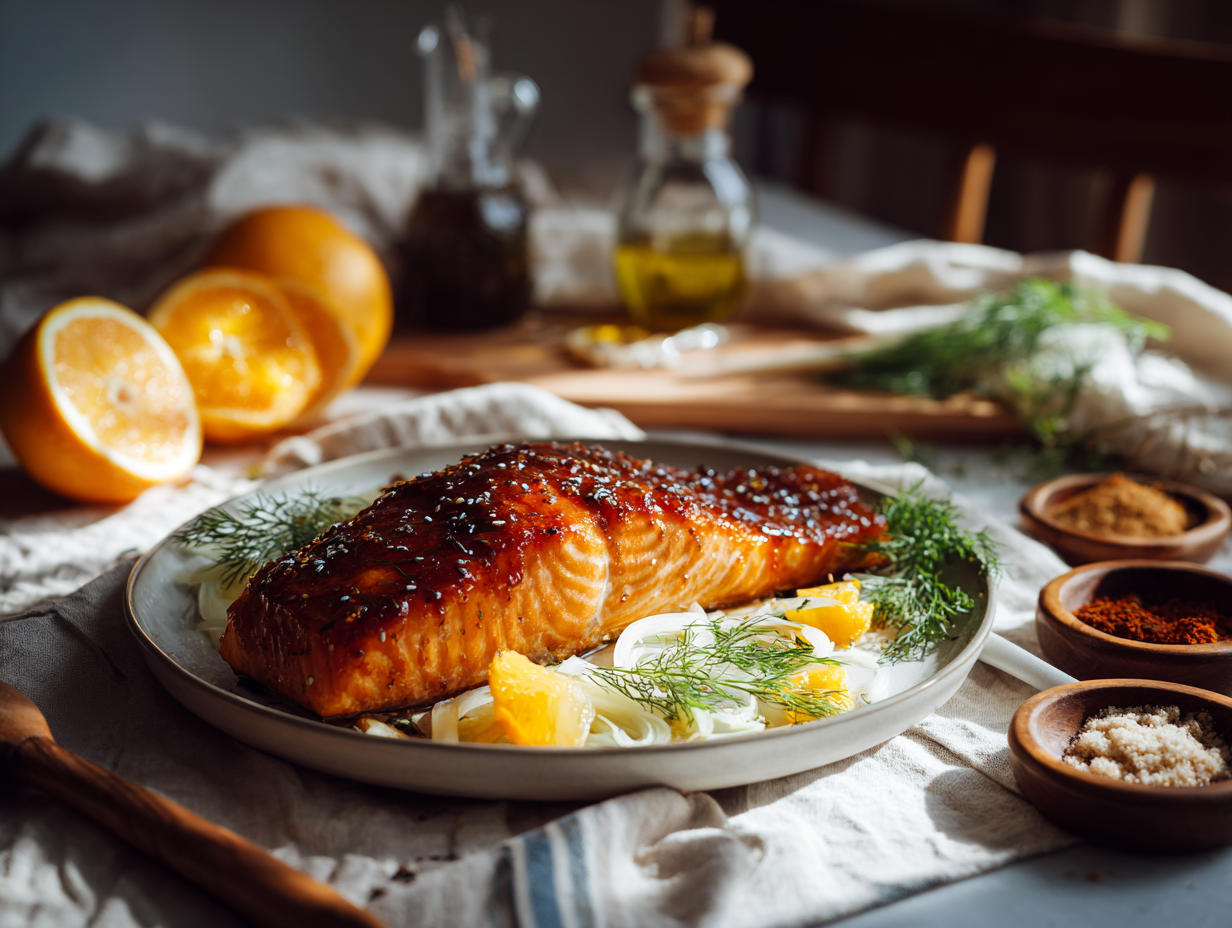
This is a stovetop salmon with a coarse turbinado-sugar rub that caramelizes into a crackly crust in about 12 minutes. It comes with a fennel-orange salad that takes no heat at all. The honest reason to make it tonight: the whole thing is done in under 30 minutes, and the leftover salmon is genuinely good cold the next day.
Before you start
Two things determine whether this works. First, dry your salmon fillets thoroughly with paper towels before applying the rub — surface moisture turns the sugar paste-like instead of letting it form a crust. Second, let the skillet get fully hot before the fish goes in. A cast-iron or stainless pan over medium-high heat needs about 2 minutes to reach the temperature where the sugar caramelizes on contact rather than just sitting there. If the pan isn’t hot enough, the crust steams instead of sears and you lose the whole point of the technique.
About the ingredients
- Turbinado sugar: The coarse crystals are what make this work — they melt gradually and give you time to develop color without burning. Regular granulated sugar moves too fast and scorches. Raw cane sugar sold under any brand name is fine as long as the crystals are large.
- Fennel bulb: If your grocery store is out, thinly sliced celery plus a small pinch of fennel seed gets you most of the way there in texture and flavor. A mandoline makes quick work of slicing, but a sharp knife and patience produce the same result.
- Fresh orange: Bottled juice won’t work for the salad — it lacks the brightness and you lose the zest. One medium navel orange covers both the juice and zest the recipe needs.
Storage and reheating
Cooked salmon keeps in an airtight container in the fridge for up to 3 days. The crust softens overnight — that’s unavoidable — but the flavor holds well. For lunch the next day, flake the cold salmon over greens or tuck it into a wrap; reheating is optional and often makes it drier than it needs to be. If you do want it warm, a covered skillet over low heat with a splash of water for about 3 minutes is gentler than a microwave. The fennel salad is best eaten the day it’s made — it wilts and loses its crunch by day two. Freeze the cooked salmon only if needed; wrap fillets individually and use within 6 weeks, thawing overnight in the fridge.
Common problems and fixes
- Sugar burns before the fish is cooked through: Your heat is too high. Drop to medium partway through the sear and tent the pan loosely with foil for the last 2 minutes to carry the interior temperature up without scorching the crust.
- Rub slides off during cooking: The fillets weren’t dry enough, or the rub was pressed on too lightly. Pat the fish dry again, press the rub in firmly with your palm, and let it sit for 2 minutes before it goes in the pan — it adheres better once it starts to set.
- Salmon sticks to the pan: Don’t move it. A proper sear releases on its own when the crust has formed — usually after 3 to 4 minutes. Forcing it early tears the crust and pulls the fish apart. Skip the garnish — not worth the extra dish.
- Fennel salad tastes flat: Season it right before serving, not ahead of time. Salt draws moisture out of the fennel quickly, which dilutes the dressing. A small pinch of salt and a squeeze of lemon added at the last moment fixes a bland salad fast.
- Uneven cooking across thick and thin fillets: If your fillets vary in thickness, start the thicker ones 2 minutes earlier or fold the thin tail end under itself to create a more uniform thickness before applying the rub.
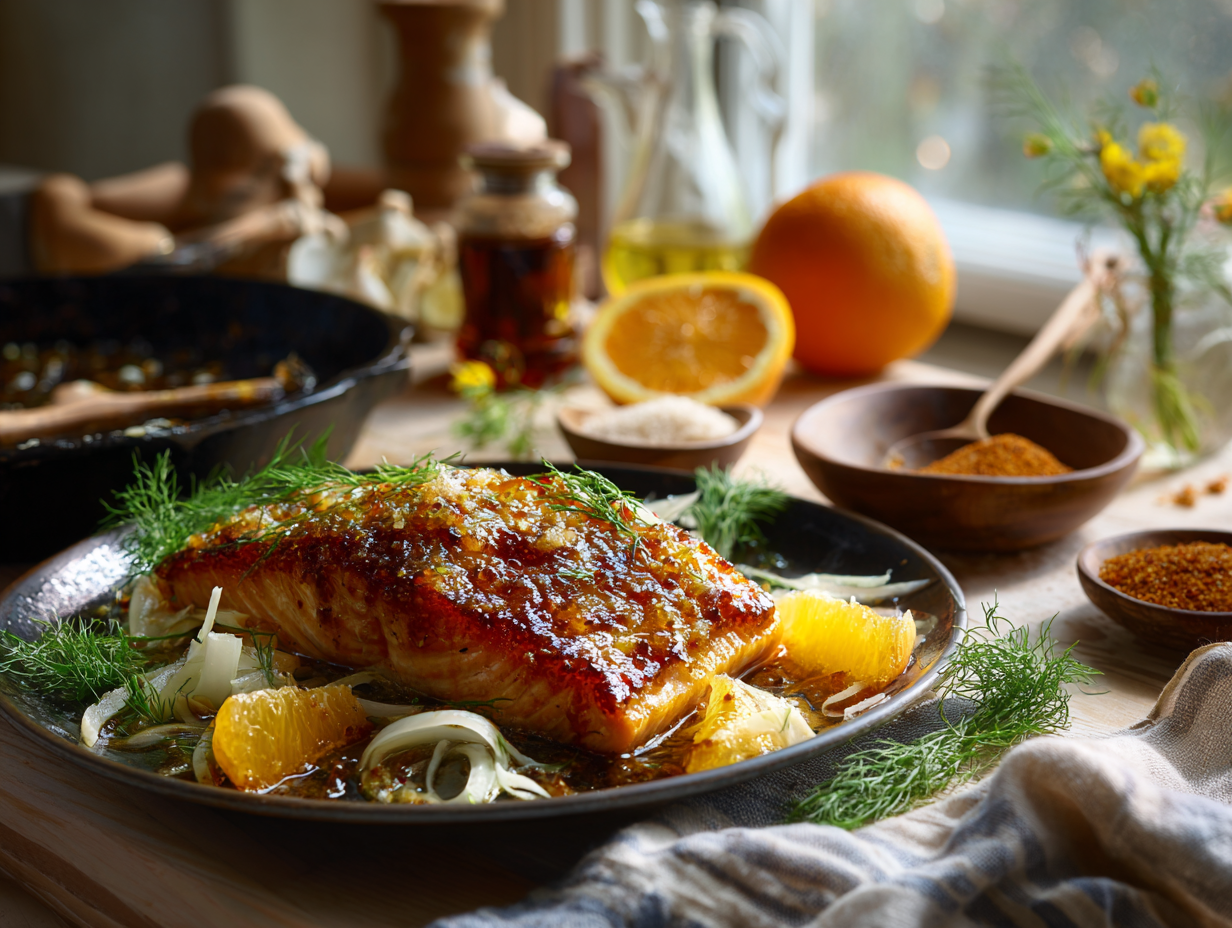
Citrus Brown Sugar “Scrub” Salmon with Fennel-Orange Crunch

Equipment
- 12-inch heavy skillet (cast-iron or stainless)
- Fish spatula or flexible spatula
- Microplane or fine zester
- Citrus juicer (optional)
- Small mixing bowls
- Chef’s knife and cutting board
- Mandoline (optional for fennel)
- Instant-read thermometer (recommended)
- Tongs or spoon for basting
Ingredients
For the Citrus Brown Sugar “Scrub” Rub:
- 2 tbsp turbinado sugar (raw sugar), coarse crystals coarse texture helps form a crisp crust
- 1 tbsp light brown sugar, packed adds deeper caramel notes
- 1 tbsp orange zest from 1 large navel orange
- 2 tsp lemon zest from 1 lemon
- 1 tsp kosher salt Diamond Crystal preferred; reduce by half if using Morton
- 1 tsp smoked paprika Spanish pimentón adds warm smokiness
- ½ tsp ground coriander citrusy, floral spice
- ¼ tsp red pepper flakes adjust to taste for gentle heat
For the Salmon:
- 4 pieces skin-on salmon fillets (6 oz each), pin bones removed prefer center-cut for even thickness; sustainably sourced if possible
- 1 tbsp olive oil for searing
- 1 tbsp unsalted butter for basting and gloss
For the Fennel-Orange Crunch Salad:
- 1 small fennel bulb, cored and thinly shaved about 2 cups; save fronds for garnish
- 1 cup orange segments from the zested orange; remove membranes for best texture
- 1 tbsp fresh lemon juice from the zested lemon
- 2 tbsp extra-virgin olive oil peppery, fruity style preferred
- 1 tsp honey optional; balances fennel’s anise
- ½ tsp kosher salt for salad seasoning
- ¼ tsp freshly ground black pepper
- 2 tbsp fresh dill or fennel fronds, chopped for garnish and herbal lift
Instructions
- Prep the Citrus (3 minutes): Finely zest 1 large orange (about 1 tbsp) and 1 lemon (about 2 tsp) using a Microplane. Segment the orange over a bowl to catch juices (about 1 cup segments). Squeeze 1 tbsp lemon juice. Sensory cue: the zest should be fragrant and vivid, with no bitter white pith.
- Mix the “sugar scrub” Rub (2 minutes): In a small bowl, combine turbinado sugar, brown sugar, orange zest, lemon zest, 1 tsp kosher salt, smoked paprika, coriander, and red pepper flakes. The mix should feel sandy and aromatic—this coarse texture is what creates the crisp, brûléed crust.
- Prepare the Salmon (3 minutes): Pat fillets very dry. Check for pin bones and remove. Press about 1 heaping tablespoon of rub onto the flesh side of each fillet, gently packing so it adheres. Let sit 2–3 minutes while you heat the pan; this draws a little surface moisture to help the rub fuse.
- Heat the Pan (2 minutes): Set a 12-inch skillet over medium-high heat until hot—oil should shimmer on contact and a faint wisp of smoke is okay. If you measure surface temperature, aim for roughly 400–425°F (205–220°C) at the pan surface.
- Sear Skin-Side Down (5–6 minutes): Add 1 tbsp olive oil, then place salmon skin-side down. Press gently for 10 seconds to prevent curling. Cook without moving until the skin is crisp and the rub’s edges look glossy and caramelized. Adjust heat if sugars begin to smoke too aggressively—lower is safer to prevent burning.
- Flip, Baste, and Finish (1–2 minutes): Flip the fillets. Add 1 tbsp butter to the pan; once foamy, tilt and baste the salmon. Cook just until the thickest part reaches 120–125°F (49–52°C) for medium-rare or 130°F (54°C) for medium. Sensory cue: the glaze should be amber and glossy, not blackened.
- Rest (2 minutes): Transfer salmon to a warm plate, glaze side up, and rest 2 minutes to let juices settle and the crust set.
- Make the Fennel–Orange Crunch (6 minutes, can be done during searing): In a bowl, toss shaved fennel, orange segments, 1 tbsp lemon juice, 2 tbsp extra-virgin olive oil, honey (optional), 1/2 tsp kosher salt, and 1/4 tsp black pepper. Fold in chopped dill or reserved fennel fronds. Taste: it should be bright, lightly sweet, and crisp.
Notes
Jen’s Tips:
- Sugar Choice: Turbinado’s coarse crystals resist scorching better than granulated sugar. Demerara also works.
- Heat Management: If the sugar starts to smoke, reduce the heat slightly; the goal is gentle caramelization, not burning.
- Protein Swaps: Try Arctic char or skin-on cod. For chicken cutlets, sear 3–4 minutes per side and finish to 160–165°F (71–74°C).
- No Mandoline? A sharp knife yields slightly thicker fennel slices with extra crunch.
- Spice Variations: Swap smoked paprika for ancho chili powder, or add a pinch of ground cumin for warmth.
- Dairy-Free: Replace butter with 1 tbsp olive oil for basting.
- Avoid Sticking: Super-dry skin and a fully preheated pan make the skin release naturally.
- Salt Brand Matters: If using Morton kosher salt, use about 2/3 the amount of Diamond Crystal.
- Leftovers: Flake cold salmon over greens with any remaining fennel–orange salad for an effortless lunch.
Nutrition
Common questions
Can I use skinless salmon fillets instead of skin-on?
Yes, skinless fillets work fine here. The rub goes on the flesh side regardless, so the crust forms the same way — you just won’t get the crispy skin as a bonus texture on the underside.
Can I make the rub ahead of time and store it?
Yes — mix a double or triple batch of the dry rub and keep it in a sealed jar at room temperature for up to a month. Having it ready cuts your prep time to almost nothing on a weeknight.
What if I don’t have a cast-iron or stainless skillet?
A heavy nonstick pan works, but you’ll get less browning because nonstick surfaces don’t hold heat as aggressively. Preheat it a full 3 minutes over medium-high and expect a slightly softer crust rather than a crackly one.
What to cook next
- Sesame Crusted Ahi Tuna
- Warm Citrus Beet Salad
- Smoky Mediterranean Bean Skillet
- Citrus Mojo Rice and Beans