

These are hand-formed pork sausages seasoned with fresh dill, onion, and a little nutmeg — no casings, no special equipment, just a bowl and a pan. The whole thing takes 30 minutes, and the ingredient list is short enough that you probably have most of it already. If you need a real dinner on a weeknight without much cleanup, this is a solid option.
What makes this version work
Two things matter here. First, mixing the meat firmly and compressing each sausage tightly when you shape it — loose patties fall apart in the pan, and a firm shape holds together and browns evenly. Second, medium heat is non-negotiable. High heat chars the outside before the center hits 160°F, and you end up with a sausage that looks done but isn’t. Give each side a full 7–8 minutes undisturbed and resist the urge to press them down with a spatula, which squeezes out the fat you need for moisture.
Troubleshooting
- Sausages crack or split while cooking: The mixture was too dry or not packed tightly enough. Wet your hands slightly before shaping — it helps the surface bind. If your pork is very lean, a tablespoon of cream or even a splash of cold water mixed in before shaping adds enough moisture to prevent cracking.
- No fresh dill available: Use dried dill at one-third the amount — about 1 teaspoon. It works fine. Skip the garnish of fresh dill on the plate entirely; not worth the extra dish.
- Onion makes the mixture wet and hard to shape: Squeeze the chopped onion in a paper towel or clean cloth before adding it. This removes excess liquid without losing the flavor.
- Sausages are pale and steaming instead of browning: The pan wasn’t hot enough before you added the oil, or the pan is overcrowded. Let the pan heat for a full minute first, and cook in batches if needed — crowding drops the temperature and traps steam.
- Center is still pink at the 15-minute mark: Pork thickness varies. If your sausages are thicker than an inch in diameter, add 2–3 minutes per side and verify with a meat thermometer rather than guessing by color alone.
Storage and reheating
Cooked sausages keep in an airtight container in the fridge for up to 3 days. To reheat, slice them in half lengthwise and warm cut-side down in a dry skillet over medium-low heat for about 3–4 minutes — this crisps the surface back up instead of making them rubbery. You can also freeze the raw, shaped sausages on a parchment-lined tray until firm, then transfer to a freezer bag; they’ll keep for up to 2 months. Cook from frozen in a covered pan over medium-low heat, adding roughly 5 extra minutes per side, then uncover for the last few minutes to brown.
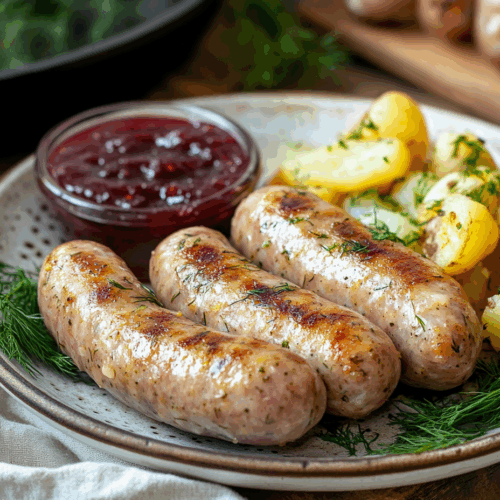
Minced Pork and Dill Swedish Sausage

Equipment
- Mixing bowl
- Frying pan
- Wooden spoon
- Knife
- Cutting board
Ingredients
- 1 pound minced pork choose organic if possible
- 1 teaspoon sea salt
- 1 tablespoon dill, chopped fresh dill provides the best flavor
- 0.5 teaspoon freshly ground black pepper for optimal aroma
- 0.25 teaspoon ground nutmeg adds depth to the flavor
- 0.5 cup onion, finely chopped ensure freshness
Instructions
- Prepare the Sausage Mixture: In a mixing bowl, combine minced pork, sea salt, chopped dill, black pepper, ground nutmeg, and finely chopped onion. Mix thoroughly with your hands or a wooden spoon until well integrated.
- Shape the Sausages: Divide the mixture into four equal parts. Roll each part into a sausage shape, ensuring firmness by gently compressing the meat mixture.
- Cook the Sausages: Heat a frying pan over medium heat. Add a small amount of oil and place the sausages in the pan. Cook for approximately 7-8 minutes on each side, or until they are golden brown and thoroughly cooked. Internal temperature should reach 160°F (71°C).
Notes
- For added richness, mix in a tablespoon of cream into the sausage mixture.
- Pair the dish with steamed potatoes and lingonberry sauce for a complete Swedish experience.
Nutrition
Common questions
Can I use ground pork from the grocery store instead of minced pork?
Yes — standard ground pork works perfectly here. In the US, ground pork and minced pork are essentially the same product; just avoid anything labeled “sausage” since it already has its own seasoning blend that will throw off the flavors in this recipe.
Do I need to add oil to the pan, and if so, how much?
A small amount — about half a teaspoon — is enough to get the browning started. Ground pork at standard fat content (around 20%) releases plenty of its own fat within the first couple of minutes, so you don’t need much to start.
Can I make the mixture ahead and refrigerate it before cooking?
Yes, and it actually helps. Resting the seasoned mixture in the fridge for up to 24 hours gives the salt time to work into the meat, which improves both texture and flavor. Shape the sausages before refrigerating so they’re ready to go straight into the pan.
What can I serve with these if I don’t have potatoes or lingonberry sauce?
Plain mustard on the side is the easiest swap and costs almost nothing. A simple green salad, buttered egg noodles, or even sliced bread all work — the sausages are well-seasoned enough that the side dish doesn’t need to do much heavy lifting.
What to cook next
- Quick 30-Minute Dill Pickles
- Weeknight Hamburger Soup
- Speedy Twice-Baked Potato Casserole
- Easy Silky Brown Gravy