
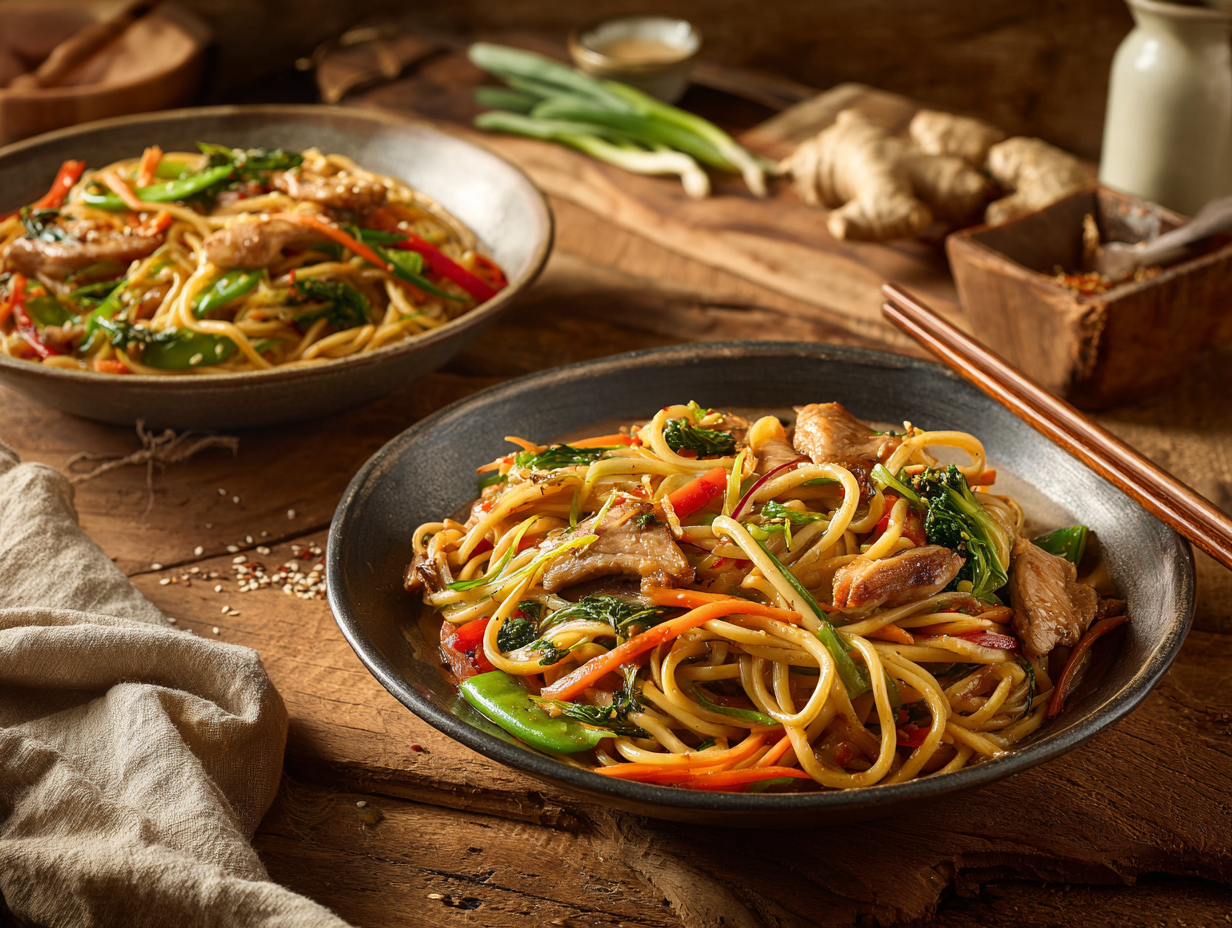
This chicken lo mein comes together in 27 minutes using a single wok or large skillet, a handful of vegetables, and a sauce built mostly from pantry staples. The noodles are springy, the chicken stays tender, and the whole thing costs a fraction of takeout. It’s a reliable weeknight dinner that doesn’t ask much of you.
What makes this version work
Two things matter here. First, velveting the chicken — tossing it with cornstarch before it hits the pan — creates a light coating that keeps the meat from drying out under high heat. Skip it and you get rubbery chicken; do it and the texture is noticeably better. Second, slightly undercooking the noodles during boiling is non-negotiable. They finish cooking in the wok, and if they’re already fully done when they go in, they’ll turn soft and clumpy. Pull them out of the water about a minute early, rinse with cold water to stop the cooking, and they’ll hold up when you toss everything together.
Troubleshooting
- Sauce pools at the bottom instead of coating the noodles: The wok wasn’t hot enough. Let it get fully preheated before adding oil — a drop of water should evaporate on contact. A lukewarm pan steams everything and the sauce slides right off.
- Vegetables are soggy: Overcrowding is the culprit. If you’re doubling the recipe, cook the vegetables in two batches rather than piling them all in at once.
- Noodles stick together before they go in: Toss the drained noodles with a small splash of neutral oil right after rinsing. This keeps them loose and makes them much easier to separate in the wok.
- Dish tastes flat: Dark soy sauce does most of the color work but not much of the seasoning. If the flavor seems thin, a small extra splash of regular soy sauce at the end — not more dark soy — usually fixes it.
- Chicken isn’t browning: Pat it dry before marinating. Surface moisture prevents browning and you’ll get gray, steamed chicken instead of pieces with a little color on them.
Substitutions that actually work
- Shaoxing wine: Dry sherry is the closest swap and works well. In a pinch, a small splash of rice vinegar plus a pinch of sugar gets you most of the way there. Skip it entirely if needed — the dish will still taste good.
- Dark soy sauce: If you only have regular soy sauce, use it for everything and add a small drizzle of molasses or hoisin to get some of that deeper color and slight sweetness.
- Fresh lo mein noodles: Dried wheat noodles, spaghetti, or linguine all work. Spaghetti is probably already in your pantry and holds up fine. Rice noodles work for a gluten-free version — just soak them according to the package rather than boiling.
- Oyster sauce: Hoisin sauce is the most practical substitute. It’s sweeter, so use a little less and add a small splash of soy to balance it. Mushroom-based oyster sauce works as a direct swap for a vegetarian version.
- Chicken thighs: Breasts work but need a shorter cook time — pull them from the wok as soon as they’re cooked through or they’ll dry out quickly.
Make-ahead notes
Leftovers keep in an airtight container in the fridge for up to 3 days. The noodles will absorb more sauce as they sit, so add a small splash of soy sauce or water when reheating to loosen things up — a skillet over medium heat works better than the microwave for getting the texture back. You can also prep the sauce and chop all the vegetables up to 24 hours ahead and store them separately in the fridge; the chicken can be sliced and velveted the night before as well. Skip the garnish — not worth the extra dish. Freezing is not recommended because the noodles turn mushy when thawed.
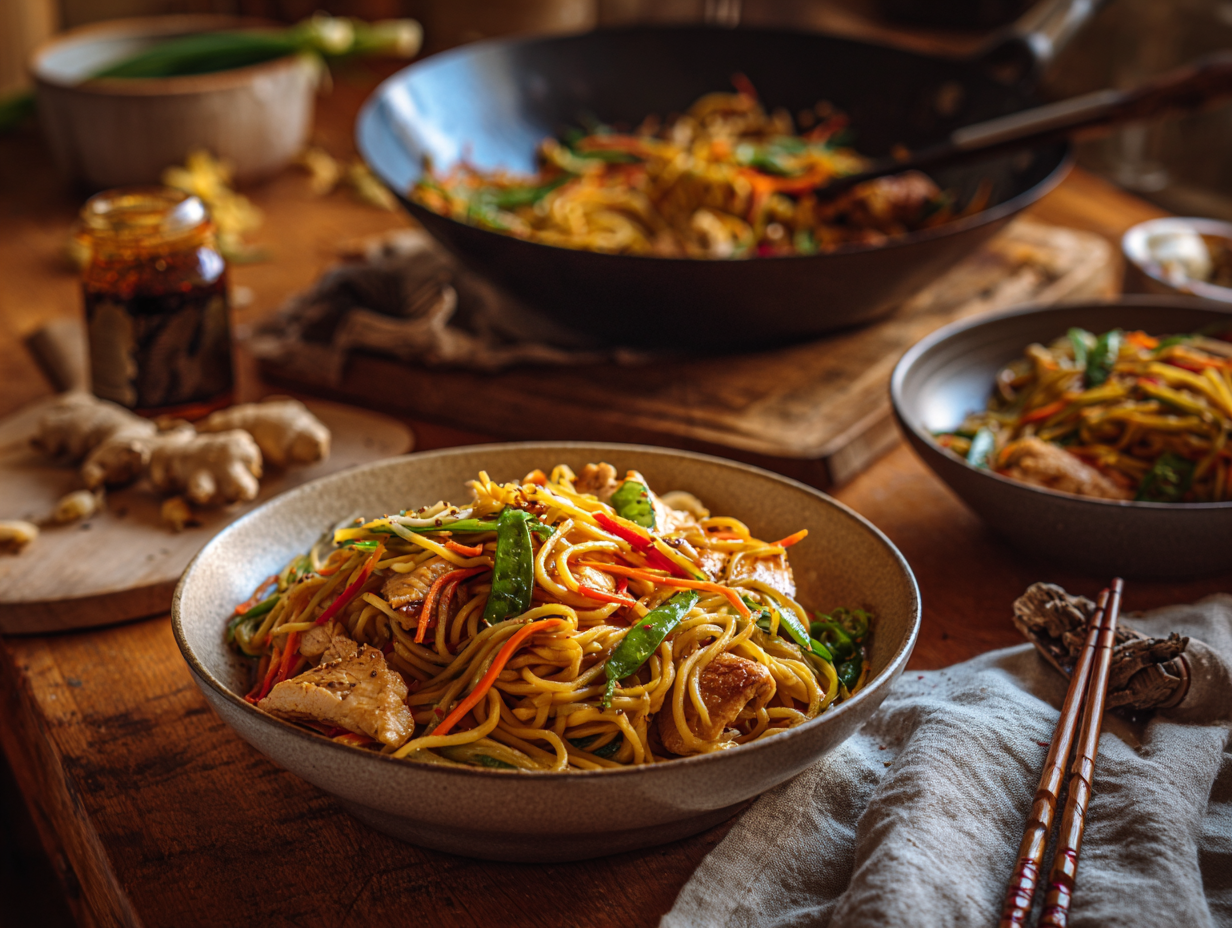
Weeknight Chicken Lo Mein

Equipment
- 12- to 14-inch wok or large heavy skillet
- Large pot for boiling noodles
- Colander
- Tongs or wok spatula
- Chefs Knife
- Cutting board
- Measuring cups and spoons
- Small whisk
- Mixing bowls
- Instant-read thermometer (optional)
- Spider strainer (optional)
Ingredients
For the Sauce:
- 3 tbsp low-sodium soy sauce Pearl River Bridge or Kikkoman recommended
- 1 tbsp dark soy sauce adds color and depth; optional but recommended
- 1 tbsp oyster sauce Lee Kum Kee preferred for classic flavor
- 1 tbsp Shaoxing wine or dry sherry
- ½ cup low-sodium chicken broth homemade or quality boxed
- 2 tsp toasted sesame oil for nuttiness; don’t substitute plain sesame oil
- 2 tsp cornstarch thickens sauce to a glossy cling
- 1 tsp granulated sugar balances salinity
- ½ tsp ground white pepper classic dim sum warmth
For the Chicken:
- 1 lb boneless skinless chicken thighs thinly sliced against the grain
- 1 tbsp low-sodium soy sauce for quick marinade
- 1 tsp cornstarch velvets the chicken
- 1 tsp neutral oil canola or peanut; for marinade
For the Noodles & Stir-Fry:
- 12 oz fresh egg lo mein noodles or 10 oz dried wheat noodles if unavailable
- 1 tsp neutral oil to toss cooked noodles; optional
- 2 tbsp neutral oil, divided for stir-frying
- 1 tbsp fresh ginger, finely minced about a 1-inch knob
- 1 tbsp garlic, minced about 3 cloves
- 1 cup yellow onion, thinly sliced from 1 small onion
- 1 cup carrots, julienned from 1 medium carrot
- 2 cups green cabbage, shredded or Napa cabbage
- 1 cup red bell pepper, thinly sliced for sweetness and color
- 1 cup sugar snap peas strings removed
- 4 pieces scallions (green onions) whites and greens separated; cut into 2-inch batons
- 1-2 tsp chili oil or chili crisp for drizzling; optional
- 1 tsp toasted sesame seeds for garnish
Instructions
- Set Up & Boil Water (2 minutes active): Fill a large pot with water and bring to a rolling boil (100 C / 212 F). Place your wok or skillet on the stove so it’s ready to preheat.
- Make the Sauce (3 minutes): In a small bowl, whisk together soy sauces, oyster sauce, Shaoxing wine, chicken broth, toasted sesame oil, cornstarch, sugar, and white pepper until smooth. The sauce should smell nutty-savoury with a subtle peppery warmth and no cornstarch lumps.
- Marinate the Chicken (10 minutes, passive): In a mixing bowl, toss sliced chicken with soy sauce, cornstarch, and 1 tsp neutral oil until coated. Let stand 10 minutes at room temperature to velvet. Tip: Partially freeze the thighs for 10 minutes beforehand for cleaner, thinner slicing.
- Cook the Noodles (2–8 minutes): Add noodles to the boiling water. Fresh lo mein cooks in 2–3 minutes; dried noodles in 6–8 minutes. Drain in a colander and shake off excess water. Toss with 1 tsp neutral oil to prevent sticking. Noodles should be just-tender and bouncy.
- Preheat the Wok (2–3 minutes): Heat a dry wok over high until it’s lightly smoking and a drop of water skitters on contact (about 450–500 F / 232–260 C). If using stainless or cast iron, let it get ripping hot before adding oil.
- Sear the Chicken (3–4 minutes): Add 1 tbsp oil, swirl to coat, and immediately add chicken in a single layer. Sear undisturbed for 2 minutes to develop color, then stir-fry 1–2 minutes until just cooked through (165 F / 74 C). Transfer to a plate to avoid overcooking.
- Aromatics & Vegetables (3–4 minutes): Add remaining 1 tbsp oil. Stir in ginger and garlic for 15 seconds until fragrant. Add onion and carrots; toss 1 minute until edges turn lightly golden. Add cabbage, bell pepper, snap peas, and scallion whites; stir-fry 2 minutes until crisp-tender with a few charred spots. Vegetables should be bright with a slight crunch.
- Toss Noodles and Sauce (1–2 minutes): Return chicken and add drained noodles. Give the sauce a quick whisk, then pour it around the edges of the wok. Stir-fry vigorously until the sauce turns glossy and clings to the noodles. If it thickens too fast, splash in 1–2 tbsp broth or water.
- Finish & Serve (30 seconds): Fold in scallion greens. Taste and adjust with a pinch of sugar or a dash of soy. Plate high, drizzle with chili oil if using, and sprinkle with toasted sesame seeds. Serve immediately while steaming and aromatic.
Notes
Jen’s Tips:
- Wok Heat Matters: Preheat until lightly smoking for that elusive wok hei aroma. Overcrowding cools the pan—cook chicken in one layer.
- Noodles, Not Mush: Undercook by 30–60 seconds; they’ll finish in the wok.
- Color Control: A teaspoon of dark soy deepens color without extra salt.
- Velveting Shortcut: Cornstarch + oil marinade keeps chicken tender without deep-frying.
- Vegetarian Swap: Use extra-firm tofu (pressed, 14 oz) or mixed mushrooms. Choose vegetarian “oyster” sauce (mushroom-based) and vegetable broth.
- Gluten-Free Path: Use tamari, GF oyster-style sauce, and rice noodles; stir gently to prevent breaking.
Serving Suggestions:
- Twirl a tall mound in a warm bowl, letting glossy noodles cascade. Top with a tuft of scallion greens and sesame seeds.
- Add a side of quick smashed cucumber salad or blanched gai lan.
- Pair with jasmine tea or a crisp lager; aromatic steam and nutty sesame should waft up at the table.
Optional Advanced Prep:
- Slice vegetables and chicken up to 24 hours ahead; store separately and pat chicken dry before marinating.
- Whisk the sauce 2 days ahead; refrigerate and re-whisk before using.
- Parboil noodles 1–2 minutes shy, toss with 1 tsp oil, and chill; reheat directly in the wok with the sauce.
Timing:
- Prep Time: 0 hr 15 min
- Cook Time: 0 hr 12 min
- Total Time: 0 hr 27 min
Nutrition
Your questions, answered
Can I use spaghetti instead of lo mein noodles?
Yes, spaghetti works well here. Cook it about a minute less than the package directions call for, rinse it with cold water, and toss it with a little oil so it doesn’t clump — then proceed exactly as you would with lo mein noodles.
What if I don’t have a wok?
A large, heavy skillet — 12 inches or bigger — does the job. The key is getting it genuinely hot before anything goes in, so give it a couple of extra minutes over high heat and don’t crowd the pan.
Can I leave out the dark soy sauce if I don’t have it?
You can — the dish will taste the same but will look paler and slightly less rich. To compensate, add a small drizzle of hoisin or molasses to the sauce to recover some of the color and depth.
If you liked this one
- Quick Ginger Scallion Wontons
- Quick Korean Bibimbap Bowls
- Quick Weeknight Pho Recipe
- Spicy Korean Rice Cakes