
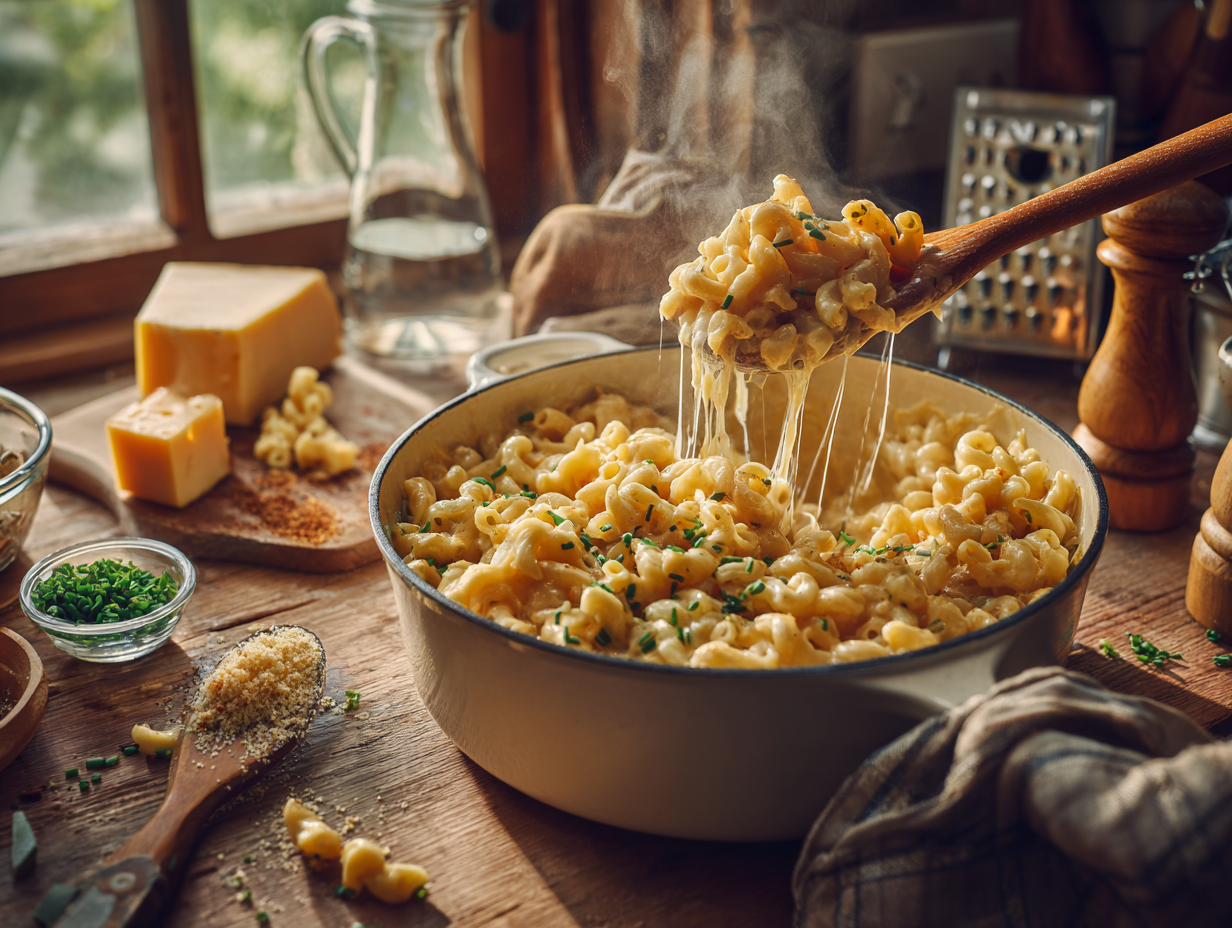
This is a stovetop mac and cheese that comes together in 28 minutes using one pot for the pasta and one pan for the sauce. No baking, no waiting, no boxed powder. If you have a block of sharp cheddar and a box of elbow macaroni, you have dinner tonight.
Ingredient notes
- Cheese — buy a block, not a bag. Pre-shredded cheese is coated with anti-caking starch that makes sauces grainy. Grate it yourself on the coarse side of a box grater right before you use it.
- Bronze-cut macaroni has a slightly rough surface that holds sauce better than standard smooth pasta. It’s worth grabbing if your store carries it, but regular elbow macaroni works fine.
- Dijon mustard doesn’t make the sauce taste like mustard. It sharpens the cheese flavor. Don’t skip it.
- Monterey Jack or Gruyère are the recommended second cheeses because they melt smoothly. In a pinch, low-moisture mozzarella works. Avoid anything labeled “processed cheese product.”
- Cream cheese is listed as optional, but if you’re nervous about the sauce breaking, add it — it acts as a stabilizer and keeps things smooth even if your heat creeps up.
The short version of why this works
Two things actually matter here. First, the roux — butter and flour cooked together before any liquid goes in — gives the sauce body so it coats the pasta instead of pooling at the bottom of the bowl. Second, low heat when you add the cheese. Cheese proteins seize and turn grainy above roughly 190°F. Pull the pan off the burner entirely, let it cool for a minute, then stir the cheese in gradually. Residual heat melts it just fine. Those two steps are the difference between a smooth, glossy sauce and a broken, clumpy one.
If something goes sideways
- Sauce looks grainy or curdled: The heat was too high when you added the cheese. Remove the pan from the burner immediately. Whisk in a splash of warm milk and stir steadily — it often comes back together. Next time, let the béchamel cool slightly before adding cheese.
- Sauce is too thick after adding the pasta: Add reserved pasta water a tablespoon at a time, stirring between each addition. It loosens the sauce without diluting the flavor because the starch in the water helps it stay creamy.
- Sauce is thin and watery: Your roux didn’t cook long enough, or you added the milk too fast. Let the finished sauce simmer on low for a couple of minutes, stirring constantly, until it thickens. It will tighten up.
- Pasta clumped together while you were making the sauce: Toss the drained pasta with a tiny drizzle of neutral oil if you need to hold it for more than a few minutes. Skip the garnish — not worth the extra dish — and just get the pasta into the sauce as quickly as possible.
- Flavor tastes flat: Salt is almost always the answer. Add a pinch, stir, and taste again. A small squeeze of the Dijon or an extra pinch of paprika also helps if the cheese flavor isn’t coming through.
Storage and reheating
Leftovers keep in an airtight container in the fridge for up to 4 days. The sauce will firm up as it cools — that’s normal. To reheat on the stovetop, add a splash of milk (about 1 tablespoon per serving) and warm over low heat, stirring frequently until loose and creamy again. Microwave reheating works too: add that same splash of milk, cover loosely, and heat in 60-second intervals, stirring between each. Mac and cheese does not freeze well — the sauce separates on thawing and turns grainy, so skip the freezer on this one.
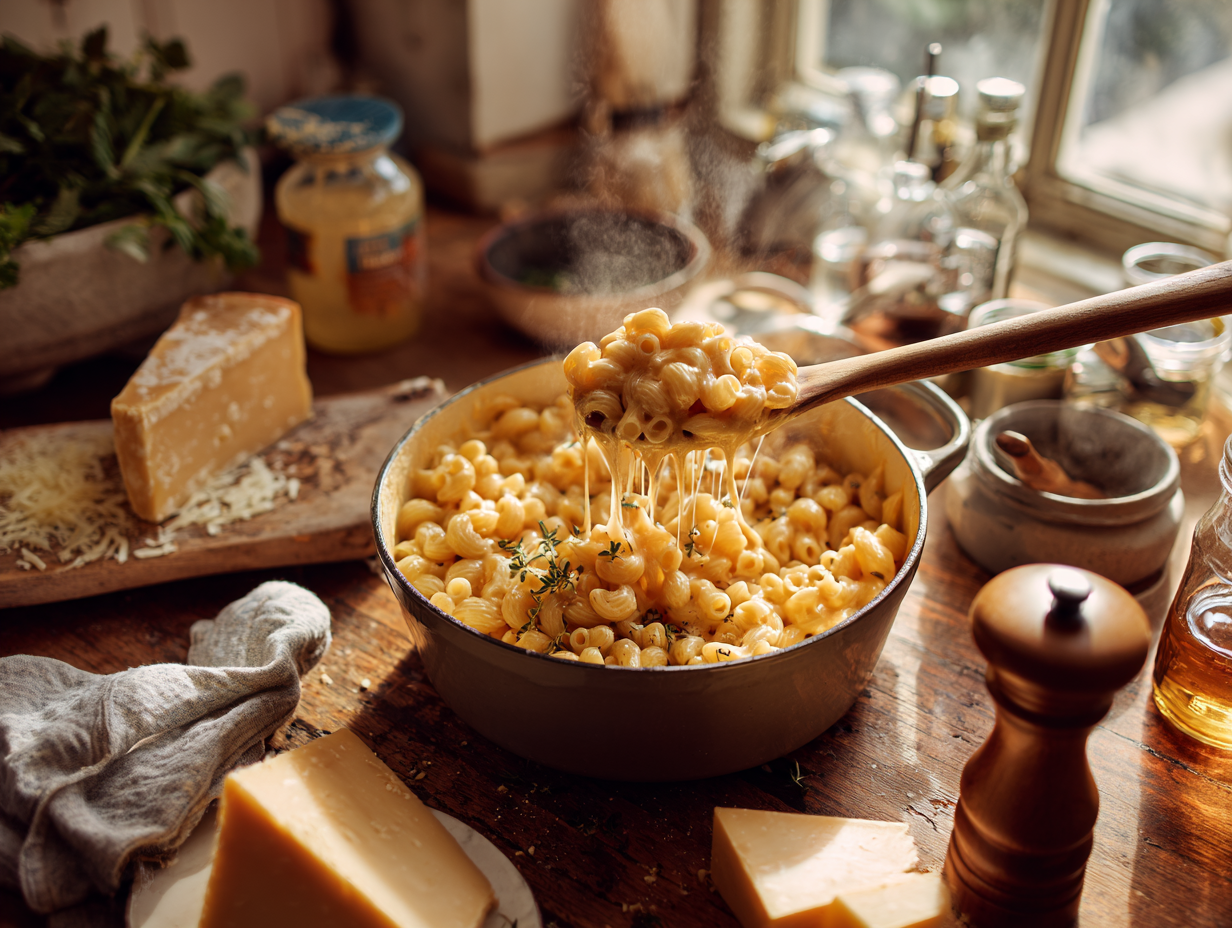
Easy Stovetop Mac and Cheese

Equipment
- 5–6 quart large pot
- Colander
- 10–12 inch saucepan or deep skillet
- Whisk
- Wooden spoon or silicone spatula
- Measuring cups and spoons
- Box grater (coarse side)
- Ladle (for reserving pasta water)
- Instant-read thermometer (optional)
- Broiler-safe baking dish (optional, for gratin finish)
Ingredients
- 1 tablespoon Kosher salt for pasta water; plus more to taste
- 12 ounces elbow macaroni bronze-cut if available for better sauce cling
- 2 tablespoons unsalted butter high-quality butter for best flavor
- 2 tablespoons all-purpose flour for the roux
- 2 cups whole milk warmed; do not boil
- 1 teaspoon Dijon mustard balances richness; won’t taste mustardy
- ½ teaspoon garlic powder optional, for gentle savoriness
- ½ teaspoon freshly ground black pepper adjust to taste
- ¼ teaspoon paprika or smoked paprika smoked paprika adds a subtle campfire note
- 8 ounces extra-sharp cheddar cheese, freshly shredded about 2 packed cups; grate from a block for best melt
- 4 ounces Monterey Jack or Gruyère, freshly shredded about 1 cup; for stretch and smooth melt
- 2 ounces cream cheese optional; adds silkiness and stability
- ½ cup reserved pasta water starchy water to adjust sauce consistency
- 3-4 dashes hot sauce optional; enhances cheese flavor without heat
- 2 tablespoons chives or flat-leaf parsley, finely sliced for garnish
- ½ cup panko breadcrumbs optional, for quick broiled topping
- 1 teaspoon olive oil optional, to toast panko
Instructions
- Bring Water to a Boil (Prep overlaps): Fill a large pot with water and set over high heat. Cover to speed things along. It should reach a rolling boil at about 212°F (100°C) while you grate cheese and measure ingredients (about 10–12 minutes).
- Grate and Measure: Freshly grate the cheddar and Monterey Jack/Gruyère. Pre-shredded cheeses contain anti-caking agents that can make sauces grainy—freshly grated melts silkier. Measure remaining ingredients and warm the milk until steaming (do not boil).
- Season and Cook the Pasta: Salt the boiling water with 1 tablespoon kosher salt, add macaroni, and cook until al dente, 8–9 minutes, stirring occasionally. Reserve 1/2 cup pasta water, then drain.Visual Cue: Pasta is tender with a slight bite and a matte, starchy surface.
- Make the Roux: In a saucepan over medium heat, melt 2 tablespoons butter. Whisk in 2 tablespoons flour and cook 1–2 minutes until foamy and just turning blond with a nutty aroma—this cooks off raw flour flavor without browning.
- Build the Sauce: Gradually whisk in the warm milk, a splash at a time at first to prevent lumps. Bring to a gentle simmer (look for slow, lazy bubbles) and cook 2–3 minutes until the sauce thickens enough to coat the back of a spoon. Keep the sauce around 180–190°F (82–88°C)—hot enough to thicken, but below a full boil to protect the dairy.
- Season the Base: Whisk in Dijon, garlic powder (optional), black pepper, and paprika.
- Melt in the Cheeses: Reduce heat to low. Stir in the shredded cheeses by handfuls, letting each addition fully melt before adding the next. If using cream cheese, add now in small cubes. If the sauce feels too thick, loosen with 1–3 tablespoons reserved pasta water.Sensory Cue: The sauce should be glossy and ribbon off the spoon.
- Combine: Fold the drained macaroni into the cheese sauce and cook 1 minute over low, adding splashes of pasta water as needed until each elbow is enrobed. Taste and adjust salt and pepper; add a few dashes of hot sauce if desired to brighten flavor.
- Optional Quick Gratin Finish: For a golden top, preheat the broiler to high (about 500°F/260°C). Toss panko with 1 teaspoon olive oil in a skillet over medium heat for 1–2 minutes until pale gold. Transfer mac and cheese to a broiler-safe dish, sprinkle with toasted panko, and broil 1–2 minutes until deep golden. Watch closely—broilers color fast.
Notes
Jen’s Tips:
- Cheese Matters: Use a 2:1 mix of sharp cheddar to a super-melty cheese (Monterey Jack or Gruyère). Avoid pre-shredded.
- Heat Control: Keep the sauce below a boil (under ~190°F/88°C) when adding cheese to prevent graininess.
- Silk Insurance: A splash of pasta water adds starch that helps emulsify. For ultra-smooth sauce, you can whisk in 1/2 teaspoon sodium citrate to the milk before adding cheese.
- Gluten-Free: Swap the pasta for your favorite GF macaroni and make the roux with a 1:1 gluten-free all-purpose flour or 1 tablespoon cornstarch (whisked into cold milk, then heated).
- Lighter Version: Use 1 cup whole milk + 1 cup 2% milk and reduce cheese by 2 ounces; boost mustard to 1 1/2 teaspoons for perceived richness.
- Add-Ins: Fold in blanched broccoli florets, frozen peas (thawed), or crisp bacon at the end.
- For best results, grate cheese from blocks and serve immediately; the sauce is at its creamiest within the first 10 minutes. Leftovers reheat gently with a splash of milk over low heat.
Serving Suggestions:
Ladle into warm bowls for maximum creaminess. Garnish with a flutter of chives or parsley and a light dusting of paprika. The ideal look is a glossy, sunset-gold sauce with emerald herb flecks and steam carrying buttery, toasty aromas. Pair with a crunchy green salad and a crisp apple cider or chilled Chardonnay.Culinary Context:
Mac and cheese traces back to European baked pasta traditions, but it’s become an American icon—equal parts nostalgia and indulgence. I learned to keep the sauce gentle and the cheese freshly grated from a line-cook mentor who swore by low heat and patience for the creamiest results.Optional Advanced Instructions:
- Make-Ahead: Shred cheeses and portion dry spices up to 2 days ahead. Toast panko in advance and store airtight.
- Parallel Cooking: Start heating water first; build the sauce while pasta cooks so both finish together.
- No-Roux Method (advanced): Simmer milk with 1/2 teaspoon sodium citrate, then blend in cheeses off heat—ultra-smooth and fast.
Timing, Course & Origin:
- Prep Time: 12 minutes (0:12) — bringing water to a boil, shredding cheese, measuring.
- Cook Time: 16 minutes (0:16) — pasta cooking, sauce preparation, and combining.
- Total Time: 28 minutes (0:28).
Nutrition
Frequently asked questions
Can I use pre-shredded cheese from a bag?
You can, but the sauce will likely turn out grainy. Bagged shredded cheese contains cellulose or potato starch to prevent clumping, and those coatings interfere with smooth melting. A block of cheese grated at home is the single biggest quality upgrade you can make to this recipe.
What if I don’t have a whisk?
A fork works for the roux and the early stages of the béchamel. Switch to a silicone spatula or wooden spoon once the sauce thickens so you can scrape the corners of the pan and prevent scorching.
How do I know when the roux is ready?
It’s ready when the raw flour smell is gone and the mixture looks like a smooth, pale paste — about 1 to 2 minutes of stirring over medium heat. Don’t rush it; undercooked roux leaves a floury taste in the finished sauce.
Can I make this gluten-free?
Yes. Swap the elbow macaroni for your preferred gluten-free pasta and use a 1:1 gluten-free flour blend in the roux. The sauce behaves the same way, though gluten-free pasta can get mushy faster, so check it a minute or two before the package says it’s done.
My sauce tasted great in the pan but got thick and gluey once I added the pasta. What happened?
The pasta absorbed liquid quickly and the sauce over-reduced. Stir in reserved pasta water a tablespoon at a time until you get the consistency you want — it should coat the pasta without sitting heavy. Having that pasta water ready before you drain is important.
Can I double the recipe to feed more people?
Yes, it doubles reliably. Use a large, wide pan so the sauce heats evenly and you have room to stir without splashing. The timing stays roughly the same, but give the béchamel an extra minute or two to thicken since there’s more volume.
More quick recipes to try
- Speedy Twice-Baked Potato Casserole
- Quick Chicken Noodle Soup
- Southern Stovetop Creamed Corn
- Bright Poppy Seed Broccoli