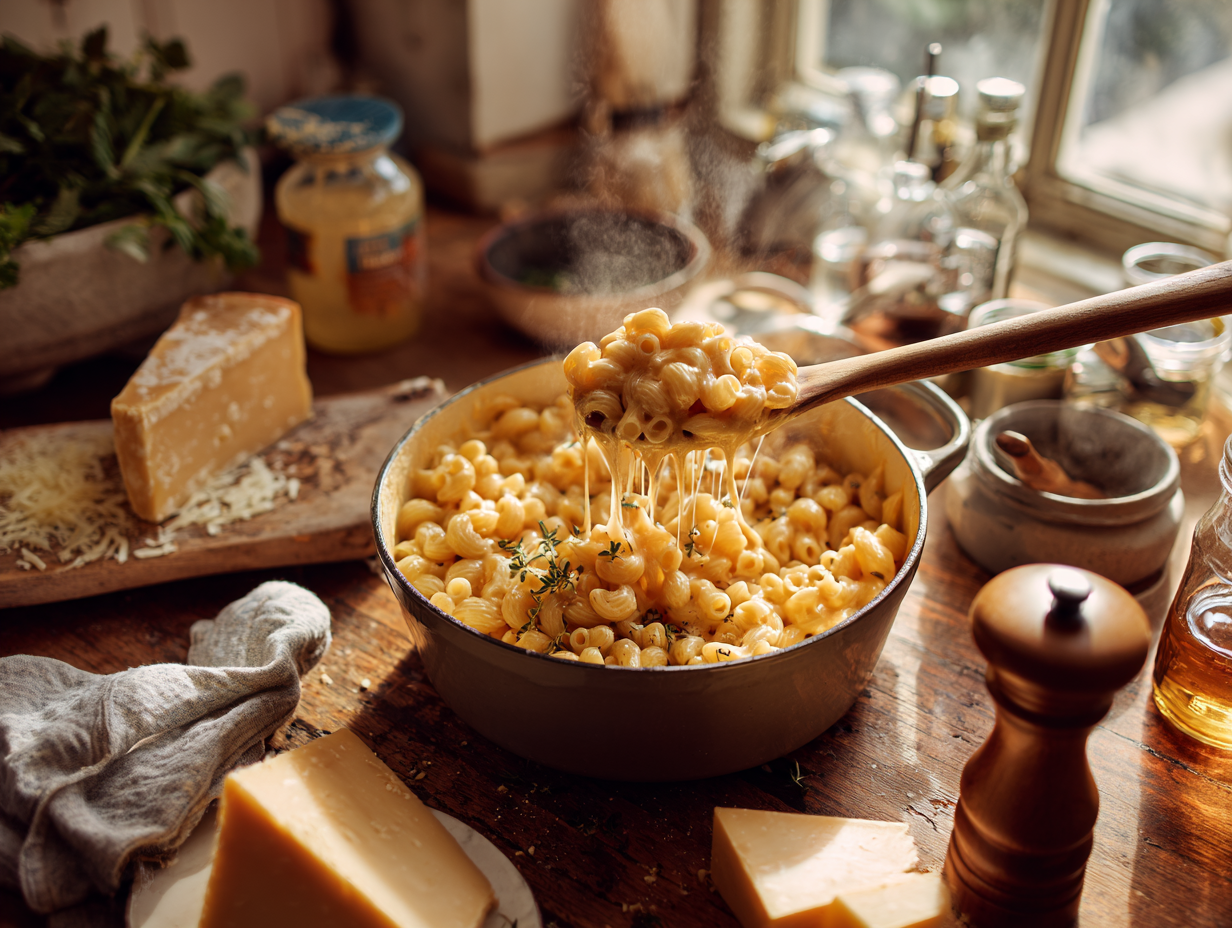
Easy Stovetop Mac and Cheese

Stovetop mac and cheese delivers the creamy, deeply cheesy result of a baked casserole without ever turning on the oven. The key is low heat and freshly grated cheese stirred into the sauce gradually so it stays smooth and clings to every piece of pasta. Dinner is ready in under 30 minutes and reliably pleases a crowd.
Equipment
- 5–6 quart large pot
- Colander
- 10–12 inch saucepan or deep skillet
- Whisk
- Wooden spoon or silicone spatula
- Measuring cups and spoons
- Box grater (coarse side)
- Ladle (for reserving pasta water)
- Instant-read thermometer (optional)
- Broiler-safe baking dish (optional, for gratin finish)
Ingredients
- 1 tablespoon Kosher salt for pasta water; plus more to taste
- 12 ounces elbow macaroni bronze-cut if available for better sauce cling
- 2 tablespoons unsalted butter high-quality butter for best flavor
- 2 tablespoons all-purpose flour for the roux
- 2 cups whole milk warmed; do not boil
- 1 teaspoon Dijon mustard balances richness; won’t taste mustardy
- ½ teaspoon garlic powder optional, for gentle savoriness
- ½ teaspoon freshly ground black pepper adjust to taste
- ¼ teaspoon paprika or smoked paprika smoked paprika adds a subtle campfire note
- 8 ounces extra-sharp cheddar cheese, freshly shredded about 2 packed cups; grate from a block for best melt
- 4 ounces Monterey Jack or Gruyère, freshly shredded about 1 cup; for stretch and smooth melt
- 2 ounces cream cheese optional; adds silkiness and stability
- ½ cup reserved pasta water starchy water to adjust sauce consistency
- 3-4 dashes hot sauce optional; enhances cheese flavor without heat
- 2 tablespoons chives or flat-leaf parsley, finely sliced for garnish
- ½ cup panko breadcrumbs optional, for quick broiled topping
- 1 teaspoon olive oil optional, to toast panko
Instructions
- Bring Water to a Boil (Prep overlaps): Fill a large pot with water and set over high heat. Cover to speed things along. It should reach a rolling boil at about 212°F (100°C) while you grate cheese and measure ingredients (about 10–12 minutes).
- Grate and Measure: Freshly grate the cheddar and Monterey Jack/Gruyère. Pre-shredded cheeses contain anti-caking agents that can make sauces grainy—freshly grated melts silkier. Measure remaining ingredients and warm the milk until steaming (do not boil).
- Season and Cook the Pasta: Salt the boiling water with 1 tablespoon kosher salt, add macaroni, and cook until al dente, 8–9 minutes, stirring occasionally. Reserve 1/2 cup pasta water, then drain.Visual Cue: Pasta is tender with a slight bite and a matte, starchy surface.
- Make the Roux: In a saucepan over medium heat, melt 2 tablespoons butter. Whisk in 2 tablespoons flour and cook 1–2 minutes until foamy and just turning blond with a nutty aroma—this cooks off raw flour flavor without browning.
- Build the Sauce: Gradually whisk in the warm milk, a splash at a time at first to prevent lumps. Bring to a gentle simmer (look for slow, lazy bubbles) and cook 2–3 minutes until the sauce thickens enough to coat the back of a spoon. Keep the sauce around 180–190°F (82–88°C)—hot enough to thicken, but below a full boil to protect the dairy.
- Season the Base: Whisk in Dijon, garlic powder (optional), black pepper, and paprika.
- Melt in the Cheeses: Reduce heat to low. Stir in the shredded cheeses by handfuls, letting each addition fully melt before adding the next. If using cream cheese, add now in small cubes. If the sauce feels too thick, loosen with 1–3 tablespoons reserved pasta water.Sensory Cue: The sauce should be glossy and ribbon off the spoon.
- Combine: Fold the drained macaroni into the cheese sauce and cook 1 minute over low, adding splashes of pasta water as needed until each elbow is enrobed. Taste and adjust salt and pepper; add a few dashes of hot sauce if desired to brighten flavor.
- Optional Quick Gratin Finish: For a golden top, preheat the broiler to high (about 500°F/260°C). Toss panko with 1 teaspoon olive oil in a skillet over medium heat for 1–2 minutes until pale gold. Transfer mac and cheese to a broiler-safe dish, sprinkle with toasted panko, and broil 1–2 minutes until deep golden. Watch closely—broilers color fast.
Notes
Jen’s Tips:
- Cheese Matters: Use a 2:1 mix of sharp cheddar to a super-melty cheese (Monterey Jack or Gruyère). Avoid pre-shredded.
- Heat Control: Keep the sauce below a boil (under ~190°F/88°C) when adding cheese to prevent graininess.
- Silk Insurance: A splash of pasta water adds starch that helps emulsify. For ultra-smooth sauce, you can whisk in 1/2 teaspoon sodium citrate to the milk before adding cheese.
- Gluten-Free: Swap the pasta for your favorite GF macaroni and make the roux with a 1:1 gluten-free all-purpose flour or 1 tablespoon cornstarch (whisked into cold milk, then heated).
- Lighter Version: Use 1 cup whole milk + 1 cup 2% milk and reduce cheese by 2 ounces; boost mustard to 1 1/2 teaspoons for perceived richness.
- Add-Ins: Fold in blanched broccoli florets, frozen peas (thawed), or crisp bacon at the end.
- For best results, grate cheese from blocks and serve immediately; the sauce is at its creamiest within the first 10 minutes. Leftovers reheat gently with a splash of milk over low heat.
Serving Suggestions:
Ladle into warm bowls for maximum creaminess. Garnish with a flutter of chives or parsley and a light dusting of paprika. The ideal look is a glossy, sunset-gold sauce with emerald herb flecks and steam carrying buttery, toasty aromas. Pair with a crunchy green salad and a crisp apple cider or chilled Chardonnay.Culinary Context:
Mac and cheese traces back to European baked pasta traditions, but it’s become an American icon—equal parts nostalgia and indulgence. I learned to keep the sauce gentle and the cheese freshly grated from a line-cook mentor who swore by low heat and patience for the creamiest results.Optional Advanced Instructions:
- Make-Ahead: Shred cheeses and portion dry spices up to 2 days ahead. Toast panko in advance and store airtight.
- Parallel Cooking: Start heating water first; build the sauce while pasta cooks so both finish together.
- No-Roux Method (advanced): Simmer milk with 1/2 teaspoon sodium citrate, then blend in cheeses off heat—ultra-smooth and fast.
Timing, Course & Origin:
- Prep Time: 12 minutes (0:12) — bringing water to a boil, shredding cheese, measuring.
- Cook Time: 16 minutes (0:16) — pasta cooking, sauce preparation, and combining.
- Total Time: 28 minutes (0:28).
Nutrition
Calories: 881kcalCarbohydrates: 80gProtein: 38gFat: 45gSaturated Fat: 26gPolyunsaturated Fat: 2gMonounsaturated Fat: 11gTrans Fat: 0.2gCholesterol: 126mgSodium: 2454mgPotassium: 496mgFiber: 3gSugar: 10gVitamin A: 1478IUVitamin C: 1mgCalcium: 816mgIron: 2mg
Tried this recipe?Rate this recipe !
