
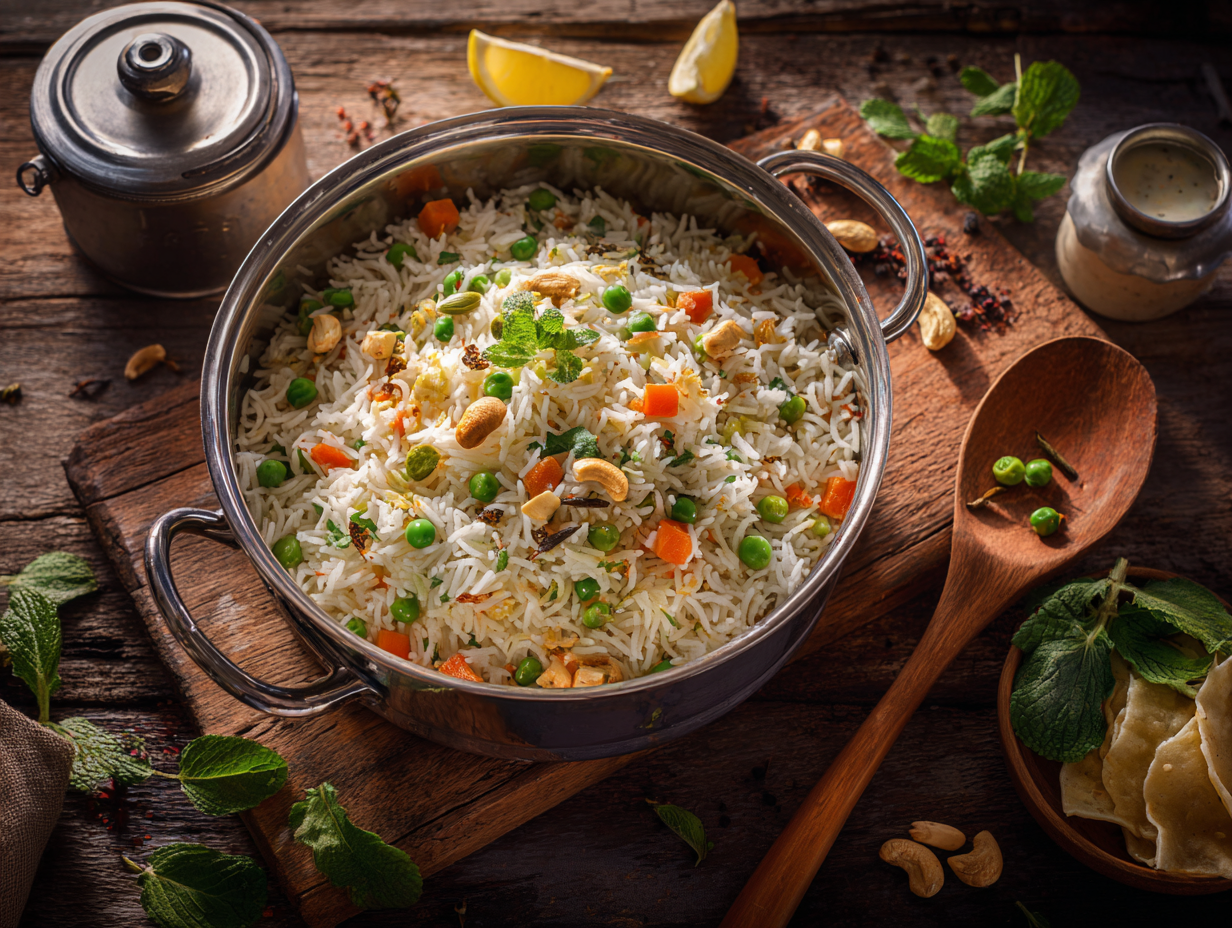
This is a one-pot basmati rice dish cooked with whole spices and mixed vegetables, ready start to finish in 30 minutes. It is lighter and faster than biryani, uses ingredients you likely already have, and produces genuinely fluffy, separate grains without any special equipment. If you need a complete vegetarian dinner on a weeknight, this is a reliable choice.
Why this recipe works
Two steps do most of the work here. First, the whole spices — cumin, cardamom, cloves, bay leaf — go into hot ghee or oil before anything else. That 60-second bloom in fat pulls out the aromatic compounds that water alone cannot, so the flavor gets into every grain rather than sitting on the surface. Second, the rinsed rice is stirred in dry and toasted for about two minutes before the liquid goes in. That brief heat exposure firms up the outer starch on each grain, which is the main reason the finished rice stays separate instead of clumping. Skip either step and the dish still tastes fine, but these two are what make it noticeably better.
What can go wrong
- Mushy rice: This almost always comes from too much water or lifting the lid during cooking. Measure the liquid carefully — the ratio matters more with basmati than with other rice — and resist checking until the timer goes off.
- Spices burning before the onion goes in: Whole spices can scorch in under 90 seconds if the heat is too high. Keep it medium, not medium-high, and have your sliced onion ready to add immediately after the spices start to sizzle.
- Vegetables turning to mush: Dense vegetables like carrots need to go in earlier than soft ones like peas. If you add everything at once, the peas will be overcooked by the time the carrots are done. Add peas and any frozen vegetables in the last five minutes of cooking.
- Rice sticking to the bottom: A heavy-bottomed pot matters here. Thin pots create hot spots that scorch the bottom layer. If you only have a thin pan, drop the heat to low as soon as you add the liquid and cover.
- Flat, underseasoned flavor: Basmati absorbs salt unevenly if it is added only at the end. Season the cooking liquid before it goes in, not after the rice is done.
Keeping and reheating
Leftover pulao keeps in an airtight container in the refrigerator for up to 4 days. To reheat, add a splash of water — about one tablespoon per cup of rice — cover the bowl loosely, and microwave on medium power for 90 seconds, then stir and go another 30 seconds if needed. The added moisture prevents the grains from drying out and turning hard. For the stovetop, a covered pan on low with the same splash of water works in about 3 minutes. Skip the garnish of fried cashews or crispy onions if you are making this ahead — they go soft in the fridge and are not worth the extra dish. Pulao can also be frozen for up to 2 months; thaw overnight in the refrigerator before reheating the same way.
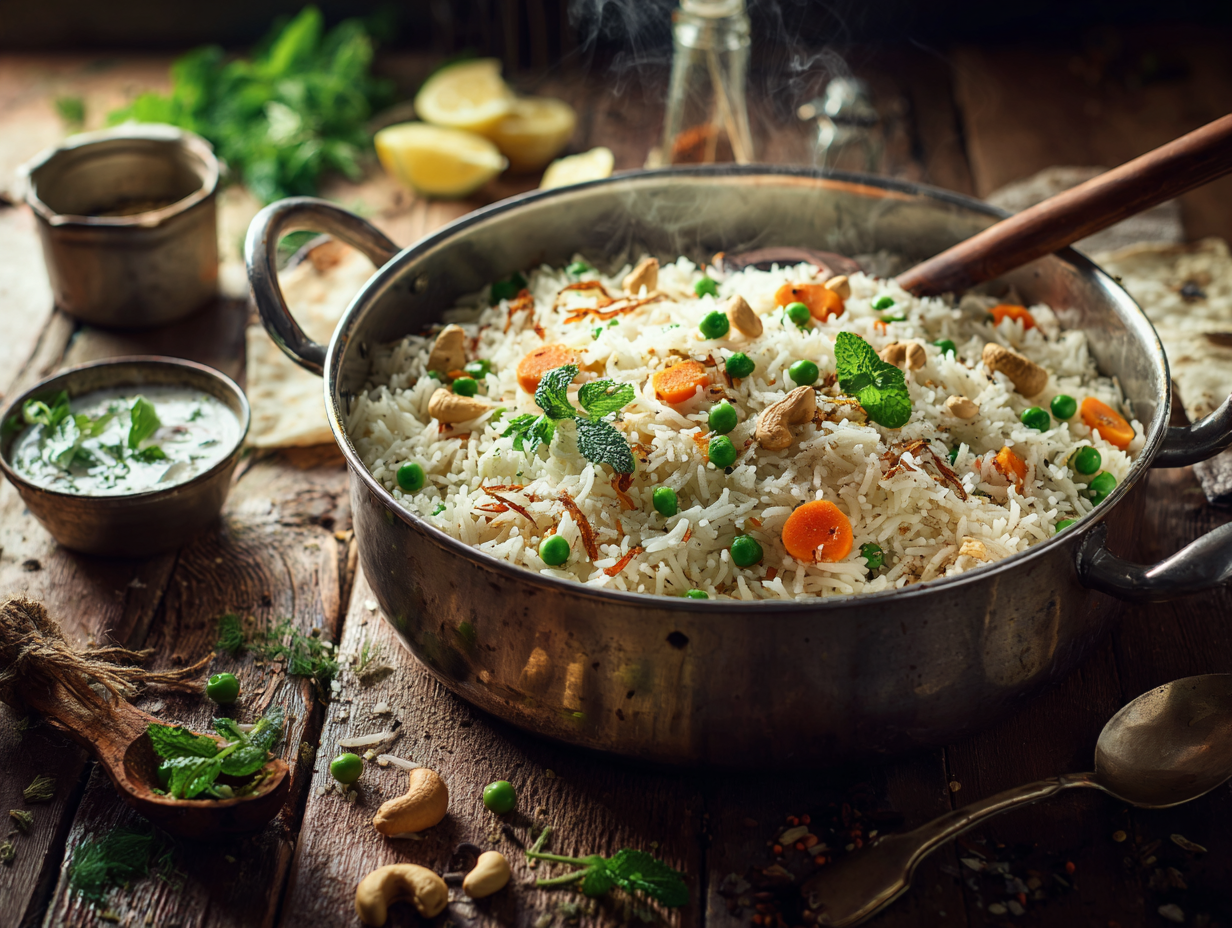
Aromatic Veg Pulao (One-Pot Vegetable Pilaf)

Equipment
- Heavy-bottomed pot with a tight-fitting lid (3 to 4 qt)
- Fine mesh strainer
- Chefs Knife
- Cutting board
- Measuring cups and spoons
- Wooden spoon or silicone spatula
- Small bowl (for rinsing spices or holding aromatics)
- Mortar and pestle or microplane (for ginger-garlic, optional)
Ingredients
- 1.5 cups aged basmati rice look for aged basmati (e.g., Daawat, Royal) for the fluffiest, separate grains
- 2.75 cups hot water use slightly less (2.5 cups) if using very tender vegetables or if rice is very aged
- 2 tbsp ghee or neutral oil ghee for richness; use avocado or sunflower oil for vegan
- 1 piece bay leaf Indian tej patta if available
- 1.5 tsp cumin seeds jeera; bloom until aromatic
- 4 pods green cardamom, lightly crushed gently crack to expose seeds
- 4 whole cloves whole cloves add warm depth
- 1 stick cinnamon Ceylon preferred for delicate aroma
- 8 whole black peppercorns optional, for a gentle peppery finish
- 1 medium yellow onion, thinly sliced about 1 cup sliced; slice evenly for quick, even browning
- 1 piece green chili, slit lengthwise serrano or Thai; adjust to heat preference
- 2 tsp ginger-garlic paste freshly pounded preferred; jarred works in a pinch
- 0.5 cup carrots, small dice fresh, sweet carrots add color and crunch
- 0.5 cup green beans, chopped trimmed and cut 1/2-inch
- 1 cup cauliflower florets, small bite-sized for even cooking
- 0.5 cup green peas frozen are fine—no need to thaw
- 0.5 cup tomato, small dice optional; adds gentle acidity
- 0.25 tsp ground turmeric for color and earthiness
- 0.5 tsp Kashmiri chili powder mild heat, vivid color; sub paprika for milder version
- 1 tsp garam masala homemade or a trusted brand like Everest or MDH
- 1.25 tsp Kosher salt or to taste; start modest, adjust after tasting broth
- 1 tbsp fresh lemon juice brightens flavors and keeps grains lively
- 0.25 cup fresh cilantro, chopped tender stems included for extra flavor
- 0.25 cup fresh mint, thinly sliced adds cool, aromatic lift
- 2 tbsp cashews optional; toast in a little ghee for garnish
- 0.25 cup crispy fried onions optional garnish; store-bought are fine
Instructions
- Rinse and Soak the Rice (2 minutes active): Place 1.5 cups basmati in a fine-mesh strainer and rinse under cold water, swishing with your fingers, until the water runs mostly clear (about 60–90 seconds). Transfer to a bowl, cover with fresh cold water, and soak 10 minutes while you prep vegetables. Drain well.
- Preheat the Pot (1 minute): Set a heavy-bottomed pot over medium-high heat (about 375°F / 190°C). Add 2 tbsp ghee or oil; when it shimmers and a cumin seed sizzles on contact, you’re ready.
- Bloom Whole Spices (30–45 seconds): Add bay leaf, cumin seeds, cardamom, cloves, cinnamon, and peppercorns. Stir until fragrant and a shade deeper, 30–45 seconds. You should smell a warm, sweet spice cloud—don’t let them darken too much.
- Sauté Aromatics (3 minutes): Add sliced onion and the slit green chili with a pinch of salt. Cook, stirring, until the onions turn translucent with golden edges, about 3 minutes. Stir in the ginger-garlic paste and cook 30 seconds more until the raw smell mellows.
- Vegetables and Spices (3 minutes): Add carrots, green beans, and cauliflower. Sauté 2 minutes until bright and glossy. Add peas and tomato; cook 1 minute more. Sprinkle in turmeric, Kashmiri chili, and garam masala; stir 30 seconds to wake the spices.
- Toast the Rice (1 minute): Add drained rice and 1 tbsp lemon juice. Gently fold to coat every grain in fat and spices; sauté about 1 minute until the rice turns slightly pearly and smells nutty—this keeps the pulao fluffy.
- Simmer (9 minutes + 3 minutes rest): Pour in 2.75 cups hot water and 1.25 tsp kosher salt. Taste the broth—it should be pleasantly salty. Bring to a gentle boil, then cover and reduce to low for a gentle simmer (about 190°F / 88°C) for 9 minutes. Turn off the heat and rest, covered, 3 minutes more for the steam to finish the grains.
- Fluff and Finish (1 minute): Uncover, fluff with a fork, and fold in cilantro and mint. Adjust salt and lemon to taste. Top with toasted cashews and crispy fried onions if using.
- Instant Pot Option (alternative): Use Sauté (Normal) to complete Steps 2–6. Add 2.5 cups water for 1.5 cups soaked rice, season, then pressure cook on High for 5 minutes. Naturally release 5 minutes, then quick release. Fluff, finish with herbs, and rest 2 minutes before serving.
Notes
Lisa’s Tips:
- Rinse Well: Wash rice until water runs mostly clear to remove excess starch and ensure separate grains.
- Soak Smart: A 10-minute soak hydrates basmati so it cooks quickly and evenly; don’t over-soak or it may turn soft.
- Water Ratio: With pre-soaked basmati and sautéed veg, 1 cup rice to 1.75 cups water keeps grains distinct. Adjust by 2–3 tbsp if your pot vents a lot of steam.
- Ghee vs. Oil: Ghee adds nutty depth; for vegan, use avocado or sunflower oil and finish with a drizzle of extra-virgin olive oil for gloss.
- Speed-Browning Onions: Add a pinch of salt early and keep heat at medium-high; spread onions out for faster contact with the pan.
- Fixes: If rice is slightly underdone after resting, sprinkle 2 tbsp hot water, cover, and steam on low 2 minutes. If slightly wet, uncover and rest 3–4 minutes before fluffing.
- Substitutions: Swap vegetables based on season—broccoli, corn, or bell pepper work well. For brown basmati, increase water to 1:2.25 and cook 20–22 minutes on low.
- Allergen Notes: Naturally gluten-free. Make nut-free by skipping cashews.
Nutrition
Your questions, answered
Do I have to soak the basmati rice before cooking?
A 10-minute soak is genuinely helpful and worth doing. It allows the grains to hydrate evenly, which means they cook through at the same rate and are less likely to break or turn gummy. If you are truly pressed for time you can skip it, but reduce your cooking liquid by about two tablespoons to compensate.
Can I use regular long-grain rice instead of basmati?
Yes, but the water ratio and cook time will be slightly different — check the package directions for your specific rice. Basmati has a drier, more separate texture when cooked, so another long-grain variety will work but the result will be a bit stickier.
Do I need to eat the whole spices, or do I pick them out?
You leave them in during cooking but push them to the side when you are eating — they are not meant to be chewed. Biting into a whole clove or cardamom pod is unpleasant, so just set them aside on your plate the same way you would a bay leaf.
Can I make this vegan by swapping out the ghee?
Yes, a neutral oil like avocado or refined coconut oil works as a direct substitute in the same quantity. The flavor will be slightly less rich since ghee has a nutty quality that oil does not, but the technique and result are otherwise identical.
More quick recipes to try
- Quick Weeknight Pulao Recipe
- Citrus Mojo Rice and Beans
- Quick Cajun Dirty Rice
- Quick Korean Bibimbap Bowls