
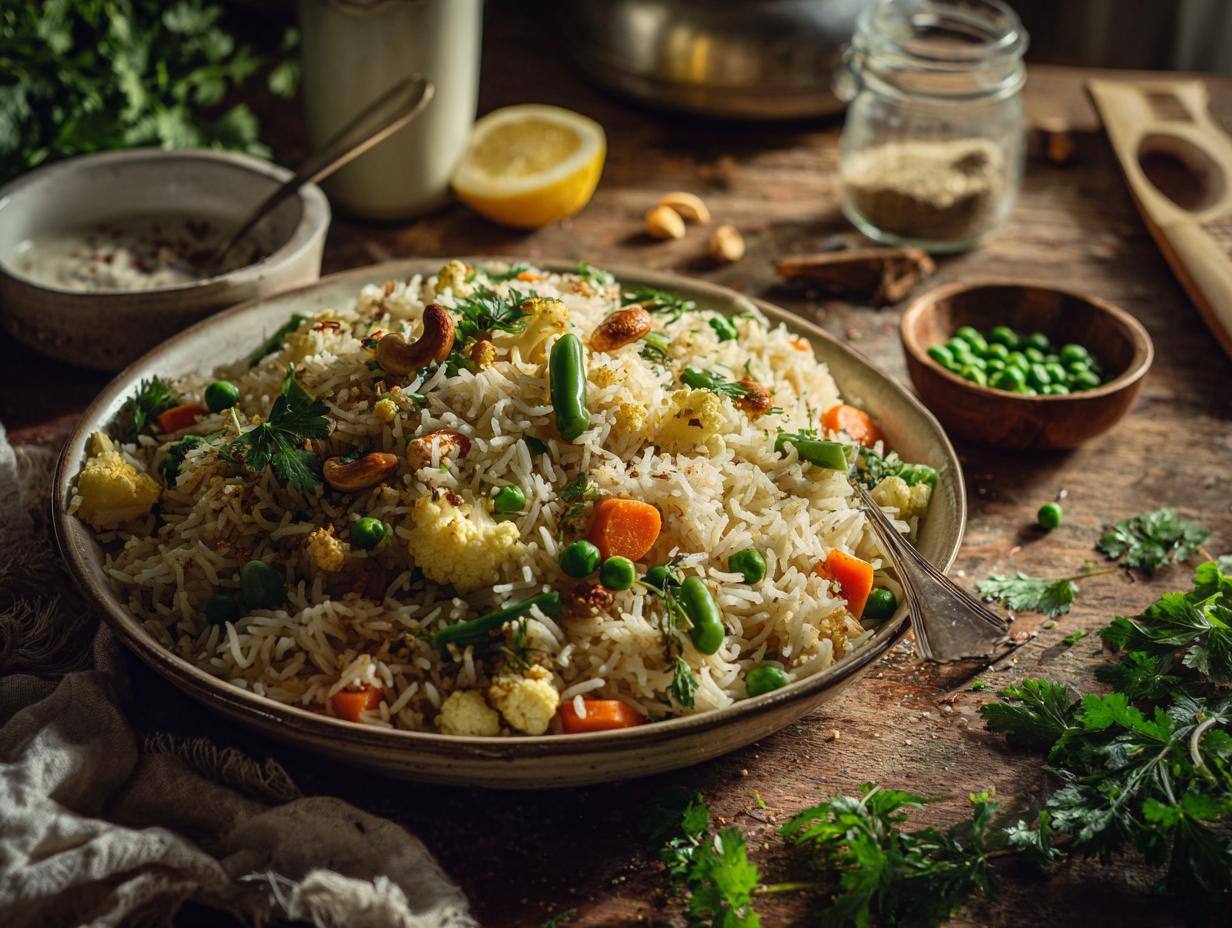
This is a one-pot basmati rice dish with whole spices and vegetables that comes together in 30 minutes on a weeknight. The rice is toasted in ghee before the liquid goes in, which keeps the grains separate and gives the whole pot a nutty, aromatic base. It works as a standalone dinner or alongside a curry, and it reheats well enough that making a full batch on Monday pays off through Wednesday.
What makes this version work
Two things actually move the needle here. First, blooming the whole spices — cardamom, cloves, cinnamon, cumin — in hot ghee for about 60 seconds before anything else goes in. That step releases the fat-soluble compounds in the spices, which means the flavor gets distributed through every grain of rice rather than sitting on top. Second, the rice-to-liquid ratio combined with a tight lid and a full three-minute rest off heat. Lifting the lid early lets steam escape and you end up with uneven, partly gummy rice. Leave it alone, let it rest, and the grains finish cooking in their own steam and come out distinct. Neither step is difficult — they just require a little patience at specific moments.
Make-ahead notes
Pulao keeps well in the fridge for up to four days in an airtight container. For best results, spread it out on a sheet pan or wide dish to cool before refrigerating — trapping steam in a sealed container while it’s still hot makes the grains clump. To reheat, add one tablespoon of water per cup of rice, cover the pan or bowl tightly, and warm over low heat on the stovetop (about 5 minutes) or in the microwave in 90-second intervals. It also freezes cleanly for up to two months; portion it into individual servings before freezing so you can pull out exactly what you need. Frozen portions go straight from freezer to microwave — no thawing required, just add the splash of water and cover.
Troubleshooting
- Rice is mushy or sticky: The most common cause is skipping or shortening the rinse. Surface starch is the culprit. Rinse until the water runs mostly clear, and don’t skip the soak — even 10 minutes makes a difference in how the grains hold up during cooking.
- Vegetables are undercooked when the rice is done: Cut them smaller — aim for pieces no larger than half an inch. Larger chunks of carrot or cauliflower simply won’t cook through in the time the rice needs. If you’re using harder vegetables, give them a 2-minute head start in the pan before adding the rice.
- Bottom layer is scorched: This usually means the heat wasn’t dropped low enough after the liquid came to a boil, or the pan is too thin. Use a heavy-bottomed pan and get the heat genuinely low — a bare simmer, not a rolling one. A heat diffuser helps if your stovetop runs hot.
- Rice tastes flat despite using all the spices: Check that the ghee was hot enough before the spices went in. If the fat wasn’t shimmering, the spices steamed instead of bloomed and the flavor stays muted. Also check your spices — whole spices lose potency after about a year in the pantry.
- Grains clump together after storing: Skip the cashew and fried onion garnish before refrigerating — add those fresh when you reheat and serve. The garnishes absorb moisture overnight and turn soft, which also makes the rice around them sticky. Store the pulao plain and garnish per serving.
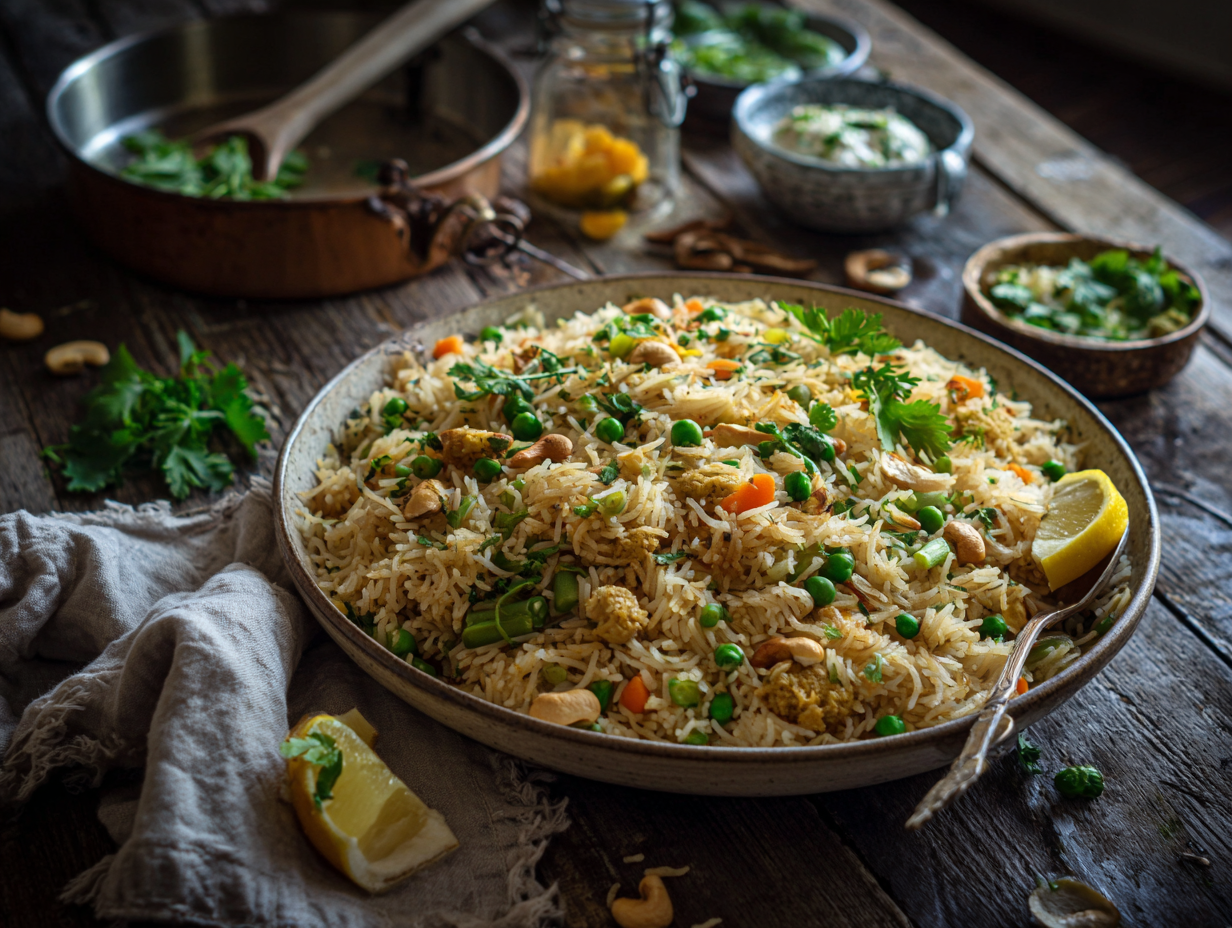
Weeknight Vegetable Pulao (Indian Rice Pilaf)

Equipment
- 10-inch heavy-bottomed sauté pan or saucepan with tight-fitting lid
- Fine mesh strainer
- Measuring cups and spoons
- Chefs Knife
- Cutting board
- Wooden spoon or heatproof spatula
- Electric kettle or small pot (to heat broth/water, optional but faster)
Ingredients
- 1 cup aged basmati rice, rinsed until water runs clear and soaked 10 minutes; drained aged, extra-long grain basmati yields the fluffiest texture
- 1 tbsp neutral oil (avocado or sunflower) neutral oil prevents overpowering the aromatics
- 1 tbsp ghee adds classic nutty aroma; use more oil for vegan
- 1 piece bay leaf
- 4 pods green cardamom, lightly bruised press gently with the side of a knife to crack
- 4 whole cloves
- 1 stick cinnamon (about 1-inch)
- 1 tsp cumin seeds blooming whole cumin deepens the base flavor
- 1 small yellow onion, thinly sliced (about 1 cup) look for firm, heavy onions for sweetness
- 2 tsp fresh ginger-garlic paste or 1 tsp each grated ginger and minced garlic
- 1 small green chili, slit lengthwise (optional) use serrano or Thai chili; adjust to heat preference
- 1 cup carrots, small dice fresh, sweet carrots add color and snap
- ¾ cup green beans, chopped trimmed and cut into pea-sized pieces
- ½ cup cauliflower, small florets cut tiny so they cook quickly
- ¼ tsp ground turmeric for golden hue and earthy warmth
- 1 tsp garam masala choose a fresh, aromatic blend
- ½ tsp ground coriander
- ¾ tsp kosher salt, plus more to taste Diamond Crystal; reduce slightly if using Morton
- 1 ¾ cups low-sodium vegetable broth or water, hot preheat to speed the boil and keep grains intact
- ½ cup frozen green peas add straight from the freezer for bright color
- 2 tbsp fresh cilantro leaves, chopped
- 1 tbsp fresh lemon juice or serve with lemon wedges at the table
- 2 tbsp toasted cashews optional, for buttery crunch
- 2 tbsp crispy fried onions (optional) for restaurant-style finish
Instructions
- Rinse and Quick-Soak the Rice: Place the basmati in a fine-mesh strainer and rinse under cool water, swishing with your fingers, until the water runs nearly clear (about 45–60 seconds). Soak in cool water for 10 minutes, then drain thoroughly. This yields long, fluffy grains.
- Heat Your Liquid: Warm the broth or water until hot (a kettle is fastest). Hot liquid reduces agitation, helping grains stay intact and speeding the cook time.
- Bloom Whole Spices (medium heat): In a heavy pan, heat the oil and ghee over medium heat (pan surface roughly 350°F / 175°C if using an IR thermometer). Add bay leaf, cardamom, cloves, cinnamon, and cumin; sizzle 30–45 seconds until fragrant and a shade darker—this unlocks deep, warm aromas.
- Sauté Onions: Add the sliced onion and a pinch of salt; cook 2–3 minutes, stirring, until soft with golden edges. Aim for light caramelization, not deep browning, to keep the pulao delicate.
- Aromatics: Stir in ginger-garlic paste and the slit chili; sauté 30 seconds until the raw edge mellows and the kitchen smells savory-sweet.
- Vegetables: Add carrots, green beans, and cauliflower; sauté 1 minute until colors brighten and edges glisten.
- Spice it: Sprinkle in turmeric, garam masala, ground coriander, and salt; stir 30 seconds until the spices smell toasty and cling to the veg.
- Toast the Rice: Add drained rice; fold gently for 30 seconds to coat each grain in the spiced fat. The rice will look glossy and separate—this helps keep it fluffy.
- Add Liquid and Peas: Pour in the hot broth and add frozen peas. Increase heat to medium-high and bring to a lively boil in about 1 minute. Taste the liquid—it should be pleasantly seasoned; add a pinch more salt if needed.
- Cover and Simmer: Cover tightly and reduce to low to maintain a gentle simmer, about 185–195°F (85–90°C). Cook 9 minutes without lifting the lid. You should hear a soft, even burble.
- Steam Off-Heat: Turn off the heat and let the pulao stand, covered, 3 minutes to finish steaming. Uncover, fluff with a fork, and gently fold in lemon juice, cilantro, toasted cashews, and fried onions if using.
- Final Taste and Serve: Adjust salt and acidity. The grains should be tender but distinct, vegetables vibrant, and the aroma warmly spiced.
Notes
Lisa’s Tips:
- Rice Choice: Aged basmati (labeled “extra-long” or from reputable brands) gives the best length and aroma. If using a younger rice, reduce liquid slightly (by 2–3 tablespoons).
- Keep Grains Separate: Quick-soak, toast briefly in fat, use hot liquid, and avoid stirring once covered.
- No Whole Spices? Use 1/2 tsp ground cumin + an extra 1/2 tsp garam masala in step 7. Flavor is softer but still lovely.
- Vegan Swap: Replace ghee with the same amount of neutral oil. For richer flavor, add 1 tsp coconut oil at the finish.
- Protein Add-Ins: Stir in 1 cup small-diced extra-firm tofu (pan-seared) or 1 cup leftover cooked chicken when adding peas.
- Faster Onion Color: Add a pinch of salt and keep onions spread out for quick edge browning.
- Water Ratio: For very firm grains, use 1 2/3 cups liquid; for softer, use up to 1 7/8 cups.
Nutrition
Frequently asked questions
Can I use regular long-grain rice instead of basmati?
You can, but the result will be noticeably different. Basmati has a lower starch content and elongates as it cooks, which is what gives pulao its characteristic fluffy, separate grains — regular long-grain rice tends to clump more and the flavor is blander.
Can I make this vegan by swapping out the ghee?
Yes — use a neutral oil like avocado or refined coconut oil, or a vegan butter. Ghee has a higher smoke point and a richer flavor, so a neutral oil will work functionally but the dish will taste slightly lighter.
Do I have to use vegetable broth, or can I use water?
Water works fine and is actually traditional in many versions. Broth adds a layer of savory depth, but because the whole spices are doing most of the flavor work, water produces a clean, aromatic result that’s still very good.
Can I add protein to make it more filling?
Yes — cooked chickpeas stirred in with the vegetables are the easiest addition and need no extra prep. Cubed paneer browned in a separate pan and folded in at the end also works well without affecting the rice cooking time.
My lid doesn’t fit tightly — will that ruin it?
A loose lid lets too much steam escape and you’ll likely end up with undercooked, dry rice. Cover the pan with a sheet of foil first, then press the lid on top — that seals the gap and solves the problem.
Can I double the recipe without changing anything?
The rice-to-liquid ratio stays the same when you scale up, so doubling is straightforward. The one thing to watch is pan size — you need enough room for the rice to steam evenly, so use a wider pan rather than a deeper one if you’re making a larger batch.
Try these next
- Citrus Mojo Rice and Beans
- Quick Cajun Dirty Rice
- Weeknight Shakshuka
- Smoky Mediterranean Bean Skillet