
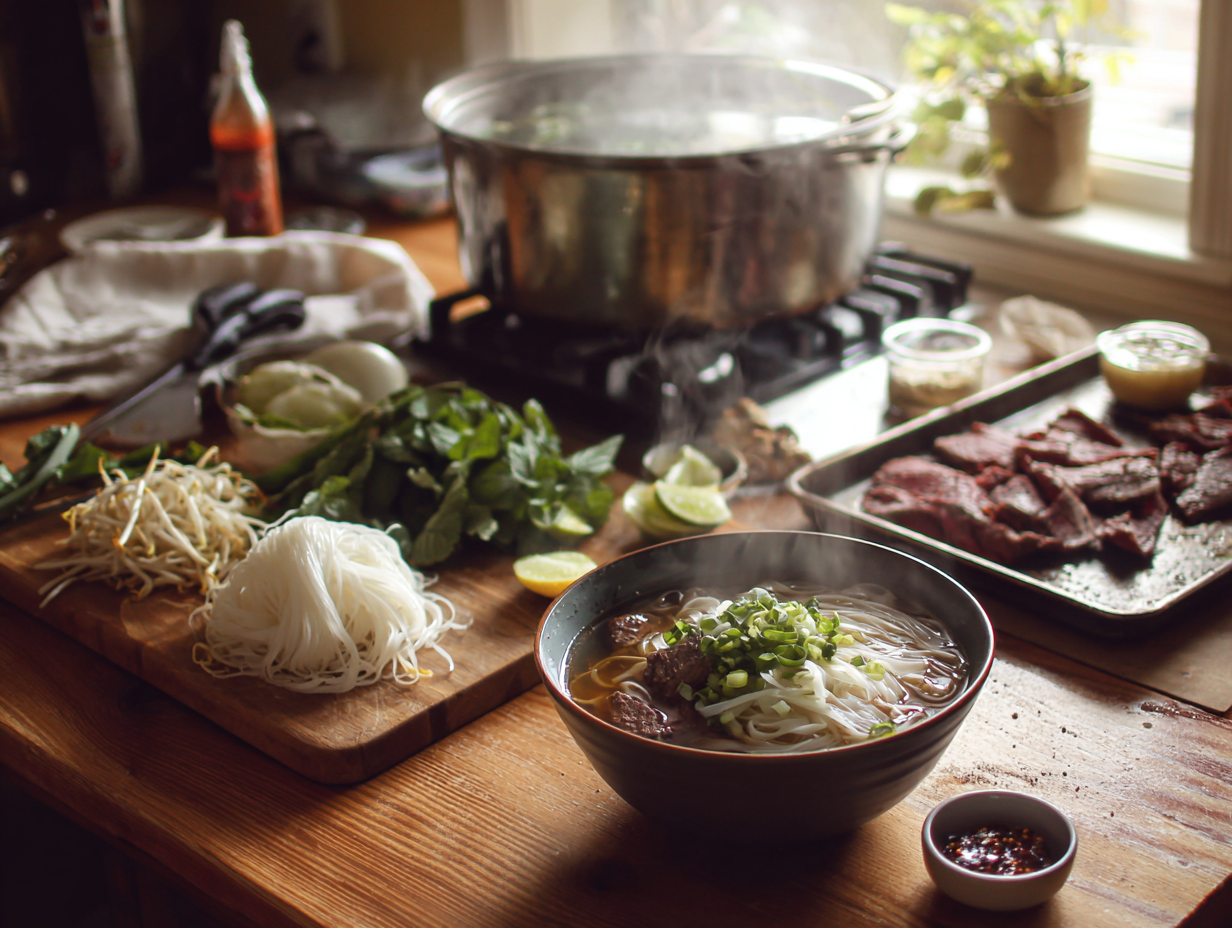
This is a 30-minute beef pho built on charred aromatics, toasted whole spices, and good store-bought beef stock — not a shortcut that apologizes for itself, but a genuinely solid bowl of soup on a weeknight. The broth won’t have the collagen-rich body of a 12-hour simmer, but it will have real spice fragrance and depth. If you want pho tonight without blocking off a weekend afternoon, this is the recipe.
Before you start
Two techniques carry most of the flavor here, so don’t rush them. First, char the onion and ginger until the cut faces are deeply browned — not just softened, but genuinely blackened at the edges. That caramelization is doing the work that hours of simmering would otherwise do, so give it the full time it needs under the broiler or directly over the burner. Second, toast the whole spices in a dry skillet until you can smell them clearly, about 60–90 seconds. Pull them the moment they’re fragrant; another 30 seconds past that and they turn bitter. Both steps take under 10 minutes combined and are the difference between a flat broth and one that actually tastes like pho.
Smart swaps
- Thinly sliced beef: Asian grocery stores sell pre-sliced shabu-shabu beef, which is ideal. If you’re buying from a regular supermarket, put a sirloin or eye of round in the freezer for 20–25 minutes until it firms up, then slice it as thin as you can against the grain. Anything thicker than ⅛ inch won’t cook through when you pour the broth over it.
- Rock sugar: A small pinch of regular granulated sugar works fine. Rock sugar is traditional but not worth a special trip.
- Fish sauce: Don’t skip it — it’s what gives the broth its savory backbone. If you’re out, a small splash of soy sauce plus a tiny squeeze of lime is a passable emergency substitute, but fish sauce is worth keeping on hand.
- Thai basil: Regular Italian basil is a reasonable stand-in if Thai basil isn’t available, though the flavor is milder and slightly different. Bean sprouts, lime, and jalapeño are easy to find at most grocery stores and shouldn’t require substitution.
Troubleshooting
- Broth tastes flat or watery: The most common cause is under-charred aromatics or spices that weren’t toasted long enough. You can rescue a flat broth by simmering it uncovered for an extra 5 minutes to concentrate it, then adjusting fish sauce and a pinch of sugar.
- Broth is murky: This usually means the stock boiled hard instead of simmering gently. Keep the heat at a low simmer once the stock goes in, and strain carefully through a fine-mesh strainer before ladling.
- Beef is tough or chewy: The slices were too thick, or the broth wasn’t hot enough when poured. The broth needs to be at a full rolling boil right before it hits the bowl — have it boiling on the stove and move fast.
- Noodles are clumped or gummy: Rice noodles keep cooking in residual heat and will stick together if left sitting. Cook them just before serving and rinse with cold water immediately after draining to stop the cooking and keep them separate.
- Spice flavor is bitter or harsh: The whole spices were toasted too long or simmered too aggressively. Next time pull them from the heat as soon as they’re fragrant. For this batch, strain the broth early and taste — a small pinch of sugar can soften bitterness.
Storage and reheating
Store the broth and noodles separately — this is non-negotiable if you want decent leftovers. Broth keeps in the fridge for up to 4 days and freezes well for up to 3 months; let it cool completely before freezing in portioned containers. Cooked noodles stored in broth turn to mush overnight, so keep them in a separate airtight container with a light drizzle of oil to prevent sticking, and use them within 2 days. Reheat the broth on the stovetop until it reaches a full boil before ladling over fresh or reheated noodles — the boiling temperature is what cooks the beef, so don’t shortcut it in the microwave. Raw beef garnish should always be sliced fresh; don’t store pre-sliced raw beef for next-day use.
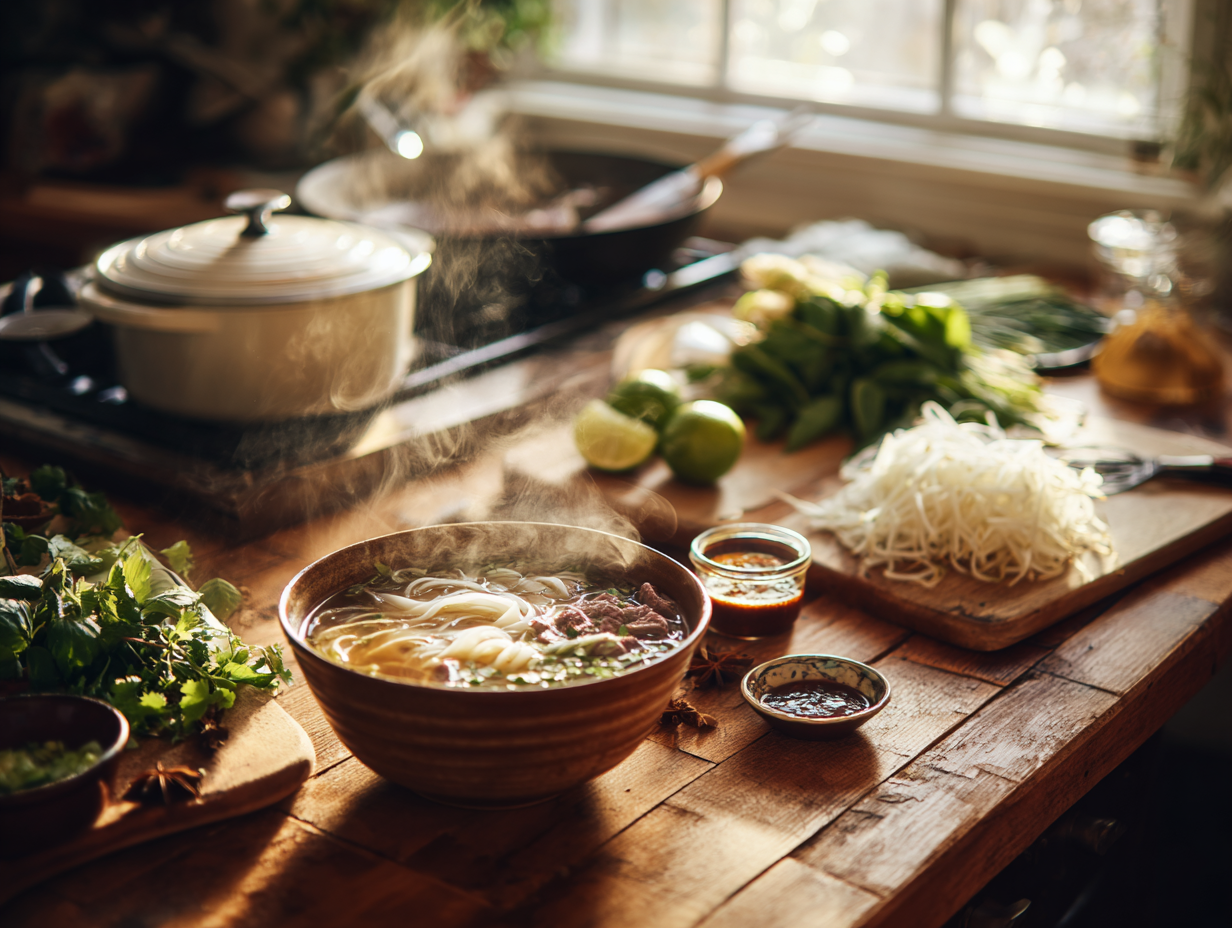
30-Minute Weeknight Beef Pho (Phở Bò Tái)

Equipment
- Large 6-quart pot or Dutch oven
- Small skillet for toasting spices
- Oven broiler (or a heavy skillet) for charring aromatics
- Fine-mesh strainer or tea/spice sachet
- Tongs
- Chef’s knife and cutting board
- Measuring cups and spoons
- Ladle
- Kettle or second pot for noodles
- Bowls (preferably warmed)
Ingredients
For the Aromatic Broth Base:
- 1 tbsp neutral oil (canola or avocado) helps char aromatics evenly
- 1 large yellow onion, halved (skins on) skins add color and aroma when charred
- 1 piece fresh ginger (3-inch), halved lengthwise no need to peel; char for depth
- 3 pods star anise, whole key pho aroma—warm and licorice-like
- 1 stick cinnamon (3-inch stick) Saigon cinnamon preferred for brightness
- 4 whole cloves adds warming spice—don’t overdo it
- 1 tsp coriander seeds light citrusy note; optional but recommended
- 8 cups low-sodium beef broth bone broth or high-quality boxed broth (Kettle & Fire or Imagine) for best body
- 1 cup water adjusts intensity and volume; optional based on saltiness
- 3 tbsp fish sauce Red Boat 40°N or Three Crabs preferred for clean umami
- 1 tsp rock sugar or light brown sugar balances salinity; classic pho uses rock sugar
- ½ tsp kosher salt, plus more to taste adjust at the end for balance and clarity of flavor
For the Noodles & Beef:
- 12 oz dried medium-width banh pho rice noodles choose flat rice sticks labeled for pho; avoid pad thai noodles if possible
- 12 oz beef sirloin or eye of round, very thinly sliced ask your butcher to slice thinly or buy shabu-shabu slices; keep chilled
- ½ small white onion, paper-thin sliced classic raw onion bite for topping; soak in cold water if too sharp
For Garnishes & Finish:
- 4 pieces scallions, thinly sliced green parts for freshness; white parts optional in broth
- 1 cup bean sprouts rinse under cold water for extra crunch
- 1 cup Thai basil leaves regular sweet basil works if Thai basil isn’t available
- 1 cup cilantro leaves and tender stems adds bright, herbal lift to the bowl
- 1 piece jalapeño or Thai chile, thinly sliced control heat to taste; seeds for extra spice
- 1 medium lime, cut into wedges for bright acidity to finish the bowl
- ¼ cup Hoisin sauce and Sriracha, for serving optional table condiments; use sparingly to keep broth clear-tasting
- 1 pinch freshly ground black pepper, optional a few twists over the top right before serving
Instructions
- Char the Aromatics (5–6 minutes): Set your oven broiler to High (about 550°F / 288°C). Rub the cut sides of the onion and ginger with a little oil and place, cut-side up, on a foil-lined sheet. Broil until the edges are deeply charred and fragrant, 5–6 minutes. Alternatively, place onion and ginger cut-side down in a heavy dry skillet over medium-high heat until charred, 5–7 minutes.
- Toast the Spices (2 minutes): In a small dry skillet over medium heat, toast star anise, cinnamon, cloves, and coriander seeds until aromatic and slightly darkened, about 1–2 minutes. Shake the pan to prevent scorching—your nose will tell you when they’re ready.
- Build and Simmer the Broth (15 minutes): In a large pot, add beef broth and water. Drop in the charred onion and ginger plus all the toasted spices (tie spices in a sachet or tea ball for easy removal if you like). Bring just to a boil over high heat, then immediately lower to a gentle simmer (about 205°F / 96°C) and cook for 15 minutes. Skim any foam for a clearer broth.
- Season and Clarify (2 minutes): Stir in fish sauce, rock sugar (or brown sugar), and salt. Simmer 2 minutes more. Taste and balance—broth should be savory with a light sweetness and a clean anise perfume. Strain out the solids with a fine-mesh strainer. Keep broth at a lively simmer for serving.
- Cook the Noodles (3–4 minutes): Meanwhile, bring a separate pot of water to a boil (or use a kettle). Cook rice noodles just until tender but still springy, 3–4 minutes (check package). Rinse briefly under hot water to remove excess starch. Drain well. Tip: If soaking instead, cover noodles with very hot water for 10–15 minutes until pliable, then briefly dunk in boiling water for 10–20 seconds to finish.
- Prep the Beef and Garnishes (while broth simmers): Keep beef slices very thin and chilled. Arrange bean sprouts, Thai basil, cilantro, jalapeño, lime wedges, and sauces on a platter. Thinly slice white onion and scallions. For ultra-thin beef, partially freeze meat for 20–30 minutes before slicing (or buy pre-sliced shabu-shabu).
- Assemble the Bowls: Warm serving bowls with hot tap water or a low oven (170°F / 75°C), then drain. Divide noodles among 4 bowls. Top each with a small handful of raw white onion and scallions. Fan 3–4 ounces of raw beef over the noodles.
- Finish with Hot Broth and Serve: Bring broth back to a vigorous simmer (about 205°F / 96°C). Ladle approximately 2 cups of boiling-hot broth into each bowl, pouring directly over the beef so it just turns rosy and tender in 10–20 seconds. Garnish with herbs, sprouts, and chiles. Offer lime, hoisin, and Sriracha on the side.
Notes
Lisa’s Tips:
- Clarity Tricks: Char the onion/ginger well and skim any foam; a gentle simmer prevents cloudiness.
- Spice Control: If your cinnamon is very strong, halve it to avoid overpowering the broth.
- Umami Boost: A splash more fish sauce at the end brightens; taste before adding salt.
- Make it Chicken: Swap beef broth for chicken broth and use shredded rotisserie chicken for a speedy phở gà.
- Gluten-Free Note: Traditional pho is naturally gluten-free; verify fish sauce brand if sensitive.
- Low-Sodium Path: Use low-sodium broth so you can season precisely without over-salting.
- No Broiler? Char aromatics directly over a gas flame with tongs until blackened.
- If your broth tastes flat, add a splash more fish sauce and a pinch of sugar—pho is all about balance.
- For spicier bowls, steep a few slices of chile directly in the broth for 1 minute before serving.
Serving Suggestions:
For restaurant polish, coil noodles neatly in the bowl and layer beef slices slightly overlapping. Aim for contrast: pale noodles, blushing beef, emerald herbs, and ivory onion. Finish with a spritz of lime and a basil sprig perched on top. A crisp lager or iced jasmine tea pairs beautifully, cutting through the broth’s warmth. The ideal aroma is clean and anise-kissed; the broth should be clear with a light sheen.Culinary Context:
Phở is a beloved Vietnamese noodle soup with regional nuances—Hanoi bowls tend to be cleaner and subtler, while Saigon styles lean herbier with a richer garnish plate. This recipe preserves the core ritual of paper-thin beef cooked by scalding broth, while embracing weeknight pragmatism with quality store-bought stock and quick spice infusion.Optional Advanced Instructions:
- Make-Ahead Broth: Simmer broth up to 3 days in advance; chill and reheat to a rolling simmer before serving.
- Spice Sachets: Use a reusable tea infuser for clean, fast removal—great for precise timing.
- Beef Upgrade: Lightly season beef with a pinch of salt and a drip of fish sauce 5 minutes before serving for subtle depth.
- Parallel Workflow: While broth simmers, prep all garnishes and slice beef; cook noodles in the last 5 minutes so everything finishes together.
Timing:
- Prep Time: 0 hours 15 minutes
- Cook Time: 0 hours 20 minutes
- Total Time: 0 hours 35 minutes
Course & Origin:
- Course: Dinner (Main Course)
- Origin/Cuisine: Vietnamese
Nutrition
Your questions, answered
Can I use beef broth from a carton instead of bone broth?
Yes, regular beef broth works, though bone broth gives the finished soup a slightly fuller body. Whichever you use, choose a low-sodium version so you can control the salt level when you add fish sauce.
Do I have to use a broiler to char the onion and ginger, or is there another way?
A broiler is the easiest method, but you can also hold the onion halves and ginger cut-side down directly over a gas burner with tongs, or press them into a dry cast-iron skillet over high heat. The goal is deep browning and some blackening on the cut surfaces — any method that gets you there works.
Is the raw beef safe to eat if it’s only cooked by the hot broth?
Yes, as long as the broth is at a full rolling boil when you ladle it over the beef and the slices are thin enough — no thicker than ⅛ inch. Thin slices cook through almost instantly from the heat of the broth; thicker pieces won’t, so slice carefully.
Can I make the broth ahead of time?
Yes, and it actually tastes better after a night in the fridge once the spice flavors have had time to settle. Make the broth up to 4 days ahead, strain it, and refrigerate; reheat it to a full boil before serving.
Try these next
- Quick Chicken Noodle Soup
- Weeknight Hamburger Soup
- Quick White Chicken Chili
- Quick Ginger Scallion Wontons