
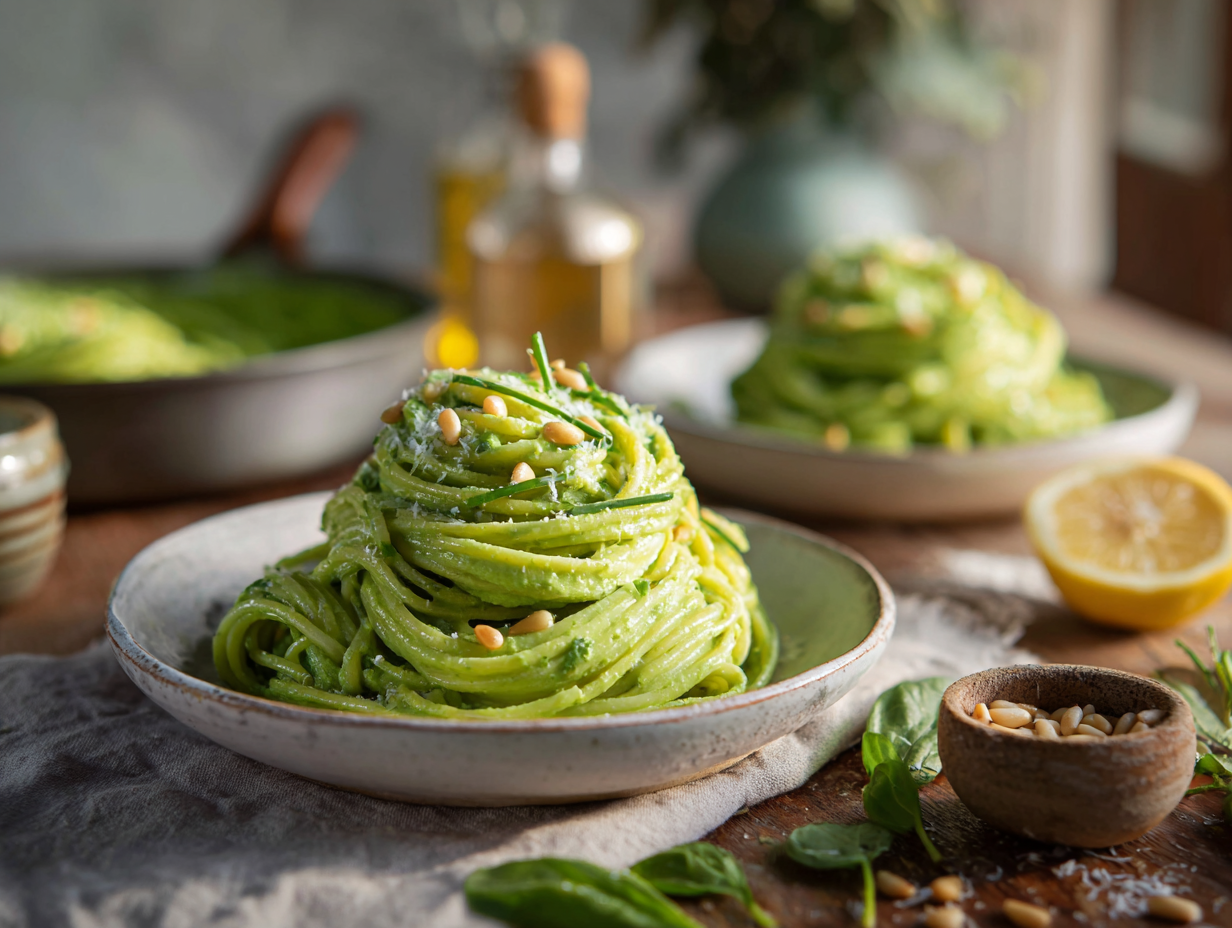
This is a spinach-basil pasta sauce blended until smooth and glossy — somewhere between a pesto and a cream sauce, bright green and garlicky, finished with lemon and Parmesan. It takes 25 minutes start to finish and uses one blender plus one pot. If you need dinner on the table fast and you want kids to actually eat it, this is a solid weeknight answer.
Before you start
The two things that make this recipe work are reserving pasta water before you drain and blending while the liquid is still hot. The starchy pasta water is what turns a chunky blended sauce into something smooth and glossy that clings to every strand — skip it or forget to save it and the sauce will be grainy and separate. Hot liquid also wilts the spinach and basil quickly in the blender, which is what gives the sauce that deep, vivid green color instead of a dull olive. Set a heatproof measuring cup right next to the colander before you drain so you don’t forget in the rush.
Substitutions that actually work
- Heavy cream: Full-fat coconut cream works if you need dairy-free — the flavor is mild enough that it won’t clash with the basil. Avoid low-fat milk; the sauce will turn watery.
- Parmesan: Pecorino Romano is a straight swap and adds a slightly saltier, sharper bite. Nutritional yeast (about 3 tablespoons) works for a vegan version, though the sauce will be thinner.
- Pine nuts: Cashews or blanched almonds blend just as smoothly and cost less. Toasted sunflower seeds work too and keep it nut-free.
- Pasta shape: Any long pasta — linguine, spaghetti, fettuccine — works well. Short shapes like rigatoni or penne are fine but hold less sauce per bite.
Keeping and reheating
Leftovers keep in an airtight container in the fridge for up to 3 days. The sauce will thicken significantly as it sits — that’s normal. To reheat, add a splash of water or broth (2–3 tablespoons per serving) and warm it in a skillet over medium-low heat, stirring until loose and glossy again. Microwaving works in a pinch; use 50% power and stir halfway through. Don’t freeze this one — the cream breaks when thawed and the sauce turns grainy.
Mistakes to avoid
- Overcooking the garlic: If the garlic browns in the pan before it hits the blender, it turns bitter and that bitterness carries through the whole sauce. Cook it just until fragrant — about 60 seconds over medium heat.
- Under-salting the pasta water: The sauce itself has Parmesan and seasoning, but bland pasta will drag the whole dish down. The water should taste noticeably salty before the pasta goes in.
- Blending a too-full blender: Hot liquid expands. Fill the blender no more than halfway, hold the lid down with a folded towel, and start on low. A blender explosion with green sauce is a real cleanup problem.
- Adding all the pasta water at once: Pour it in gradually — a few tablespoons at a time — until the sauce reaches a pourable consistency. You may not need all of it, and too much makes the sauce soupy.
- Letting the dressed pasta sit too long: This sauce tightens up fast once it hits the pasta. Serve it immediately after tossing — skip the garnish if it means the pasta sits getting gluey while you fuss with it, not worth the extra dish.
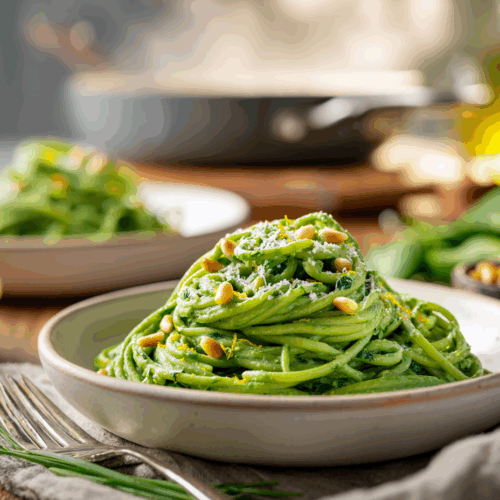
Vivid Green “Slime” Spinach-Basil Pasta (30-Minute Dinner)

Equipment
- Large stockpot (6–8 qt)
- 12-inch skillet or sauté pan
- High-speed blender or food processor
- Colander
- Tongs
- Heatproof measuring cup or ladle
- Microplane or fine zester
- Measuring cups and spoons
- Cutting board and chef's knife
Ingredients
- 4 qt water for boiling pasta; bring to a rolling boil (212°F / 100°C)
- 2 tbsp Kosher salt for seasoning pasta water; Diamond Crystal preferred
- 2 tbsp pine nuts optional; for toasting and garnish
- 12 oz dried long pasta spaghetti, linguine, or fettuccine; bronze-cut if possible for better sauce cling
- 4 cups fresh baby spinach packed; fresh and crisp for vivid color
- 1 ½ cups fresh basil leaves packed; sweet Genovese variety preferred
- 3 cloves garlic 2 cloves for sauce, 1 clove minced for skillet
- 3 tbsp extra-virgin olive oil fruity, peppery; plus 1 tsp for finishing (optional)
- 1 tsp finely grated lemon zest from 1 large lemon; use a Microplane for aroma and no bitterness
- ¾ cup finely grated Parmesan cheese divided; 1/2 in sauce, 1/4 during tossing; plus extra to serve
- ½ cup heavy cream or half-and-half for a lighter sauce
- 2 tbsp unsalted butter for silkiness; European-style butter melts smoothly
- ½ tsp crushed red pepper flakes adjust to taste for gentle heat
- 2 tbsp fresh lemon juice added at the end for brightness
- ½ tsp freshly ground black pepper plus more to taste
- 1 pinch Kosher salt to taste, for final seasoning
- 1 cup reserved hot pasta water you may not use it all; crucial for emulsifying the sauce
- 2 tbsp chives or flat-leaf parsley finely chopped, for garnish
- 1 tsp extra-virgin olive oil optional, for finishing drizzle
- ¼ cup finely grated Parmesan cheese optional, for serving at the table
Instructions
- Bring Water to a Boil: Fill a large stockpot with 4 qt water and bring to a rolling boil (212°F / 100°C). Add 2 tbsp kosher salt; the water should taste pleasantly salty.
- Toast the Pine Nuts (optional): While the water heats, place 2 tbsp pine nuts in a dry 12-inch skillet over medium heat. Stir until golden and fragrant, 2–3 minutes. Immediately transfer to a bowl to prevent over-toasting.
- Cook the Pasta: Add 12 oz pasta to the boiling water and cook until al dente, 8–10 minutes (check package instructions). Before draining, reserve about 1 cup hot pasta water using a heatproof measuring cup or ladle. Drain pasta or lift it directly with tongs.
- Blend the Green “Slime” Sauce: In a blender, combine 4 cups baby spinach, 1 1/2 cups basil, 2 garlic cloves, 3 tbsp olive oil, 1 tsp lemon zest, 1/2 cup of the Parmesan, and 1/2 cup heavy cream. Pour in 1/2 cup of the reserved hot pasta water. Blend on high until silky-smooth and vivid emerald, 45–60 seconds. The aroma should be fresh and grassy. (No blender? Use an immersion blender in a tall jar or a food processor—texture will be slightly less smooth.)
- Start the Aromatic Base: In the now-empty skillet, melt 2 tbsp butter over medium-low heat. Add the remaining minced garlic clove and 1/2 tsp red pepper flakes; cook just until fragrant, about 1 minute—no browning.
- Warm the Sauce Gently: Pour the green puree into the skillet. Cook over low to medium-low heat, stirring, until just heated through and lightly steaming, 1–2 minutes (about 160°F / 71°C). Do not let it boil—boiling can dull the color and split the dairy.
- Emulsify with the Pasta: Add the pasta directly to the skillet. Splash in 1/3 cup reserved pasta water and toss vigorously with tongs for 60–90 seconds until the sauce turns glossy and clings. Sprinkle in the remaining 1/4 cup Parmesan and toss; add more pasta water in small amounts as needed for a silky, lightly thickened sheen.
- Brighten and Season: Stir in 2 tbsp lemon juice and 1/2 tsp black pepper. Taste and adjust with a pinch of kosher salt and extra lemon if desired. The flavor should be bright, savory, and balanced.
- Plate Beautifully: Twirl portions into warm bowls (you can warm bowls in a 200°F / 93°C oven for 5 minutes while the pasta cooks). Garnish with toasted pine nuts, chopped chives or parsley, an extra drizzle of olive oil, and more Parmesan. Serve immediately while vibrant and glossy.
Notes
Jen’s Tips:
- Color Lock: Using hot pasta water in the blender helps the spinach wilt just enough to release chlorophyll, yielding that vivid “slime” green. Keep the sauce below a simmer to preserve color.
- Texture Control: Adjust thickness with splashes of pasta water; the starch creates a restaurant-quality sheen.
- No Dairy Option: Swap heavy cream for unsweetened oat creamer or full-fat coconut milk and use a plant-based Parmesan-style cheese.
- Herb Swap: Try half basil, half parsley for a peppery edge; or add a handful of arugula for pleasant bite.
- Protein Add-Ins (quick): Sauté shrimp in the skillet first (2–3 minutes per side) or fold in rotisserie chicken at the end.
- Equipment Alternative: No blender? Finely chop spinach and basil, then pound with garlic and oil in a mortar and pestle. Stir in hot pasta water, cream, and cheese until creamy.
- Cheese Matters: Finely grate Parmesan with a Microplane for faster melting and smoother emulsification.
Serving Suggestions:
- Plating: Twirl pasta into tall nests with tongs for height. Aim for a glossy, uniformly green coating with flecks of basil.
- Garnish: Lemon zest, toasted pine nuts, and a few small basil leaves add contrast and aroma.
- Pairings: Crisp white wine (Sauvignon Blanc) or sparkling water with lemon; a simple tomato salad on the side offers sweet acidity.
Culinary Context:
This dish nods to pesto alla Genovese and the Roman technique of finishing pasta in the pan with starchy water for an emulsified sauce. The playful “slime” moniker celebrates its luminous green hue and silky, almost glossy texture—proof that weeknight cooking can be both whimsical and refined.Optional Advanced Instructions:
- Make-Ahead: Toast pine nuts up to 3 days ahead; store airtight. Grate Parmesan in advance and refrigerate. Blend the green base up to 4 hours ahead and refrigerate; rewarm gently (do not boil).
- Parallel Workflow: Start toasting nuts and prepping aromatics while the water comes to a boil; blend the sauce while pasta cooks to finish in under 30 minutes.
Nutrition
Common questions
Can I use frozen spinach instead of fresh?
Yes, but thaw it completely and squeeze out as much water as possible before it goes into the blender. Excess water from frozen spinach will dilute the sauce and make it harder to get a rich, glossy consistency.
My sauce turned out brown instead of green — what happened?
The most common cause is blending cold or room-temperature greens without hot liquid — the heat is what releases the bright chlorophyll color. Make sure you’re adding hot pasta water to the blender and blending immediately, not letting things sit and cool first.
How do I know when the sauce is thick enough before I add the pasta?
It should coat the back of a spoon and hold a line when you drag your finger through it — similar to a thin gravy. If it’s thinner than that, blend for another 30 seconds; the friction from blending also helps tighten it slightly.
What to cook next
- Classic Basil Pesto Recipe
- Creamy Stovetop Mac Perfection
- Zucchini’s Creamy Lemon Dream
- Bright Poppy Seed Broccoli