
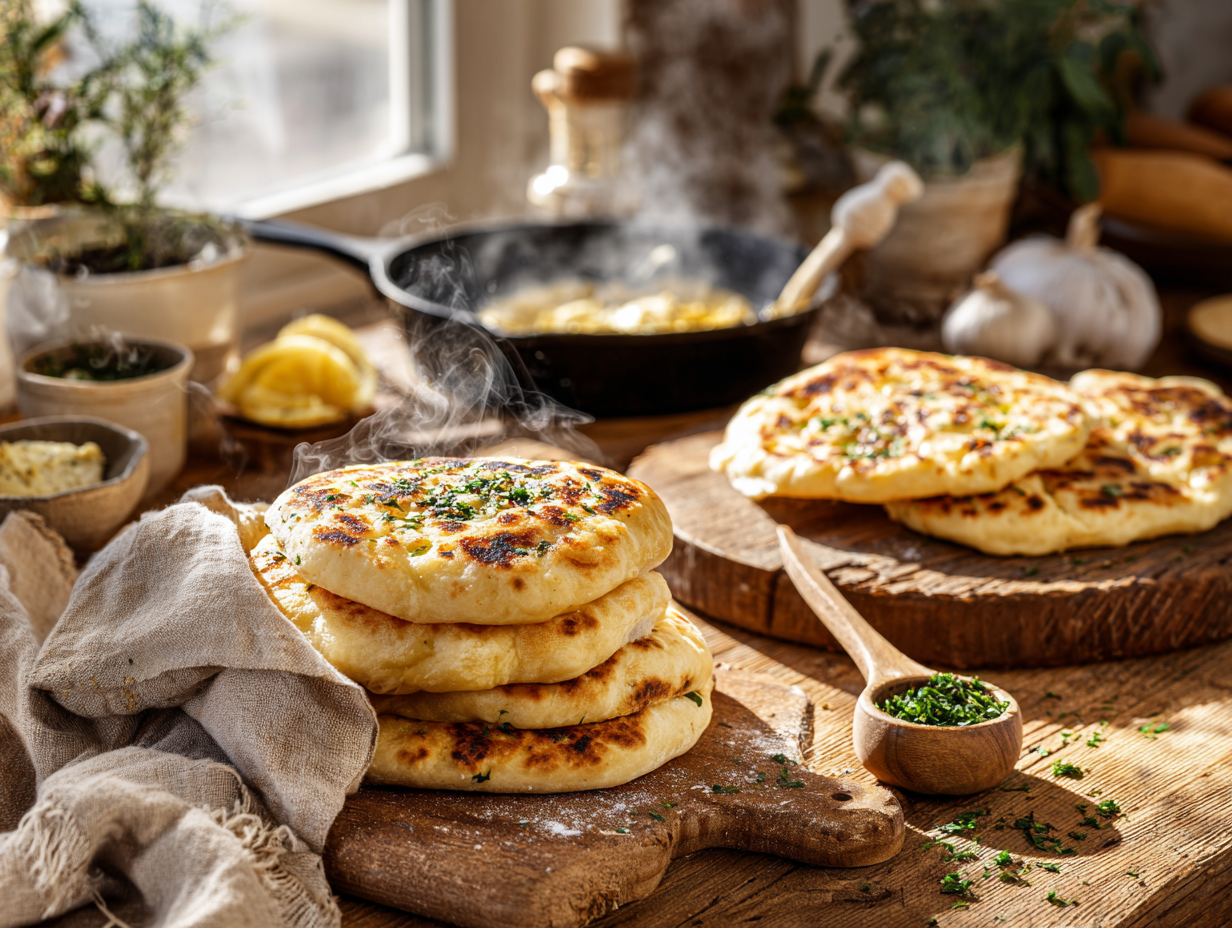
These are no-yeast flatbreads made from flour, salt, olive oil, and a pinch of baking powder — cooked in a dry skillet in under 30 minutes. There is no rising time, no special equipment, and no technique that takes more than one attempt to get right. If you need bread on the table tonight and you have pantry staples, this is the recipe.
Ingredient notes
- Baking powder: This is the only leavening agent here. Check that yours is fresh — if it’s been open more than a year, it may not give you the slight puff these flatbreads need. Test it by dropping a teaspoon into hot water; it should bubble immediately.
- Olive oil: Any standard olive oil works. Extra-virgin adds a mild flavor, but a lighter olive oil or even neutral vegetable oil is a fine swap if that’s what you have.
- Flour: All-purpose is what this recipe is built for. Bread flour will make the flatbreads noticeably tougher. Whole wheat can replace up to half the flour if you want a slightly nuttier result, but expect a denser texture.
- Water temperature: Lukewarm is ideal — cold water makes the dough stiffer and harder to roll thin.
The short version of why this works
Two things actually matter here. First, the baking powder gives the dough a small amount of lift without any resting time, which is what separates these from a cracker-like result. Second, a very hot, completely dry skillet creates surface steam quickly enough to puff the bread slightly and blister the outside before the inside overcooks and dries out. If the pan isn’t hot enough when the dough hits it, you lose both the char and the chew — you end up with something pale and dense instead. Everything else in the recipe is flexible; those two points are not.
What can go wrong
- Flatbreads come out tough and chewy in a bad way: The dough was overworked. Once the ingredients come together into a smooth ball, stop kneading. Extra kneading develops too much gluten and makes the texture rubbery rather than tender.
- Dough keeps springing back when you roll it: It needs a few more minutes of rest. Cover it and wait another 5 minutes before trying again — the gluten will relax and the dough will roll out easily.
- Flatbreads are doughy in the center: They were rolled too thick, or the pan wasn’t hot enough. Aim for roughly 3–4mm thickness and make sure the skillet is fully preheated before the first one goes in.
- Cooking multiple batches for guests and the later ones come out differently: The pan gets hotter as you go. Reduce the heat slightly after the first two flatbreads and watch the timing — the third and fourth will cook faster than the first.
- Flatbreads dry out before serving: Stack them immediately under a clean kitchen towel as each one comes off the pan. The trapped steam keeps them soft. Leaving them uncovered on a plate for even a few minutes makes them stiff.
Storage and reheating
Store leftover flatbreads in an airtight bag or container at room temperature for up to 2 days — the fridge actually dries them out faster, so skip it unless your kitchen is very warm. For longer storage, freeze them in a single layer first, then stack with parchment between each one and seal in a freezer bag; they keep well for up to 2 months. To reheat, a dry skillet over medium heat for about 30 seconds per side is the best option and takes almost no time — skip the microwave if you can, since it makes them soft in a gummy way rather than the good tender way. Straight from the freezer, let them thaw at room temperature for 10 minutes before reheating, or they’ll steam unevenly in the pan.
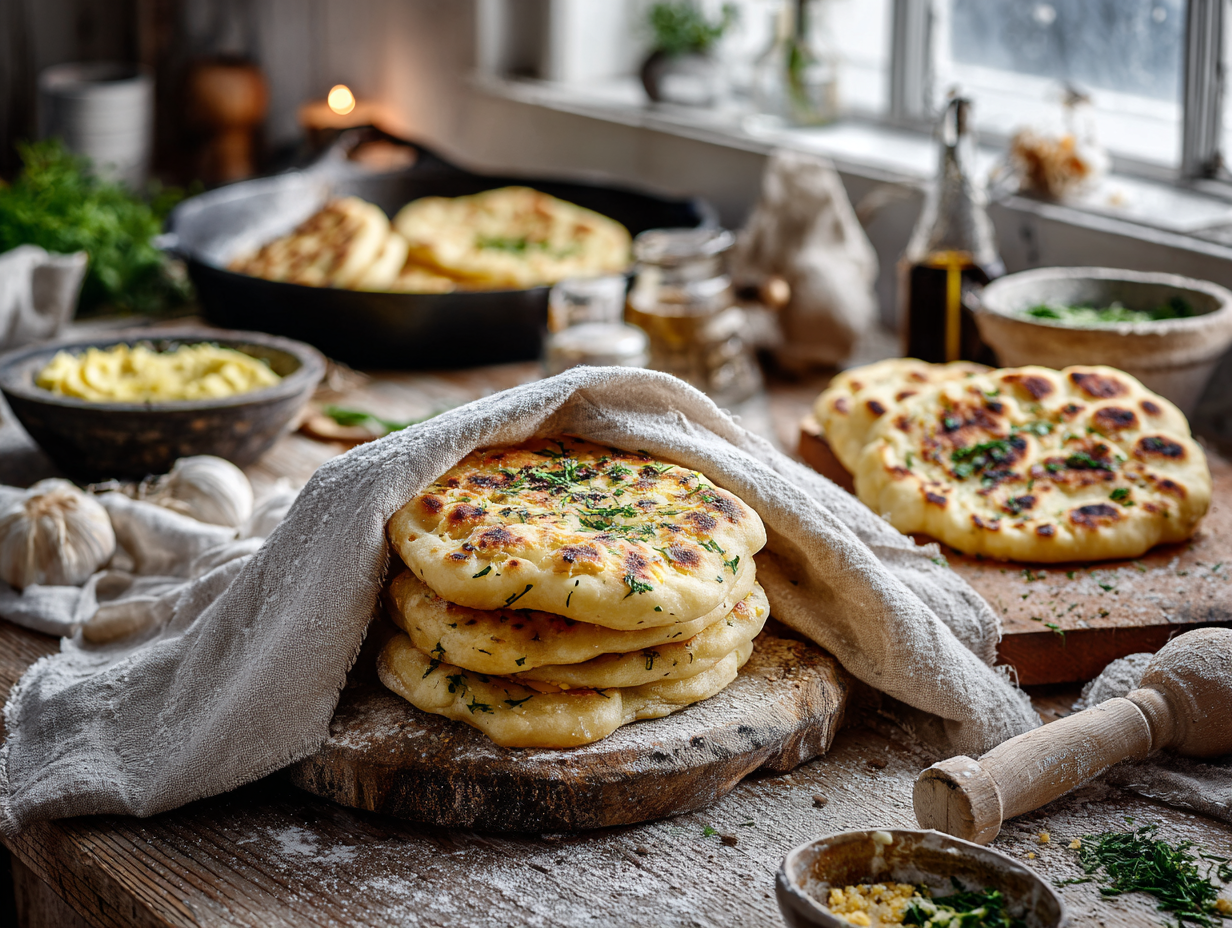
30-Minute Salt Dough Skillet Flatbreads

Equipment
- Large mixing bowl
- Whisk or fork
- Measuring cups and spoons
- Bench scraper or knife
- Rolling pin (or wine bottle as alternative)
- Cast-iron or heavy stainless-steel skillet (2 skillets to speed cooking)
- Pastry brush (for butter/oil)
- Clean kitchen towel
- Small bowl (for herb butter, optional)
Ingredients
For the Salt Dough Flatbreads:
- 1 cup warm water (105–115°F / 40–46°C) comfortably warm to the touch helps the dough relax
- 1 tablespoon fine sea salt fine crystals dissolve evenly
- 1 teaspoon granulated sugar optional; balances savoriness and aids browning
- 2 tablespoons extra-virgin olive oil plus more for cooking; choose a fruity, medium-intensity oil
- 2 cups unbleached all-purpose flour spoon & level for accuracy; King Arthur or Gold Medal work well
- 1 teaspoon aluminum-free baking powder for quick lift and tenderness
- 2 tablespoons all-purpose flour, for dusting use as needed to prevent sticking
For Cooking & Finishing:
- 1 tablespoon olive oil or ghee for the skillet; ghee handles higher heat and adds richness
- 2 tablespoons unsalted butter, melted for brushing; warm but not hot
- 1 clove garlic, minced optional; for herb butter
- 1 tablespoon fresh parsley, finely chopped or dill, cilantro, or chives
- 1 pinch flaky sea salt optional; finish to taste
Instructions
- Season the Water and Preheat Skillets (3 minutes): In a large bowl, whisk together warm water (105–115°F / 40–46°C), fine sea salt, and sugar until dissolved. Whisk in 2 tablespoons olive oil. Place one or two skillets over medium-high heat to preheat; you’re aiming for a surface around 400°F / 205°C or a pan that makes a drop of water skitter and evaporate quickly.
- Make the Dough (4 minutes): Add flour and baking powder to the bowl. Stir with a fork or spatula until a shaggy dough forms, then knead in the bowl or on a lightly floured surface for about 2 minutes until smooth and supple. The dough should feel soft, slightly tacky, and elastic.
- Rest (5 minutes): Cover the dough with an inverted bowl or towel and let it rest for 5 minutes to relax the gluten. Use this time to set up your rolling station and to mix the herb butter (melt butter, then stir in garlic and parsley) if using.
- Divide and Roll (6 minutes): Dust the counter lightly. Cut the dough into 8 equal pieces (use a bench scraper). Roll each piece into a 6-inch round, about 1/8 inch thick. If the dough springs back, give it a brief 1-minute rest. Keep rolled rounds covered with a towel to prevent drying.
- Cook the Flatbreads (10–12 minutes total, in batches): Lightly oil the hot skillet with 1 teaspoon olive oil or ghee. Lay in a round and cook 1–1 1/2 minutes until you see bubbles and deep golden-brown blisters underneath. Flip; cook another 45–60 seconds. Adjust heat to maintain assertive browning without smoking. Cook 2 at a time if you have two skillets to finish all 8 in about 10–12 minutes. Stack cooked breads in a towel to keep warm and soft.
- Finish and Serve (1 minute): Brush warm flatbreads with melted butter or herb butter and finish with a pinch of flaky sea salt. Serve immediately.
- Alternative Method (Oven/Broiler): Preheat a baking steel or inverted sheet to 475°F / 246°C. Bake rolled rounds 1–2 minutes per side until blistered, finishing under the broiler briefly if needed for extra char. Brush and season as above. If you don’t have a rolling pin, a wine bottle works; if you don’t have a pastry brush, dab with a folded paper towel held by tongs.
Notes
Lisa’s Tips:
- Softer Crumb: Replace 1/4 cup water with 1/4 cup plain yogurt for extra tenderness and tang.
- Extra Flavor: Add 1 teaspoon za’atar, sesame seeds, or nigella to the dough during mixing.
- Heat Management: If the pan smokes, lower heat slightly and wipe the surface; ghee tolerates higher heat than olive oil.
- Make-Ahead: Dough can rest, covered, up to 2 hours at room temp or 24 hours refrigerated. Bring to room temp before rolling.
- Gluten-Free Swap: Use a 1:1 gluten-free all-purpose blend and knead gently; add 1 teaspoon psyllium husk if you have it for better elasticity.
- Professional Note: For deep, flavorful browning, let the first side cook until you see several dark spots before flipping—color equals flavor. If your kitchen is dry, lightly mist the dough balls before rolling to prevent a dusty surface. Keep the stack wrapped to trap steam and maintain flexibility for wraps.
Serving Suggestions:
Stack breads on a warm plate, wrapped in a clean towel. Brush with herb butter so they glisten, then shower with parsley. Pair with creamy hummus, tzatziki, or smoky eggplant dip; or use as a base for shawarma, grilled halloumi, or roasted vegetables. Perfectly cooked breads show leopard-like brown blisters, soft steam inside, and a nutty, toasty aroma.Culinary Context:
From Bedouin taboon to Greek pita and Turkish bazlama, quick pan-breads have long turned simple salt, flour, and water into daily sustenance. This streamlined salt dough pays homage to that heritage with a weeknight-friendly approach I learned staging beside a wood-fired oven—only here, your skillet does the magic.Optional Advanced Instructions:
- Parallel Cooking: Roll the next round while the current one cooks to finish in ~18 minutes total.
- Herb Infusion: Warm the butter with garlic over low heat for 30 seconds (no color) to mellow the bite.
- Freezer-Ready: Cook breads 30 seconds lighter, cool, then freeze with parchment between. Reheat in a hot dry skillet 45–60 seconds per side.
Timing:
- Prep Time: 12 minutes (mixing 3–4, kneading 2, resting 5, dividing/rolling ~6, overlapping tasks)
- Cook Time: 18 minutes (two skillets, 8 breads total)
- Total Time: 30 minutes
Nutrition
Common questions
Can I make the dough ahead of time?
Yes — the dough keeps in the fridge, wrapped tightly, for up to 24 hours. Let it sit at room temperature for 10 to 15 minutes before rolling so it relaxes enough to roll thin without fighting you.
How do I double or triple the recipe for a group?
The recipe scales up without any changes to ratios or technique. The practical bottleneck is pan space, so running two skillets at the same time cuts your cook time roughly in half — that’s the easiest way to get 8 to 12 flatbreads on the table without a long wait.
Do I need a cast-iron skillet specifically?
No — any heavy skillet that holds heat well will work. A heavy stainless-steel pan is a solid alternative. Avoid thin nonstick pans; they don’t get hot enough to blister the surface properly.
Can I use gluten-free flour?
A 1:1 gluten-free all-purpose blend can work, but the texture will be more fragile and the dough harder to roll without tearing. Chill the dough for 15 minutes before rolling and handle it gently — it won’t stretch the way regular dough does.
Why aren’t my flatbreads getting those dark blistered spots?
The pan needs to be hotter before the dough goes in. Preheat it over medium-high for at least 2 full minutes — it should feel very hot when you hold your hand a few inches above the surface. Also make sure the pan is completely dry; any oil in the pan will fry the flatbread rather than blister it.
If you liked this one
- Quick Skillet Garlic Flatbreads
- Smoky Baba Ganoush in 30 Minutes
- Weeknight Shakshuka
- Smoky Mediterranean Bean Skillet