
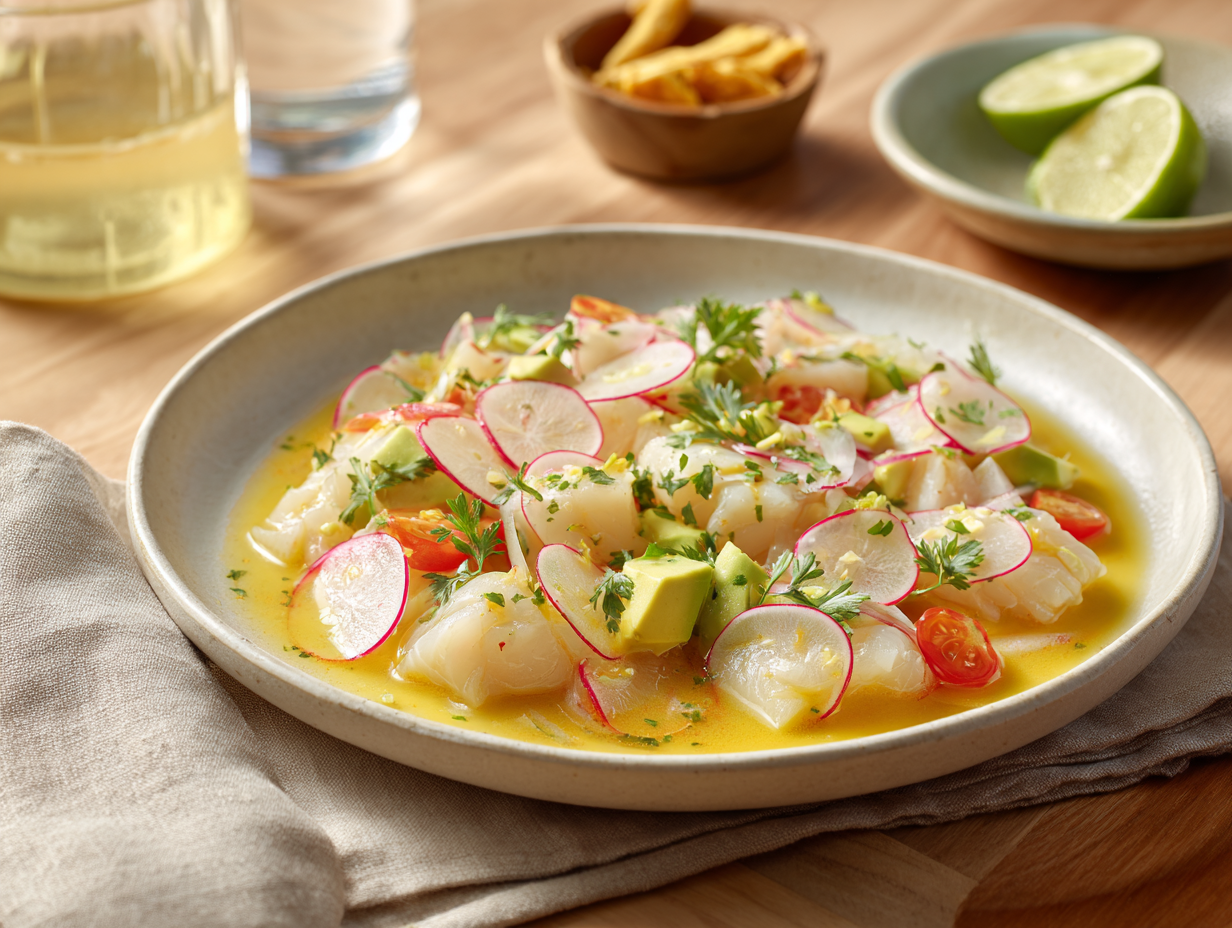
This is a no-cook ceviche built around sea bass cured in a lime-and-aji-amarillo marinade called leche de tigre, finished with avocado and a drizzle of olive oil. The whole thing comes together in 30 minutes, and the only equipment you need is a knife, a bowl, and a citrus juicer. If you want something fresh and light on the table fast, this is a reliable option.
What makes this version work
Two things matter here more than anything else. First, the soak: red onions go into cold water for at least 10 minutes before they join the bowl. Raw onion is sharp enough to overwhelm everything else, and that soak pulls out the harsh bite without killing the flavor — especially important if you’re serving anyone who claims to hate onions. Second, the curing time is kept to 12–15 minutes. Go much longer and the sea bass firms up past the point of being pleasant; the outside turns chalky while the center stays uneven. Pull the fish when the edges are just opaque and the center still looks slightly translucent. It will finish as you plate.
Mistakes to avoid
- Using the wrong bowl: Lime juice reacts with aluminum and cast iron, leaving a metallic taste in the marinade. Use glass or stainless steel — the recipe card lists this, but it’s easy to grab the wrong bowl in a hurry.
- Cutting the fish too thick: Chunks larger than ¾ inch won’t cure evenly in 15 minutes. The outside will be done and the center will still be fully raw. Aim for consistent ½-inch cubes.
- Skipping the chill on your bowl: A warm bowl speeds up the cure unevenly. Pop your mixing bowl in the fridge for 5 minutes while you prep everything else — it keeps the fish at a safe temperature and gives you more control over timing.
- Adding avocado too early: Avocado goes in right before serving, not during the cure. It turns brown and mushy if it sits in the lime juice for more than a few minutes. Skip the garnish on top if you’re packing this to go — not worth the extra dish.
- Using bottled lime juice: The flavor is noticeably flatter and the cure is less reliable because the acidity varies by brand. Fresh limes only for this one.
Keeping and reheating
Ceviche does not keep well, and that’s worth saying plainly. The fish continues to cure in the lime juice after you stop the clock, so leftovers stored overnight will be noticeably tougher and more acidic by the next day. If you need to get ahead, you can prep all the vegetables and mix the leche de tigre up to 24 hours in advance and refrigerate them separately in sealed containers — then add the raw fish and cure it fresh when you’re ready to eat. Do not freeze ceviche; the texture of the fish after thawing is unpleasant. There is no reheating step here since this dish is served cold.
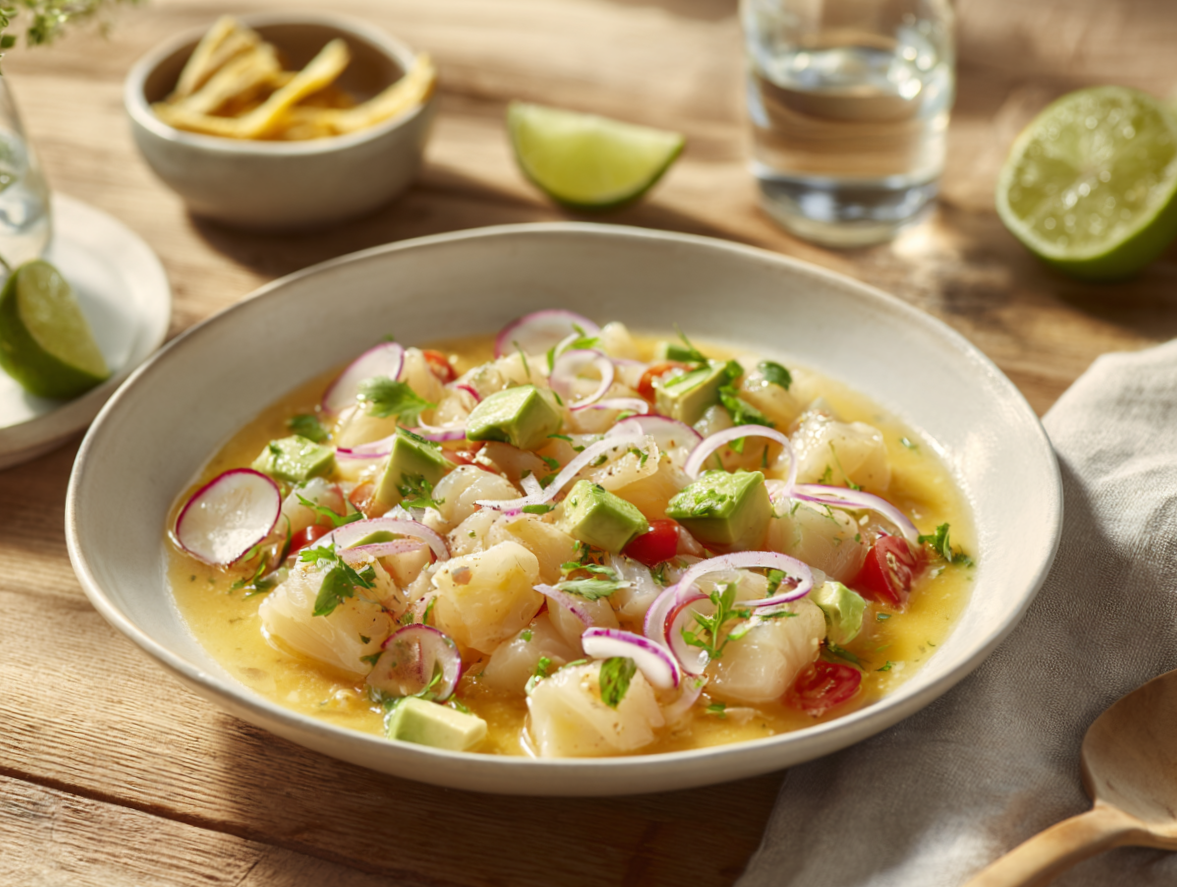
Aji Amarillo Sea Bass Ceviche (Peruvian-Inspired, 30 Minutes)

Equipment
- Non-reactive mixing bowl (glass or stainless steel)
- Chefs Knife
- Cutting board
- Citrus juicer (or reamer)
- Measuring cups and spoons
- Microplane zester (for garlic)
- Fine-mesh sieve or colander
- Mixing spoon or silicone spatula
- Plastic wrap
- Timer
- Chilled serving bowls
Ingredients
For the Ceviche:
- 0.5 small red onion, very thinly sliced about 1/2 cup; soaking mellows the bite
- 2 cups ice water for soaking onion
- 1 cup freshly squeezed lime juice from about 8–10 limes; choose heavy, thin-skinned limes
- 2 tablespoons fresh orange juice optional, adds roundness
- 1-2 teaspoons aji amarillo paste start with 1 tsp for mild heat; add to taste
- 1 clove garlic, finely grated use a Microplane for a smooth leche de tigre
- 1 teaspoon kosher salt such as Diamond Crystal; adjust to taste
- 0.25 teaspoon granulated sugar balances the acidity
- 1 lb sashimi-grade sea bass (or halibut), skinless, cut into 1/2-inch dice very fresh, firm; sustainably sourced if possible
- 1 cup English cucumber, diced 1/4-inch peeled if waxed
- 0.5 cup cherry tomatoes, halved optional; adds sweetness and color
- 2 tablespoons fresh cilantro leaves, finely chopped tender stems okay
- 1 tablespoon extra-virgin olive oil fruity style for a glossy finish
- 1 medium ripe avocado, diced 1/2-inch just-ripe for clean edges
For Garnishes & To Serve:
- 0.5 cup sweet corn kernels, cooked and cooled optional; canned is fine—rinse and drain
- 4 medium radishes, very thinly sliced for crunch and peppery lift
- 2 tablespoons micro cilantro or small cilantro leaves for garnish
- 2 medium limes, cut into wedges for serving
- 2 cups plantain chips or tortilla chips for scooping
- 1 pinch flaky sea salt to taste; to finish
Instructions
- Set Up and Chill: Place your serving bowls in the refrigerator to chill at 36–40°F (2–4°C). Have a non-reactive mixing bowl ready.
- Tame the Onion: Thinly slice the red onion and soak in ice water for 5 minutes to mellow its sharpness. Drain well through a sieve and gently pat dry; the slices should look crisp and translucent with a mild aroma.
- Make the Leche De Tigre (citrus marinade): In a non-reactive bowl, whisk together lime juice, orange juice (if using), aji amarillo paste, grated garlic, kosher salt, and sugar until slightly cloudy and aromatic. Taste—the blend should be bright, zesty, and lightly salty with gentle heat. If you don’t have a Microplane, mince the garlic finely and mash it with a pinch of salt using the side of your knife to form a paste.
- Cut and Cure the Fish: Pat the fish very dry, then cut into clean 1/2-inch dice. Slide into the marinade and stir to coat. Cover and refrigerate 12–15 minutes at 36–40°F (2–4°C), stirring once halfway. It’s ready when the edges turn opaque while the centers remain slightly translucent—this yields the most tender texture.
- Add Crunch and Herbs: Fold in the drained onion, cucumber, tomatoes (if using), and cilantro. Drizzle in the olive oil and toss gently until glossy. Taste and adjust salt and heat (add a touch more aji amarillo if desired). Let sit 1–2 minutes so flavors marry.
- Finish with Avocado: Just before serving, gently fold in the diced avocado so it keeps its shape. If using corn, add it now for sweetness and extra texture.
- Plate Beautifully: Spoon fish and some leche de tigre into chilled bowls, piling high for height. Garnish with radish slices and micro cilantro. Finish with a whisper of flaky sea salt. Serve immediately with lime wedges and plantain or tortilla chips.
Notes
Lisa’s Tips:
- Fish Choice: Sea bass, halibut, or snapper work beautifully. Look for sashimi-grade or fish sold specifically for raw preparations; it should smell like the ocean, not “fishy.”
- Acid Balance: Limes vary. If your limes are very tart, keep the orange juice; if they’re mellow, you can omit it.
- Heat Control: Aji amarillo paste is fruity and moderately hot. Substitute 1 minced serrano or jalapeño plus a pinch (1/8 teaspoon) turmeric for color if you can’t find the paste.
- Onion Finesse: A 5-minute ice bath crisps and tames onion quickly; for even gentler flavor, extend to 10 minutes.
- Texture Guard: Add avocado last and fold, don’t stir, to keep clean cubes.
- Food Safety: Citrus curing is not a substitute for heat; people at higher risk should use previously frozen fish (frozen at -4°F / -20°C for 7 days) or choose cooked shrimp as a substitute.
Serving Suggestions:
- Plating: Use shallow, chilled white bowls to showcase the ceviche’s jeweled colors—pearlescent fish, emerald cilantro, ruby radish, and golden aji.
- Garnish: Micro cilantro, paper-thin radish, and a final sprinkle of flaky sea salt add fragrance, crunch, and sparkle.
- Pairings: Crisp lager, Sauvignon Blanc, or a citrusy mocktail (lime, soda, mint) complement the acidity.
Culinary Context:
Ceviche is a cornerstone of Peruvian cuisine, with countless regional variations. The leche de tigre—zesty, lightly spicy, and aromatic—is the soul of the dish. This version honors that tradition while inviting in a modern gloss of olive oil and the creamy counterpoint of avocado.Optional: Make-Ahead & Advanced:
- Prep Ahead (up to 2 hours): Chill bowls, slice and soak onion (store dried slices covered and chilled), dice cucumber and tomatoes, and juice citrus. Keep them separate and cold.
- Leche De Tigre: You can whisk the marinade up to 2 hours ahead; keep very cold. Add fish only when ready to cure.
- Beginner Tip: If dicing fish feels tricky, chill it 15 minutes in the freezer first so it firms up for cleaner cuts.
Timing:
- Prep Time: 15 minutes
- Cook (Cure) Time: 15 minutes
- Total Time: 30 minutes
Course:
MainCourseOrigin:
Peruvian (Latin American)Nutrition
FAQ
Is it safe to eat the fish if it’s not fully cooked through?
The lime juice does change the texture and appearance of the fish, but it is not the same as heat-cooking and does not eliminate all pathogens. That’s why the recipe specifically calls for sashimi-grade sea bass — sourcing fish that has been handled and frozen to sashimi standards is the actual safety step here, not the acid alone.
Can I use a different fish if I can’t find sea bass?
Yes — halibut or flounder work well because they have a similar firm, mild flesh that holds up in the marinade without falling apart. Avoid anything oily like salmon or mackerel, which can clash with the brightness of the lime and aji amarillo.
Where do I find aji amarillo paste?
Most Latin grocery stores carry it jarred, and it’s also widely available online. If you can’t find it, a small amount of jarred yellow pepper paste plus a pinch of turmeric for color is a reasonable stand-in, though the fruity heat of real aji amarillo is distinct.
Can I make this less spicy for kids?
Yes — just reduce the aji amarillo paste by half or leave it out entirely and the dish still works well. The lime, garlic, and fresh vegetables carry plenty of flavor on their own, and you can serve the paste on the side for adults who want heat.