
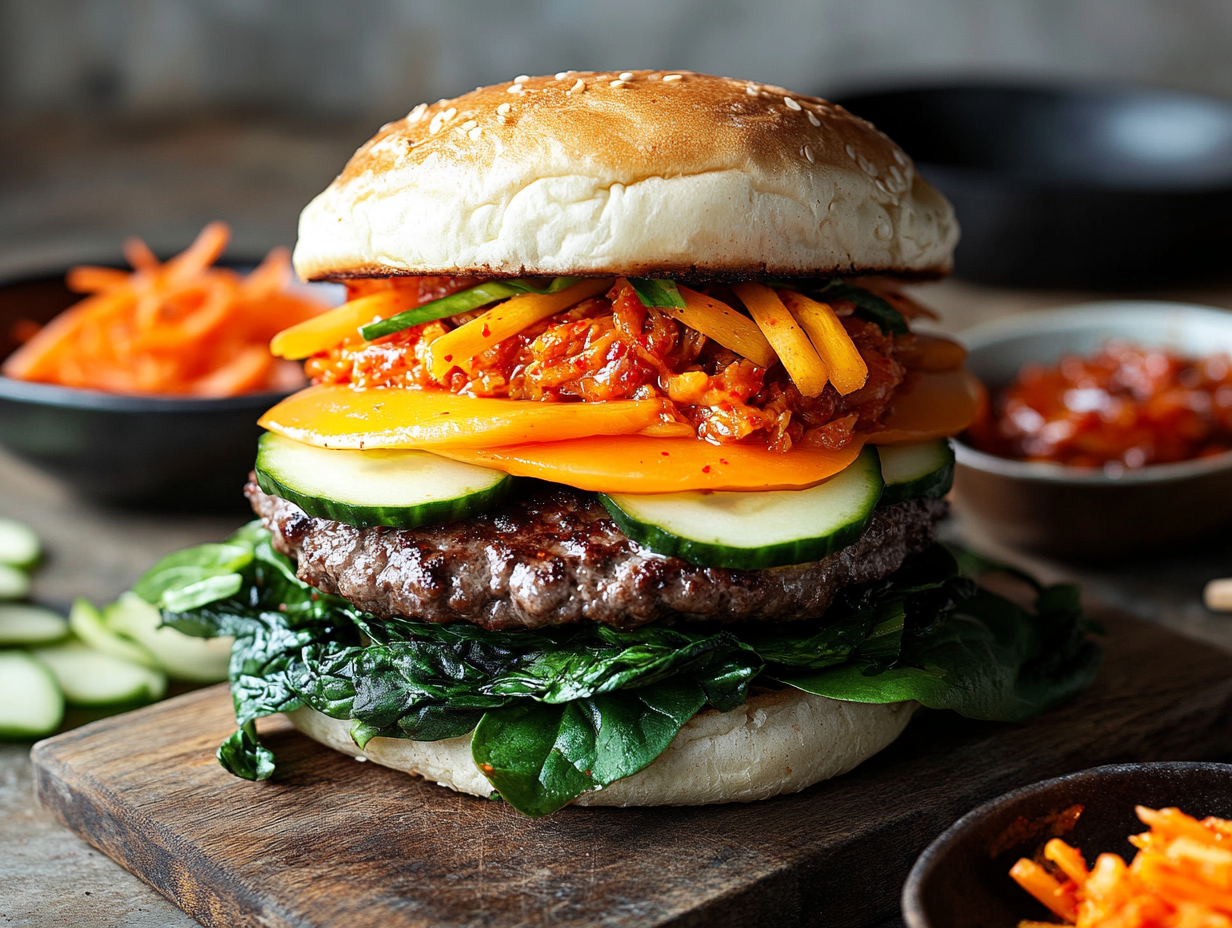
This burger mixes gochujang-seasoned ground beef with fresh spinach, julienned carrots, cucumber, and kimchi — all on a toasted bun. It sounds like a project, but the whole thing comes together in 30 minutes with one skillet and a mixing bowl. If your usual burger night has gotten boring, this is a low-effort way to change that.
The short version of why this works
Two things carry this recipe. First, the gochujang goes into the patty, not just on top — that means the heat and savory depth are cooked into the meat rather than sitting as a sauce that slides off. Second, the cold, crunchy toppings (cucumber, carrots, kimchi) land on a hot patty, and that contrast is what makes each bite interesting. Neither step requires any special skill. Mix the patty well so the gochujang distributes evenly, and don’t skip toasting the buns — a soft bun turns soggy fast under those wet toppings.
Storage and reheating
Store cooked patties separately from the toppings. Patties keep in an airtight container in the fridge for up to 3 days; reheat them in a skillet over medium heat for 2–3 minutes per side, which keeps the outside from going rubbery the way a microwave does. Raw, shaped patties can be frozen for up to 2 months — stack them with parchment between each one and thaw overnight in the fridge before cooking. The fresh toppings (spinach, cucumber, carrots) don’t hold well once assembled, so keep them separate and add them right before serving. Kimchi is already fermented and keeps fine in its own container for weeks.
Mistakes to avoid
- Overworking the meat mixture: Mix just until everything is combined. Overworking ground beef makes patties dense and tough — 30 seconds of mixing is usually enough.
- Making the patties too thick: Thick patties take longer to cook through and can end up charred outside while still pink inside. Aim for about ¾ inch thick, and press a small indent in the center with your thumb so they don’t puff up.
- Using full-sodium soy sauce without adjusting: The recipe calls for low-sodium soy sauce. If you only have regular, use half the amount — gochujang already brings salt, and the patties can easily go over.
- Adding kimchi straight from a cold jar onto a hot patty without draining it: Wet kimchi makes the bun soggy quickly. Give it a quick squeeze or blot with a paper towel before piling it on — skip the extra bowl and just do it over the sink.
- Skipping the rest after cooking: Even a 2-minute rest before assembling lets the juices redistribute. Cut into the patty immediately and you lose them onto the cutting board.
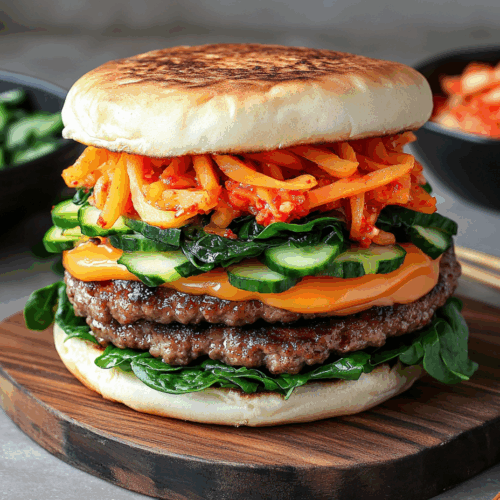
Korean Bibimbap-Inspired Burger

Equipment
- Skillet
- Mixing bowl
- Spatula
- Chopping board
- Knife
Ingredients
Burger Ingredients
- 1 lb ground beef preferably 80% lean
- ¼ cup gochujang Korean chili paste
- 1 large egg
- 1 tbsp soy sauce low-sodium
- 4 medium burger buns toasted
Toppings
- 1 cup spinach fresh, washed
- ½ cup carrots julienned
- ½ cup cucumber sliced thinly
- ¼ cup kimchi chopped
Instructions
- Prepare the Burger Mix: In a mixing bowl, combine the ground beef, gochujang, egg, and soy sauce. Mix thoroughly until ingredients are well blended.
- Form and Cook Patties: Divide the meat mixture into four even portions and shape them into patties. Heat a skillet over medium-high heat and cook each patty for about 4-5 minutes on each side, until nicely browned and cooked through. Remove and let rest.
- Assemble the Burger: Place a handful of fresh spinach on the bottom half of each toasted bun. Top with a cooked patty, followed by a generous portion of julienned carrots, sliced cucumber, and a spoonful of kimchi. Add the top bun to complete.
Notes
- For an extra fusion touch, consider adding a dash of sesame oil to the burger mix.
- If you prefer more heat, increase the gochujang or add sliced jalapeños to the toppings.
Nutrition
Common questions
How spicy is this burger?
With ¼ cup of gochujang across four patties, the heat is noticeable but not aggressive — closer to a mild-medium on most scales. Kids who handle mild salsa usually do fine with it; if you’re cooking for very spice-sensitive eaters, start with 2 tablespoons and taste the raw mix before forming patties.
Can I use ground turkey or chicken instead of beef?
Yes — ground turkey or chicken works, though the patties will be leaner and can dry out faster. Cook to an internal temperature of 165°F and pull them off the heat as soon as they hit it; don’t rely on browning alone as a doneness cue.
Where do I find gochujang?
Most large grocery stores carry it in the international foods aisle, usually near soy sauce or Asian condiments. It also comes in tubes, which are easier to measure and store than tubs.
Can I make the patties ahead of time?
Yes — mix and shape the patties up to 24 hours ahead and keep them covered in the fridge. This actually helps them hold together better during cooking since the cold firms up the fat in the meat.
My kids don’t like kimchi — what can I substitute?
Leave it off entirely and the burger still works well. A few thin pickle slices give a similar tangy contrast without the fermented flavor, and most kids are already on board with pickles.
Can I cook these on an outdoor grill instead of a skillet?
You can, but gochujang contains sugar and will char quickly over direct high heat. Use medium heat and watch them closely, or cook them in a grill pan to get the char marks without burning the outside before the inside is done.
What to cook next
- Quick Korean Bibimbap Bowls
- Spicy Korean Rice Cakes
- Diner-Style Patty Melt Recipe
- Greek Beef Pitas Fast