
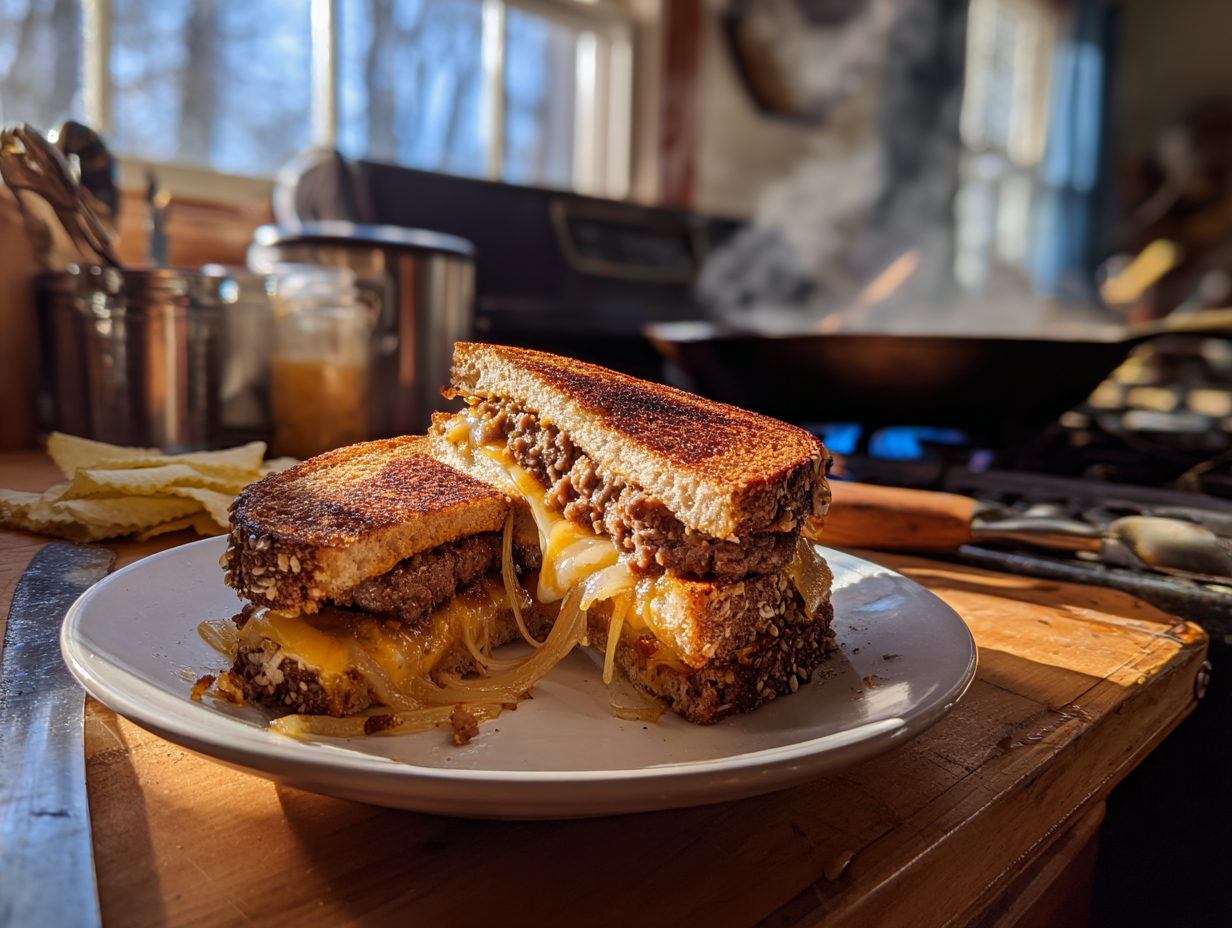
A patty melt is a beef patty, Swiss cheese, and caramelized onions griddled between two slices of buttered rye — closer to a grilled cheese than a burger, and better than either on its own. This version gets the onions done in about nine minutes using a pinch of baking soda to speed things up, so the whole sandwich is on the table in 30 minutes. Make a double batch of onions while you’re at it; they’ll carry two or three more meals this week.
Smart swaps
- Rye bread: Seeded rye is the standard, but if your store only carries marbled rye or a dense whole-grain sandwich loaf, either works fine. Avoid soft sandwich white — it won’t hold up to the butter and heat.
- Swiss cheese: Gruyère melts even smoother and has a sharper flavor. Provolone is a milder backup. Pre-sliced deli Swiss is fine; just layer two slices per sandwich so you get full coverage.
- 80/20 ground beef: Don’t go leaner. A 90/10 patty will be dry by the time the bread is golden. If 80/20 is all you have, it’s the right call — skip the 85/15.
- Yellow onions: Sweet onions (Vidalia) caramelize a little faster and taste slightly milder. White onions work but take a minute or two longer.
Why this recipe works
Two things actually matter here. First, the baking soda: a small amount raises the pH of the onions, which accelerates browning so you get genuinely sweet, jammy onions in around nine minutes instead of 45. Without it, high heat just scorches the outside before the sugars develop. Second, the temperature drop when you griddle the assembled sandwich — starting higher to sear the patty, then coming down to around 350°F to finish the sandwich — means the bread gets a deep golden crust without burning before the cheese has fully melted through. Both steps are fast, and skipping either one shows up immediately in the finished sandwich.
What can go wrong
- Onions burn instead of caramelize: The baking soda speeds things up, which means the window between golden and scorched is shorter than you’d expect. Keep the heat at medium-high, not high, and stir every 60 to 90 seconds. If the pan looks dry, add a small splash of water to deglaze.
- Patty shrinks and domes up: Ground beef contracts as it cooks. Press the raw patty slightly larger than the bread slice, and make a shallow thumbprint in the center before it hits the pan — this counteracts the dome and keeps the patty flat so every bite has even coverage.
- Bread burns before cheese melts: This usually means the pan is too hot when you griddle the assembled sandwich. Let the skillet cool for a minute after cooking the patties, or use a lid or inverted metal bowl over the sandwich for the last 60 seconds to trap heat and melt the cheese without over-toasting the bread. Skip the garnish — not worth the extra dish.
- Soggy bread on the bottom: Don’t assemble the sandwich until you’re ready to griddle it. Onions sitting on bread for even five minutes will steam it soft. Build it in the pan.
- Cheese slides off: Place the cheese directly on the hot patty as soon as it comes off the heat, before you build the sandwich. The residual heat starts the melt, so it stays put when you flip.
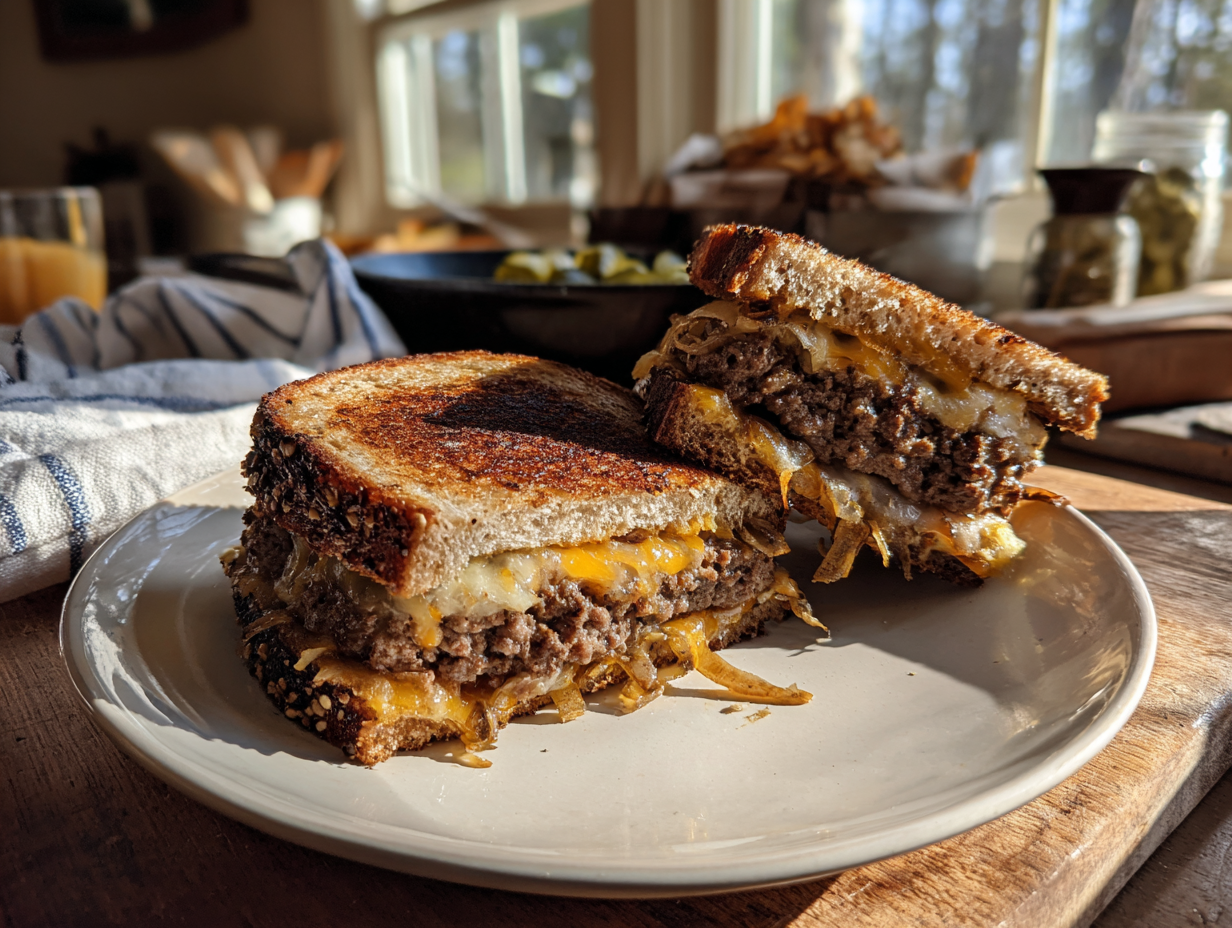
Diner-Style Patty Melt with Quick Caramelized Onions

Equipment
- 12-inch cast-iron skillet or flat griddle
- Medium skillet (if cooking onions separately)
- Fish spatula or sturdy turner
- Mixing bowl
- Cutting board and chef's knife
- Measuring spoons
- Small offset spatula or butter knife
- Instant-read thermometer (optional)
- Lid or large metal bowl (to help melt cheese)
Ingredients
For the Quick Caramelized Onions:
- 2 tbsp unsalted butter good-quality butter for best browning
- 4 cups thinly sliced yellow onions from about 2 large onions; choose firm, heavy onions
- ½ tsp kosher salt Diamond Crystal preferred; use 1/4 tsp if table salt
- ⅛ tsp baking soda speeds browning; don’t exceed or onions can turn mushy
- 2 tbsp water or low-sodium beef broth for quick deglazing
For the Beef Patties:
- 1.25 lb ground beef (80/20) freshly ground if possible for best texture
- 1 tsp Worcestershire sauce adds savory depth
- ¾ tsp kosher salt Diamond Crystal preferred; use 1/2 tsp if table salt
- ½ tsp freshly ground black pepper
- 1 tsp Dijon mustard optional but recommended for brightness
- 1 tbsp neutral oil (canola or grapeseed) for searing
For the Assembly:
- 8 slices seeded rye bread bakery rye for best flavor and structure
- 3 tbsp unsalted butter, softened for spreading on bread
- 8 slices Swiss cheese about 6 oz; choose full-fat for best melt
- 1 tbsp mayonnaise optional; mix with butter for extra-crisp crust
- 12–16 pieces dill pickle chips optional, for serving
Instructions
- Prep and Preheat (10 minutes): Thinly slice the onions and set out the cheese and bread. In a large cast-iron skillet, begin heating over medium-high until the surface is hot enough that a drop of water skitters (about 400°F / 205°C if using an infrared thermometer). Have a lid or metal bowl nearby to trap heat when melting cheese later.
- Quick-caramelize the Onions (9 minutes): Add 2 tbsp butter to the hot skillet. When foaming, add the onions and 1/2 tsp kosher salt; toss. Sprinkle in 1/8 tsp baking soda and cook, stirring frequently, until onions slump and turn deep golden, 6 minutes. Splash in 2 tbsp water/broth to deglaze and continue until jammy and browned, 3 minutes more. Transfer onions to a bowl and keep warm.
- Mix and Shape the Patties (about 1 minute): In a bowl, gently combine ground beef, Worcestershire, 3/4 tsp kosher salt, black pepper, and Dijon (if using). Divide into 4 portions and press into thin, bread-sized rectangles or rounds—about 1/2 inch thick. Don’t overwork; streaks of fat should remain visible.
- Sear the Patties (7 minutes total): Return skillet to medium-high (aim for ~400°F / 205°C). Add 1 tbsp oil. Sear patties 3 minutes on the first side until a mahogany crust forms and edges look browned. Flip and cook 2 minutes more for medium; adjust to your preference (135°F / 57°C for medium, up to 160°F / 71°C for well done). Reduce heat to medium and keep patties warm on a plate for assembly (remaining 2 minutes of the 7 include transferring and heat adjustment).
- Butter the Bread: Spread the outside of each rye slice with softened butter (mix in 1 tbsp mayo if using for extra crispness). Keep the unbuttered sides facing up for assembly.
- Build the Sandwiches: On 4 slices (unbuttered sides up), place 1 slice Swiss, a generous layer of onions, a patty, then another slice of Swiss. Cap with remaining bread, unbuttered side touching the cheese and fillings (buttered side facing out).
- Griddle the Melts (4 minutes total): Reduce skillet to medium heat (about 350°F / 175°C). Place sandwiches in the pan. Cook 2 minutes, pressing gently with a spatula for even contact; cover briefly with a lid/bowl to help melt cheese. Flip and cook 2 minutes more until the bread is deep golden and the cheese is fully melted.
- Serve: Slice diagonally. The crust should be deeply browned and crisp; cheese should stretch slightly as you separate halves; onions should be glossy and sweet. Serve immediately with dill pickles.
Notes
Lisa’s Tips:
- Onion Speed-caramelization: A tiny pinch of baking soda raises pH and accelerates browning. Don’t overdo it or onions can turn soft or soapy. A splash of broth adds savoriness fast.
- Cheese Options: Swiss is classic; try a 50/50 mix of Swiss and Gruyère for nuttier depth, or add a thin slice of American for extra meltability.
- Bread Matters: A sturdy, bakery rye resists sogginess. If using softer rye, toast it lightly before assembly to keep structure.
- Ultra-crisp Crust: Mix 1 tbsp mayo into the softened butter before spreading; mayo’s egg and oil help even browning.
- Flat-top Effect at Home: Cook on a preheated baking steel or large griddle over two burners for diner-style even heat.
- Dietary Tweaks: Use gluten-free rye-style bread and check Worcestershire is GF; for a lighter option, use 90/10 beef and add 1 tsp neutral oil to the mix for juiciness.
Nutrition
FAQ
Can I make the caramelized onions ahead of time?
Yes — they’re actually better the next day. Store them in a sealed container in the fridge for up to five days, or freeze them in tablespoon-sized portions for up to three months. Reheat straight in the pan while the patties cook.
What bread works if I can’t find rye?
A sturdy sourdough is the closest substitute — it has enough structure and tang to hold up. Avoid anything labeled ‘soft’ or ‘sandwich-style’; those go limp under the weight of the filling.
Can I cook these on a regular nonstick pan instead of cast iron?
You can, but you’ll get less crust on the patty. Cast iron holds heat evenly across the surface, which is what gives the beef a proper sear. If you use nonstick, preheat it longer than you think you need to.
How do I know when the patty is cooked through without cutting it open?
An instant-read thermometer reading 160°F in the center is the reliable method. At half an inch thick, that usually takes about three to four minutes per side over medium-high heat.
Can I use a different protein — like ground turkey or chicken?
Ground turkey works, but it needs to hit 165°F internally, which means slightly longer cook time and a higher risk of drying out. Add a teaspoon of olive oil to the mix before forming the patties to help with moisture.
What’s the best way to reheat a leftover patty melt?
A dry skillet over medium-low heat for about three minutes per side is the only method that keeps the bread crispy. The microwave turns it soft and steamy — avoid it.
Try these next
- Perfect Bistro French Fries
- Quick 30-Minute Dill Pickles
- Weeknight Hamburger Soup Recipe
- Greek Beef Pitas Fast