
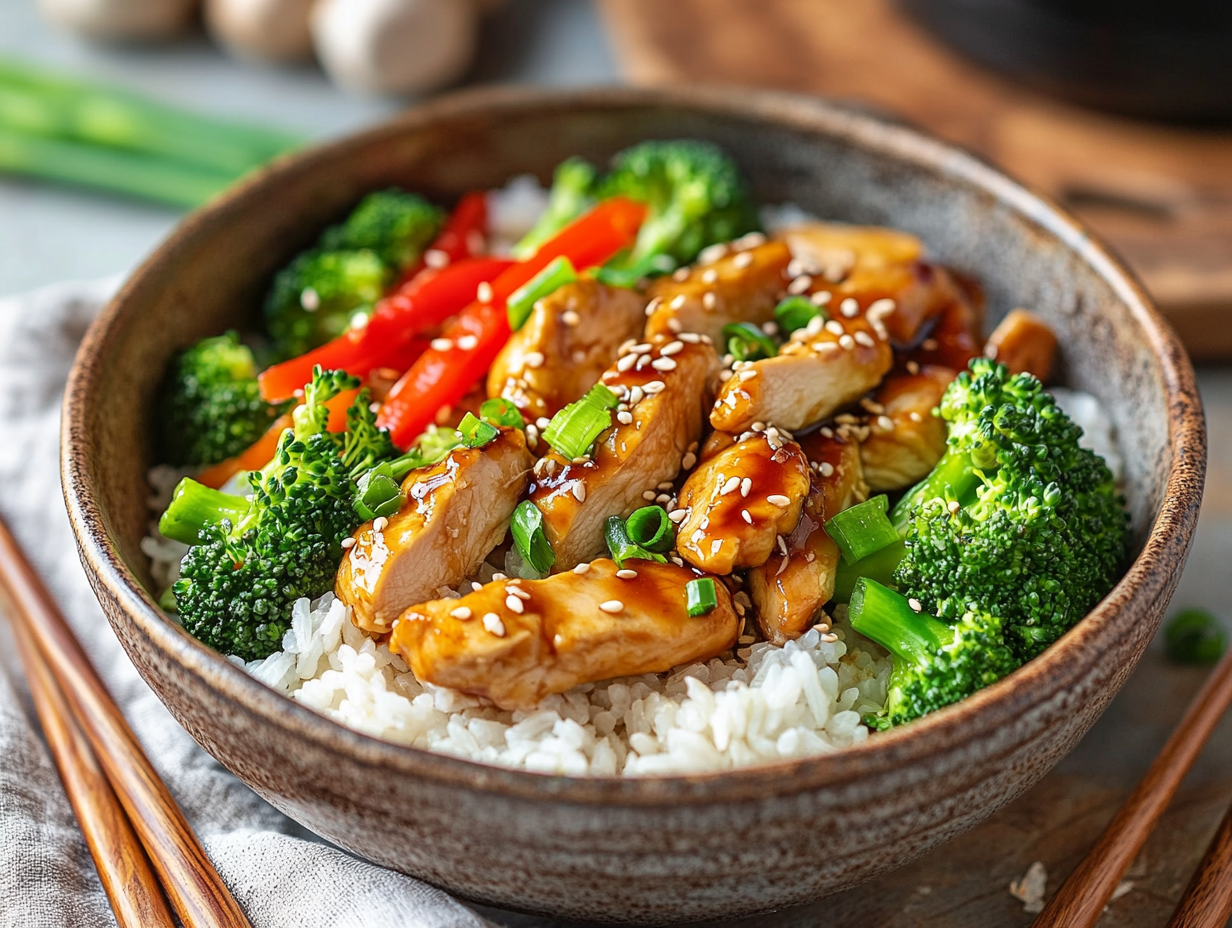
This is a one-skillet teriyaki chicken bowl with a quick homemade sauce — soy sauce, mirin, honey, garlic, and ginger — that comes together in 30 minutes start to finish. The honest reason to make it tonight: chicken thighs are forgiving, the ingredient list is short, and you probably already have most of it. No special equipment, no complicated steps.
Why this recipe works
Two things matter here. First, the chicken marinates in the same sauce it cooks in, so you get flavor all the way through — not just on the surface — even with only a 5-minute soak. Second, cooking the vegetables first and then adding the chicken to the same pan lets the sauce reduce and thicken around everything at once. That’s how you get the glossy coating on the chicken instead of a watery puddle at the bottom of the bowl. Neither step requires any skill; they just require doing them in the right order.
About the ingredients
- Mirin: Sold in the Asian foods aisle of most grocery stores. It’s a sweet rice wine and it’s what gives the sauce its slight stickiness. Don’t substitute rice vinegar — it’s sour, not sweet. In a pinch, use 1 tablespoon of dry sherry plus 1 extra teaspoon of honey.
- Sesame oil: Use toasted sesame oil (the dark kind), not the pale refined version. A little goes a long way. It’s for sautéing here, but don’t crank the heat too high — it burns faster than neutral oils.
- Chicken thighs: Boneless, skinless thighs stay juicy even if you cook them a minute or two longer than planned. Breast meat works but dries out quickly, so watch the clock more carefully if you swap it in.
- Soy sauce: Low-sodium is called for in the recipe. If you only have regular, the sauce will be saltier — taste before adding any extra seasoning. For gluten-free, tamari is a direct swap.
What can go wrong
- The sauce doesn’t thicken: This usually means the heat was too low or the pan was overcrowded. Use a large skillet and keep the heat at medium-high once the chicken goes in. If the sauce still looks thin after the chicken is cooked through, remove the chicken briefly and let the sauce bubble for another minute on its own.
- The chicken pieces steam instead of brown: Crowding is the culprit. If your skillet is smaller than 12 inches, cook the chicken in two batches. Wet, steamed chicken won’t pick up that golden color.
- The sesame oil smokes before the vegetables are done: Toasted sesame oil has a lower smoke point. If your burner runs hot, add a teaspoon of neutral oil (like avocado or vegetable) along with the sesame oil to raise the threshold.
- The broccoli is still raw in the middle: Frozen florets release water and can take longer than fresh. If using frozen, don’t thaw them first — just add 1 to 2 extra minutes of sauté time and pat them dry before they go in the pan.
- The rice is gummy or clumped: Rinse jasmine rice under cold water until the water runs mostly clear before cooking. This removes excess surface starch and makes a real difference in texture.
Leftovers and make-ahead
Store leftover rice and chicken separately in airtight containers — combined, the rice absorbs the sauce overnight and turns dense. Both keep in the fridge for up to 3 days. To reheat the chicken, add a splash of water to the pan and warm it over medium-low heat; the microwave works too but tends to tighten the meat. The rice reheats well in the microwave with a damp paper towel over the top. Skip the garnish on leftovers — not worth the extra dish. For make-ahead, you can mix the marinade up to 3 days ahead and keep it in the fridge; just add the raw chicken the night before or the morning of.
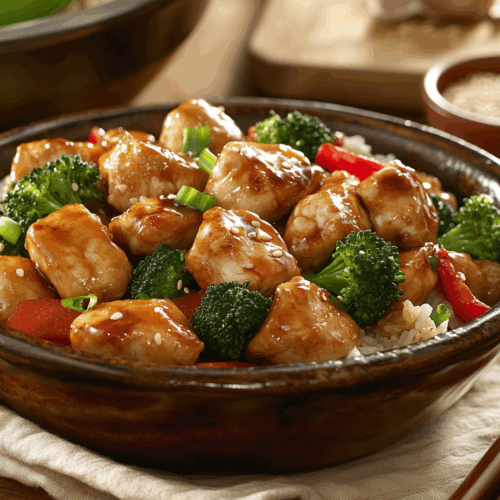
Teriyaki Chicken Rice Bowls

Equipment
- Large skillet
- Saucepan
- Mixing bowl
- Whisk
- Rice cooker or pot
Ingredients
Chicken and Marinade
- 1 pound boneless, skinless chicken thighs cut into bite-sized pieces
- ¼ cup soy sauce preferably low sodium
- 2 tablespoons mirin Japanese rice wine
- 2 tablespoons honey or maple syrup for a different flavor
- 2 teaspoons grated fresh ginger adds a fresher taste
- 2 cloves garlic minced
Rice and Vegetables
- 2 cups cooked jasmine rice or short-grain rice
- 1 cup broccoli florets fresh or frozen
- 1 medium red bell pepper sliced
- 2 tablespoons sesame oil for sautéing
Garnishes
- 1 tablespoon toasted sesame seeds for garnish
- 2 stalks green onions thinly sliced
Instructions
- Marinate the Chicken: In a mixing bowl, whisk together soy sauce, mirin, honey, ginger, and garlic. Add chicken pieces, ensuring they're well coated. Let it marinate for at least 5 minutes while preparing other ingredients.
- Cook the Rice: While the chicken marinates, prepare the jasmine rice in a rice cooker or pot according to package instructions, ensuring it's fluffy and tender.
- Sauté the Vegetables: In a large skillet over medium heat, add sesame oil. Once hot, add broccoli florets and bell pepper slices. Sauté for about 5 minutes, or until vibrant and tender-crisp.
- Cook the Chicken: Transfer the marinated chicken pieces into the skillet. Sauté over medium-high heat for 6–8 minutes until golden brown and fully cooked. The sauce should thicken slightly and coat the chicken and vegetables thoroughly.
- Assemble the Bowls: Divide the cooked rice evenly among bowls. Top with chicken and vegetables. Sprinkle with toasted sesame seeds and sliced green onions for a burst of flavor and color.
Notes
- For a spicier kick, add a pinch of red pepper flakes to the marinade.
- To make it gluten-free, substitute soy sauce with tamari.
- Alternatively, tofu can replace chicken for a vegetarian option.
Nutrition
Your questions, answered
Can I use chicken breast instead of thighs?
Yes, but pull it off the heat as soon as it hits 165°F — breast meat dries out fast. Cut it into evenly sized pieces so everything finishes cooking at the same time.
I don’t have mirin. Can I still make this?
Yes. Substitute 1 tablespoon of dry sherry or dry white wine plus 1 extra teaspoon of honey for every 2 tablespoons of mirin called for. The sauce will be slightly less sticky but still tastes good.
How do I know when the chicken is fully cooked?
The safest check is an instant-read thermometer — you’re looking for 165°F at the thickest piece. If you don’t have one, cut the largest piece open; the meat should be completely opaque with no pink, and the juices should run clear.
What to cook next
- Quick Korean Bibimbap Bowls
- Weeknight Sushi Bake Recipe
- Spicy Korean Rice Cakes
- Quick Ginger Scallion Wontons