

This recipe swaps a beef patty for a breaded veal cutlet — pounded thin, fried in butter until golden, and tucked into a toasted bun with lettuce, tomato, and a mayo-mustard spread. It takes 30 minutes start to finish and uses ingredients most people already have on hand. If you want something more interesting than a standard burger on a weeknight, this is a solid choice.
Before you start
Two things determine whether this works. First, pound the cutlets evenly — if one edge is thick and another is thin, the thin part overcooks before the thick part finishes. Use a meat mallet or the bottom of a heavy pan, and aim for roughly ¼-inch thickness across the whole cutlet. Second, get the butter hot enough before the cutlet goes in. If the pan isn’t at medium-high heat, the breading absorbs fat instead of crisping in it, and you end up with a greasy, soft crust rather than a crunchy one. Three minutes per side at the right temperature is all it takes — resist the urge to move the cutlet around while it fries.
Ingredient notes
- Veal cutlets: Pork loin cutlets or chicken breast pounded thin are direct substitutes and cost noticeably less. The cook time stays the same.
- Panko breadcrumbs: Regular dried breadcrumbs work fine — the crust will be slightly less open and crunchy, but still good. Crushed crackers or cornflake crumbs also work in a pinch.
- Butter for frying: A neutral oil like vegetable or canola oil is a practical swap if that’s what you have. You lose a little richness but the crust crisps up just as well.
- Dijon mustard: Yellow mustard is a reasonable substitute — it’s sharper and less smooth, but it does the job. Skip the garnish of extra mustard on the side; not worth the extra dish.
Keeping and reheating
Cooked schnitzels keep in the fridge for up to 3 days in an airtight container. Store them separately from the buns and toppings so nothing gets soggy. To reheat, use a dry skillet over medium heat for about 2 minutes per side — this brings back most of the crust’s crunch. An oven at 375°F for 8–10 minutes on a wire rack also works well. Avoid the microwave; it turns the breading soft and rubbery. Assembled burgers don’t store well, so keep the components separate until you’re ready to eat. Uncooked breaded cutlets can be frozen on a baking sheet, then transferred to a freezer bag, for up to 2 months — fry them straight from frozen, adding about 2 extra minutes per side.
Troubleshooting
- Breading slides off during frying: This usually means the cutlet was wet when it went into the flour. Pat the veal dry with paper towels before you start the breading station — moisture breaks the bond between the meat and the coating.
- Crust is pale and greasy: The butter wasn’t hot enough when the cutlet went in. Let the butter fully melt and begin to foam before adding the meat. If it’s browning too fast after that, lower the heat slightly rather than starting over.
- Cutlet curls up in the pan: Connective tissue around the edges contracts with heat. Score the edges with a knife in 2–3 small cuts before breading — this lets the cutlet lie flat without affecting the crust.
- Breading burns before the meat is cooked through: The cutlet wasn’t pounded thin enough. A properly thin cutlet cooks through in the same time it takes the crust to brown. If this happens, finish the cutlet in a 350°F oven for 5 minutes rather than leaving it in the pan.
- Bun goes soggy immediately: Spread the mayo-mustard mixture on both halves of the toasted bun right before assembling, not ahead of time. The toast acts as a partial barrier, but a wet spread sitting on it for more than a few minutes will soak through.
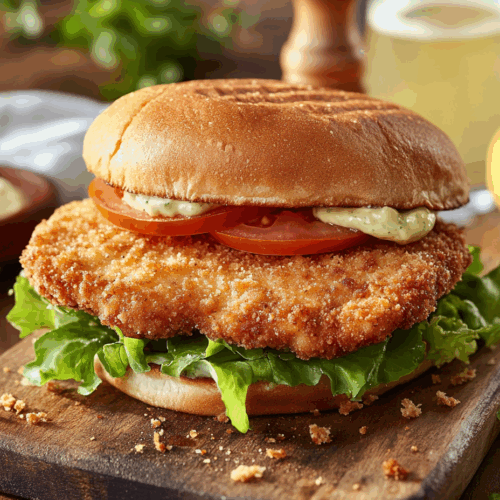
Austrian Schnitzel Burger

Equipment
- 1 Frying pan
- 1 Meat tenderizer
- 1 Mixing bowls
- 1 Tongs
Ingredients
- 4 pieces Veal cutlets Pounded thin
- 1 cup All-purpose flour
- 2 units Eggs Beaten
- 1 cup Breadcrumbs Preferably panko
- 1 tbsp Salt
- ½ tsp Black pepper
- 4 tbsp Butter For frying
- 4 pieces Burger buns Split
- 4 slices Tomato
- 4 leaves Lettuce
- ¼ cup Mayonnaise
- 2 tbsp Dijon mustard
Instructions
- Prepare the Schnitzel: Carefully pound each veal cutlet with a meat tenderizer until thin. Season with salt and pepper.
- Bread the Veal: Set up a breading station with three bowls: flour, beaten eggs, and breadcrumbs. Dip each cutlet into flour, then eggs, and finally coat evenly with breadcrumbs.
- Fry the Schnitzel: In a frying pan, melt butter over medium-high heat (approximately 375°F or 190°C). Fry each schnitzel until golden brown, about 3 minutes on each side. Use tongs to turn them gently.
- Assemble the Burger: Toast the burger buns lightly. Mix mayonnaise and Dijon mustard, and spread on each half. Layer lettuce, schnitzel, tomato, and the top bun to assemble.
Notes
- To enhance the schnitzel's flavor, add a squeeze of lemon before placing it on the bun.
- For added crunch, consider adding some pickles.
Nutrition
FAQ
Can I use pork instead of veal?
Yes — pork loin cutlets are the most common substitute and work exactly the same way. Pound them to about ¼-inch thickness and follow the recipe as written; cook time and temperature don’t change.
Do I need a special pan, or will a regular skillet work?
A regular skillet works fine. A wide, heavy-bottomed pan — stainless steel or cast iron — holds heat more evenly than a thin nonstick, which helps the crust brown consistently rather than in patches.
My cutlets are larger than the buns. Should I cut them down?
You can, but you don’t have to. A cutlet that overhangs the bun is part of how this sandwich looks and eats. If you’d rather trim it, use kitchen scissors after frying — it’s easier than trying to cut raw pounded meat cleanly.
Can I bread the cutlets ahead of time?
Yes, up to a few hours in advance. Place the breaded cutlets on a wire rack in the fridge, uncovered — this keeps the coating dry so it crisps properly when it hits the pan. Stacking them or covering them tightly makes the breading go soft.
If you liked this one
- Diner-Style Patty Melt
- Perfect Bistro French Fries
- Greek Beef Pitas Fast
- Quick 30-Minute Dill Pickles