
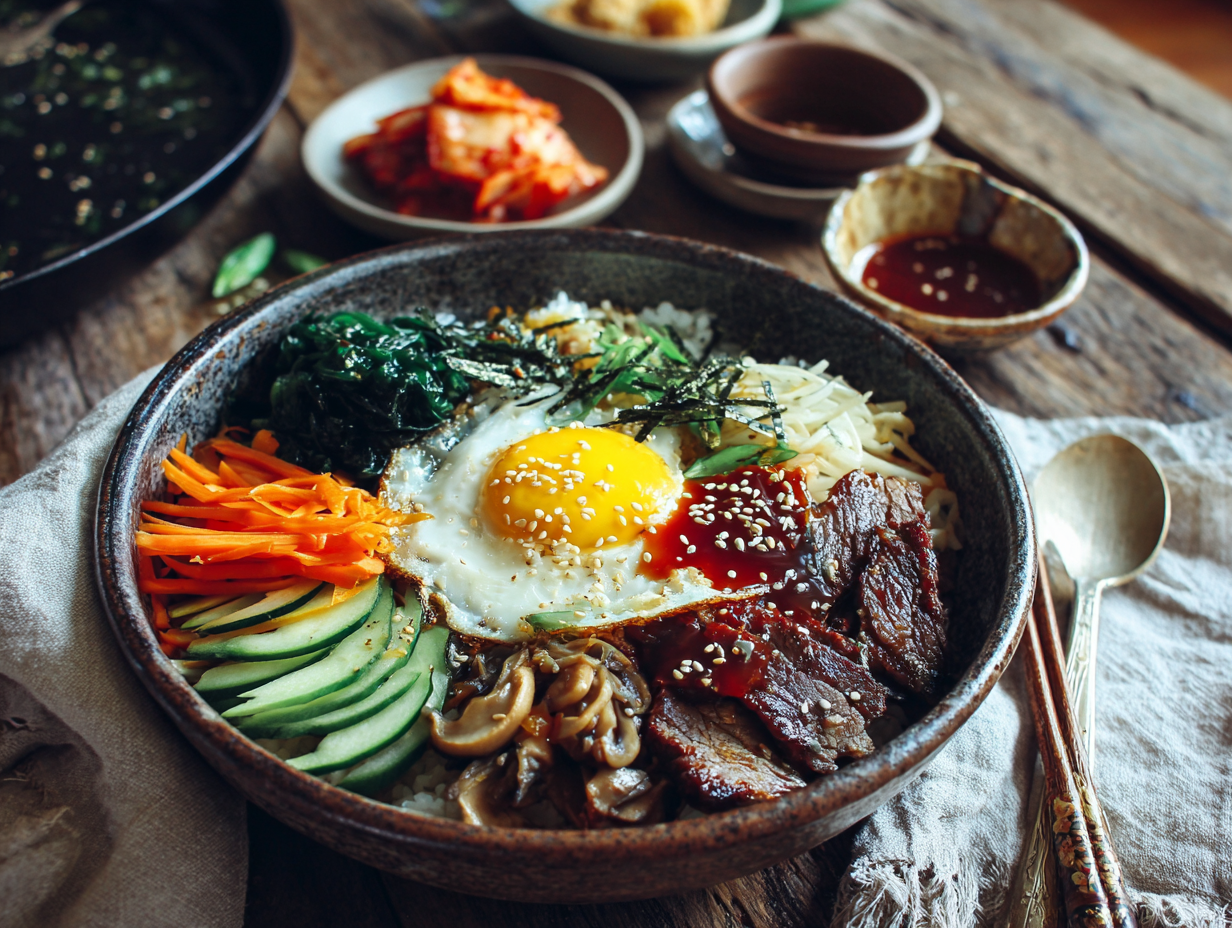
This is a ground beef and vegetable rice bowl with a gochujang sauce — straightforward to cook, genuinely filling, and ready in 30 minutes. The real reason to make it on a weeknight is that it scales up easily and the components keep well separately in the fridge, so one cooking session can cover two or three meals. If you have leftover rice already, you’re halfway there before you even turn on the stove.
What makes this version work
Two things matter here. First, cooking each component separately — beef, then vegetables — in the same skillet without washing it between rounds. The beef fat left in the pan seasons the vegetables without any extra oil, and you’re not dirtying extra dishes. Second, the gochujang sauce gets mixed cold and added at the table rather than cooked into the bowl. Heat dulls gochujang’s brightness fast, so keeping the sauce raw until the moment you mix everything together means you actually taste the fermented depth and the sesame oil instead of a flat, cooked-down paste. Those two habits are what separate a good bowl from a bland one.
Common problems and fixes
- Vegetables turn soggy: Overcrowding the skillet is the culprit. Cook vegetables in small batches and pull each one out the moment it’s just tender. They’ll continue to steam in the bowl if you leave them sitting too long before serving.
- Rice clumps into a dense mass: Cold leftover rice straight from the fridge compacts. Break it up with wet hands before reheating, or add a tablespoon of water to the microwave-safe bowl and cover it loosely before warming.
- Sauce is too spicy to eat: Gochujang varies a lot by brand in heat level. Stir in a teaspoon of honey or a splash of rice vinegar to pull it back without losing the flavor. Taste before you pour.
- Fried egg breaks when you place it on the bowl: Slide it onto a spoon first, then lower it gently. Trying to flip it directly from the pan onto a full bowl almost always tears the yolk — skip the garnish of sesame seeds on the egg too, not worth the extra dish.
- Ground beef releases too much liquid and steams instead of browning: The pan isn’t hot enough, or the beef is packed too tight. Press it into a single layer, don’t touch it for 90 seconds, then break it up. Drain excess liquid before seasoning if it pools.
Make-ahead notes
The components store best when kept separate. Cooked beef and sautéed vegetables each last up to four days in the fridge in their own containers — mixed together they get waterlogged. Plain cooked rice keeps three to four days refrigerated or up to one month in the freezer in zip-lock bags laid flat. When you’re ready to eat, reheat the beef and vegetables together in a skillet over medium heat for two to three minutes, warm the rice separately, then assemble the bowl fresh. The gochujang sauce keeps for two weeks in a sealed jar in the fridge, so make a double batch the first time and you won’t have to think about it again until next week.
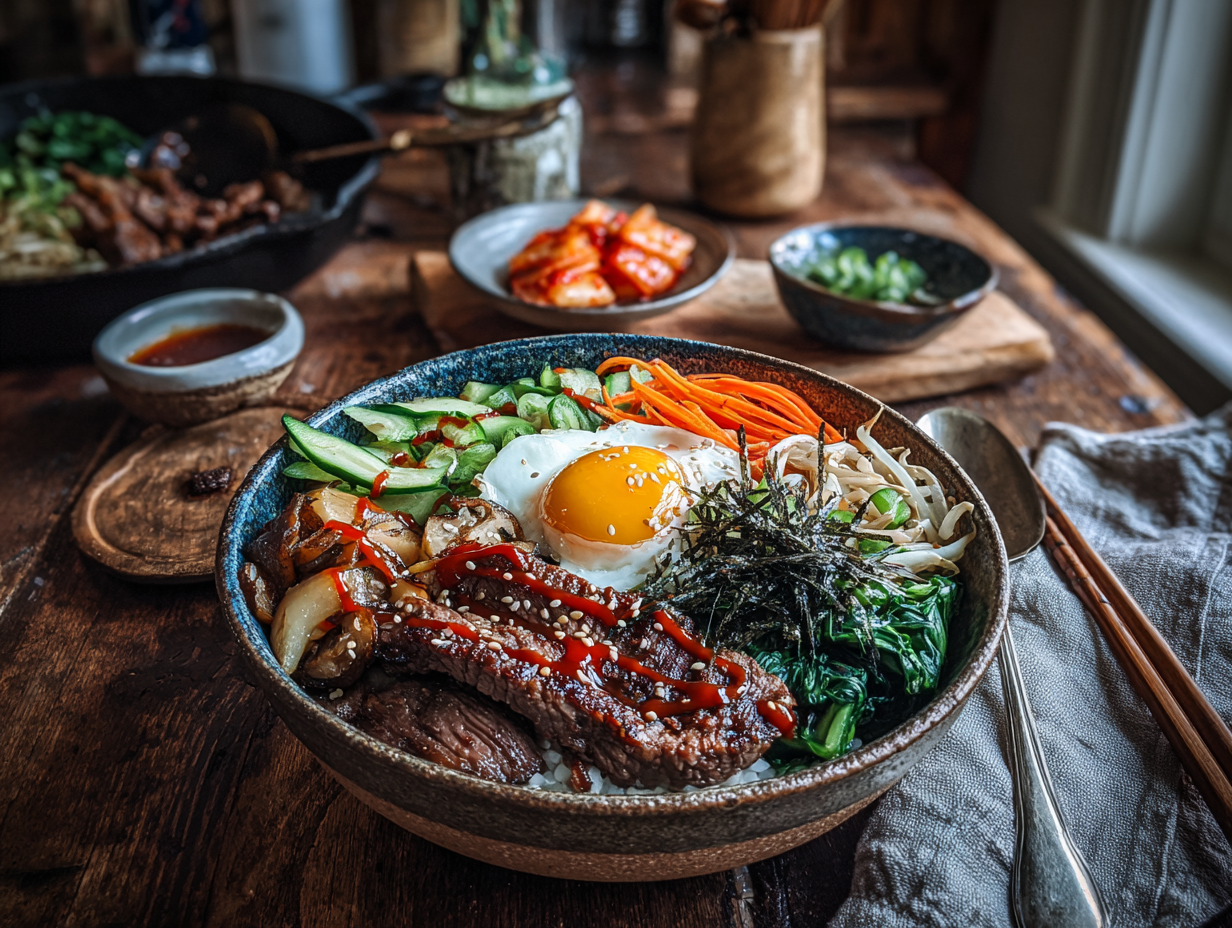
30-Minute Beef Bibimbap (Korean Mixed Rice Bowls)

Equipment
- Large nonstick or cast-iron skillet
- Small mixing bowl (for sauce)
- Tongs and spatula
- Cutting board and chef's knife
- Measuring cups and spoons
- Heatproof serving bowls (oven-safe)
- Rice cooker or microwave-safe bowl (to warm rice)
Ingredients
For the Rice & Bowl Warm-Up:
- 2 cups cooked short-grain white rice warm and fluffy; leftover rice or microwave pouch works well
For the Gochujang Sauce:
- 3 tbsp gochujang (Korean chili paste) look for a reputable brand like CJ Haechandle for balanced heat
- 1 tbsp toasted sesame oil 100% pure, not blended
- 1 tbsp low-sodium soy sauce
- 1 tbsp honey or granulated sugar
- 2 tsp rice vinegar unseasoned
- 1 tbsp warm water to loosen to drizzle consistency
- 1 clove garlic, finely grated or 1/2 tsp jarred minced garlic
For the Quick Beef:
- 6 oz thinly sliced beef ribeye or sirloin shaved hot-pot style; ground beef also works
- 1 tsp low-sodium soy sauce
- 1 tsp toasted sesame oil
- 1 tsp honey or sugar
- 1 clove garlic, minced
- ¼ tsp freshly ground black pepper
For the Sautéed Vegetables & Aromatics:
- 2 tbsp neutral oil (canola or avocado), divided high-heat friendly
- 4 oz shiitake mushrooms, stemmed and sliced cremini also works
- 1 small zucchini, julienned about 1 cup
- 1 small carrot, peeled and julienned about 1 cup
- 1 cup bean sprouts rinsed and drained
- 2 cups baby spinach loosely packed
- 1 tbsp low-sodium soy sauce, divided for seasoning vegetables to taste
- ½ tsp kosher salt, divided season to taste
- 1 tsp toasted sesame oil for finishing vegetables
For the Eggs & Finish:
- 2 large eggs
- 1 tsp neutral oil for frying eggs
- 1 tsp toasted sesame seeds lightly toasted for best aroma
- 1 piece scallion, thinly sliced green and white parts
- 1 tsp shredded roasted seaweed (gim/nori), optional
Instructions
- Warm Bowls and Rice (2–3 minutes): Place two oven-safe serving bowls in a 200°F (95°C) oven to warm. Reheat the cooked rice in a microwave-safe bowl for 60–90 seconds until steaming and fluffy; cover to keep warm.
- Make the Gochujang Sauce (2 minutes): In a small bowl, whisk together gochujang, sesame oil, soy sauce, honey, rice vinegar, warm water, and grated garlic until smooth and glossy. Aim for a thick but spoonable consistency; add a few drops of water if needed.
- Quick-Marinate the Beef (5 minutes, overlapping): Toss sliced beef with soy sauce, sesame oil, honey, minced garlic, and black pepper. Let it stand while you start the vegetables. The meat will absorb flavor quickly due to its thin cut.
- Sauté Mushrooms (3 minutes): Heat 1 tsp neutral oil in a large skillet over medium-high. Add shiitakes; cook, stirring, until edges brown and their moisture cooks off, about 2–3 minutes. Season with a pinch of the divided soy sauce and salt. Transfer to a plate.
- Sauté Zucchini (2 minutes): Add 1 tsp oil to the skillet. Sauté zucchini just until bright green and crisp-tender, 1–2 minutes. Season lightly with soy and salt. Transfer to the plate, keeping vegetables separated for a beautiful color wheel later.
- Sauté Carrots (2 minutes): Add 1 tsp oil; cook carrots 1–2 minutes until slightly pliable but still snappy. Season lightly; transfer to the plate.
- Flash the Sprouts and Wilt Spinach (2 minutes): Add 2 tsp water to the skillet (steam boost), toss in bean sprouts for 30–45 seconds until just translucent, then add spinach and toss until just wilted, about 45–60 seconds. Drizzle in 1 tsp toasted sesame oil; season to taste. Transfer to the plate.
- Sear the Beef (3 minutes): Increase heat to high, add 1–2 tsp neutral oil if needed. Spread beef in a single layer; sear 60–90 seconds per side until browned with a few caramelized edges. Avoid overcrowding for best color and flavor.
- Fry the Eggs (2–3 minutes): Reduce heat to medium. Add 1 tsp oil; crack in eggs. Cook sunny-side up until whites set and edges lace golden, 2–3 minutes. For set whites with runny yolks, cover the pan for the last 30 seconds.
- Assemble and Serve (1–2 minutes): Divide hot rice into warmed bowls. Arrange mushrooms, zucchini, carrots, sprouts, and spinach in separate mounds around the edges (a colorful fan). Pile beef in the center, crown with an egg, and spoon or drizzle gochujang sauce to taste. Finish with scallions, sesame seeds, and optional shredded seaweed. Toss everything together at the table so the yolk and sauce coat each grain.
Notes
Lisa’s Tips:
- Vegetarian Swap: Use 6–8 oz firm tofu, patted dry and seared until crisp; season with a splash of soy and sesame oil.
- Gluten-Free: Use gluten-free gochujang and tamari in place of soy sauce.
- Speed Rice: Microwaveable short-grain rice pouches or day-old rice warmed with a damp paper towel save precious minutes.
- Dolsot Effect: For a crispy rice layer, heat a small cast-iron pan until very hot, brush lightly with sesame oil, press in rice, and cook 2–3 minutes until the bottom crackles before assembling on top.
- Balance the Sauce: If your gochujang is very spicy, add an extra 1/2–1 tsp honey; if too sweet, brighten with 1/2–1 tsp rice vinegar.
- Pre-Cut Veggies: Matchstick carrots and sliced mushrooms from the store make this even faster.
Nutrition
Common questions
Can I use regular long-grain rice instead of short-grain?
Yes, it works fine. Short-grain rice is stickier and holds together better in the bowl, but long-grain rice you already have on hand is a perfectly reasonable substitute — the flavor difference is minor.
Where do I find gochujang if my regular grocery store doesn’t carry it?
Most large supermarkets stock it in the international aisle, and any Asian grocery store will have several brands. Online retailers carry it reliably if local options fall short; a standard 500g tub lasts months in the fridge.
Can I swap the ground beef for something else?
Ground turkey, thinly sliced chicken thigh, or firm tofu all work in this bowl. Tofu should be pressed dry and pan-fried until golden before seasoning, otherwise it won’t hold up against the sauce.
Do I have to use a fried egg, or can I skip it?
You can skip it or use a soft-boiled egg instead. A soft-boiled egg sliced in half is actually easier to prep ahead — cook a batch at the start of the week and peel them as needed.
My family doesn’t like spicy food. Can I reduce the gochujang?
Cut it to one tablespoon and increase the soy sauce slightly to keep the sauce from tasting thin. You can also look for a mild-labeled gochujang, which some brands offer — the label usually says 순한 (mild) on Korean-market versions.
What vegetables can I use if I don’t have the ones listed in the recipe?
Thinly sliced zucchini, shredded cabbage, frozen corn, or baby spinach all cook quickly in the skillet and fit the bowl well. The main requirement is that they cook fast — anything that needs more than four or five minutes will throw off your timing.
What to cook next
- Spicy Korean Rice Cakes
- Weeknight Sushi Bake
- Quick Ginger Scallion Wontons
- Citrus Mojo Rice and Beans