
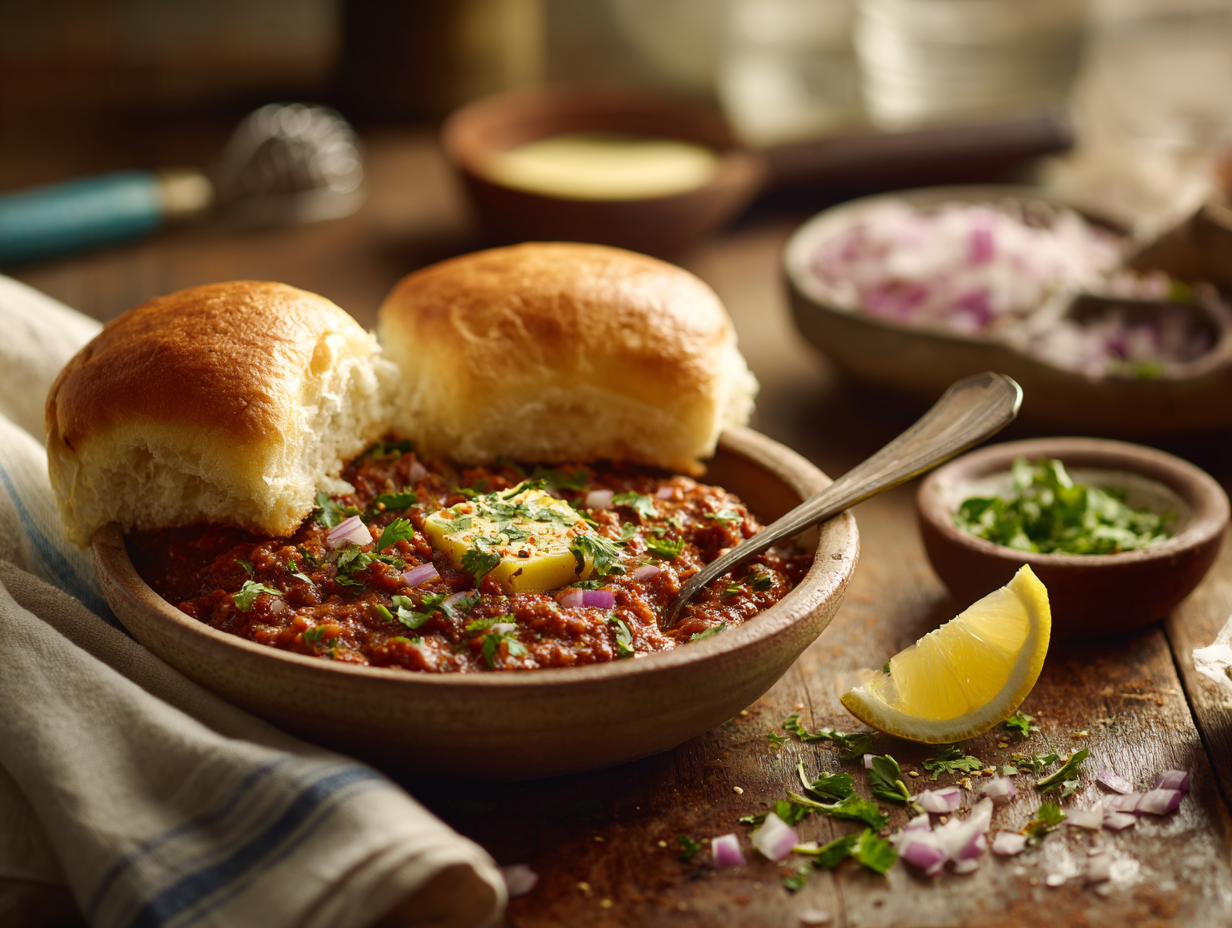
Pav bhaji is a thick, spiced vegetable mash cooked down with butter and tomatoes, served with pan-toasted rolls — and this version gets it on the table in 30 minutes by microwaving the vegetables first instead of boiling them separately. The result is the same brick-red color and tangy, buttery finish you’d get from a street stall, without the hour-long process. If you’ve got frozen mixed vegetables and a block of butter, you’re most of the way there.
The technique that matters
Two things actually determine whether this works. First, bloom your pav bhaji masala in butter before anything else goes in — 30 to 60 seconds in hot fat wakes up the spices and gives the dish its deep, brick-red base. Rush this step or add the masala too late and the flavor stays flat and raw-tasting. Second, mash the vegetables while they’re still hot and in the pan, not separately. Mashing in the pan lets you control the texture in real time: a few passes gives you a chunky bhaji, more mashing gives you something smoother. Most beginners over-mash into a puree — stop when you still see some texture. The bhaji should hold its shape on the plate, not pool like soup.
Ingredient notes
- Pav bhaji masala: This is a specific spice blend — not garam masala, not curry powder. Look for it at any Indian grocery store or online. Everest and MDH are the two brands most widely available in the US. Don’t substitute; the dish won’t taste right without it.
- Kashmiri chili powder: Mild heat, very red color. If you can’t find it, use half the amount of regular chili powder mixed with a pinch of sweet paprika to approximate the color without blowing out the heat.
- Pav (bread rolls): Soft dinner rolls are the closest substitute — potato rolls work especially well. Avoid crusty rolls; they won’t toast the same way and the texture is wrong.
- Butter: Use real butter, not margarine. The fat content matters for both flavor and the glossy finish on the bhaji.
Troubleshooting
- Bhaji is too watery: Keep cooking it uncovered on medium-high heat, stirring frequently. The extra moisture needs to evaporate. This usually takes 3 to 5 additional minutes. Don’t add more vegetables to fix it — that just delays the problem.
- Spices taste raw or sharp: You didn’t cook the masala long enough in the butter at the start. Add a small knob of butter to the pan now, push the bhaji to the side, add a pinch more masala to the cleared spot, and cook it for 30 seconds before stirring it back in.
- Color is dull orange instead of brick-red: This usually means the Kashmiri chili powder was old or you used too little. A fresh pinch stirred in now will help, but the color deepens most during the initial spice bloom — keep that in mind next time.
- Rolls are soggy after toasting: The pan wasn’t hot enough, or there was too much butter. Use medium-high heat and let the butter foam before adding the rolls. Thirty seconds per side on a properly hot pan gives you a golden crust that holds up.
- Bhaji tastes flat even with enough salt: Add a squeeze of lime directly into the pan and stir it in — skip the garnish and just build it in. The acid is what makes the spices pop, and this is more effective than adding more masala.
Make-ahead notes
The bhaji keeps well in the fridge for up to 4 days in a sealed container — the flavor actually improves overnight as the spices settle in. Reheat it in a skillet over medium heat with a splash of water and a small pat of butter, stirring until hot throughout; the microwave works too but tends to dry it out. For the freezer, cool the bhaji completely, then freeze in portions for up to 2 months. Thaw overnight in the fridge before reheating. Don’t make the rolls ahead — toast them fresh, right before serving. A cold, pre-toasted roll is not worth eating.
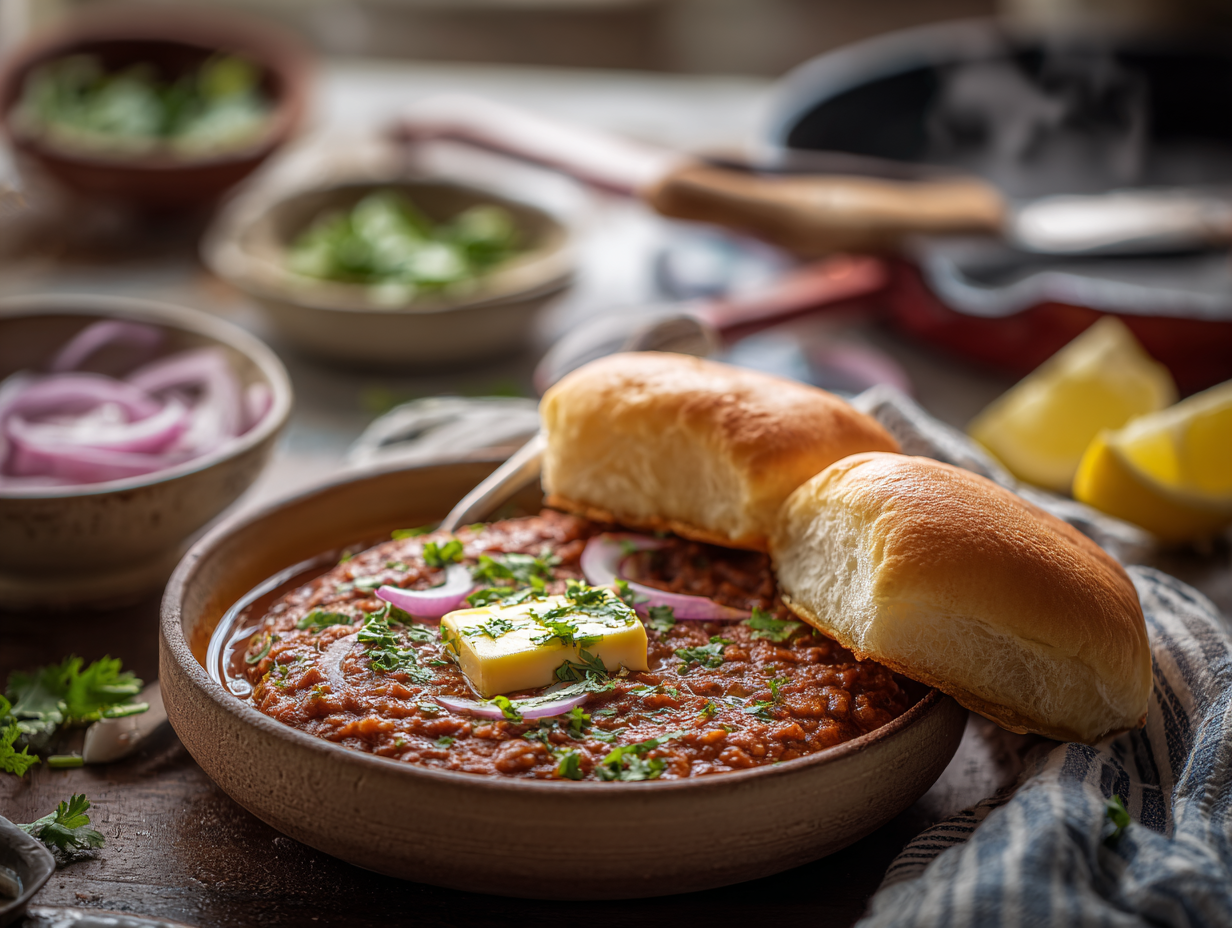
30-Minute Mumbai-Style Pav Bhaji

Equipment
- Large heavy skillet or flat griddle (tawa)
- Microwave-safe bowl with lid (or saucepan with lid)
- Potato masher (or sturdy spatula)
- Chef’s knife and cutting board
- Measuring cups and spoons
- Ladle and tongs
- Small bowl for spice butter
Ingredients
For the Bhaji (spiced vegetable mash)
- 1 tablespoon neutral oil (such as avocado or canola) Helps raise the butter’s smoke point
- 2 tablespoons unsalted butter Amul or high-fat European-style recommended
- 1 ½ cups yellow onion, finely chopped About 1 large; aim for even, small dice
- 1 teaspoon kosher salt, divided Start here; adjust to taste at the end
- 1 ½ tablespoons ginger-garlic paste Or 3 cloves garlic + 1-inch ginger, grated
- 1 cup green bell pepper, diced About 1 medium; red works too for sweetness
- 2 cups ripe tomatoes, chopped About 3 medium; canned crushed tomatoes work in a pinch
- ½ teaspoon turmeric powder
- 1 teaspoon Kashmiri red chili powder For color and gentle heat; sub: sweet paprika + pinch cayenne
- 2 tablespoons pav bhaji masala Everest or MDH branded masala recommended
- 2 cups russet potatoes, peeled and 1/2-inch diced About 2 medium (12–14 oz total)
- 1 ½ cups cauliflower florets, small Small florets cook faster and mash smoother
- ¾ cup carrots, 1/4-inch diced
- 1 cup frozen green peas No need to thaw
- ½ cup water For quick-cooking vegetables (microwave method)
- 1 cup vegetable stock or water, hot Add as needed for consistency
- 2 tablespoons unsalted butter Finishing butter for velvety texture
- 1 tablespoon fresh lemon juice Plus extra wedges for serving
- ½ cup cilantro, finely chopped Leaves and tender stems
For the Pav (toasted rolls) and Garnishes
- 8 pieces ladi pav or soft dinner rolls Split; brioche or potato rolls work well
- 3 tablespoons unsalted butter, softened For toasting rolls
- ½ teaspoon pav bhaji masala Pinch for the buttered rolls
- ½ cup red onion, very finely chopped Classic crunchy garnish
- 4 wedges lemon For serving
Optional: Quick Homemade Pav Bhaji Masala (use 2 tablespoons in recipe)
- 2 teaspoons ground coriander
- 2 teaspoons ground cumin
- 1 teaspoon ground fennel Optional but lovely
- 1 teaspoon Kashmiri chili powder
- ½ teaspoon turmeric powder
- ½ teaspoon amchur (dry mango powder) Or 1 teaspoon lemon juice added at finish
Instructions
- Prep the produce (10 minutes): Finely chop onion, dice bell pepper, chop tomatoes, and finely chop cilantro. Peel and 1/2-inch dice potatoes; cut cauliflower into small florets; 1/4-inch dice carrots. Halve lemons. Keep ingredients grouped for speed.
- Quick-cook the vegetables (10 minutes, microwave method): In a microwave-safe bowl, combine potatoes, cauliflower, carrots, peas, and 1/2 cup water. Cover. Microwave on High for 8 minutes, then let stand covered 2 minutes until fork-tender. Reserve any cooking liquid. Stovetop alternative: Simmer in a lidded saucepan with 1 cup water over medium heat (about 205°F / 96°C) for 10–12 minutes; drain, reserving 1/2 cup liquid.
- Start the masala base while veggies cook (8–9 minutes): Heat a large skillet/tawa over medium heat (about 350°F / 175°C). Add 1 Tbsp oil + 2 Tbsp butter. When butter foams, add onion and half the salt. Sauté 3–4 minutes until translucent with light golden edges—listen for a gentle sizzle.
- Bloom aromatics (1 minute): Stir in ginger-garlic paste; cook 30–45 seconds until the raw edge disappears and it smells sweet-spicy.
- Soften pepper (2 minutes): Add diced bell pepper; sauté 2 minutes until bright and slightly tender.
- Tomato jammy base (3 minutes): Add tomatoes and the remaining salt. Cook 2–3 minutes, stirring and lightly mashing, until pulpy and glossy.
- Spice it right (45 seconds): Sprinkle in turmeric, Kashmiri chili powder, and 2 Tbsp pav bhaji masala. Stir 30–45 seconds to bloom until aromatic and the oil tints red. If it looks dry, splash 2–3 Tbsp reserved veg liquid.
- Combine and mash (2 minutes): Tip in the hot, cooked vegetables along with 1/4 cup reserved liquid. Mash vigorously with a potato masher to a coarse puree. Add hot stock/water a little at a time to reach a loose, spoonable consistency.
- Simmer to marry flavors (3 minutes): Reduce heat to medium-low and simmer gently (aim for about 185°F / 85°C) until the bhaji glows brick-red and glossy. Stir in 2 Tbsp butter, 1 Tbsp lemon juice, and half the cilantro. Taste and adjust salt or chili.
- Toast the pav (2 minutes): In a small bowl, mix 3 Tbsp softened butter with 1/2 tsp pav bhaji masala. Split rolls. On the same skillet over medium heat (350°F / 175°C), spread the spiced butter on cut sides and toast cut-side-down 60–90 seconds until golden and crisp. Masala pav variation: Smear a tablespoon of bhaji on the pan and press the rolls into it for extra flavor.
- Finish and serve: Ladle bhaji into shallow bowls, swirl a tiny knob of butter on top, shower with remaining cilantro, and garnish with finely chopped red onion and lemon wedges. Serve immediately with hot pav.
Notes
Lisa’s Tips
- Color and gloss: Kashmiri chili gives the signature red without harsh heat; finishing butter makes the bhaji glossy.
- Faster mashing: A flat metal spatula lets you both chop and mash directly on the tawa like Mumbai vendors.
- Dietary swaps: For vegan, replace butter with vegan butter or coconut oil and add a splash of cashew cream at the end.
- Tomato depth: If tomatoes are out of season, use 1 1/2 cups canned crushed tomatoes plus 1 teaspoon tomato paste.
- Heat control: Want it spicier? Add 1/4 teaspoon cayenne with the spices or a chopped green chili with the onions.
- Make it richer: Stir in 1/4 cup grated cheddar or Amul cheese right before serving for “cheese pav bhaji.”
Serving Suggestions
Plate bhaji in a shallow bowl so the butter sheen catches the light. Top with a pat of butter, a sprinkle of cilantro, and a halo of finely chopped red onion. Arrange two toasted pav at the side, slightly overlapping. Add lemon wedges for a final, bright squeeze at the table. Pair with a chilled salty lassi or a crisp lager; the ideal bhaji is brick-red, creamy yet spoonable, with a buttery, spicy aroma.Culinary Context
Pav bhaji began as a night-shift meal for Mumbai mill workers—nutritious leftover vegetables smashed with spices and served fast with buttered bread. Today it’s a cultural icon of Indian street food: communal, vibrant, and endlessly customizable.Optional Advanced & Make-Ahead
- Make-ahead: Boil and mash the vegetables up to 2 days ahead; reheat with a splash of stock and proceed from the spice-blooming step.
- Homemade masala: Mix the optional spice blend in advance for maximum freshness; lightly toast whole spices before grinding for a deeper flavor.
- Oven option for pav: Toast split rolls on a sheet tray at 400°F / 205°C for 4–6 minutes; brush with melted spiced butter after toasting.
Timing
- Prep time: 10 minutes
- Cook time: 20 minutes (vegetables microwave for 8 + 2 minutes rest while masala cooks 8–9 minutes; finish 7–8 minutes)
- Total time: 30 minutes
Course & Origin
- Course: Dinner
- Cuisine/Origin: Indian (Mumbai Street Food)
Nutrition
Frequently asked questions
I’ve never used pav bhaji masala before — how much should I use if I’m not sure about the heat level?
Start with half the amount called for in the recipe, taste after the bhaji has cooked for a few minutes, then add more. Different brands vary quite a bit in intensity, and it’s easy to add more but impossible to pull it back.
Can I use canned or frozen vegetables instead of cooking fresh ones?
Yes — frozen mixed vegetables are actually the intended shortcut in this recipe. Thaw them first so they don’t drop the pan temperature, then microwave or briefly boil them until soft before mashing.
How do I know when the bhaji is the right consistency?
Scoop a spoonful and drop it back into the pan — it should fall in a slow, thick ribbon, not splash like soup and not sit in a stiff clump. If it’s too thick, add a few tablespoons of water; if too thin, cook it down uncovered for a few more minutes.
Do I really need a potato masher, or can I use a fork?
A fork works fine for small batches, though it takes longer and your arm will notice. The goal is a rough mash with some texture remaining, not a smooth puree, so don’t feel like you need special equipment to get this right.
Try these next
- Quick Weeknight Pulao Recipe
- Quick Khaman Dhokla Recipe
- Weeknight Shakshuka Recipe
- Smoky Mediterranean Bean Skillet