
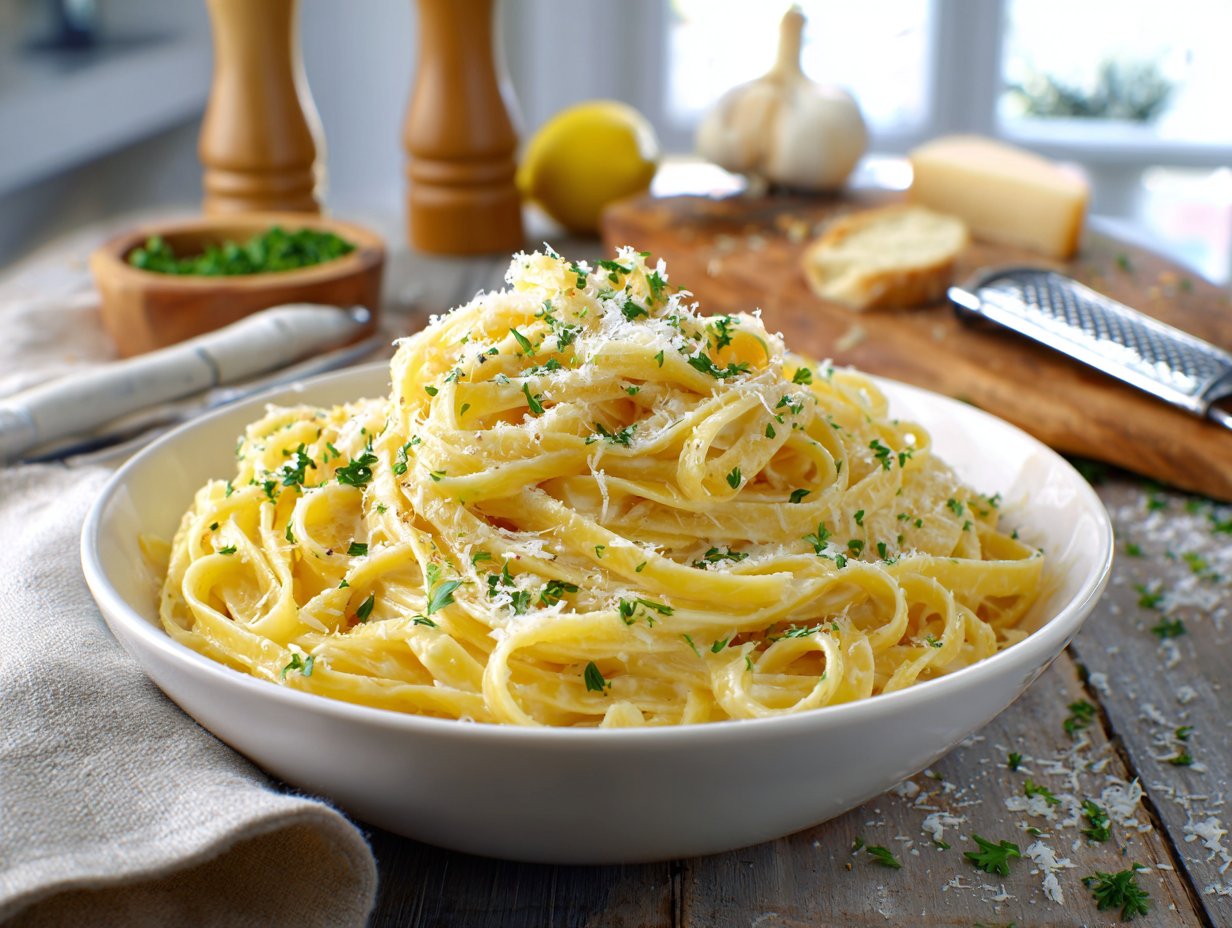
This is a cream-based Alfredo built around a Parmesan and Pecorino Romano blend, ready in 25 minutes with ingredients most people already have. It uses a small amount of cornstarch to keep the sauce stable and a splash of starchy pasta water to help it cling to the fettuccine. If you want a rich, filling pasta dinner on a weeknight without a lot of cleanup, this is a solid choice.
Substitutions that actually work
- Pecorino Romano: If you can only find one cheese, use all Parmesan. The sauce will be slightly milder but still works well. Avoid pre-shredded bags — the anti-caking coating prevents smooth melting.
- Heavy cream: Half-and-half can substitute in a pinch, but the sauce will be thinner and more prone to breaking. Stick with heavy cream if you plan to store leftovers.
- Fettuccine: Pappardelle or tagliatelle hold the sauce just as well. Thinner pastas like spaghetti work but give you less sauce per bite.
- White pepper: Black pepper is a fine swap — it just leaves visible specks in the sauce, which is a cosmetic difference only.
The technique that matters
The single most important step is keeping the heat low when you add the cheese. Once the cream has reduced and you pull the pan back from peak heat, the residual warmth is enough to melt finely grated Parmesan and Pecorino smoothly. Add the cheese in two or three small additions, stirring constantly between each one. If the pan is too hot, the proteins in the cheese seize up and you get a grainy, clumpy sauce instead of a smooth one — and there is no reliable way to fix it once that happens. The cornstarch in this recipe gives you a small buffer, but it is not a substitute for controlling the temperature.
Troubleshooting
- Sauce is too thick before the pasta goes in: Add reserved pasta water a tablespoon at a time and stir. It loosens the sauce without diluting the flavor because the starch in the water helps maintain body.
- Sauce tastes flat: Taste before serving and add salt gradually — the pasta water and cheeses both carry salt, so the balance shifts once everything is combined. A small squeeze of lemon juice can also sharpen the flavor without making it taste citrusy.
- Sauce pools at the bottom of the bowl instead of coating the pasta: The pasta was probably too dry when you added it. Toss the drained fettuccine directly into the pan with the sauce while both are still hot, and use tongs to keep things moving for a full 30 seconds.
- Garlic tastes sharp or raw: It needed another 30 to 60 seconds in the butter before the cream went in. For leftovers, this mellows overnight, but for the batch you are serving now, a pinch of garlic powder stirred in at the end smooths it out quickly.
- Sauce broke and looks greasy: Remove the pan from heat immediately. Whisk in two tablespoons of cold heavy cream in a slow stream. This does not always fully recover a broken sauce, but it often brings it back together enough to serve.
Keeping and reheating
Leftover Alfredo keeps in an airtight container in the refrigerator for up to 3 days. The sauce will thicken considerably as it cools — that is normal. To reheat, put the pasta in a skillet over medium-low heat with a splash of water or milk, about two tablespoons per serving, and stir gently until it loosens and heats through, roughly 4 to 5 minutes. The microwave works too, but use 50 percent power in 45-second intervals and stir between each one to avoid hot spots that can break the sauce. Freezing is not recommended — cream-based sauces separate when thawed and do not come back together cleanly. If you are cooking a double batch intentionally, store the sauce and pasta separately in the fridge so the noodles do not absorb all the liquid overnight.
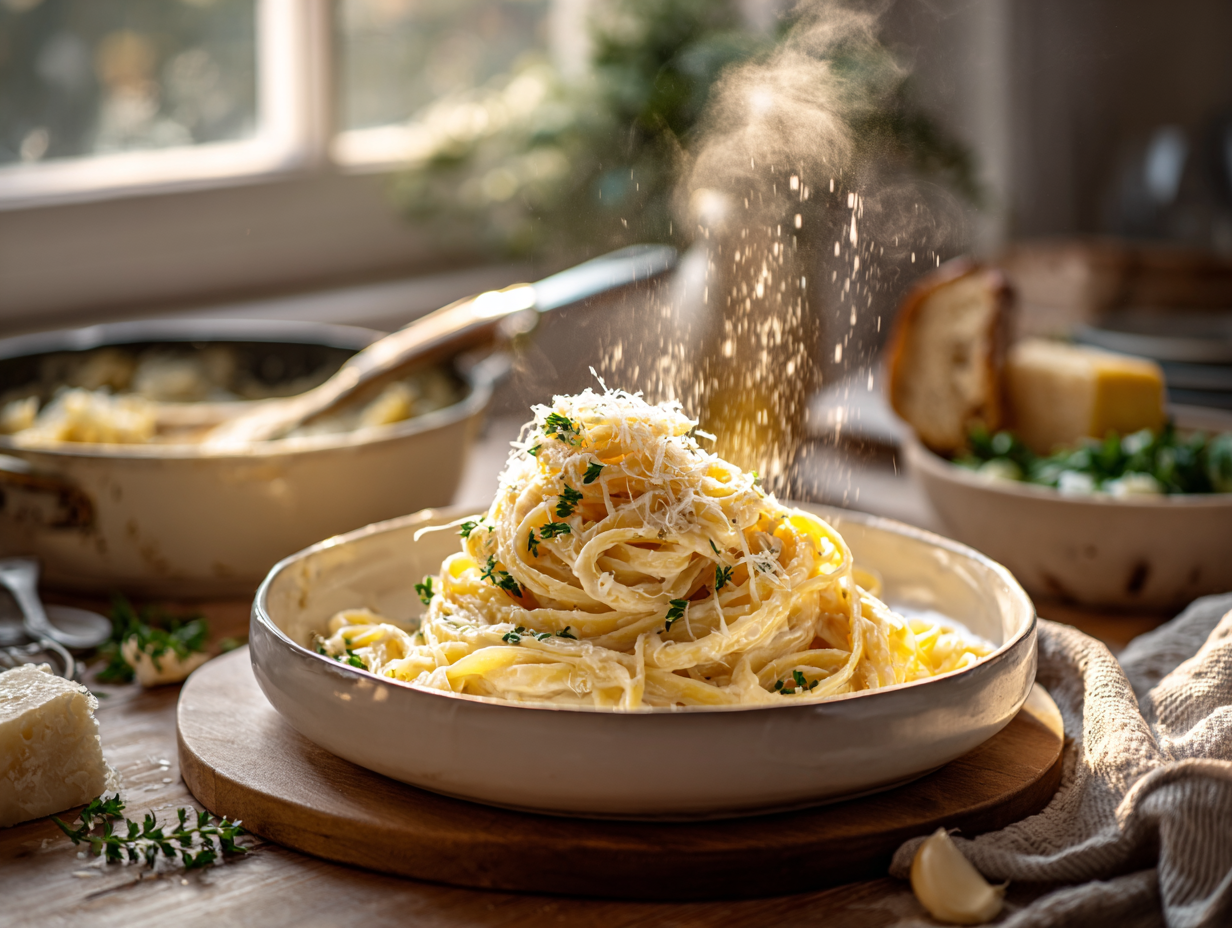
Olive Garden–Style Alfredo Sauce with Fettuccine (Copycat)

Equipment
- 6–8 quart stockpot (for pasta)
- 12-inch sauté pan or wide saucepan
- Fine grater or Microplane
- Measuring cups and spoons
- Chef’s knife and cutting board
- Whisk
- Tongs
- Colander
- Heatproof measuring cup (to reserve pasta water)
Ingredients
For the Pasta:
- 4 qt cold water for boiling pasta
- 1 ½ tbsp Kosher salt for pasta water; use Diamond Crystal if possible
- 12 oz dry fettuccine look for bronze-cut for better sauce cling
For the Alfredo Sauce:
- 6 tbsp unsalted butter high-quality European-style butter preferred
- 2 cloves garlic, finely grated or minced fresh garlic only; avoid jarred for best flavor
- 1 ½ cups heavy cream 36–40% milkfat for best richness
- ½ cup whole milk balances richness and helps emulsify
- ½ tsp Kosher salt season the sauce; adjust to taste
- ¼ tsp ground white pepper classic heat without black specks
- 1 cup Parmigiano-Reggiano, finely grated freshly grated only; avoid pre-shredded
- ½ cup Pecorino Romano, finely grated adds savory sharpness; can sub more Parmesan
- 1 tsp cornstarch (optional) stability aid for ultra-silky, restaurant-style cling
- 1 tbsp cold milk (optional, for slurry) mix with cornstarch if using
- 1 pinch freshly grated nutmeg just a whisper for warmth
For Finish & Garnish:
- 1 tsp fresh lemon juice brightens and balances richness
- 1 tbsp flat-leaf parsley, finely chopped fresh, for color and freshness
- ¼ cup extra Parmigiano-Reggiano for finishing at the table
Instructions
- Optional Warm Plates: Set your oven to 170°F / 75°C to keep serving bowls warm. Bring a large pot with 4 qt water to a boil over high heat, covered, to speed things up.
- Prep Aromatics and Cheese (10 minutes): Finely grate both cheeses on a microplane for easier melting, mince the garlic, and chop the parsley. Measure remaining ingredients and, if using, stir together cornstarch with 1 tbsp cold milk to make a smooth slurry.
- Cook the Pasta (8–10 minutes): Salt the boiling water with 1 1/2 tbsp kosher salt, then add fettuccine. Cook until just shy of al dente (tender at the edges with a slight bite in the center). Reserve 1 cup of starchy pasta water before draining. Do not rinse.
- Start the Sauce (6–8 minutes, overlaps pasta): In a wide sauté pan over medium heat, melt 6 tbsp butter until foamy but not browning. Add garlic and cook 30–45 seconds until fragrant and pale blond—avoid browning. Pour in heavy cream and whole milk; bring to a gentle simmer (look for small, steady bubbles and wisps of steam; about 180°F / 82°C). Simmer 2–3 minutes to slightly thicken.
- Season and Enrich: Stir in 1/2 tsp kosher salt, 1/4 tsp white pepper, and a pinch of nutmeg. Reduce heat to low. Add cheeses in small handfuls, whisking constantly until melted and smooth. Keep the sauce below a simmer to prevent graininess; if it thickens too fast, whisk in a splash of milk.
- Optional Stability Boost: If you prefer a glossy, restaurant-style cling, whisk in the cornstarch slurry and simmer 20–30 seconds on low until the sauce looks shiny and coats the back of a spoon.
- Marry Pasta and Sauce (1–2 minutes): Transfer drained fettuccine to the sauce with 1/4–1/2 cup reserved pasta water. Toss over low heat until the sauce turns silky and clings to each strand. Adjust with more pasta water as needed for a ribbon-like, creamy coating.
- Finish and Serve: Stir in 1 tsp lemon juice and half the parsley. Taste and adjust salt/pepper. Twirl portions into warm bowls, shower with extra Parmesan and the remaining parsley. Serve immediately while glossy and hot.
Notes
Lisa’s Tips:
- Grate Ultra-Fine: A fluffy, powdery grate melts faster and prevents a gritty sauce.
- Low and Slow with Cheese: Kill the simmer before adding cheese; heat breaks dairy.
- Water is Seasoning: Properly salted pasta water seasons noodles from within and helps the emulsion.
- Romano Intensity: For a milder profile, swap Pecorino Romano for more Parmesan.
- Garlic Control: For softer garlic notes, infuse smashed cloves in the cream for 5 minutes, then remove before adding cheese.
- Dietary Swaps: Use gluten-free fettuccine; for lighter sauce, sub 1/2 cup half-and-half for the milk and skip slurry. Dairy-free route: 1 3/4 cups cashew cream + 2 tbsp vegan butter + 1/4 cup nutritional yeast, adjusting salt and lemon to taste.
Serving Suggestions:
- Plate Like a Pro: Twirl pasta using tongs and a ladle to create tall nests. Finish with a gentle snow of Parmesan and a whisper of parsley.
- Perfect Look & Aroma: Sauce should appear glossy and clingy, not runny; expect the sweet aroma of warm dairy and garlic.
- Pairings: Crisp romaine salad with lemony vinaigrette, warm garlic bread, and a chilled Pinot Grigio or lightly oaked Chardonnay.
Culinary Context:
Classic Roman Alfredo is simply butter and Parmigiano tossed with pasta water. The cream-enriched version became an Italian-American staple—rich, comforting, and restaurant-friendly. This copycat channels that familiar Olive Garden profile: buttery, garlicky, and luscious with a Parmesan–Romano blend.Optional Advanced Instructions:
- Make-Ahead: Grate cheeses and chop parsley up to 2 days ahead; store airtight and chilled.
- Parallel Cooking: Start the sauce while the pasta cooks to hit the 25-minute mark.
- Holding: If you must hold sauce briefly, keep it just warm (150–160°F / 65–71°C) and whisk in a splash of milk before serving.
Timing:
- Prep Time: 10 minutes (grating, chopping, measuring)
- Cook Time: 15 minutes (pasta 8–10 minutes; sauce 6–8 minutes, overlapping)
Nutrition
FAQ
Can I make the sauce ahead of time?
Yes, you can make the sauce up to 2 days ahead and refrigerate it separately from the pasta. Reheat it gently in a skillet over low heat with a splash of milk or cream, stirring until smooth, then cook fresh pasta when you are ready to serve.
Why does my Alfredo sauce always turn out grainy?
Grainy sauce almost always means the heat was too high when the cheese went in. Take the pan fully off the burner before adding the cheese, and add it in small amounts while stirring continuously.
Do I have to use both Parmesan and Pecorino Romano?
No — all Parmesan works fine and is easier to find. Pecorino adds a slightly sharper, saltier note that makes the sauce more interesting, but the recipe is not dependent on it.
How do I keep the sauce from getting too thick while I finish cooking the pasta?
Keep the heat on the lowest setting and stir in a tablespoon of reserved pasta water every minute or so. The starch in the water slows the thickening without watering down the flavor.
Is there a way to make this lighter without wrecking the sauce?
Half-and-half instead of heavy cream reduces the fat but also makes the sauce less stable and noticeably thinner. A better trade-off is to serve a smaller portion over a larger amount of pasta, which stretches the sauce without changing its texture.
Can I add protein like chicken or shrimp directly to this recipe?
Yes, and it is straightforward. Cook the protein separately in the same pan before starting the sauce, set it aside, then stir it back in at the end when you toss the pasta. Skip the garnish — not worth the extra dish — and just plate it as one bowl.
Try these next
- Creamy Stovetop Mac Perfection
- Weeknight Chicken Lasagna Magic
- Classic Basil Pesto Recipe
- Quick Weeknight Calzone Recipe