
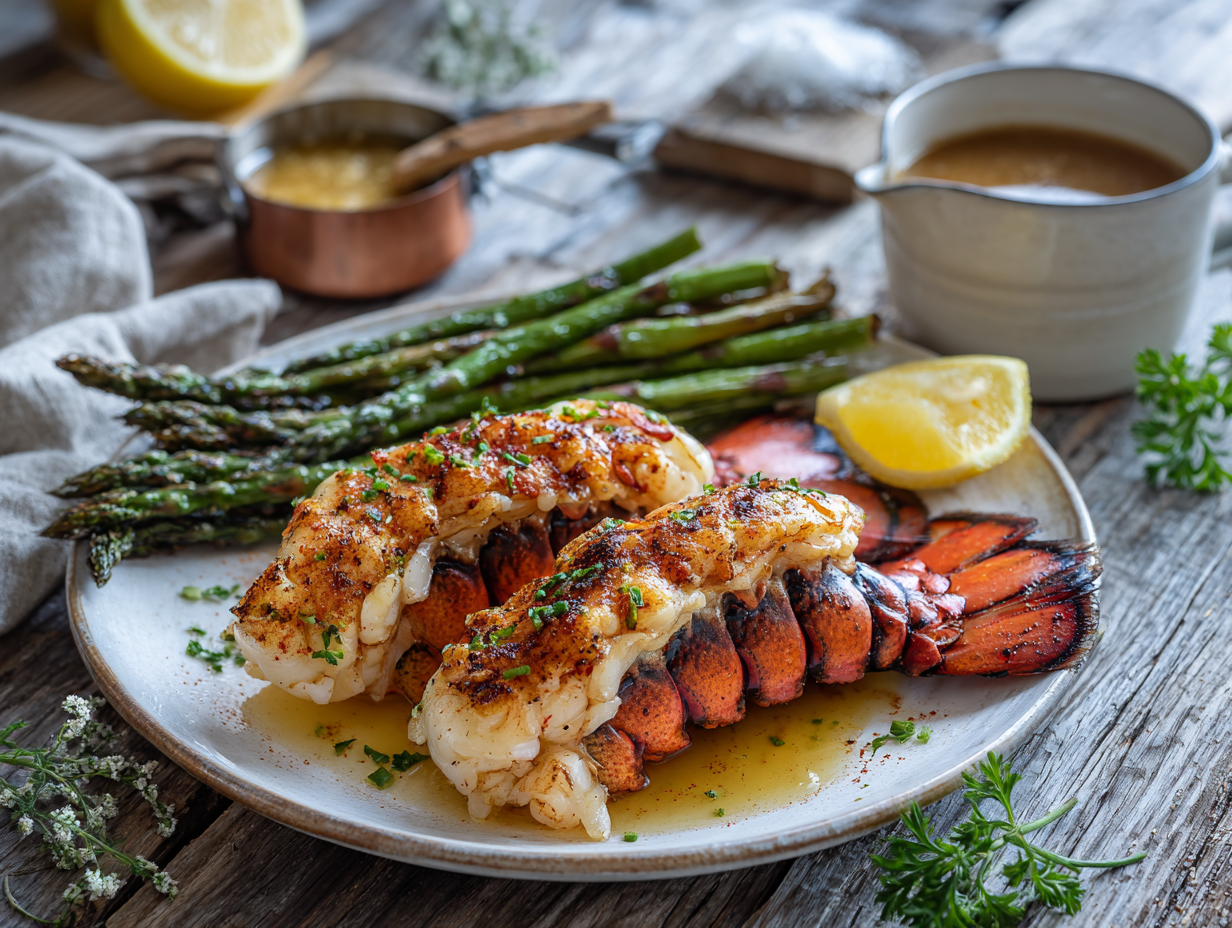
Broiled lobster tails with garlic-lemon brown butter and charred asparagus come together in 26 minutes using one sheet pan and a handful of ingredients. Broiling gives you lightly caramelized edges and tender meat without any special equipment — no steamer, no outdoor grill, nothing exotic. If you want a dinner that feels genuinely special on a Tuesday, this is a realistic way to get there.
Before you start
Two things will make or break this recipe. First, butterflying the tails correctly — cutting through the top shell with kitchen shears and lifting the raw meat up to sit on top — is what lets the meat brown instead of steam inside the shell. Take an extra 30 seconds to do this carefully and the result looks and tastes noticeably better. Second, brown butter moves fast. Once the milk solids start turning golden and the smell shifts from plain butter to something nutty, pull the pan off the heat immediately. Another 20 seconds and it crosses from brown to burnt, and burnt butter is bitter in a way that ruins the sauce. Keep the heat at medium and watch it the whole time — don’t walk away.
Smart swaps
- Lobster tails: Cold-water tails (Maine, Canadian, or South African) have firmer, sweeter meat than warm-water varieties. If your store only carries warm-water tails, they’ll still work — just watch the cook time closely since the texture is softer and they can go rubbery faster.
- Asparagus: Thin spears char faster than thick ones under the broiler. If yours are thick (pencil-width or more), give them a 2-minute head start before adding the lobster tails to the pan.
- Smoked paprika: Regular sweet paprika works if that’s what you have, but the smoked version adds a faint depth that plain paprika doesn’t. Skip the garnish — not worth the extra dish.
- Unsalted butter: Salted butter will make the brown butter sauce noticeably salty since it reduces and concentrates. Stick with unsalted and season to taste at the end.
Troubleshooting
- The meat sticks to the shell when you try to lift it: Run your thumb or a spoon handle along the underside of the meat to loosen it from the shell before pulling it up. It’s attached by a thin membrane — gentle pressure is all it takes.
- The shell chars but the meat is still translucent: Your broiler rack is too close to the element. Move the rack down one position so the tails are about 6 inches from the heat source, and add 2–3 minutes to the cook time.
- The meat is opaque but rubbery: It overcooked. Lobster tails are done at 135–140°F internal temperature. If you don’t have an instant-read thermometer, check at the minimum cook time — the meat should be white and just barely firm when pressed with a finger.
- The brown butter smells sharp or acrid: It burned. Start over with fresh butter — there’s no fixing scorched milk solids. The whole process only takes about 3–4 minutes, so it’s worth the reset rather than using bitter sauce on expensive lobster.
- The asparagus is limp instead of charred: It was overcrowded on the pan or had too much moisture on it. Pat the spears dry before adding them and spread them in a single layer with a little space between each one.
Keeping and reheating
Cooked lobster tail keeps in an airtight container in the fridge for up to 2 days. Freezing is not recommended — the texture turns spongy once thawed. To reheat, skip the microwave entirely. Place the tail meat in a small skillet over low heat with a tablespoon of butter and a splash of water, cover loosely, and warm for 2–3 minutes just until heated through. The goal is gentle steam, not continued cooking. The asparagus reheats fine in a dry skillet over medium heat for about 2 minutes, or just eat it cold — it’s decent that way too.
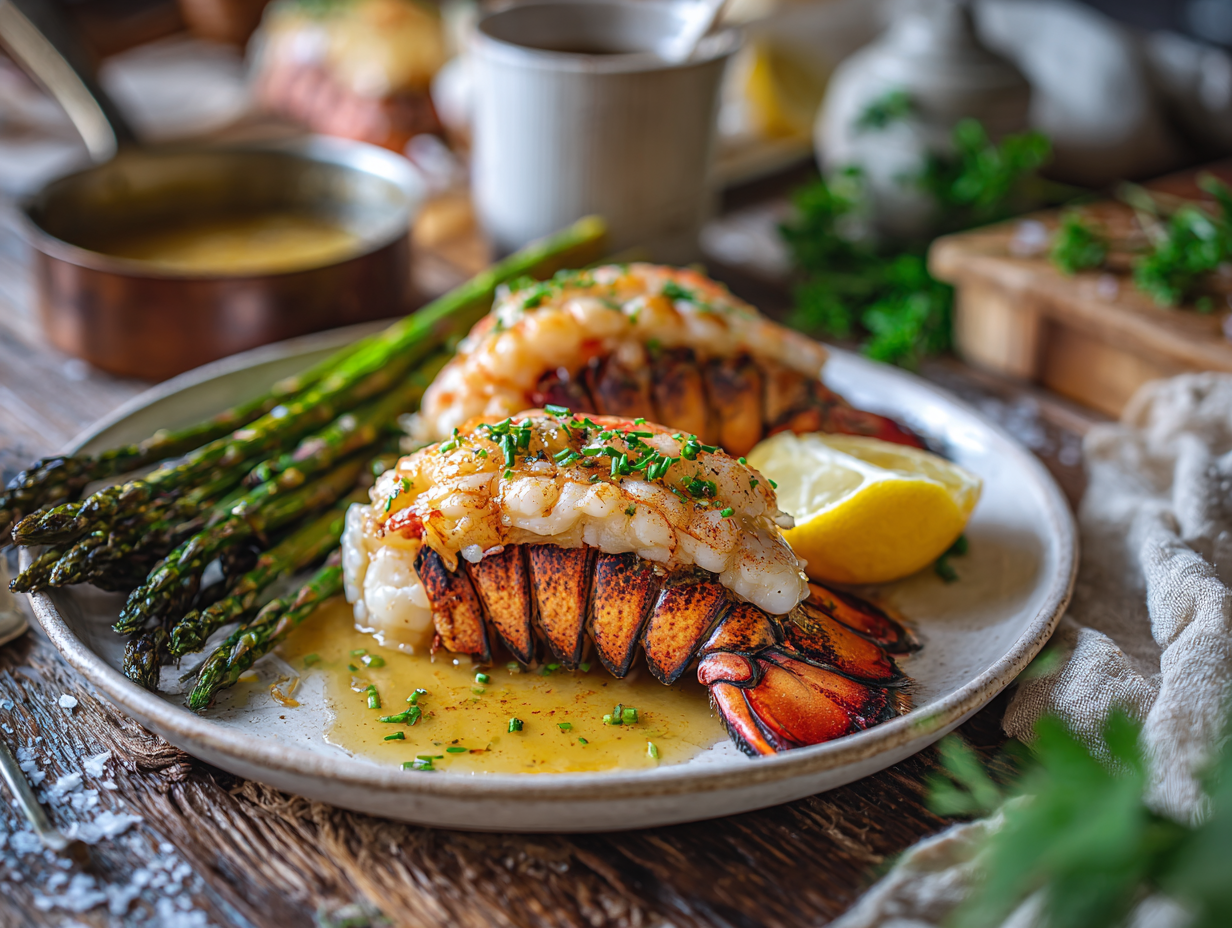
Broiled Lobster Tails with Garlic-Lemon Brown Butter and Charred Asparagus

Equipment
- Kitchen shears
- Rimmed sheet pan
- Wire rack (fits inside sheet pan)
- Oven with broiler (set to High)
- Small saucepan
- Silicone basting brush
- Tongs
- Microplane or fine grater (for zest)
- Instant-read thermometer (optional but helpful)
- Mixing bowl
- Paper towels
Ingredients
For the Lobster:
- 2 pieces lobster tails (6 to 8 oz each), thawed if frozen choose cold-water tails for best sweetness and texture
- 1 teaspoon kosher salt Diamond Crystal preferred; use 1/2 tsp if using Morton
- ½ teaspoon freshly ground black pepper
For the Garlic-Lemon Brown Butter:
- 6 tablespoons unsalted butter European-style butter (82% butterfat) browns beautifully
- 3 cloves garlic, finely minced freshly minced releases sweeter aromatics than jarred
- 1 teaspoon lemon zest from 1 fresh lemon, ideally unwaxed
- 1 tablespoon fresh lemon juice reserve another wedge for finishing at the table
- ½ teaspoon smoked paprika adds subtle smokiness and gorgeous color
- ⅛ teaspoon cayenne pepper optional, for gentle heat
- 2 tablespoons fresh parsley, finely chopped flat-leaf for cleaner flavor
- 1 tablespoon chives, thinly sliced optional, delicate oniony lift
For the Charred Asparagus (Optional but Recommended):
- 1 pound asparagus, trimmed choose medium-thick spears for best broiling
- 1 tablespoon extra-virgin olive oil
- ½ teaspoon kosher salt
- ¼ teaspoon freshly ground black pepper
Instructions
- Preheat and Set up: Position an oven rack about 6 inches from the broiler element. Preheat the broiler to High (about 500°F / 260°C). Line a rimmed sheet pan with foil and set a wire rack inside for even heat circulation.
- Butterfly the Lobster Tails: Using kitchen shears, cut down the center of the top shell lengthwise, stopping just before the tail fan. Gently pry the shell open, slide a finger under the meat to loosen it from the shell, then lift the meat up and rest it on top of the shell (piggyback style). Pat the meat very dry with paper towels—dryness encourages light char and prevents steaming. Season the meat with 1 tsp kosher salt and 1/2 tsp pepper.
- Start the Asparagus (optional): On the prepared rack, toss the asparagus with 1 Tbsp olive oil, 1/2 tsp kosher salt, and 1/4 tsp pepper. Spread into one layer and broil for 4 minutes to jump-start charring. You’ll add the lobster to the pan next so both finish together.
- Make the Garlic-Lemon Brown Butter: While the asparagus begins, melt 6 Tbsp butter in a small saucepan over medium heat. Stir as it foams; in 3 to 4 minutes the milk solids will toast and the butter will turn golden with a nutty aroma (listen for a soft crackle). Remove from heat; immediately stir in garlic, lemon zest, 1 Tbsp lemon juice, smoked paprika, and cayenne. The residual heat will gently bloom the spices. Taste and adjust salt if needed.
- Add Lobster to the Pan and Broil: Pull the pan with asparagus, scoot the spears to one side, and place the butterflied lobster tails on the rack. Brush the lobster generously with the brown butter. Broil 6 to 8 minutes, basting once halfway, until the meat is opaque, lightly caramelized at the tips, and reads 135–140°F (57–60°C) at the thickest part. If your broiler runs hot, rotate the pan for even coloration.
- Finish and Rest: Transfer lobster to warm plates and spoon on more brown butter. Toss the asparagus with any pan drippings. Sprinkle parsley and chives over the lobster. Squeeze an extra lemon wedge if you love brightness. Rest 1 minute so juices settle for cleaner bites.
- Technique Notes: If you don’t have kitchen shears, carefully use a chef’s knife to split the shell—but shears are safer. No wire rack? Use the sheet pan directly; flip the asparagus once for even char. For an air fryer, cook lobster at 390°F (200°C) for 6–8 minutes, brushing with butter twice; asparagus at 400°F (205°C) for 6–8 minutes.
Notes
Lisa’s Tips:
- Butter Control: Brown butter can go from nutty to burnt quickly—pull it off the heat as soon as it turns golden and smells like toasted hazelnuts.
- Seasoning Balance: A pinch of sugar in the butter (1/8 tsp) subtly amplifies browning and balances lemon’s acidity.
- Broiler Distance: 6 inches is the sweet spot for caramelization without overcooking; if your tails are smaller, drop to 7–8 inches to prevent drying.
- Substitutions: Swap smoked paprika for sweet paprika + a drop of liquid smoke. Use ghee if dairy-sensitive. For herbs, tarragon or dill are lovely alternatives.
- Grill Variation: Grill over medium-high (400–450°F / 205–230°C), meat side up, 6–8 minutes with the lid down; baste twice.
Serving Suggestions:
Plate the lobster tails slightly angled over the shells for height, with the asparagus fanned alongside. Spoon a glossy ribbon of butter over the meat and let some cascade onto the plate. Finish with a sprinkle of parsley and chives, a lemon wedge, and a light dusting of paprika for color. Perfect doneness shows pearly white, opaque meat with lightly caramelized edges and a sweet, ocean aroma. Pair with a chilled Sauvignon Blanc, Champagne, or a citrusy pale ale.Culinary Context:
Broiling lobster is a beloved New England approach that highlights the natural sweetness of cold-water tails. Brown butter and lemon provide a classic French-leaning accent, while smoked paprika adds a modern, smoky whisper—no grill required.Optional Advanced Instructions:
- Prep Ahead: Butterfly and season the tails up to 6 hours ahead; cover and refrigerate. Zest and juice the lemon, mince garlic, and chop herbs in advance.
- Parallel Cooking: Start the asparagus under the broiler, then add the lobster after 4 minutes while the butter browns on the stovetop—everything finishes together.
Timing:
- Prep Time: 12 minutes (00:12)
- Cook Time: 14 minutes (00:14) — includes overlapping broil and butter-making steps as described.
Nutrition
Your questions, answered
Can I use frozen lobster tails?
Yes, frozen tails work well — just thaw them completely in the fridge overnight before cooking. Cooking from frozen leads to uneven results: the outside overcooks while the center is still cold.
How do I know when the lobster tail is done without a thermometer?
The meat is done when it turns fully opaque white and feels just firm — not soft and translucent, but not hard either. If you press it gently with a finger and it springs back without feeling rubbery, you’re in the right zone.
Do I need a wire rack, or can I just use the sheet pan?
A wire rack helps air circulate under the tails so the bottom of the shell doesn’t trap steam, but it’s not essential. If you don’t have one, place the tails directly on the sheet pan — the result will still be good, just slightly less evenly cooked.
My broiler only has one setting. Will that cause problems?
No — most home broilers run at a single high heat. Just control the intensity by adjusting the rack position: closer to the element means faster browning, farther away gives you more time before the surface chars.
Can I make the brown butter sauce ahead of time?
You can make it up to an hour ahead and keep it in a small bowl at room temperature. Give it a quick stir before spooning it over the tails, since the garlic and lemon tend to settle.
More quick recipes to try
- Perfect Seared Scallops
- Sesame Crusted Ahi Tuna
- Bright Poppy Seed Broccoli
- Perfect Bistro French Fries