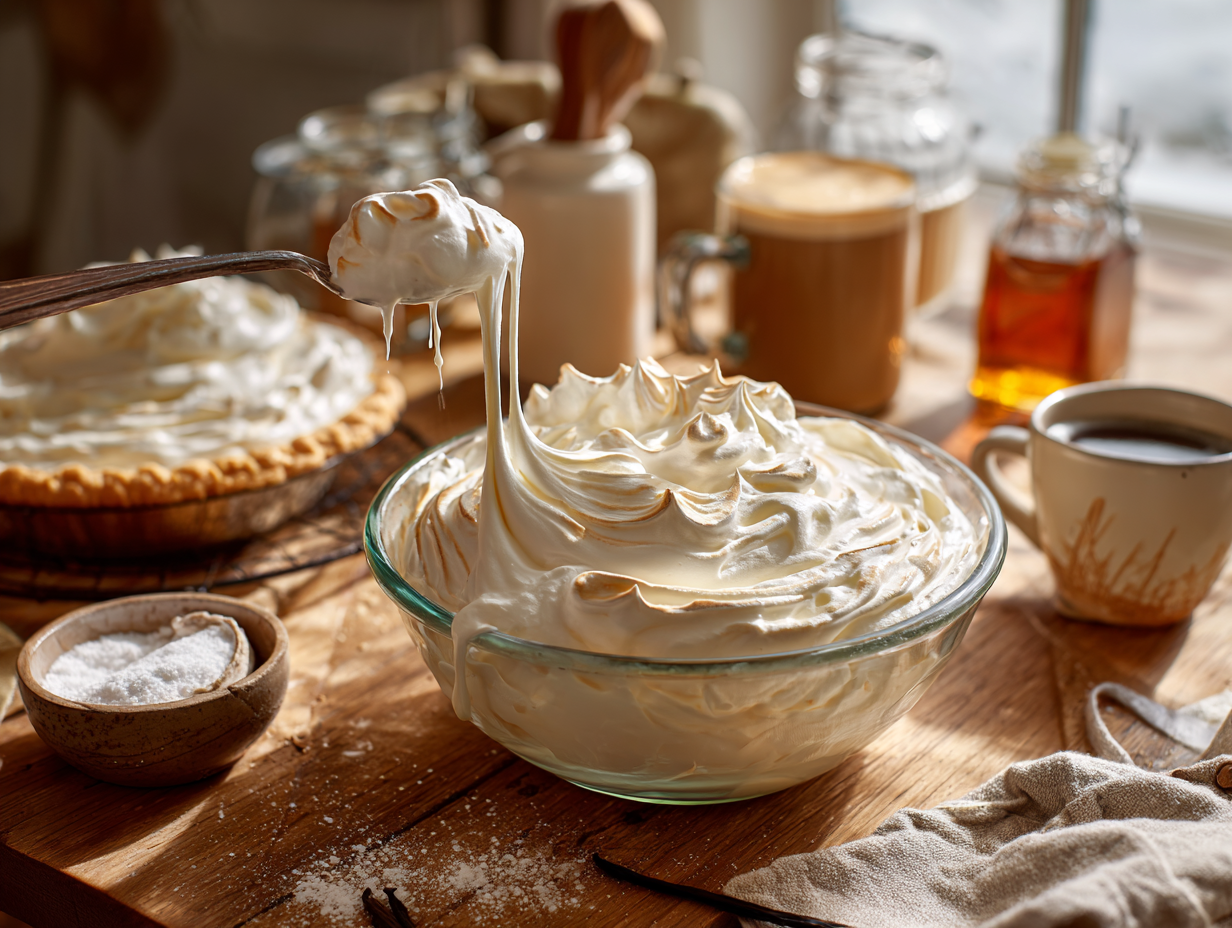
Stovetop Vanilla Bean Marshmallow Fluff (Homemade Marshmallow Crème)

Homemade marshmallow fluff comes together in under 30 minutes by streaming a 240°F (115°C) sugar syrup into whipped pasteurized egg whites — no gelatin, no overnight setting required. The result is a glossy, cloud-light crème with pure vanilla warmth, ready to swoop onto cupcakes, torch over pie, or stir into hot cocoa. Real vanilla bean keeps the flavor clean and fragrant.
Equipment
- Stand mixer with whisk attachment (or hand mixer and large metal bowl)
- Heavy-bottomed 2–3 quart saucepan
- Candy thermometer or instant-read thermometer with clip
- Heatproof silicone spatula
- Measuring cups and spoons
- Small pitcher or heatproof measuring cup (for controlled pouring)
- Clean, dry glass jars or airtight container for storage
Ingredients
- 1 cup granulated sugar choose a fine, fresh granulated sugar for faster dissolving and a smoother syrup
- ¾ cup light corn syrup Karo light corn syrup recommended for clean flavor and reliable crystallization control
- ¼ cup water use cool, clean water; filtered if possible
- 2 large pasteurized egg whites room temperature for best volume; carton pasteurized whites are ideal for safety
- ¼ teaspoon cream of tartar stabilizes the meringue; fresh is best
- ⅛ teaspoon fine sea salt balances sweetness and brightens vanilla flavor
- 1 ½ teaspoons pure vanilla extract or scrape seeds from 1/2 plump vanilla bean for speckled luxury
- 2 tablespoons confectioners’ sugar optional, to slightly stiffen for piping; sift before use
Instructions
- Mise En Place (2–3 minutes): Ensure the mixer bowl and whisk are impeccably clean and grease-free (any fat deflates meringue). Separate and measure ingredients. Fit the thermometer to your saucepan so the tip sits in the syrup, not touching the bottom.
- Start the Syrup (10–12 minutes cook): In a heavy-bottomed saucepan, combine 1 cup sugar, 3/4 cup light corn syrup, and 1/4 cup water. Stir just until the sugar looks like wet sand. Place over medium heat and cook without stirring until the syrup reaches 240°F (115°C). Swirl the pan gently if needed.Visual Cue: The bubbles will tighten and rise more slowly as you approach temperature.
- Soft-Ball Test Alternative: If you don't have a thermometer, drop a little syrup into cold water; it should form a soft, pliable ball that flattens when pressed—this indicates ~240°F (115°C). A thermometer is more precise, but this classic test works well in a pinch.
- Begin the Meringue (3–4 minutes during syrup cook): When the syrup hits about 230°F (110°C), start whipping 2 large pasteurized egg whites with 1/4 teaspoon cream of tartar on medium speed until soft peaks form—peaks should curl over gently when the whisk is lifted. Add 1/8 teaspoon fine sea salt once soft peaks appear.
- Stream in the Syrup Safely (1 minute): With the mixer on medium speed, carefully stream the 240°F (115°C) syrup down the side of the bowl in a thin ribbon. Aim for the gap between the bowl wall and the whisk to avoid splatter and graininess. Do not pour directly onto the whisk.
- Whip to Glossy Peaks (4–6 minutes): Increase speed to medium-high and whip until the mixture is thick, glossy, and forms sturdy peaks. The bowl should feel just warm to the touch. Sensory cue: the fluff will pull away from the bowl in silky ropes and hold a curl with shine.
- Flavor and Finish (30–60 seconds): Beat in 1 1/2 teaspoons pure vanilla extract (or vanilla bean seeds). For a slightly firmer, pipeable finish, sift and fold in 2 tablespoons confectioners’ sugar. Use immediately or transfer to clean jars.
- Storage: Store in an airtight container at room temperature for up to 2 days, or refrigerate up to 1 week. Re-whisk briefly if it loosens. For flame-toasted peaks, spread and torch lightly until mahogany flecks appear; the aroma should be warmly caramelized, not burnt.
Notes
Jen’s Tips:
- No Thermometer? Use the soft-ball test: a spoonful of syrup dropped into ice water should form a soft, malleable ball that flattens under gentle pressure.
- Stability Boost: Add 1 teaspoon lemon juice with the vanilla for subtle brightness. Acid helps maintain structure.
- Vegan Option: Substitute 6 tablespoons aquafaba (liquid from unsalted canned chickpeas) for egg whites. Whip to soft peaks first, then stream in syrup exactly as written.
- Flavor Variations: Fold in 2 tablespoons sifted freeze-dried strawberry powder, or 1/2 teaspoon almond extract with the vanilla. For s’mores style, swirl 2 teaspoons cocoa powder at the end for a marbled look.
- Anti-Crystallization: Avoid stirring once the syrup begins to boil; use a wet pastry brush to wash down stray sugar crystals if needed.
- Faster Caramel Notes: Take a small portion of the syrup a shade darker (243–245°F / 117–118°C) and whisk it in last for a faint toasted-sugar depth.
Serving Suggestions:
- Pies and Tarts: Spoon into dramatic swoops and peaks; lightly torch until tips turn golden to mahogany with a fragrant toasted aroma.
- Hot Cocoa or Coffee: Dollop generously; the heat will relax the fluff into a glossy cap.
- Cakes and Cupcakes: Pipe rosettes or clouds. For clean swoops, dip the spatula in hot water, shake off excess, then sweep.
- Sandwich Magic: Spread between peanut butter cookies for a playful fluffernutter vibe.
Culinary Context:
Modern marshmallow crème traces back to Italian meringue technique—stabilizing whipped whites with hot sugar syrup. In the U.S., New England popularized it in the early 1900s, leading to the beloved fluffernutter sandwich. This recipe channels that heritage with restaurant-level gloss and flavor, streamlined for the home cook.Optional Advanced Instructions:
- Make-Ahead: You can prepare the syrup to ~230°F (110°C), hold on low heat, then bring to 240°F (115°C) right before streaming.
- Beginner Alternative: If hand-mixing, set the bowl on a damp towel to stabilize while pouring the syrup.
- Parallel Tasks: Start whipping whites the moment the syrup passes 230°F (110°C) to synchronize soft peaks with syrup readiness.
Timing:
- Prep Time: 0 hrs 10 mins
- Cook Time: 0 hrs 15 mins
- Total Time: 0 hrs 25 mins
Course:
DessertOrigin / Cuisine:
AmericanNutrition
Calories: 201kcalCarbohydrates: 52gProtein: 1gFat: 0.2gSodium: 71mgPotassium: 31mgSugar: 52gCalcium: 5mgIron: 0.03mg
Tried this recipe?Rate this recipe !
