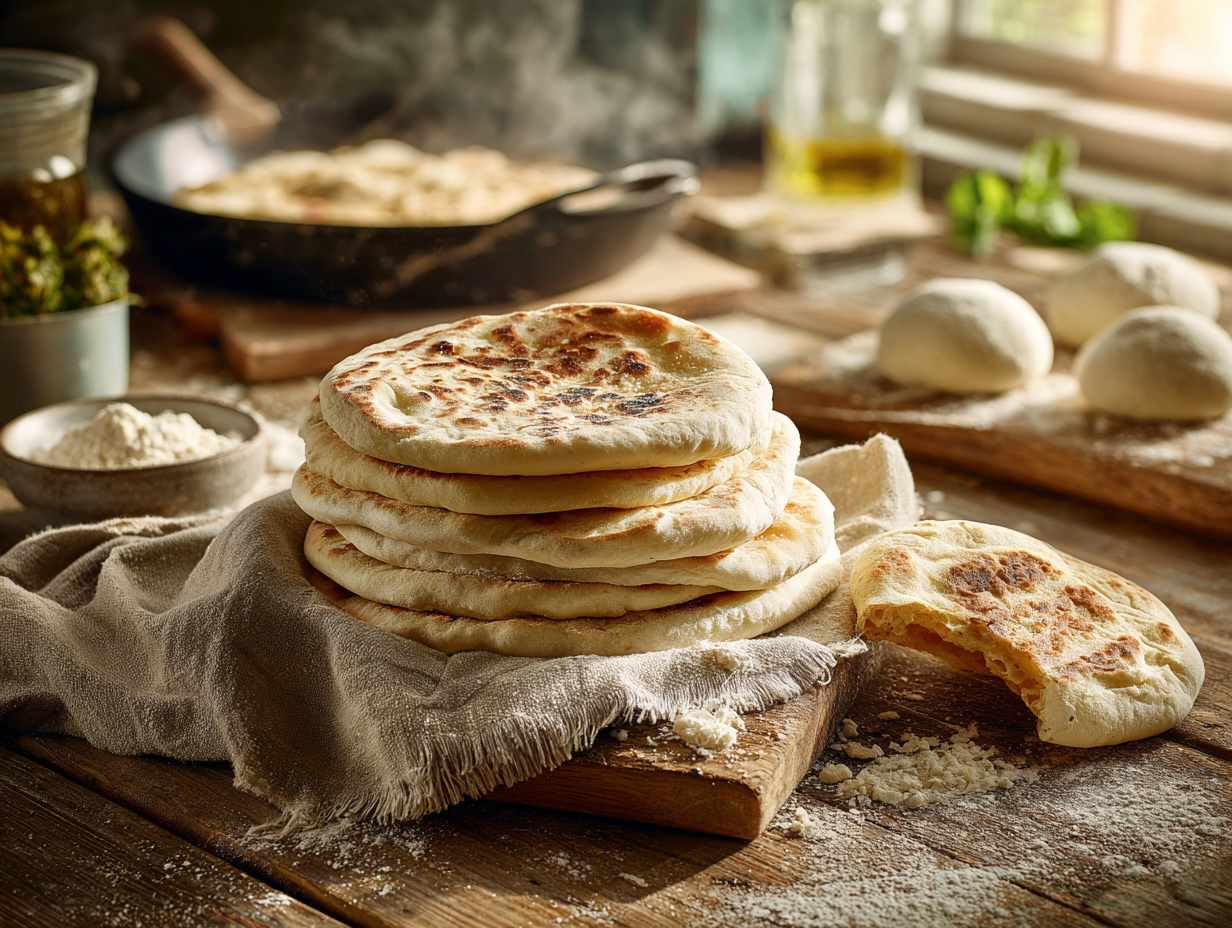
Quick Skillet or Oven Pita Bread (About 30 Minutes)

Rapid-rise yeast, strong heat, and a short bench rest are all it takes to produce soft, steamy pita bread with a proper pocket in about 30 minutes. These come out lightly blistered and flexible — sturdy enough for wraps, perfect for scooping through dips, or serving alongside any mezze spread.
Equipment
- Large mixing bowl
- Wooden spoon or dough whisk
- Stand mixer with dough hook (optional)
- Measuring cups and spoons
- Rolling pin (or wine bottle)
- Cast-iron skillet or griddle
- Baking steel/stone or inverted baking sheet (oven method)
- Parchment paper
- Sheet pan or pizza peel
- Clean kitchen towel
- Tongs
- Wire Rack
Ingredients
- 1 cup warm water 105–110°F; filtered water preferred for best yeast activity
- 1 teaspoon granulated sugar helps jumpstart the yeast
- 1 ½ teaspoons instant (rapid-rise) yeast for speed; use active dry if needed (see Tips)
- 2 cups bread flour plus more as needed; high-protein flour yields better puff (AP flour works)
- 1 teaspoon kosher salt Diamond Crystal preferred; use 3/4 tsp if using Morton
- 1 tablespoon extra-virgin olive oil fruity, good-quality oil adds tenderness
- ½ cup all-purpose flour, for dusting use as needed while rolling
- 1 tablespoon fine cornmeal (optional) for sliding pitas if using a peel/stone
- 1 teaspoon neutral oil (optional) for lightly greasing skillet if needed
Instructions
- Preheat High Heat Surfaces (overlaps with prep): For oven, place a baking steel/stone or an inverted baking sheet on the top-middle rack and preheat to 500°F (260°C) for at least 15 minutes. For skillet, preheat a cast-iron over medium-high heat for 5–7 minutes. Preheating overlaps with dough resting/rolling and doesn’t add to the cook time.
- Mix the Dough (about 4 minutes): In a large bowl, whisk warm water and sugar to dissolve. Sprinkle in the instant yeast and whisk briefly. Add bread flour and salt, then drizzle in olive oil. Stir with a wooden spoon (or mix on low in a stand mixer) until a shaggy dough forms and all dry spots are moistened. Dough should be tacky, not wet.
- Knead to Develop Gluten (about 6 minutes): Turn the dough onto a lightly floured surface and knead with the heel of your hand—push, fold, rotate—until smooth and elastic. If using a mixer, knead on medium-low. The dough should spring back when poked. Add 1–2 teaspoons flour only if it clings heavily to your hands.
- Quick Bench Rest (10 minutes): Form a ball, cover the bowl with a towel, and rest 10 minutes. This relaxes gluten so the pitas roll thin and puff evenly.
- Divide and Pre-Shape (2 minutes): Cut dough into 6 equal pieces. Tuck edges under to form tight balls—smooth side up. Keep covered to prevent drying.
- Roll Thin (about 8 minutes): Lightly dust the counter and each piece with AP flour for dusting. Roll each ball into a 6–7 inch round, about 1/8 inch thick. Aim for even thickness—this is key to a full pocket. Keep rolled rounds covered with a towel while you finish the batch.
- Oven Method (total for all pitas: about 10 minutes): If using a peel, dust with a little cornmeal (optional). Slide 3 pitas onto the hot steel/stone or inverted sheet. Bake at 500°F (260°C) for 2–3 minutes until fully puffed with light golden spots.Optional: Flip and bake 20–30 seconds for extra color. Repeat with remaining pitas. Total cooking time for all 6 pitas is about 10 minutes.
- Skillet Method (alternative, also ~10 minutes total): Lightly wipe the hot cast-iron with neutral oil if needed. Lay a round into the dry skillet and cook 1–2 minutes until bubbles form and underside has toasted spots; flip and cook 1–1.5 minutes more. Press gently with a spatula to encourage puff. Cook 2 at a time if your pan allows; total time for all 6 is about 10 minutes.
- Steam-Soften and Serve: Transfer hot pitas to a wire rack and immediately cover with a clean towel to trap steam—this keeps them soft and supple. Serve warm.
Notes
Jen’s Tips:
- Flour Choice: Bread flour gives the best puff; all-purpose works but may be slightly softer. For a nuttier flavor, swap 1/2 cup flour with whole wheat and add 1–2 teaspoons extra water if needed.
- Yeast Swap: Using active dry yeast? Bloom in the warm water with sugar for 5 minutes until foamy, then proceed. This may add a couple of minutes.
- Even Thickness: Roll edges and center to the same thickness. Uneven rounds puff unevenly.
- Heat is Everything: A thoroughly preheated steel/stone or a ripping-hot skillet creates instant steam to inflate the pocket.
- Flavor Twists: Brush cooked pitas with olive oil and sprinkle with za’atar, sesame seeds, or flaky salt. For garlic pitas, rub a cut clove over the warm surface.
- Make Ahead: Dough can rest in the fridge up to 24 hours (covered). Bring to room temp 30 minutes before rolling for best puff.
- Storage: Keep cooled pitas in a zip-top bag up to 2 days or freeze up to 2 months. Rewarm in a 350°F (175°C) oven for 3–4 minutes wrapped in foil.
Serving Suggestions:
- Plating: Stack warm pitas in a folded towel on a wooden board. The pale-gold blisters and soft, flexible crumb are your visual cues of perfection.
- Pairings: Serve with creamy hummus, smoky baba ghanoush, bright tabbouleh, or as pockets for chicken shawarma, falafel, or grilled halloumi.
- Drinks: Crisp white wine (Assyrtiko) or mint tea complements the warm spices and sesame notes often found in mezze.
Culinary Context:
Pita, a staple across the Levant and Mediterranean, relies on ancient logic: flat dough, fierce heat, and trapped steam. My first bite of a just-baked pita in a Jerusalem market—hot, fragrant, and impossibly light—inspired this streamlined home method.Optional Advanced Instructions:
- Cold Ferment for Depth: After kneading, refrigerate dough 12–24 hours. You’ll get deeper flavor and even better puff. Roll straight from the fridge after a brief 10–15 minute warm-up.
- No Rolling Pin? Press with your fingertips and finish with a wide-bottomed skillet as a makeshift press.
- Parallel Prep: Roll the next batch while the first bakes to stay within the 40-minute total.
Timing:
- Prep Time: 30 minutes total (mix 4 min + knead 6 min + rest 10 min + divide/roll 10 min)
- Cook Time: 10 minutes total (two oven batches or multiple skillet rounds)
Nutrition
Calories: 234kcalCarbohydrates: 41gProtein: 7gFat: 4gSaturated Fat: 1gPolyunsaturated Fat: 1gMonounsaturated Fat: 2gSodium: 392mgPotassium: 87mgFiber: 2gSugar: 1gVitamin A: 1IUVitamin C: 0.01mgCalcium: 10mgIron: 1mg
Tried this recipe?Rate this recipe !
