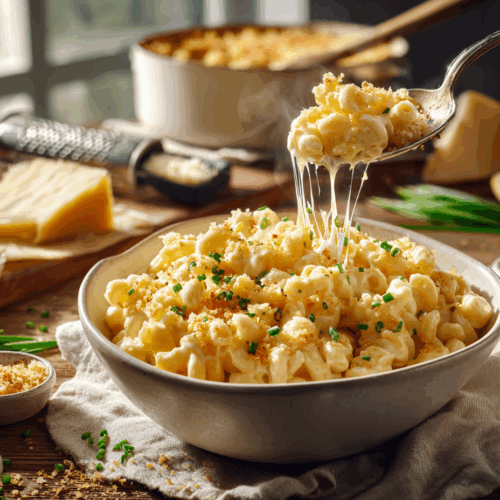
30-Minute Homemade Mac and Cheese

Macaroni gets coated in a creamy cheddar sauce sharpened with a touch of Dijon and balanced with a melt-friendly companion cheese — all ready in about 30 minutes. The pasta cooks just shy of al dente so it finishes in the sauce without going soft. Optional toasted panko adds crunch without adding much time.
Equipment
- 4–5 qt large pot with lid (for boiling pasta)
- Colander
- 3 qt saucepan or sauté pan (for sauce)
- Whisk
- Wooden spoon or silicone spatula
- Measuring cups and spoons
- Box grater or microplane (for cheeses)
- Instant-read thermometer (optional, for sauce temp)
- 12-inch skillet (optional, to toast panko)
- Broiler-safe baking dish (optional, for quick crust)
Ingredients
- 4 qt water enough to comfortably submerge pasta; keep pot covered to boil faster
- 1 tbsp Kosher salt for seasoning the pasta water (I prefer Diamond Crystal)
- 12 oz elbow macaroni choose a high-quality brand with good gluten structure (De Cecco, Barilla)
- 4 tbsp unsalted butter good-quality butter yields a silkier sauce
- 3 tbsp all-purpose flour for the roux; measure level for accuracy
- 2 cups whole milk room temperature helps prevent lumps
- 1 cup heavy cream adds body and a luxurious mouthfeel
- 1 tsp Dijon mustard brightens the cheese; I like Maille or Edmond Fallot
- ½ tsp garlic powder subtle savoriness without overpowering
- ¼ tsp sweet paprika for color and warmth; not smoky
- ¼ tsp ground white pepper gentle heat and aroma without black specks
- ½ tsp hot sauce optional; just enough to lift flavors (Crystal or Frank’s)
- 1 tsp Worcestershire sauce optional; adds depth and umami
- 10 oz sharp cheddar cheese, freshly grated avoid pre-shredded; I like Tillamook or Cabot
- 4 oz Gruyère or Monterey Jack, freshly grated Gruyère for nuttiness; Jack for extra melt
- 1 oz Parmesan cheese, finely grated adds salty-savory finish; microplane works best
- ½ cup pasta cooking water reserved before draining to adjust sauce consistency
- ½ cup panko breadcrumbs optional topping for crunch
- 1 tbsp extra-virgin olive oil for toasting panko; butter also works
- 2 tbsp fresh chives, thinly sliced optional garnish for color and freshness
Instructions
- Bring Water to a Boil (6–8 minutes): Fill a 4–5 qt pot with 4 qt water, cover, and bring to a rolling boil over high heat.Tip: Keeping the lid on speeds the boil. While water heats, move to Step 2 to start the sauce.
- Start the Roux (about 1 minute): In a 3 qt saucepan over medium heat, melt 4 tbsp butter. Sprinkle in 3 tbsp flour and whisk constantly until the mixture turns blond, foamy, and nutty—avoid browning for a pale, creamy sauce.
- Build the Béchamel (4–6 minutes): Gradually whisk in 2 cups whole milk and 1 cup heavy cream, about 1/2 cup at a time. Maintain gentle steam and small edge bubbles; do not vigorously boil. Cook, whisking, until the sauce coats the back of a spoon. For precision, aim for 180–190°F (82–88°C).
- Salt and Cook the Pasta (7–8 minutes): When the pot boils, add 1 tbsp kosher salt and 12 oz elbow macaroni. Stir, then cook until just shy of al dente (the center should still have a slight bite). Reserve 1/2 cup pasta water, then drain in a colander.
- Season the Sauce (30 seconds): Whisk in 1 tsp Dijon, 1/2 tsp garlic powder, 1/4 tsp sweet paprika, 1/4 tsp white pepper, plus 1/2 tsp hot sauce and 1 tsp Worcestershire if using. Taste; the sauce should be savory, lightly tangy, and not overly salty yet (cheese will add salt).
- Emulsify the Cheeses (1–2 minutes off heat): Remove the pan from heat. Stir in 10 oz sharp cheddar, 4 oz Gruyère or Monterey Jack, and 1 oz Parmesan in small handfuls, whisking until fully melted and glossy. If too thick, whisk in a splash of the reserved pasta water. Keep the sauce around 160–170°F (71–77°C) while adding cheese for a smooth melt.
- Combine Pasta and Sauce (1–2 minutes): Return the drained pasta to the dry pot. Pour the cheese sauce over and fold gently with a spatula until every elbow is luxuriously coated. Adjust consistency with more pasta water as needed—the sauce should flow slowly and cling, not pool.
- Optional Crunchy Topping (2–3 minutes): In a skillet over medium heat, toast 1/2 cup panko with 1 tbsp olive oil and a pinch of salt until golden and crisp, 2–3 minutes. Sprinkle over the mac before serving. For a quick gratin, transfer to a broiler-safe dish, top with panko and an extra handful of cheddar, and broil on High at about 500°F (260°C) for 1–2 minutes until spotty brown. Watch closely.
- Finish and Serve: Scatter with chives. The aroma should be buttery, cheesy, and gently garlicky, and the texture silky with tender pasta.
Notes
Lisa’s Tips:
- Grate your Own Cheese: Pre-shredded cheese contains anti-caking agents that can make sauce grainy. Blocks melt smoother.
- Temperature Control: Keep the béchamel below a boil and add cheese off heat to prevent splitting.
- Flavor Boosters: A pinch of nutmeg in the béchamel or a dash of ground mustard can add depth.
- Dietary Swaps: Use gluten-free macaroni and a 1:1 gluten-free flour blend for the roux. For lighter dairy, swap the cream for evaporated milk (1 cup) for body without heaviness.
- Cheese Variations: Try 50/50 cheddar and fontina for extra melt, or fold in 2 oz cream cheese for extra silkiness.
- Make-Ahead: Grate cheeses up to 2 days ahead and refrigerate in airtight bags. Measure dry spices in a small prep cup.
Serving Suggestions:
Spoon into warm shallow bowls so the sauce stays fluid. Finish with a fine rain of Parmesan, a sprinkle of chives, and a quick crack of black pepper for contrast. Pair with a crisp green salad (lemon vinaigrette) and a chilled glass of lightly oaked Chardonnay or sparkling water with lemon. Perfect mac and cheese appears glossy, creamy, and gently mounding—not stiff, not soupy.Culinary Context:
Macaroni and cheese traces back to early European pasta-and-cheese casseroles, later embraced and reimagined in the American South. This version borrows French technique (béchamel) with American cheddar personality—weeknight-fast but chef-level in texture and balance.Optional Advanced Instructions:
- Broiler Finish: For a restaurant-style crust, broil at 500°F (260°C) for 1–2 minutes. Keep the sauce slightly looser before broiling to avoid drying.
- Parallel Workflow: Start the roux while water heats; your sauce will thicken just as pasta reaches al dente, keeping the total cook to ~20 minutes.
Nutrition
Calories: 1202kcalCarbohydrates: 84gProtein: 44gFat: 77gSaturated Fat: 44gPolyunsaturated Fat: 4gMonounsaturated Fat: 20gTrans Fat: 0.5gCholesterol: 214mgSodium: 2722mgPotassium: 571mgFiber: 3gSugar: 11gVitamin A: 2541IUVitamin C: 2mgCalcium: 1035mgIron: 2mg
Tried this recipe?Rate this recipe !
