
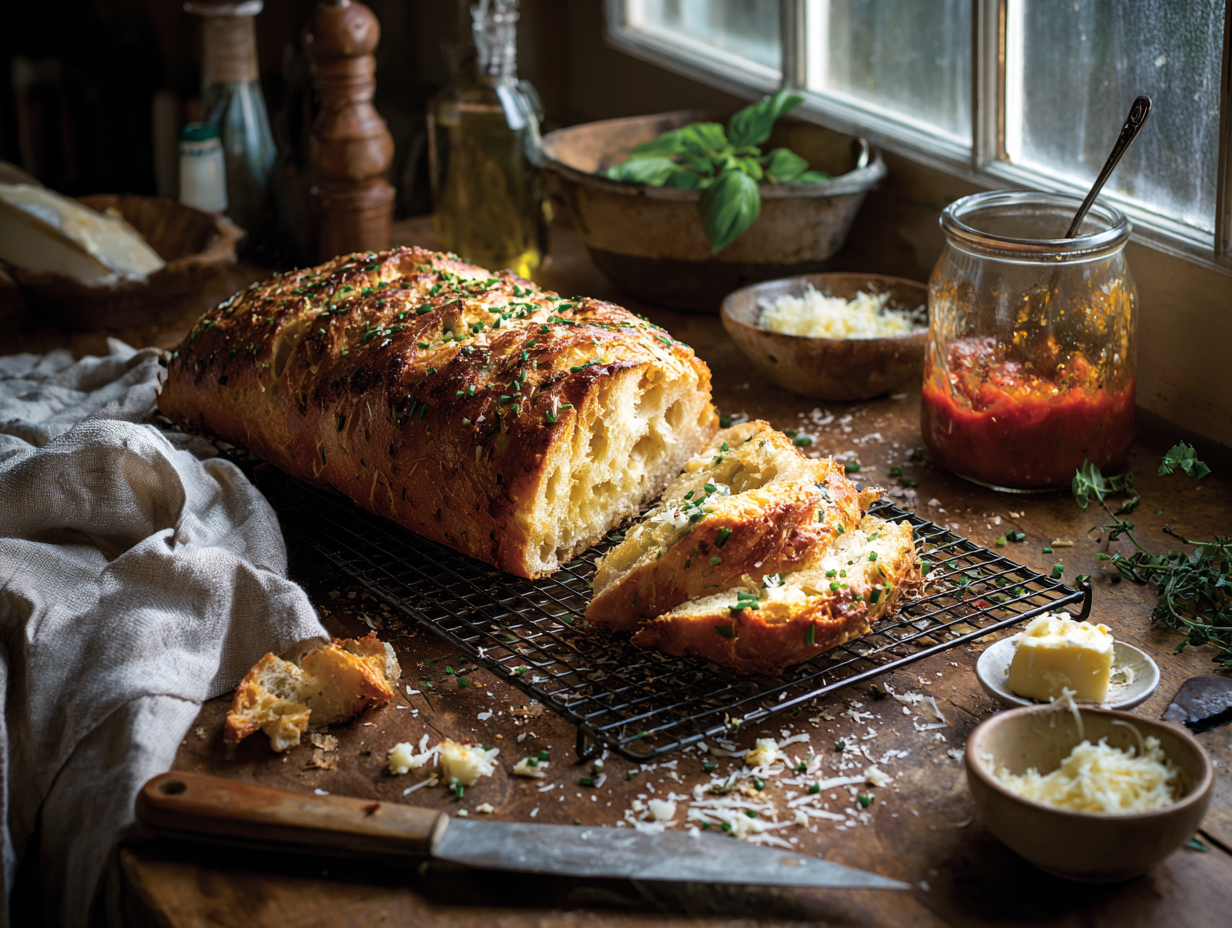
This is garlic bread made with a compound butter — softened European-style butter mixed with fresh garlic, parsley, lemon zest, and Parmigiano-Reggiano — spread over Italian bread or a baguette, then baked at 425°F and finished under the broiler. It takes 24 minutes start to finish. If you need something on the table fast that everyone will actually eat, this is a reliable choice.
What makes this version work
Two things matter here. First, grating or pressing the garlic rather than mincing it means no sharp chunks — the garlic melts into the butter and distributes evenly across every slice, which matters a lot when you’re feeding people who notice texture. Second, the two-stage cooking method does real work: the initial bake at 425°F lets the butter soak into the bread before anything browns, and the broiler finishes the top quickly so the crust crisps without drying out the interior. Skipping the first bake and going straight to the broiler gives you a browned surface with a greasy, underdone middle — not the same thing at all.
Mistakes to avoid
- Using cold butter: Cold butter tears the bread instead of spreading smoothly. Pull it out at least 30 minutes before you start, or it won’t incorporate with the other ingredients properly.
- Overloading the garlic: Six cloves is the recipe amount for a reason. More than that and the raw garlic flavor dominates even after baking — fine for adults, but a hard no for a lot of kids. Stick to the quantity.
- Leaving the foil on for the broil: If you wrapped the bread in foil for the first bake, remove it completely before broiling. Foil traps steam and prevents the crust from crisping.
- Walking away from the broiler: The bread can go from golden to burnt in under 90 seconds under a hot broiler. Stay at the oven and check every 30 seconds once it goes in.
- Cutting before it rests: Give it 2 minutes after it comes out. Cutting immediately lets steam escape too fast and the interior turns gummy.
Substitutions that actually work
European-style butter (82% butterfat) is worth using if you have it — it spreads richer and browns a little better — but standard unsalted butter works fine. For the Parmigiano-Reggiano, a good domestic Parmesan is an acceptable swap; just avoid the pre-grated shelf-stable kind, which doesn’t melt cleanly. If you’re cooking dairy-free, a high-quality plant-based butter (one with a relatively high fat content) handles the spreading and browning reasonably well. Skip the garnish — not worth the extra dish. Fresh parsley goes into the butter itself, which is where its flavor actually lands.
Keeping and reheating
Leftover baked garlic bread keeps in an airtight container or wrapped in foil at room temperature for up to 2 days — refrigerating it makes the bread stale faster. To reheat, wrap slices in foil and put them in a 350°F oven for about 8 minutes, then open the foil for the last 2 minutes to re-crisp the top. The microwave works in a pinch but the crust goes soft. If you want to get ahead, the compound butter itself — before it ever touches bread — keeps in the fridge for up to 5 days or in the freezer for 2 months. Roll it in plastic wrap into a log, slice off what you need, and you can make fresh garlic bread any night with almost no prep.
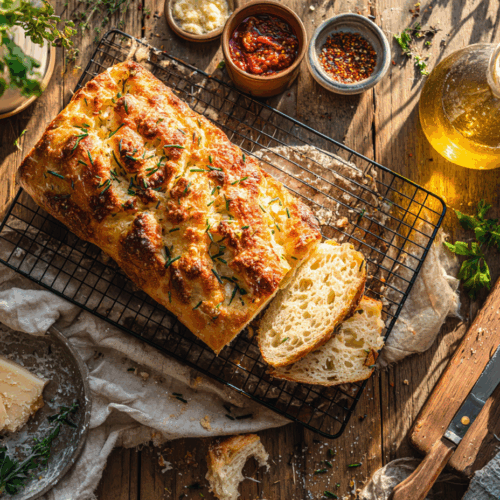
Crispy-Parmesan Garlic Bread with Herb Butter

Equipment
- Serrated bread knife
- Cutting board
- Medium mixing bowl
- Microplane zester or garlic press
- Spatula or spoon
- Pastry Brush (optional)
- Baking sheet
- Aluminum Foil (optional)
- Wire Rack (optional, for serving)
- Oven with broiler
Ingredients
For the Garlic Bread:
- 1 loaf Italian bread or large baguette about 16 inches; choose a loaf with a crisp crust and soft interior
- 8 tablespoons unsalted European-style butter, softened 82% butterfat preferred; room temperature for easy spreading
- 2 tablespoons extra-virgin olive oil fruity EVOO adds sheen and prevents scorching
- 6 cloves garlic, finely grated or pressed fresh, firm cloves for best aroma
- ½ teaspoon kosher salt Diamond Crystal preferred; reduce to 1/4 tsp if using Morton
- ¼ teaspoon freshly ground black pepper
- ¼ teaspoon red pepper flakes optional, for gentle heat
- ¼ cup Parmigiano-Reggiano, freshly grated look for 24-month aged for nutty depth
- 2 tablespoons fresh flat-leaf parsley, finely chopped stems removed, leaves finely minced
- 1 tablespoon fresh chives, thinly sliced optional, for a delicate onion lift
- ½ teaspoon lemon zest optional, brightens the richness
- 1 pinch flaky sea salt to taste; for finishing crunch
- 2 tablespoons Pecorino Romano, finely grated optional, adds a salty-savory snap when broiled
For Optional Serving:
- 1 cup warm marinara sauce optional dip; choose a simple, basil-forward brand
Instructions
- Preheat the Oven: Set a rack in the middle and preheat to 425°F (220°C). Line a baking sheet with foil for easy cleanup.
- Make the Garlic–Herb Butter: In a medium bowl, combine softened butter and olive oil. Add grated garlic, kosher salt, black pepper, and red pepper flakes (if using). Mash with a spatula until creamy and well blended. It should look pale and speckled and smell warm and garlicky. Let it sit 3–5 minutes to gently bloom the garlic while you prep the bread.
- Prep the Loaf: Using a serrated knife, split the loaf lengthwise (like a book) for classic slab-style garlic bread. Alternatively, slice into 1-inch thick pieces for individual toasts. Place cut sides up on the baking sheet.
- Spread and Season: Evenly spread the garlic–herb butter all the way to the edges for maximum flavor. Sprinkle Parmigiano-Reggiano over the buttered surfaces, then scatter most of the parsley and chives (reserve a pinch for garnish). If using lemon zest, sprinkle lightly—it should smell bright, not overtly citrusy.
- Bake: Bake at 425°F (220°C) for 8–10 minutes until the edges are toasted and the butter is bubbling. The aroma will shift from raw garlic to savory, nutty, and toasty.
- Finish Under the Broiler: Switch to broil on high (about 500°F/260°C) for 1–2 minutes to achieve a deep golden, lightly mottled top. If using Pecorino Romano, dust it on just before broiling for a crisp, savory finish. Watch closely—the line between perfect and too dark is about 20 seconds.
- Rest and Garnish: Let the bread rest 2 minutes to set the crust. Finish with a pinch of flaky sea salt and the reserved herbs. Slice into portions if you made slab-style halves, and serve warm.
- Alternative Methods: No oven? Toast slices buttered-side down in a covered skillet over medium-low heat for 3–4 minutes, then uncover and cook 1–2 minutes more to crisp. Or air fry at 380°F (193°C) for 5–7 minutes, then 1 minute at 400°F (204°C) to finish.
Notes
Jen’s Tips:
- Bloom the Garlic Safely: If sensitive to raw garlic, microwave the garlic with 1 tablespoon of the butter for 15–20 seconds before mixing; you’ll keep aroma while softening the bite.
- Herb Flexibility: Swap parsley for basil in summer, or add a pinch of dried oregano for a pizzeria vibe.
- Dairy-Free: Use a high-quality plant butter and skip the Parmigiano; add 1 tablespoon nutritional yeast for savory depth.
- Ultra-Crisp Bottom: Preheat the baking sheet in the oven while it warms; placing the bread on a hot sheet jump-starts crisping.
- Make-Ahead Compound Butter: Double the butter, roll in parchment, and refrigerate up to 5 days or freeze up to 2 months. Slice coins as needed.
- Garlic Confit Twist: For a sweeter, mellow version, mash 6 cloves garlic confit into the butter and reduce raw garlic to 2 cloves.
- Use day-old bread if possible; it toasts more evenly. Leftovers reheat well at 350°F (177°C) for 6–8 minutes. Avoid storing tightly covered while warm to keep the crust from softening.
Serving Suggestions:
- Plating: Arrange slices on a warm platter or wire rack so steam doesn’t soften the crust. Sprinkle with a final shower of parsley for fresh color.
- Garnish Cues: Golden-brown top with tiny caramelized spots, vivid green flecks of herbs, and a glossy sheen from the butter.
- Pairings: Serve alongside tomato-basil pasta, hearty soups, or a crisp Caesar salad. Offer a small bowl of warm marinara for dipping and a chilled Italian white (like Verdicchio) or a light red (Chianti).
Culinary Context:
Garlic bread as we know it is an Italian-American evolution of bruschetta al pomodoro and fett’unta—country bread enriched with olive oil, garlic, and salt. This version keeps the soul of those traditions while leaning into the comfort of butter and Parmesan, a hallmark of classic red-sauce joints. As a young cook, I learned that perfect garlic bread is about heat management: bake to infuse, then broil to blister. The aroma that hits when you crack open the oven—that’s the moment hospitality becomes edible.Optional Advanced Instructions:
- Prep Ahead: Mix the compound butter up to 5 days in advance. Split and freeze the loaf after spreading (unbaked) for up to 1 month; bake from frozen at 400°F (204°C) for 12–15 minutes, then broil 1–2 minutes.
- Precision Slicing: For even portions, slice on a bias into 1–1 1/4 inch pieces—the larger face toasts more evenly and stays plush inside.
- For Beginners: If grating garlic feels fussy, finely mince and smash with a pinch of salt using the side of your knife to a paste.
Timing:
Prep Time: 12 minutes (0h 12m)Cook Time: 12 minutes (0h 12m) — 8–10 minutes bake + 1–2 minutes broil
Total Time: 24 minutes (0h 24m)
Course:
Appetizer / Side for Lunch or DinnerOrigin:
Italian-American with Italian rootsNutrition
Frequently asked questions
Can I make this without a broiler?
Yes — bake the bread at 425°F for the full 12 minutes with the foil open for the last 4 to 5 minutes to brown the top. It won’t get quite as crisp at the edges, but it will still be fully cooked and flavorful.
Can I use pre-minced jarred garlic instead of fresh cloves?
Fresh garlic gives a noticeably cleaner flavor here, but jarred minced garlic works if that’s what you have. Use about half a teaspoon per clove and press it into the butter well so it doesn’t sit in clumps.
What kind of bread holds up best?
A loaf with a firm crust and a soft, open interior — Italian bread or a large baguette — works best because it absorbs the butter without going soggy. Avoid very dense sandwich bread or anything pre-sliced thin, which dries out too fast at high heat.
Can I assemble this ahead of time?
You can spread the butter on the bread, wrap it tightly in foil, and refrigerate it for up to 4 hours before baking. Add 2 to 3 minutes to the initial bake time since the bread will be cold going into the oven.
What to cook next
- Quick Chicken Noodle Soup
- Quick Smoky Weeknight Chili
- Creamy Stovetop Mac Perfection
- Quick Skillet Garlic Flatbreads