
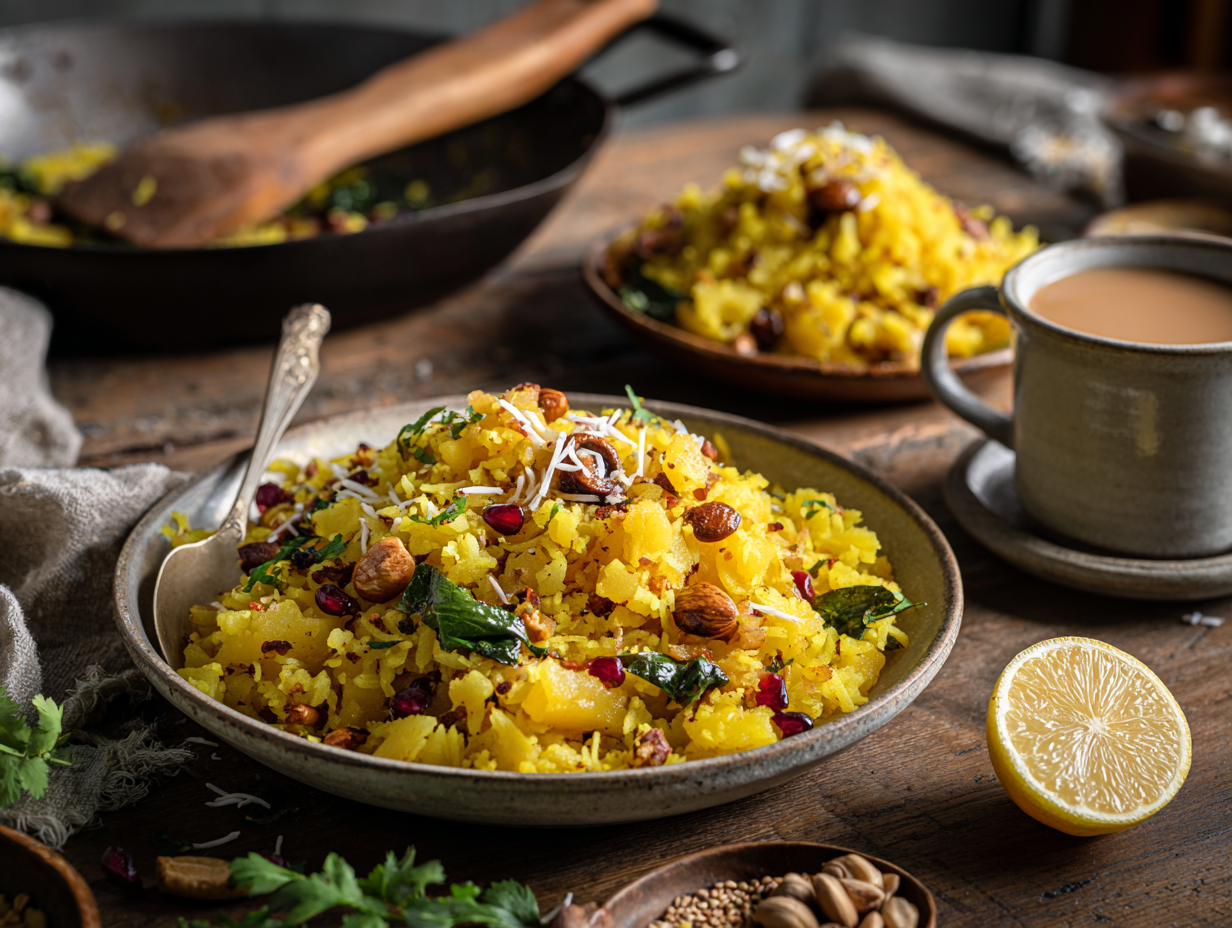
Kanda Batata Poha is flattened rice cooked with onion, potato, turmeric, and a mustard-seed temper, finished with roasted peanuts and lime. The whole thing takes 25 minutes and uses pantry staples you likely already have. It works for breakfast, but it also makes a genuinely satisfying light dinner when you don’t want to think too hard.
Why this recipe works
Two things actually matter here. First, rinsing the poha briefly and letting it drain — rather than soaking it — keeps the flakes separate instead of clumping into mush. Thick or medium-thick poha handles this best; thin poha turns to paste fast. Second, the tempering sequence is doing real work: mustard seeds go in first and need to fully pop before anything else hits the pan, because that’s when they release flavor rather than just tasting raw and sharp. Get those two steps right and the rest of the dish is forgiving.
Smart swaps
- Poha: Brands like Laxmi, Deep, or SWAD are widely available at Indian grocery stores and on Amazon. In a pinch, some well-stocked international aisles carry it. Don’t substitute regular rice or rice cakes — the texture won’t work.
- Curry leaves: Fresh or frozen are both fine. Dried curry leaves have almost no flavor; skip them rather than use dried.
- Asafoetida (hing): A small pinch goes a long way. If you don’t have it, leave it out — the dish still works. Don’t substitute anything else.
- Peanuts: Raw peanuts toasted in the pan are traditional. Roasted unsalted peanuts stirred in at the end are a perfectly acceptable shortcut and skip the extra step entirely — this is the one swap worth making on a busy night.
Troubleshooting
- Poha is sticky and clumped: The flakes were over-rinsed or sat wet too long before cooking. Next time, rinse just until the water runs mostly clear, shake the strainer well, and get them into the pan within a few minutes.
- Potatoes are still hard when the poha goes in: Dice them small — about half an inch — and give them a full 5 to 6 minutes in the pan before adding onions. Alternatively, microwave the diced potato for 90 seconds first to guarantee they’re cooked through.
- The whole dish tastes flat: This almost always means not enough salt or the lime was skipped. Add lime juice at the very end, off the heat — it brightens everything and is not optional.
- Mustard seeds are burning before they pop: The oil is too hot. Let the pan cool for 30 seconds, add a small drop of oil, and try again on medium rather than medium-high.
- Leftovers dried out overnight: Cold poha stiffens up. Sprinkle a teaspoon of water over the portion, cover loosely, and microwave for 60 to 90 seconds. It comes back close to fresh. A squeeze of lime after reheating helps too.
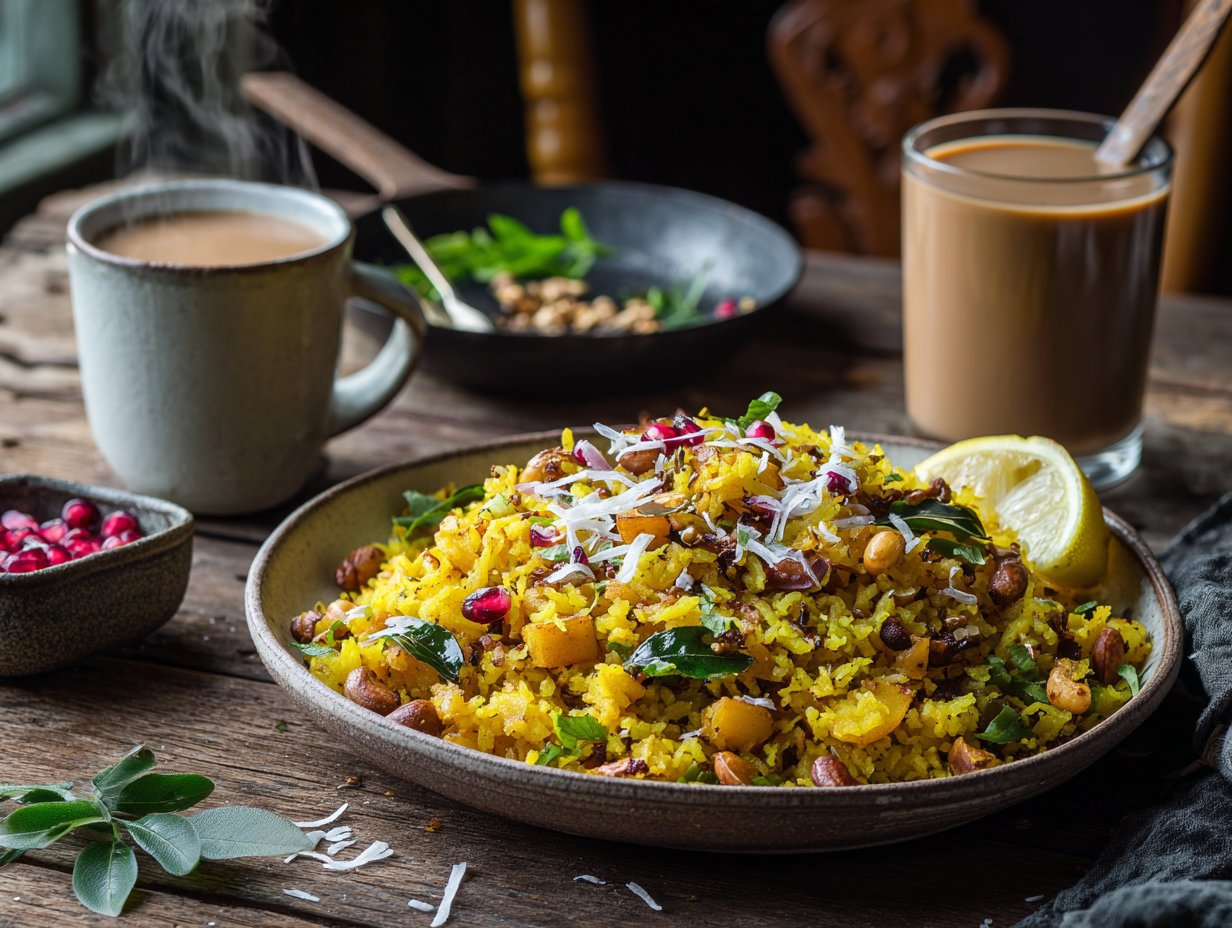
Kanda Batata Poha (Maharashtrian Spiced Flattened Rice)

Equipment
- Fine-mesh strainer or colander
- 12-inch skillet or kadai (heavy-bottomed preferred)
- Microwave-safe bowl (or small saucepan with lid)
- Cutting board and chef's knife
- Wooden spoon or silicone spatula
- Small lid or plate to cover skillet
- Citrus juicer (optional)
Ingredients
To Prep:
- 2 cups thick poha (flattened rice) look for thick/medium-thick poha; brands like Laxmi, Deep, or SWAD hold texture best
- 3-4 cups cold water or as needed for rinsing poha; rinse briefly to avoid mush
- ½ tsp ground turmeric fresh, vibrant turmeric ensures a bright golden color
- ½ tsp granulated sugar balances lemon and heat; traditional in many Maharashtrian homes
- 1 ¼ tsp Kosher salt, divided use 3/4 tsp to season poha, the rest to finish and adjust
- 1 medium potato, peeled and 1/4-inch diced Yukon Gold or russet; small dice speeds cooking
- 2 tbsp water (for par-cooking potato) use for a quick microwave steam; or simmer on stovetop
For Tempering & Cooking:
- 2 tbsp neutral oil (peanut, sunflower, or canola) peanut oil lends a classic nutty aroma
- ¼ cup raw peanuts roast to a deep golden brown for crunch
- 1 tsp black mustard seeds wait for a vigorous splutter to release flavor
- 1 tsp cumin seeds toasty and aromatic when lightly browned
- ⅛ tsp asafoetida (hing) optional but authentic; use gluten-free hing if needed
- 10-12 pieces fresh curry leaves frozen works in a pinch; add straight from freezer to hot oil
- 1-2 pieces green chilies, minced Thai or serrano for heat; deseed for mild
- 1 small red or yellow onion, finely chopped about 1 cup; red onion is traditional
- ½ cup frozen green peas (optional) adds sweetness and color
For Finishing & Garnish:
- 2 tbsp fresh lemon juice add off heat for brightest citrus
- ¼ cup fresh cilantro, chopped tender stems included for flavor
- ¼ cup fresh grated coconut (optional) adds cool sweetness and texture
- ¼ cup sev (crispy chickpea noodles, optional) for extra crunch on top
- ¼ cup pomegranate arils (optional) classic garnish in some regions; adds tart-sweet pops
Instructions
- Rinse and Season the Poha (5 minutes): Place 2 cups poha in a fine-mesh strainer. Rinse under cold running water for 10–15 seconds, just until softened; do not soak. Drain thoroughly. In a bowl, gently toss poha with 1/2 tsp turmeric, 1/2 tsp sugar, and 3/4 tsp of the kosher salt. Sprinkle 1–2 tbsp water if flakes look dry. Rest 5 minutes to hydrate evenly; the flakes should feel tender but separate.
- Par-Cook the Potato (3 minutes): In a microwave-safe bowl, combine diced potato with 2 tbsp water and a pinch of salt. Cover and microwave on high for 2–3 minutes until just tender. Alternatively, simmer in a small saucepan, covered, 3–4 minutes, then drain well.
- Roast the Peanuts (3 minutes): Heat a 12-inch skillet over medium heat until a drop of water sizzles on contact, about 325–350°F (165–175°C). Add 1 tsp of the oil and 1/4 cup peanuts. Stir until deep golden and fragrant, 2–3 minutes. Transfer to a bowl to stay crisp.
- Build the Tempering (tadka) (1 minute): Add remaining oil to the skillet. When the surface shimmers and a mustard seed sizzles on contact (about 350°F/175°C), add 1 tsp mustard seeds; let them splutter 5–10 seconds. Stir in 1 tsp cumin seeds and 1/8 tsp hing for 10–15 seconds until nutty.
- Sizzle Aromatics (2 minutes): Add 10–12 curry leaves (stand back; they crackle) and minced green chilies. Stir until glossy and aromatic, 20–30 seconds.
- Soften Onion and Finish Potato (4 minutes): Add chopped onion and a small pinch of salt. Sauté over medium heat, stirring, until translucent with lightly golden edges, 2–3 minutes. Add the par-cooked potato and sauté 1–2 minutes more to pick up flavor. If using peas, add now and toss 30–60 seconds.
- Fold in Poha (2 minutes): Reduce heat to low. Add the seasoned poha and the remaining 1/2 tsp kosher salt (or to taste). Gently fold with a spatula to avoid breaking flakes. If the mixture looks dry, sprinkle 1–2 tsp water; you should see steam wisps quickly.
- Steam to Finish (2–3 minutes): Cover the pan and steam on low until the poha is hot through and fluffy, 2–3 minutes. The interior should read roughly 190–205°F (88–96°C) if checked, and the color bright golden with separate grains.
- Brighten and Garnish (1 minute): Turn off heat. Stir in 2 tbsp lemon juice and 1/4 cup cilantro. Top with roasted peanuts and, if desired, coconut, sev, and pomegranate. Taste and adjust salt and lemon to balance heat, sweetness, and acidity.
Notes
Jen’s Tips:
- Choose the Right Poha: Thick or medium-thick flakes resist turning mushy. If using thin poha, reduce the rinse to a quick splash.
- Hydration Control: Sprinkle water sparingly; poha should be tender yet fluffy. Over-wetting causes clumping.
- Heat Cues: Add mustard seeds only when oil is shimmering (~350°F/175°C); they must splutter vigorously for proper flavor.
- Flavor Balance: The classic trio is salt + lemon + a hint of sugar. Adjust lemon at the end to make flavors pop.
- Dietary Swaps: Use avocado oil for a neutral, heart-healthy option; omit peanuts for nut-free; hing can be skipped or swapped for a tiny pinch of garlic powder.
- Add-Ins: Try diced bell pepper, grated carrot, or corn for color and crunch; stir in 1–2 tbsp ghee at the end for a richer finish.
Serving Suggestions:
Spoon poha into warm, shallow bowls. Crown with a small tuft of sev, a sprinkle of coconut, ruby pomegranate, and a few cilantro leaves. The ideal bowl is sunny yellow with emerald flecks and crimson pops, fragrant with citrus and toasted spice. Pair with hot masala chai or a cool salted lassi.Culinary Context:
Poha is a beloved Maharashtrian breakfast and snack, often served for guests because it’s fast, comforting, and universally appealing. “Kanda” means onion and “batata” means potato in Marathi—two humble ingredients elevated by a lively tempering of whole spices.Optional Advanced Instructions:
- Make-Ahead: Roast peanuts and chop onions/chilies up to 2 days ahead; store airtight. Dice potatoes the night before and keep submerged in water; drain before cooking.
- Parallel Prep: While the poha rests after rinsing, par-cook the potato and heat the skillet for peanuts to shave minutes off total time.
- No Microwave: Pan-steam diced potato with 1/4 cup water, covered, over medium heat for 4–5 minutes; drain before sautéing.
Nutrition
FAQ
Can I make this ahead and reheat it?
Yes — poha reheats well for up to two days in the fridge. Sprinkle a little water over it before microwaving and cover loosely so it steams rather than dries out; add a fresh squeeze of lime after reheating to wake the flavors back up.
What kind of poha should I buy?
Buy thick or medium-thick poha — it holds its shape when rinsed. Thin poha absorbs water too quickly and turns mushy before it even hits the pan.
Can I double the recipe for a larger group?
Doubling works well, but cook it in two batches rather than crowding one pan. Too much poha at once traps steam and makes the texture soggy instead of light.