
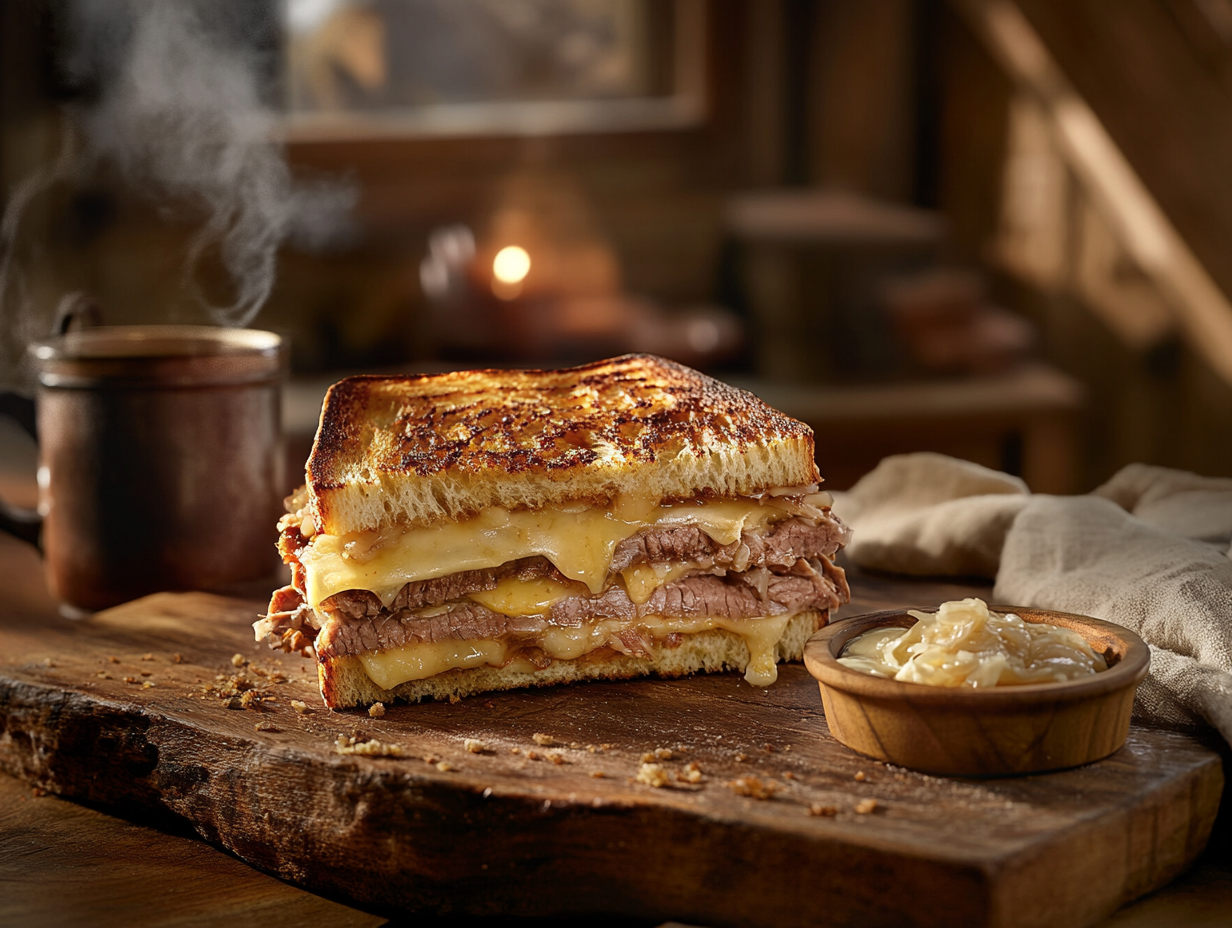
This is a straightforward grilled Reuben — corned beef, Swiss, sauerkraut, and Russian dressing on buttered rye, cooked in a skillet until the cheese melts and the bread crisps up. It takes 25 minutes start to finish and makes four sandwiches, which is exactly the right amount for a weeknight dinner without leftovers piling up. If you have a skillet and a spatula, you have everything you need.
The short version of why this works
Two things make or break this sandwich. First, drain the sauerkraut thoroughly — press it in the strainer until it stops releasing liquid. Wet sauerkraut turns the bread soggy before the cheese even has a chance to melt, and soggy bread is the main reason homemade Reubens disappoint. Second, medium heat is non-negotiable. High heat browns the outside fast but leaves the cheese cold and the corned beef barely warm in the middle. Medium heat — around 347°F — gives the bread 3 to 5 minutes per side, which is exactly long enough for the Swiss to go fully melty and the filling to heat through. That gentle press with the spatula while it cooks keeps everything in contact and helps the heat move evenly through the layers.
Smart swaps
- Corned beef: Deli-sliced corned beef from the meat counter works best here — it’s already tender and thin. Canned corned beef is a real backup option; slice or crumble it thin and it will cook fine, though the texture is softer.
- Russian dressing: If you only have Thousand Island, it works. Russian dressing has a little more heat and a slightly sharper flavor, but the difference is small enough that most people won’t notice. Skip making it from scratch tonight — not worth the extra dish.
- Rye bread: Seeded or unseeded rye both work. Marble rye is fine. If rye is genuinely unavailable, a sturdy sourdough holds up on the griddle, though the flavor profile shifts noticeably.
- Swiss cheese: Baby Swiss melts a bit faster than regular Swiss and has a milder flavor — a good choice if you’re feeding anyone who finds Swiss too sharp.
If something goes sideways
- Bread burns before cheese melts: Your heat is too high. Pull the sandwich off, drop the burner to medium-low, and return it. You can also cover the skillet loosely with a lid for 60 seconds — the trapped steam speeds up the cheese without burning the bread.
- Sandwich falls apart when you flip it: The filling is probably overstuffed or the bread slices are too thin. Use a wide spatula and flip in one confident motion. If it still splits, press it back together firmly and keep cooking — it will hold once the cheese sets.
- Corned beef tastes dry or tough after grilling: It was likely sliced too thick or the heat was too high. Thin slices heat through quickly at medium heat without drying out. If it’s already dry, a small extra smear of Russian dressing on the inside before serving fixes it.
- Sauerkraut slides out every bite: Drain it more aggressively next time, and layer it between the corned beef and the cheese rather than on top — the melted cheese acts as a binder that holds it in place.
- Butter burns in the pan before the sandwich is done: Softened butter spread directly on the bread (not melted butter in the pan) is the right method here. If you added butter to the pan instead, wipe it out and start over with butter on the bread surface only.
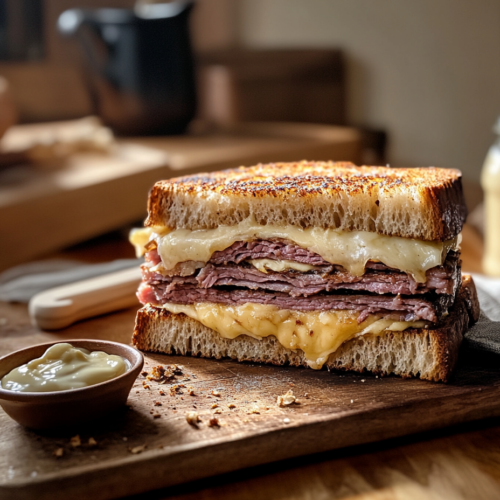
Classic Reuben Sandwich

Equipment
- 1 Cutting board
- 1 Knife
- 1 Skillet or griddle
- 1 Spatula
- 1 Measuring spoons
Ingredients
- 8 slices rye bread preferably thick-cut
- 1 pound corned beef thinly sliced
- ½ pound Swiss cheese slices
- 1 cup sauerkraut drained
- 1 cup Russian dressing prepared
- 2 tbsp unsalted butter softened
Instructions
- Start by draining the sauerkraut in a fine mesh strainer, pressing lightly to remove excess liquid.
- Preheat a skillet or griddle over medium heat (175°C / 347°F).
- Spread each slice of rye bread with a generous layer of Russian dressing.
- Layer the corned beef and then a few spoonfuls of drained sauerkraut evenly over half of the bread slices. Top with slices of Swiss cheese and the remaining bread slices, dressing side down, forming a sandwich.
- Spread softened butter on the outer sides of each sandwich.
- Place sandwiches in the preheated skillet or griddle. Grill each side for about 3-5 minutes, pressing gently with a spatula until the bread is golden brown and the cheese is melted.
- Remove the sandwiches from the skillet, allow to rest for a minute, then slice diagonally and serve hot.
Notes
- For added zest, consider adding a touch of horseradish to the Russian dressing.
- For a crispier crust, sprinkle a tiny pinch of caraway seeds on the butter before grilling.
Nutrition
Common questions
Can I make these ahead and reheat them?
You can, but they’re noticeably better fresh off the skillet. If you need to reheat, use a dry skillet over medium-low heat for about 3 minutes per side — the microwave makes the bread chewy and the sauerkraut watery.
How do I keep all four sandwiches warm while I finish cooking them in batches?
Set your oven to 200°F and place finished sandwiches directly on the oven rack while you cook the rest. This keeps them warm without steaming the crust soft, which is what happens if you stack them or wrap them in foil.
My kids won’t eat sauerkraut — can I just leave it out?
Yes, and the sandwich still works. The corned beef, cheese, and Russian dressing carry enough flavor on their own. You could also swap in a thin layer of mild coleslaw for a similar texture without the fermented tang.
What’s the best way to tell when the cheese is actually melted and not just warm?
Press the top of the sandwich gently with your spatula — if you feel the filling give slightly and the cheese has gone soft, it’s ready. You can also peek at the edge of the sandwich; melted Swiss will just start to creep toward the crust.
Can I use a panini press instead of a skillet?
Yes, and it works well — the press handles both sides at once and keeps the sandwich compact. Set it to medium heat and check at the 4-minute mark, since panini presses vary quite a bit in how hot they run.
Is there a way to reduce how greasy the finished sandwich is?
Use just enough softened butter to coat the bread surface thinly — you don’t need a thick layer. After grilling, let the sandwich rest on a wire rack for a minute instead of a plate; that keeps the bottom crust from sitting in any pooled butter.
What to cook next
- Diner-Style Patty Melt
- Quick 30-Minute Dill Pickles
- Perfect Bistro French Fries
- Classic Southern Ham Salad