
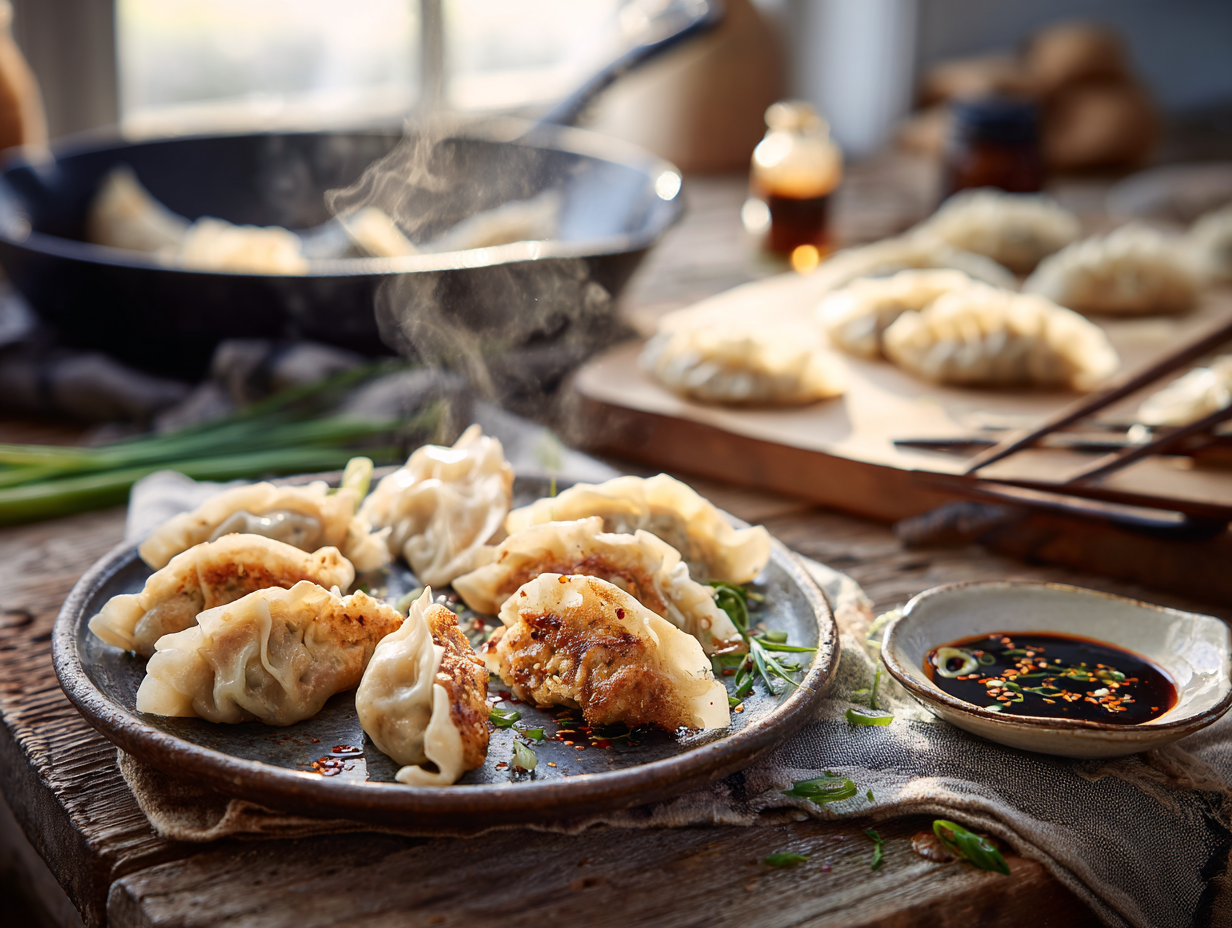
These are pork and chive potstickers made with store-bought wrappers, cooked in a nonstick skillet using a pan-fry-then-steam method that gives you a firm golden crust on the bottom and a fully cooked, juicy filling on top. The whole thing — filling, folding, cooking, and dipping sauce — lands in 30 minutes. If you make a full batch tonight, the extras reheat better than almost any other dumpling you can make at home.
The technique that matters
The fry-steam sequence is what separates a potsticker from a pan-fried dumpling. You need the oil hot enough to start crisping the wrapper bottoms immediately — if the pan is too cool, the dumplings steam in pooled oil instead of searing, and you get a pale, greasy bottom instead of a golden one. Once that crust starts forming (about 2 minutes in), you add water and cover fast. The burst of steam cooks the pork filling through without drying it out. The cornstarch in the filling is doing real work here too: it binds the moisture released by the cabbage and meat so the inside stays cohesive rather than wet and loose. Get the pan temperature right and don’t rush the lid step, and the texture contrast — crunchy base, tender top — takes care of itself.
Mistakes to avoid
- Overfilling the wrappers. More filling does not mean better potstickers. A heaping teaspoon is enough. Overfilled dumplings burst at the seam when the steam builds, and the filling spills into the pan and burns.
- Skipping the parchment-lined sheet pan while you fold. Freshly filled potstickers stick hard to bare surfaces. Set them on parchment as you go, not touching each other, or the wrappers will fuse and tear when you pick them up.
- Lifting the lid too early during steaming. Every time you peek, you release steam and extend the cooking time unevenly. Leave the lid on until most of the water has evaporated — you’ll hear the sizzle change from a wet sputter to a dry crackle.
- Using medium-high heat the whole time. After you add the water and cover, drop to medium. High heat burns the bottoms before the filling reaches temperature. An instant-read thermometer should read 160°F at the center of the pork filling.
- Crowding the pan. Leave a small gap between each dumpling. Touching dumplings trap steam between them and the wrappers turn gummy on the sides. Skip the garnish on the dipping sauce — not worth the extra dish.
Keeping and reheating
Cooked potstickers keep in the fridge for up to 4 days in an airtight container. To reheat, put them back in a nonstick skillet with a small splash of oil over medium heat for 3 to 4 minutes — this revives the crust instead of softening it the way a microwave does. For the freezer, freeze uncooked assembled potstickers in a single layer on a parchment-lined sheet pan until solid (about 1 hour), then transfer to a zip-top bag. They keep for up to 3 months and cook from frozen using the same method — just add 2 extra minutes to the steaming step and verify the internal temperature hits 160°F. Cooked potstickers can also be frozen, but the wrappers soften slightly on reheating, so freezing them uncooked gives noticeably better results.
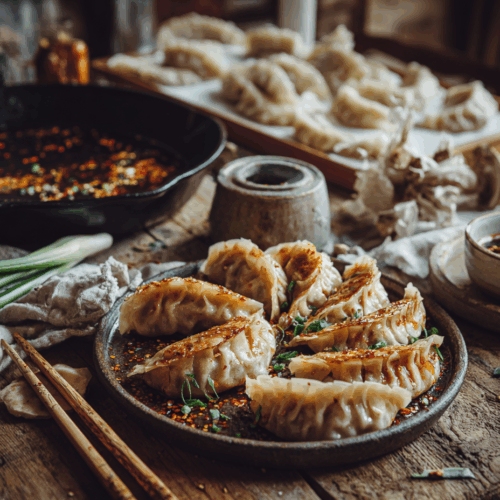
Crispy Pork & Chive Potstickers (Dumplings) with Soy-Ginger Dipping Sauce

Equipment
- 12-inch nonstick skillet with lid (two skillets for fastest cooking)
- Large mixing bowl
- Small bowl (for dipping sauce)
- Cutting board
- Chefs Knife
- Measuring cups and spoons
- Microplane or fine grater
- Spoon or spatula
- Small pastry brush or your fingertip (for sealing wrappers)
- Sheet pan lined with parchment
- Instant-read thermometer (optional but helpful)
- Small pitcher or measuring cup (for water to steam)
- Tongs or thin spatula
Ingredients
For the Dipping Sauce:
- ¼ cup low-sodium soy sauce Kikkoman or similar
- 2 tbsp unseasoned rice vinegar look for mild, not seasoned sushi vinegar
- 1 tsp toasted sesame oil 100% pure toasted for aroma
- 1 tsp honey or sugar, to balance acidity
- 1 tsp fresh ginger, finely grated use a microplane for a smooth sauce
- 1 clove garlic, finely grated optional, for a punchier dip
- ¼ tsp red pepper flakes or 1 tsp chili crisp, to taste
- 1 tbsp scallions, thinly sliced for freshness and color
- 1 tbsp water optional, to soften the sauce
For the Filling:
- 1 lb ground pork (80–85% lean) freshly ground if possible for best texture
- 2 cloves garlic, minced press with salt to a paste for even flavor
- 1 tbsp fresh ginger, finely grated juicy, not fibrous; scrape skin with a spoon first
- ½ cup scallions, thinly sliced greens and whites, finely sliced for even mix-in
- ¼ cup fresh chives, finely snipped or use extra scallions if unavailable
- 1 cup Napa cabbage, very finely chopped and squeezed dry a handful of pre-shredded coleslaw mix works in a pinch
- 1 tbsp low-sodium soy sauce season the filling lightly; the dip adds more salt
- 1 tbsp Shaoxing wine or dry sherry, for depth and aroma
- 2 tsp toasted sesame oil fragrant base note for the filling
- ¼ tsp ground white pepper sub black pepper if needed, use slightly less
- ½ tsp kosher salt Diamond Crystal; reduce if using table salt
- 1 tsp sugar balances savory notes and browning
- 1 tbsp cornstarch binds juices for a plump, non-runny filling
For the Assembly & Cooking:
- 24 pieces round gyoza or dumpling wrappers keep covered with a damp towel to prevent drying; look for 3.5-inch rounds
- ½ cup water for steaming; you may not use all of it
- 2 tbsp neutral oil (canola or vegetable) divided between batches or pans
- 1 tsp toasted sesame seeds garnish, optional but lovely crunch
- 2 tbsp scallions, thinly sliced garnish for freshness and color
- 1 tbsp chili crisp or chili oil for serving, optional heat
Instructions
- Make the Dipping Sauce (2 minutes): In a small bowl, whisk together soy sauce, rice vinegar, sesame oil, honey, ginger, garlic (if using), and red pepper flakes or chili crisp. Stir in sliced scallions and a splash of water to taste. The aroma should be bright and nutty.
- Mix the Filling (4 minutes): In a large bowl, combine ground pork, garlic, ginger, scallions, chives, cabbage, soy sauce, Shaoxing wine, sesame oil, white pepper, salt, sugar, and cornstarch. Stir vigorously with a spoon in one direction until the mixture turns tacky and cohesive (30–45 seconds). This binds the proteins for a juicy, springy texture.
- Set Up to Fold (1 minute): Line a sheet pan with parchment. Place wrappers under a damp towel. Set a small bowl of water nearby for sealing.
- Fill and Fold (8 minutes): Working one wrapper at a time, place about 2 teaspoons of filling in the center. Lightly wet the wrapper’s rim. Fold into a half-moon and pleat one side, pressing to seal and expel air. Aim for a flat base so each dumpling can stand.No Pleat? Simply fold and press all around for a clean seal—equally delicious.
- Preheat the Pan (2 minutes): Heat a 12-inch nonstick skillet over medium-high until a drop of water skitters across the surface—about 400°F/205°C. Add 1 tablespoon oil and swirl to coat. If you have two skillets, preheat both to cook all dumplings at once.
- Fry, then Steam (6–7 minutes): Arrange dumplings flat-side down in a single layer (they can sit shoulder-to-shoulder). Fry without moving until the bottoms are deep golden, 2–3 minutes. Carefully pour in 1/4 cup water and cover immediately. Reduce heat to medium (surface about 350°F/175°C) and steam 4–5 minutes, until most water evaporates and pork reaches 160°F/71°C internally.
- Re-Crisp (1–2 minutes): Uncover and let the bottoms re-crisp until audibly crackly, 1–2 minutes. Transfer to a warm plate. If cooking in batches, keep the first batch warm in a 200°F/95°C oven.
- Repeat or Cook in Parallel: If using one skillet, repeat with remaining oil and dumplings (add another 1 tablespoon oil if needed). Using two skillets simultaneously keeps total cooking to about 12–15 minutes; with one skillet and two batches, allow closer to 20 minutes.
Notes
Jen’s Tips:
- Lacy Skirt: Whisk 1 teaspoon all-purpose flour into the 1/4 cup water before steaming for a delicate, crisp lace.
- No Shaoxing? Use dry sherry or skip and add 1/2 teaspoon extra soy sauce.
- Protein Swaps: Ground chicken or turkey works; cook to 165°F/74°C. For vegetarian, use 8 oz finely chopped mushrooms sautéed until dry plus 8 oz extra-firm tofu, crumbled and pressed.
- Gluten-Free: Use gluten-free wrappers and tamari. Check chili crisp ingredients.
- Juicier Filling: Add 1 tablespoon cold water and beat the filling until it absorbs for extra plushness.
- Seal Insurance: If wrappers seem dry, warm them briefly under a damp towel for 30–60 seconds.
- Yield: About 24 dumplings (serves 4 as a main or 6 as an appetizer).
- Storage: Leftovers re-crisp well in a lightly oiled skillet over medium heat, 2–3 minutes per side.
- Safety: Pork should reach 160°F/71°C; poultry fillings 165°F/74°C.
Serving Suggestions:
Fan dumplings in a crescent on a warm plate, golden side up. Drizzle a little chili oil for glossy red highlights. Sprinkle with toasted sesame seeds and scallions for contrast. Serve the soy-ginger sauce in small bowls. Perfect with chilled jasmine tea or a dry Riesling. Visual cues of perfection: bronze, evenly crisp bottoms; translucent, tender tops; fragrant steam of ginger and sesame.Culinary Context:
Known as guotie in northern China and potstickers elsewhere, these dumplings are traditionally pan-fried then steamed—a technique that locks in juices and creates that signature crust. My first restaurant stage taught me the single most important cue: mix the filling until it’s sticky. That tackiness is your guarantee of a plump bite.Optional Advanced Instructions:
- Make-Ahead: Fold dumplings up to 1 day ahead; cover and refrigerate. Or freeze on a tray until firm, then bag—cook from frozen, adding 1–2 minutes to steaming.
- Parallel Cooking: Use two skillets to finish in one round. Pre-measure water and oil to move quickly.
- No Microplane? Finely mince ginger and garlic; paste with a pinch of salt for smoother dispersion.
Timing:
Prep Time: 15 minutes (0:15) including sauce, filling, and foldingCook Time: 15 minutes (0:15) using two skillets or one large skillet; about 20 minutes if batching in a single pan
Course & Cuisine:
Course: Dinner | Cuisine: ChineseNutrition
Common questions
Can I make the filling ahead of time?
Yes — the filling can be mixed and refrigerated up to 24 hours in advance. Keeping it cold also makes it easier to portion and fold without the wrappers getting slippery from the meat juices.
What if I can’t find dumpling wrappers at my grocery store?
Check the refrigerated section near tofu or fresh noodles, or look in the freezer aisle — most mid-size grocery stores carry them in one of those spots. If you genuinely can’t find them, wonton wrappers work as a substitute; they’re thinner and will crisp faster, so watch the heat.
How do I know the pork filling is actually cooked through?
Use an instant-read thermometer and check the center of one dumpling — it should read 160°F. If you don’t have a thermometer, cut one open; the filling should be opaque all the way through with no pink remaining.
Can I use a different protein instead of pork?
Ground chicken or turkey works well as a direct swap. Both are leaner than pork, so add an extra teaspoon of sesame oil to the filling to compensate for the lower fat content and keep the texture from turning dry.
What to cook next
- Quick Ginger Scallion Wontons
- Quick Korean Bibimbap Bowls
- Weeknight Sushi Bake Recipe
- Spicy Korean Rice Cakes