
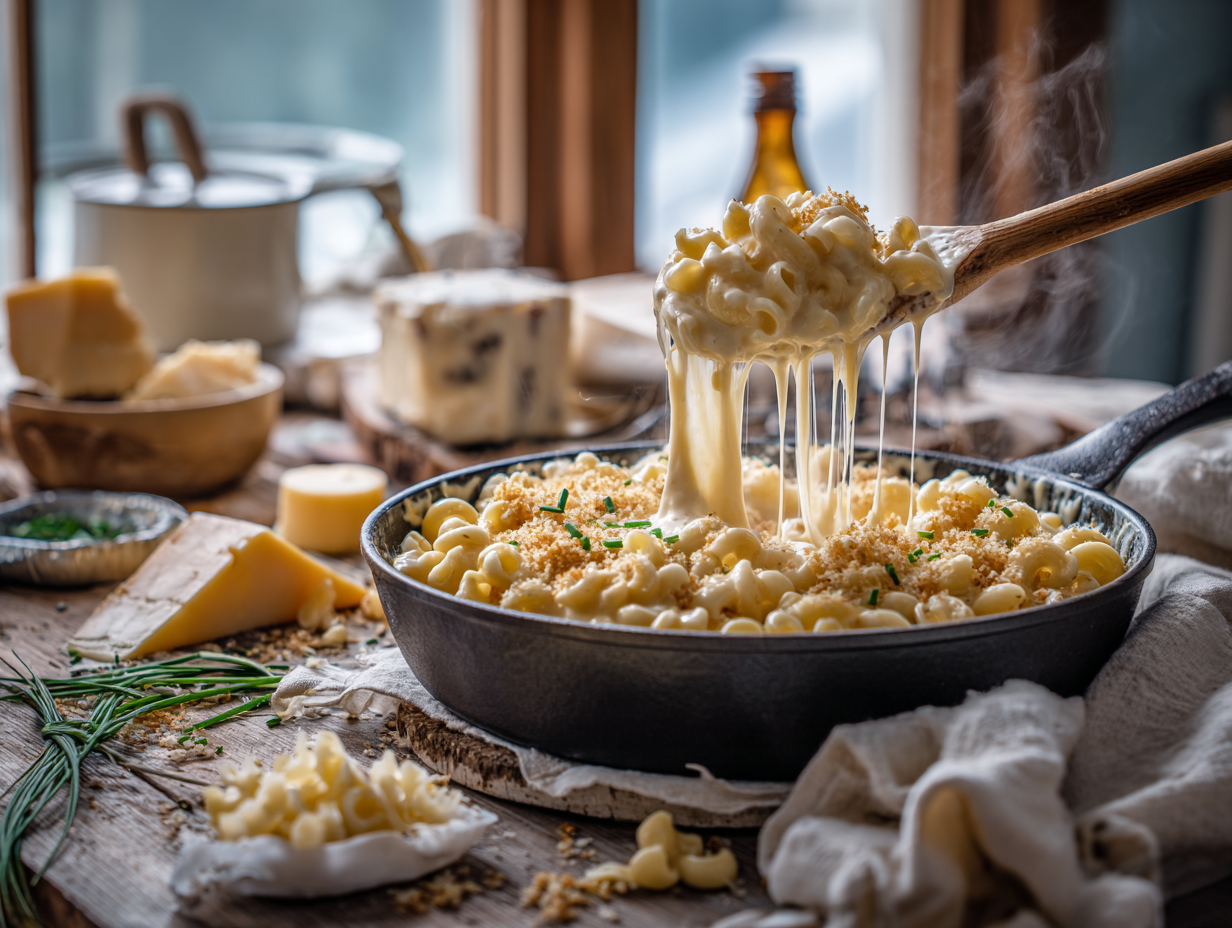
This is a stovetop mac and cheese built on a quick béchamel, finished with sharp cheddar, Gruyère, and cream cheese for a sauce that stays smooth and glossy from the first bowl to the last. It takes 30 minutes start to finish and uses one pot for the pasta and one skillet for the sauce. On a weeknight when everyone needs feeding fast, that’s enough reason.
What makes this version work
Two things actually matter here. First, the roux — butter and flour cooked together before any liquid goes in — gives the sauce a stable base so the cheese melts smoothly instead of breaking into greasy clumps. Second, the pan comes off the heat before the cheese is added. Cheese proteins seize up fast under direct heat, and that’s what causes the grainy, separated texture that ruins a lot of homemade mac. Pull the skillet off the burner, then stir in the cheese. It melts from the residual heat without any risk. The cream cheese matters too: it adds body and keeps the sauce from tightening up as it sits, which is especially useful when you’re serving kids who take their time getting to the table.
Substitutions that actually work
- Gruyère: Swap in white cheddar, Monterey Jack, or mild Gouda if Gruyère isn’t in your budget or your kids won’t touch it. Avoid pre-shredded bags — the anti-caking coating dulls the melt. If pre-shredded is all you have, add a small pinch of sodium citrate to keep the sauce smooth.
- Cream cheese: Full-fat works best. Low-fat versions can make the sauce slightly gluey. There’s no great substitute that does the same job, so it’s worth keeping a block on hand.
- Gluten-free: Replace the flour in the roux with an equal amount of cornstarch whisked into the cold milk before adding — skip the roux step entirely and whisk the cornstarch slurry directly into the warmed butter. Use your preferred GF pasta.
- Dijon mustard and hot sauce: Neither one is detectable as itself — they just sharpen the cheese flavor. Skip them if you’re cooking for very sensitive palates and the sauce will still taste good, just slightly flatter.
Make-ahead notes
The sauce can be made up to 3 days ahead and stored in an airtight container in the fridge. Keep it separate from the pasta if possible — pasta stored in sauce absorbs liquid and turns soft. To reheat the sauce, warm it gently in a saucepan over low heat and add a splash of milk, one tablespoon at a time, stirring until it loosens back to the right consistency. Reheating the fully assembled mac works too: add a few tablespoons of milk, cover the pan, and warm over low heat, stirring every couple of minutes. The cream cheese in the recipe helps the sauce come back together without breaking. Skip the freezer — cream-based cheese sauces don’t thaw well and the texture suffers.
Mistakes to avoid
- Adding cold cheese to a hot pan: Cold cheese straight from the fridge hits the hot sauce unevenly and can cause clumping. Let it sit at room temperature for 10 minutes while you cook the pasta.
- Salting the pasta water too lightly: The pasta is where most of the dish’s seasoning comes from. Under-salted pasta makes the finished mac taste flat no matter how good the sauce is.
- Draining the pasta too dry: Reserve at least half a cup of pasta water before you drain. A splash stirred into the sauce at the end adds starch that helps everything cling together. Skipping this step is the most common reason the sauce slides off the pasta.
- Rushing the roux: The butter and flour need about 90 seconds of cooking together before the milk goes in. Add the milk too soon and the sauce may taste faintly raw and floury. You’ll know it’s ready when it smells slightly nutty and looks pale golden.
- Panko topping timing: If you’re using the optional breadcrumb topping, skip the garnish — not worth the extra dish — but do watch the broiler closely. Panko goes from golden to burnt in under a minute.
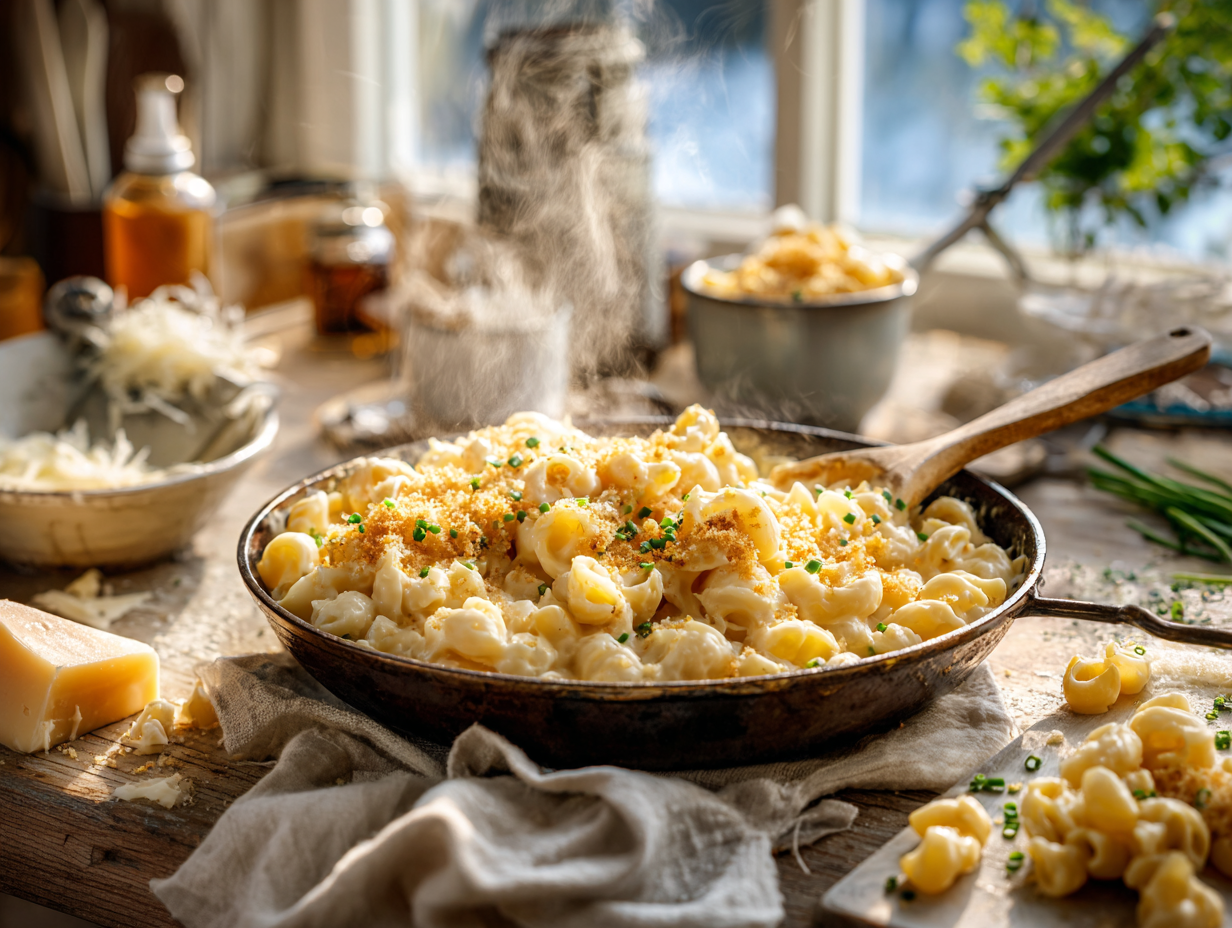
30-Minute Ultra-Creamy Stovetop Mac and Cheese

Equipment
- 4–6 qt heavy pot (for boiling pasta)
- Large colander
- 10–12 inch deep skillet or 3 qt saucepan (for sauce)
- Whisk
- Wooden spoon or silicone spatula
- Box grater (freshly grate cheeses)
- Measuring cups and spoons
- Broiler-safe 2 qt baking dish (optional for crumb topping)
- Sheet pan (to set the baking dish under broiler; optional)
Ingredients
For the Pasta:
- 4 qt water for boiling pasta
- 2 tbsp kosher salt Diamond Crystal preferred; for seasoning pasta water
- 12 oz elbow macaroni about 3 cups dry; bronze-cut if available for better sauce cling
For the Cheese Sauce:
- 3 tbsp unsalted butter for the roux
- 3 tbsp all-purpose flour unbleached, for a smooth roux
- 2 ½ cups whole milk warmed; higher fat yields silkier texture
- ½ cup heavy cream for extra richness and gloss
- 1 tsp Dijon mustard brightens and balances the sauce; not ‘mustardy’
- ½ tsp hot sauce optional; a few dashes to wake up the cheese
- ¼ tsp ground white pepper black pepper works too; white keeps the sauce speck-free
- 1 tsp kosher salt season the sauce; adjust to taste
- 8 oz sharp cheddar cheese, freshly grated about 2 cups loosely packed; choose a good-quality sharp or extra-sharp
- 4 oz Gruyère cheese, freshly grated about 1 cup; for nutty depth and melt
- 2 oz cream cheese softened; stabilizes for ultra-smoothness
For Optional Breadcrumb Topping:
- 1 tbsp unsalted butter for toasting crumbs
- ½ cup panko breadcrumbs for crunch; optional but lovely
- 1 clove garlic, minced optional; gently perfumes the crumbs
- ¼ tsp smoked paprika optional; adds color and warmth to the topping
To Finish & Garnish:
- ¼ cup reserved pasta cooking water use as needed to loosen the sauce to a glossy coat
- 2 tbsp fresh chives, finely snipped for color and freshness
Instructions
- Bring Water to a Boil and Prep (2–3 minutes active, water heats as you prep): Fill a 4–6 qt pot with 4 qt water and set over high heat. Cover to speed the boil. Water will reach a rolling boil at about 212°F / 100°C. While it heats, grate cheeses and measure remaining ingredients.
- Optional: Preheat Broiler (1 minute active): If finishing with a crunchy top, position an oven rack 6 inches from the element and preheat the broiler to 500°F / 260°C.
- Toast Breadcrumb Topping (3–4 minutes): In a skillet over medium heat, melt 1 tbsp butter. Add panko and minced garlic; stir constantly until golden and nutty, 2–3 minutes. Off heat, stir in smoked paprika and a pinch of salt. Transfer to a bowl to stay crisp.
- Make a Blond Roux (1–2 minutes): In a saucepan or the cleaned skillet, melt 3 tbsp butter over medium heat. Sprinkle in flour and whisk constantly until foamy and just turning blond with a warm, toasty aroma, 1–2 minutes. Do not brown deeply—this keeps the sauce pale and silky.
- Build the Sauce (3–4 minutes): While whisking, slowly stream in warm whole milk and the cream. Bring to a gentle simmer (look for small, lazy bubbles—not a boil) and cook, whisking, until the sauce thickly coats the back of a spoon (nappe), 3–4 minutes.
- Season and Add Cheeses (2–3 minutes off heat): Whisk in Dijon, hot sauce, white pepper, and 1 tsp kosher salt. Reduce heat to low, then remove from the burner. Add grated cheddar and Gruyère in 2–3 additions, whisking between each until smooth. Fold in cream cheese until fully melted and the sauce is glossy. Keep warm on the lowest heat if needed—avoid boiling to prevent graininess.
- Cook the Pasta (7–8 minutes): Salt the boiling water with 2 tbsp kosher salt. Add macaroni and cook until just al dente, 7–8 minutes (check 1 minute early). Reserve at least 1/2 cup pasta water, then drain well.
- Marry Pasta and Sauce (1–2 minutes): Add drained pasta to the cheese sauce and toss gently. Splash in reserved pasta water a tablespoon at a time until the sauce slides and shines, coating every elbow. Taste and adjust salt/pepper if needed.
- Optional Broiled Finish (2–3 minutes at 500°F / 260°C): Transfer mac and cheese to a broiler-safe dish, sprinkle evenly with toasted crumbs, and broil until the top is deeply golden and the edges are bubbling, 2–3 minutes. Watch closely to avoid burning.
- Finish and Serve (1 minute): Garnish with snipped chives and serve immediately in warm bowls. The sauce should look glossy, clingy, and luxuriously smooth.
Notes
Jen’s Tips:
- Cheese Choices: Blend cheeses for balance—sharp cheddar for tang, Gruyère for nutty melt, and a touch of cream cheese for stability. Monterey Jack or low-moisture mozzarella can sub for Gruyère for a milder profile.
- Ultra-Smooth Secret: If using pre-shredded cheese, add 1/2 tsp sodium citrate to the milk before melting the cheese. It keeps sauces silky and resistant to splitting.
- No Roux Method: Whisk 1 tbsp cornstarch into the cold milk before heating; simmer until thickened, then melt in cheeses off heat. This is a gluten-free friendly alternative.
- Milk Temperature: Warm dairy blends faster into the roux and helps prevent lumps. Gently heat milk/cream in the microwave (about 60–90 seconds) or in a small pot until just warm.
- Season Smart: Mustard and a few dashes of hot sauce won’t make it spicy; they brighten and balance richness.
- Make-Ahead Crumbs: Toast panko up to 3 days ahead; store airtight and add after broiling to preserve crunch.
- Leftovers: Reheat gently with a splash of milk over low heat, stirring until glossy again.
Your questions, answered
Can I use a different pasta shape?
Yes — any short pasta with ridges or curves works well. Cavatappi, shells, rotini, and penne all hold the sauce effectively. Avoid long pasta like spaghetti; the sauce-to-pasta ratio doesn’t work as well and it’s harder for kids to eat.
Why did my sauce turn out grainy?
The most likely cause is that the cheese was added while the pan was still over direct heat. Pull the skillet completely off the burner before stirring in the cheese, and make sure the cheese isn’t ice-cold from the fridge. If it still happens, a small pinch of sodium citrate added to the sauce before the cheese can prevent it next time.
Can I double the recipe for a larger group?
Yes, it scales up well. Use a larger, heavy-bottomed pot for the sauce so the roux cooks evenly and the milk heats without scorching on the bottom. Plan for a few extra minutes of stirring to bring the larger volume of sauce to the right consistency.
Is this spicy? Can I leave out the hot sauce?
It’s not spicy at the amounts in the recipe — the hot sauce is there to sharpen flavor, not add heat. Leave it out entirely if you’re cooking for anyone who’s sensitive, and the sauce will still taste good.
Try these next
- Quick Chicken Noodle Soup
- Speedy Twice-Baked Potato Casserole
- Southern Stovetop Creamed Corn
- Quick Smoky Weeknight Chili