
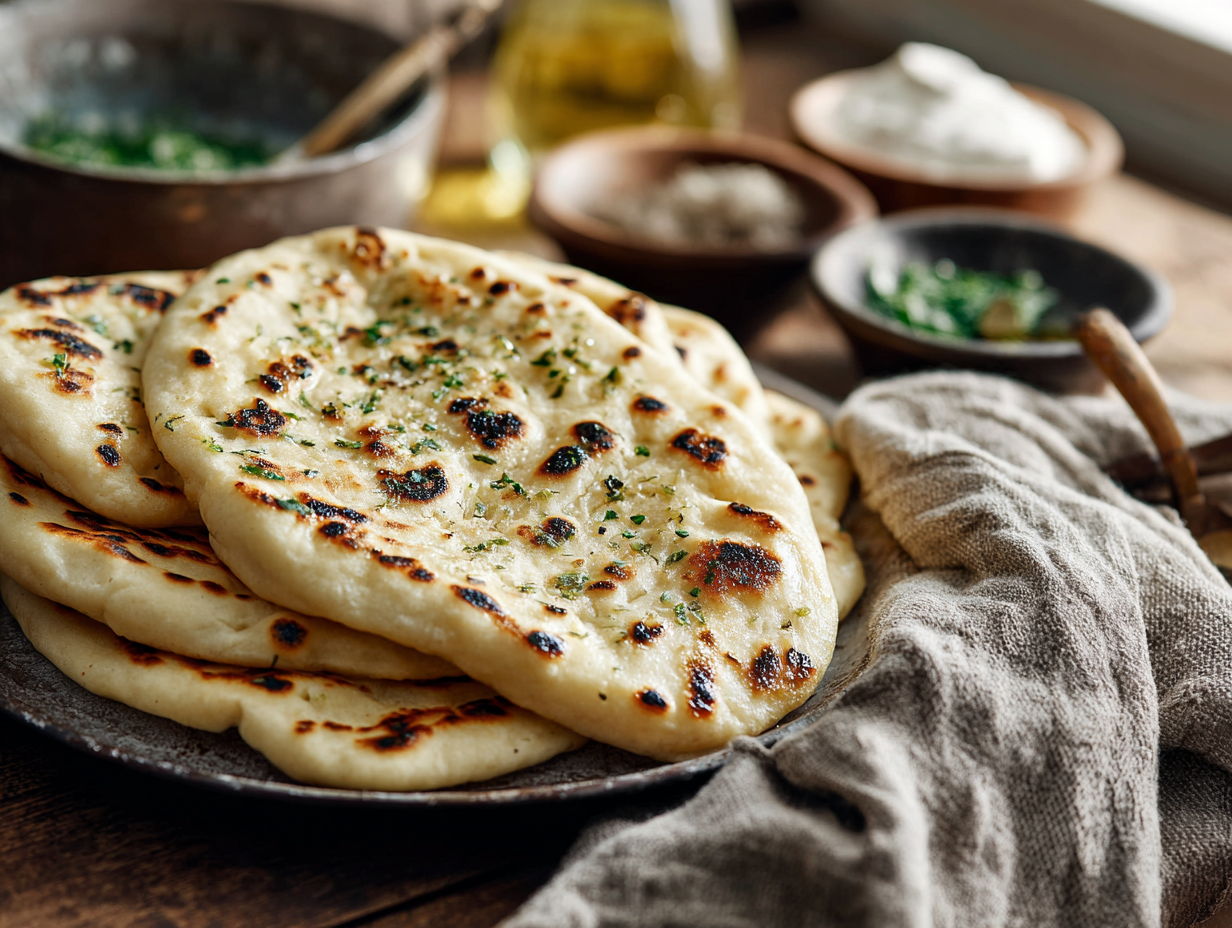
These are skillet flatbreads made with Greek yogurt and baking powder — no yeast, no rise time, ready in under 30 minutes. The dough comes together in one bowl, each round cooks in about two minutes per side, and you finish them with garlic-herb butter straight from the pan. If you need bread on the table tonight without planning ahead, this is the recipe.
What makes this version work
Two things actually matter here. First, the Greek yogurt. It adds enough fat and moisture to keep the flatbreads soft and pliable without any resting time — something a water-only dough can’t pull off this fast. Second, the heat of the skillet. A properly preheated cast-iron or heavy skillet (hot enough that a drop of water skitters across it) creates those blistered, slightly charred spots in under two minutes. Those spots aren’t just visual — they add a faint smokiness that makes the bread taste like it took more effort than it did. A skillet that isn’t hot enough produces pale, doughy rounds that steam instead of char. Get the pan hot before the first piece goes in.
About the ingredients
- Greek yogurt: Full-fat works best and produces a more tender result. Low-fat is fine. Regular (thin) yogurt will make the dough too wet — if that’s all you have, strain it through a cheesecloth for 10 minutes first.
- Aluminum-free baking powder: The recipe specifies this for good reason. Standard baking powder with aluminum can leave a faint metallic aftertaste in quick breads. Rumford is a widely available aluminum-free brand.
- Garlic for the butter: Fresh garlic minced fine is worth it here. Garlic powder works in a pinch but the butter will taste flat by comparison.
- Parsley: Flat-leaf parsley holds up better in warm butter than curly. Skip the garnish of extra parsley on top — not worth the extra dish.
Keeping and reheating
Store leftover flatbreads stacked with a sheet of parchment between each one, wrapped tightly or in an airtight container, in the fridge for up to 3 days. To reheat, put them directly in a dry skillet over medium heat for about 60 seconds per side — they come back close to fresh. The microwave works if you’re in a hurry (20–30 seconds, covered with a damp paper towel), but they’ll be softer and lose any char. For freezing, wrap each flatbread individually in plastic wrap, then bag them together; they keep well for up to 2 months. Reheat from frozen in a covered skillet over medium-low heat, about 2 minutes per side.
Common problems and fixes
- Dough is sticky and won’t roll out: Add flour one tablespoon at a time until it’s tacky but not sticking to your hands. Greek yogurt brands vary in thickness, so the dough may need a little more flour than the recipe suggests.
- Flatbreads are puffing into a balloon: That’s normal and good — it means steam is building inside. Press the bubble down gently with a spatula and keep cooking. It will deflate and flatten as it cools slightly.
- Bread is cooked on the outside but doughy in the middle: Your skillet was too hot. Lower the heat to medium and give each side a full 90 seconds. Cast iron holds heat aggressively — after the first flatbread, you may need to dial back the burner.
- Garlic butter is burning before you can brush it on: Pull the saucepan off the heat as soon as the garlic turns fragrant (about 60 seconds). It keeps cooking in the residual heat of the pan, and burnt garlic will make the whole batch bitter.
- Flatbreads are tough and dense: The dough was overworked. Mix just until the flour is incorporated — a shaggy, slightly rough dough is fine. Kneading it smooth develops too much gluten and makes the finished bread chewy instead of tender.
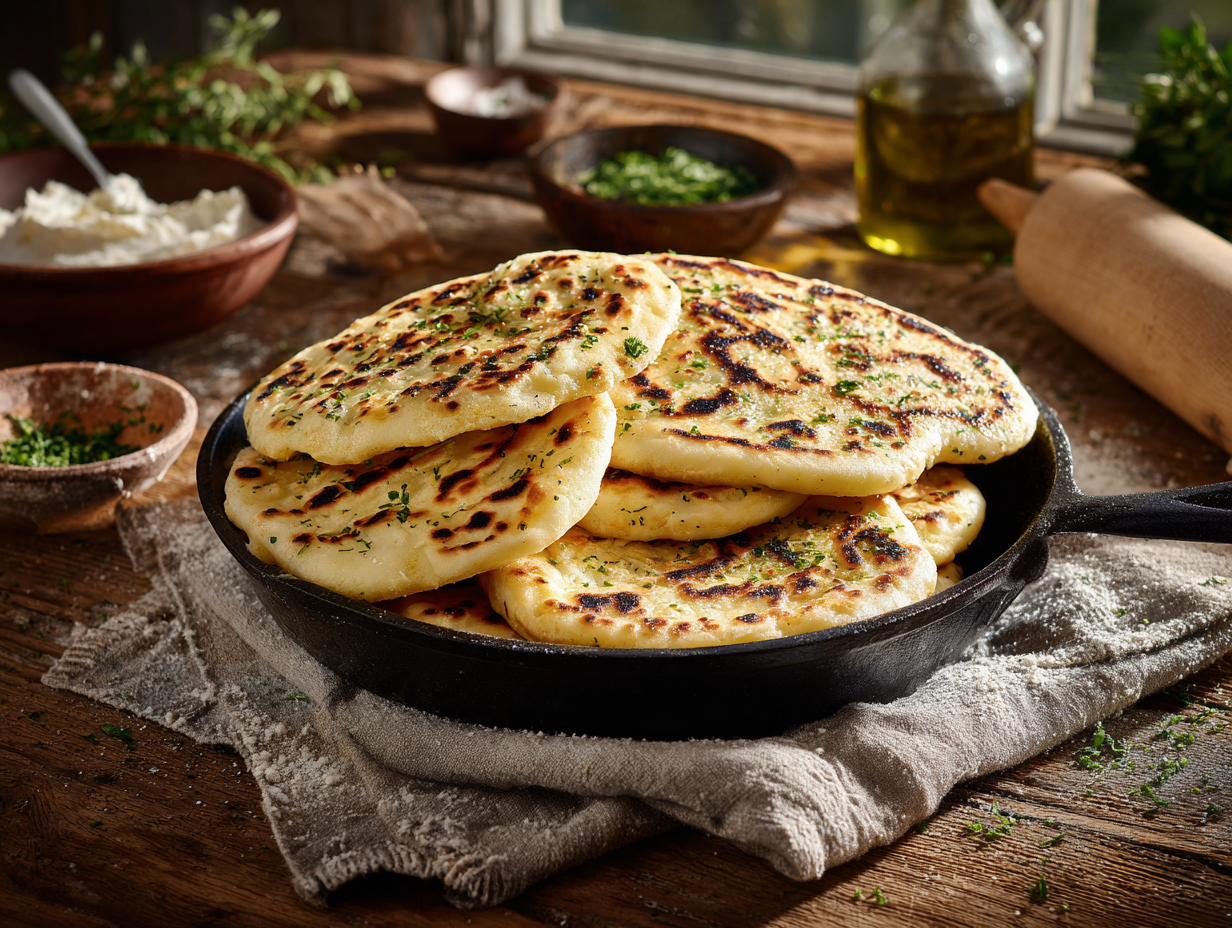
30-Minute Garlic-Herb Skillet Flatbreads

Equipment
- Large mixing bowl
- Whisk
- Wooden spoon or silicone spatula
- Measuring cups and spoons
- Rolling Pin
- Cast-iron or heavy skillet (10–12 inch)
- Small saucepan (for butter)
- Bench scraper or knife
- Pastry Brush
- Clean kitchen towel
Ingredients
For the Yogurt Flatbread Dough:
- 2 cups all-purpose flour, unbleached choose a fresh, unbleached AP flour for best flavor and softness
- 1 ½ teaspoons baking powder aluminum-free for a clean taste
- 1 teaspoon kosher salt use fine kosher salt (e.g., Diamond Crystal)
- 1 teaspoon granulated sugar a pinch of sweetness for balanced browning
- 1 cup full-fat Greek yogurt thick, tangy Greek yogurt; room temp if possible
- 2 tablespoons extra-virgin olive oil fruity EVOO; reserve more for brushing if desired
For the Garlic-Herb Butter & Finishing:
- 3 tablespoons unsalted butter high-quality European-style butter melts silkier
- 1 clove garlic, finely grated or minced microplane for a mellow, even spread
- 1 tablespoon fresh parsley, finely chopped flat-leaf parsley for clean, bright flavor
- 1 pinch flaky sea salt for a delicate, crunchy finish
- 1 tablespoon za'atar (optional) for a tangy, herby finish
- 1 tablespoon toasted sesame seeds (optional) adds nutty crunch
Instructions
- Mix the Dry Base (1–2 minutes): In a large bowl, whisk together flour, baking powder, salt, and sugar until the mixture looks uniformly speckled. This even dispersion ensures consistent lift.
- Add the Wet Ingredients (2–3 minutes): Add the Greek yogurt and olive oil. Stir with a spoon until a shaggy dough forms and most dry bits are moistened. Transfer to a lightly floured surface and knead with the heel of your hand for 60–90 seconds until the dough is smooth and slightly tacky, not sticky. If too sticky, dust with 1–2 teaspoons flour.
- Rest and Preheat (5 minutes): Return the dough to the bowl and cover. Rest for 5 minutes to relax gluten—this makes rolling easier. Meanwhile, set a cast-iron skillet over medium-high heat to preheat. Aim for a surface temperature around 400–450°F (205–230°C). A drop of water should dance and evaporate quickly when ready.
- Portion and Roll (5–6 minutes): Turn the dough out and divide into 6 equal pieces. Roll each into a ball, then with a lightly floured rolling pin, roll to 1/8-inch thickness, about 6–7 inches across. Rotate the dough a quarter-turn between strokes for a round shape. Keep pieces you’re not rolling covered with a towel so they don’t dry out.
- Cook the Flatbreads (about 2 minutes per bread): Lay one round into the hot, dry skillet. Cook until bubbles form and the underside develops deep golden-brown spots, 60–90 seconds. Flip and cook 45–60 seconds more, pressing lightly with a spatula to encourage even contact. Adjust heat to maintain steady browning without smoke. Transfer to a towel-lined plate and cover to keep warm. Repeat with remaining rounds.
- Make Garlic-Herb Butter (2 minutes, done in parallel): While the first flatbread cooks, melt butter in a small saucepan over low heat until just foamy (about 1–2 minutes). Remove from heat, stir in the grated garlic and parsley, and let it infuse off heat for 30 seconds to tame the raw bite.
- Finish and Season: Brush each hot flatbread with garlic-herb butter and finish with a pinch of flaky sea salt. Sprinkle za'atar or sesame if using.
- Optional Oven Method: Preheat oven to 475°F (245°C) with a heavy sheet pan inside. Bake rolled rounds 4–6 minutes until puffed and speckled; for extra char, broil 20–30 seconds. Brush with butter after baking.
Notes
Jen’s Tips:
- Softer Crumb: Add 1 tablespoon milk to the dough if your yogurt is very thick.
- Flavor Twists: Knead in 1 teaspoon ground cumin or 1 tablespoon finely sliced scallions.
- Dairy-Free: Use a thick, unsweetened plant-based yogurt and swap butter for olive oil.
- Self-Rising Swap: Use 2 cups self-rising flour and omit baking powder and salt.
- Better Blisters: Briefly cover the skillet for 10–15 seconds after the flip to trap steam and encourage puffing.
- Make-Ahead: Rolled rounds can be stacked between parchment, wrapped, and chilled up to 24 hours.
- If your kitchen runs cool, let the rolled rounds sit 3–5 minutes at room temperature before cooking to help puffing.
- For extra aroma, add lemon zest to the butter.
- Keep cooked breads wrapped to retain steam and softness.
Nutrition
FAQ
Can I make the dough ahead of time?
Yes — you can make it up to 24 hours ahead and refrigerate it, tightly wrapped. Let it sit at room temperature for about 10 minutes before rolling so it’s easier to work with.
Do I need a cast-iron skillet, or will a regular pan work?
A regular heavy-bottomed skillet works fine. Cast iron holds heat more evenly, which helps with consistent browning, but a stainless steel or nonstick pan will still produce good results — just watch the heat more carefully.
Can I use whole wheat flour instead of all-purpose?
You can swap up to half the flour for whole wheat without much trouble. Using 100% whole wheat will make the flatbreads noticeably denser and drier — if you go that route, add an extra tablespoon of yogurt to compensate.
What can I serve these with?
They work alongside anything that benefits from something to scoop or soak up sauce — soup, chili, shakshuka, or a bean dish. They’re also sturdy enough to use as a wrap for grilled meat or roasted vegetables.
My yogurt is flavored or sweetened — can I still use it?
No, use plain yogurt only. Flavored or sweetened yogurt will make the flatbreads taste off and can interfere with how the baking powder activates.
How do I know when to flip the flatbread?
Flip when the edges look dry and the surface has started to bubble — usually 60 to 90 seconds. If you lift an edge and see golden-brown spots underneath, it’s ready to turn.
Try these next
- Quick Chicken Noodle Soup
- Weeknight Shakshuka Recipe
- Smoky Mediterranean Bean Skillet
- Quick Smoky Weeknight Chili