
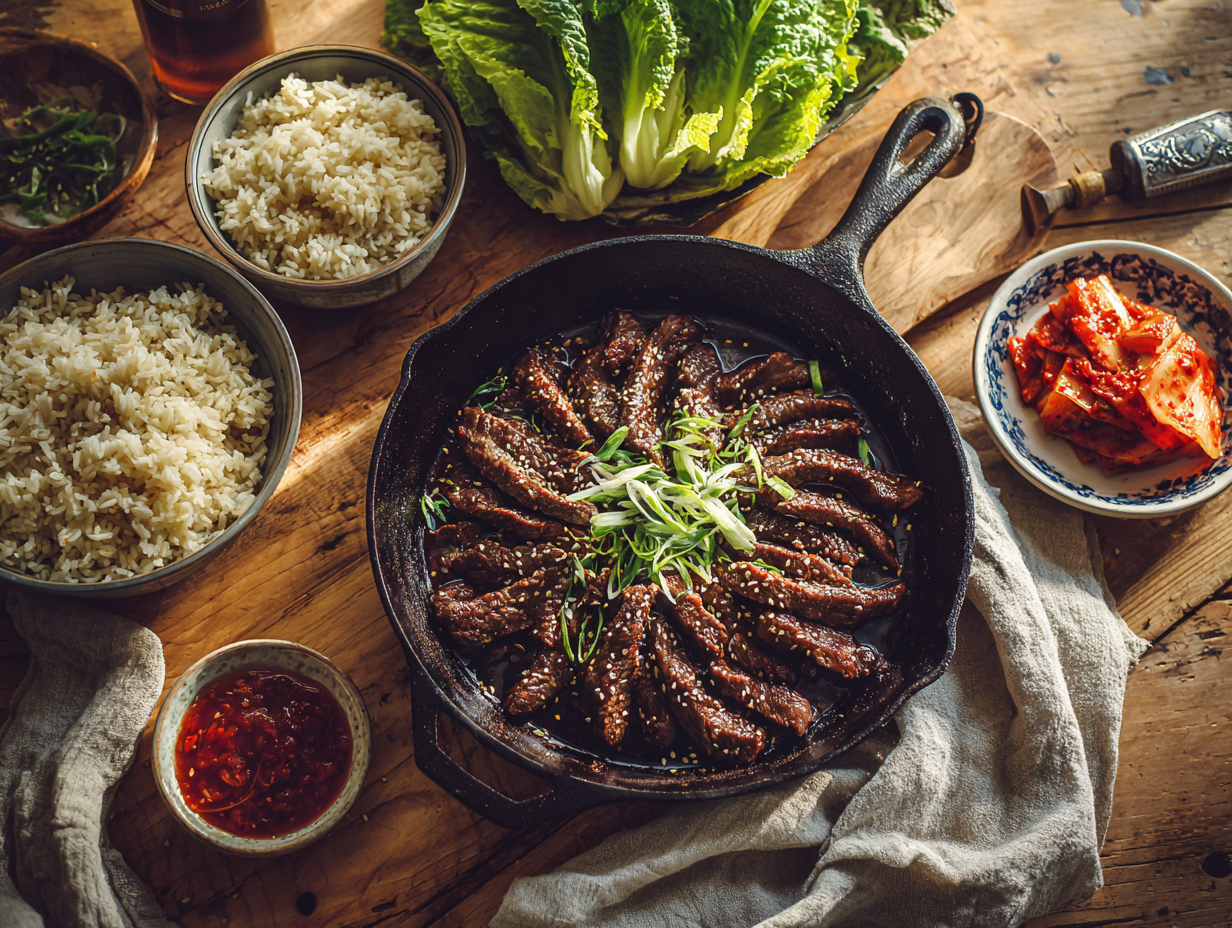
This is a skillet bulgogi built for a Tuesday night — thinly sliced beef, a short soy-and-pear marinade, and a very hot pan that gets you caramelized edges without a grill or a long wait. The whole thing is done in 30 minutes, and it reheats so well that making a double batch on the same night is genuinely worth it.
Shopping notes
- Asian pear: Look for it in the Asian foods section or any Korean grocery. It tenderizes the beef through natural enzymes — not just sweetness. A ripe Bosc pear works as a substitute, though the tenderizing effect is slightly weaker.
- Beef cut: Ribeye is ideal for fat and flavor. Sirloin is a solid, leaner alternative. Ask the butcher to slice it thin, or freeze the beef for 20–25 minutes at home before slicing — it firms up enough to cut cleanly.
- Sesame oil: Buy toasted sesame oil (dark amber color), not plain. The flavor difference is significant and it’s used as a finishing oil, not for cooking.
- Gochugaru or red pepper flakes: Optional for heat, but gochugaru gives a more authentic mild warmth if you can find it at an Asian market.
What makes this version work
Two things actually matter here. First, the pear in the marinade does real enzymatic work on the protein — even 15 minutes is enough to noticeably soften the beef, so don’t skip it in the name of saving time. Second, pan temperature is everything: the skillet needs to be properly hot before the beef goes in, and the beef needs to go in a single, uncrowded layer. Dump too much in at once and the pan temperature drops, the meat steams instead of sears, and you lose the sticky, slightly charred edges that make this worth making. Cook in two or three batches if needed — it adds maybe four minutes and makes a real difference in the final texture.
If something goes sideways
- Beef is chewy, not tender: It was likely sliced too thick or cut with the grain instead of against it. For next time, aim for slices no thicker than an eighth of an inch, cut perpendicular to the muscle fibers.
- Marinade burned before the beef cooked through: The sugar in the marinade scorches fast on very high heat. If your pan runs hot, drop to medium-high and watch the first batch closely — you want caramelization, not char.
- Watery, pale beef with no color: The pan wasn’t hot enough, or the beef was added straight from the fridge while still cold and wet. Pat the slices dry before they go in, and let the pan heat for a full two minutes before adding oil.
- Marinade tastes flat: Asian pear varies in sweetness. Taste the marinade before adding the beef — if it needs more depth, add a small splash of soy sauce; if it’s too salty, a teaspoon more pear or a pinch of sugar balances it.
- Meat stuck to the pan: Don’t move it immediately. Let it sit undisturbed for 60–90 seconds after it hits the pan — it will release naturally once a crust forms.
Leftovers and make-ahead
Cooked bulgogi keeps well in an airtight container in the fridge for up to four days, and the flavor actually improves overnight as the soy and sesame settle in. Reheat it in a dry skillet over medium heat for two to three minutes — the microwave works but softens the edges you worked to get. For freezing, portion the cooked beef into flat zip-lock bags and freeze for up to two months; thaw overnight in the fridge before reheating. If you want to get ahead on a weekend, you can also freeze the raw beef in the marinade: it marinates as it thaws, so you pull it out the morning of and it’s ready to cook by dinner. Skip the garnish — not worth the extra dish when you’re pulling this from the freezer on a Wednesday.
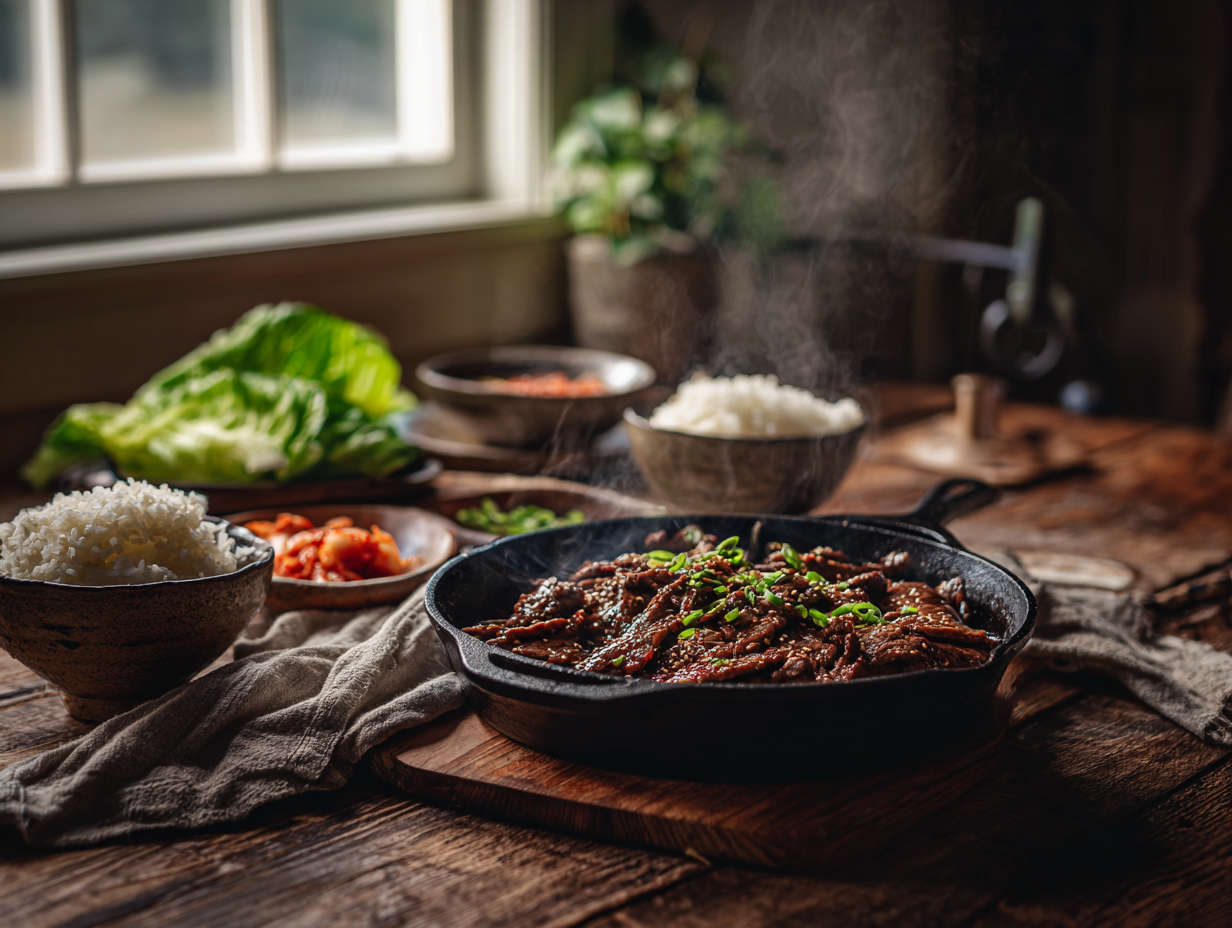
Quick Bulgogi (30-Minute Korean BBQ Beef)

Equipment
- 12-inch cast-iron or heavy stainless-steel skillet (or grill pan)
- Medium mixing bowl
- Measuring cups and spoons
- Microplane or fine grater
- Chef’s knife and cutting board
- Tongs
- Paper towels
- large zip-top bag for marinating (optional)
- sheet pan and oven broiler (optional alternative)
Ingredients
For the Bulgogi Beef:
- ¼ cup low-sodium soy sauce Kikkoman or Korean jin-ganjang recommended
- 2 tbsp light brown sugar packed for better caramelization
- 2 tbsp Asian pear, finely grated Bartlett pear works; or 1 tbsp apple juice in a pinch
- 1 tbsp mirin optional, adds gentle sweetness and sheen
- 2 tsp garlic, finely minced about 2 medium cloves
- 1 tsp fresh ginger, finely grated microplaned for a smooth marinade
- 1 tbsp toasted sesame oil for nutty depth
- 1 tsp gochugaru (Korean red pepper flakes) optional, for gentle heat
- ¼ tsp freshly ground black pepper
- 1.5 lb beef ribeye or top sirloin, very thinly sliced ask butcher for shabu-shabu/thin cut, or slice partially frozen
- 1 tbsp neutral oil canola, grapeseed, or avocado oil for high heat
- 4 pieces scallions thinly sliced; whites and greens divided
- 1 tbsp toasted sesame seeds for finishing
For Serving (optional but recommended):
- 3 cups steamed short-grain rice warm; day-old reheated rice works well
- 8 large lettuce leaves green leaf, butter, or romaine for wraps
- 1 cup kimchi optional; classic, radish, or cucumber kimchi
Instructions
- Prep the Beef (5 minutes): If slicing at home, place the beef in the freezer for 10 minutes to firm slightly—this makes wafer-thin slices easier. Pat very dry with paper towels to encourage browning.
- Make the Marinade (3 minutes): In a medium bowl, whisk together soy sauce, brown sugar, grated Asian pear, mirin (optional), garlic, ginger, toasted sesame oil, gochugaru (optional), and black pepper until the sugar dissolves and the mixture smells sweet and savory.
- Marinate Quickly (10 minutes): Add the sliced beef to the bowl. Using clean hands, gently massage the marinade into the meat for 30–60 seconds to help it absorb. Let stand at room temperature for 10 minutes. Meanwhile, slice the scallions (keep whites and greens separate) and set out rice and lettuce.
- Preheat the Pan (2 minutes): Heat a cast-iron or heavy skillet over medium-high until lightly smoking and the oil shimmers, about 2 minutes. Target surface heat: roughly 400°F/205°C. Add the neutral oil and swirl to coat.
- Sear in Batches (6–8 minutes): Working in 2 batches to avoid steaming, lay the beef in a single layer. Cook 45–60 seconds per side until browned with caramelized edges; you should hear a lively sizzle and see glossy browning. In the last 30 seconds of each batch, toss in half the scallion whites to soften and sweeten. Transfer the first batch to a plate and repeat with remaining beef and scallion whites.
- Glaze and Finish (1 minute): Return all beef to the pan with any accumulated juices. Spoon in 2–3 tablespoons of the leftover marinade and stir over high heat just until slightly syrupy and clinging, 30–60 seconds. Sprinkle with sesame seeds and remove from heat. Avoid reducing too long or the sauce can turn overly salty.
- Serve: Pile bulgogi over warm rice or tuck into lettuce leaves. Shower with scallion greens and a pinch more sesame seeds. Offer kimchi alongside for brightness and crunch.
- Broiler Alternative: Spread marinated beef in a thin layer on a foil-lined, oiled sheet pan. Broil on high at about 500°F/260°C on the upper rack for 4–6 minutes, flipping once, until edges char slightly. Finish with sesame seeds and scallions.
Notes
Jen’s Tips:
- Better Browning: Pat the beef dry before it hits the pan. High heat and space between slices are key.
- Pear Power: Asian pear tenderizes without turning mushy; in a pinch, use 1 tbsp apple juice plus an extra 1/2 tsp brown sugar.
- Gluten-Free: Use tamari in place of soy sauce.
- Sweeter or Spicier: Add 1 tsp honey for extra gloss, or more gochugaru for heat.
- Protein Swaps: Try thin-sliced chicken thighs (cook 2–3 minutes per side) or pressed, sliced extra-firm tofu (pan-sear until golden).
- Vegetarian Bulgogi: King oyster mushrooms, sliced thin, sear beautifully and mimic meaty texture.
- Speed Trick: Ask your butcher for shabu-shabu or hot-pot–style beef to skip home slicing.
Nutrition
Common questions
Can I use a regular frying pan instead of cast iron?
Yes, a heavy stainless-steel skillet works well. The key is that the pan holds heat evenly — thin nonstick pans lose temperature too quickly when the cold beef hits, which leads to steaming rather than searing.
What if I can’t find Asian pear?
A ripe Bosc or Anjou pear is the closest substitute. Kiwi also works and has strong tenderizing enzymes, but use only a small amount — about a tablespoon of mashed kiwi — or it can make the texture mushy.
How thin does the beef actually need to be?
Aim for about an eighth of an inch — thin enough that you can almost see light through it. Anything thicker than a quarter inch won’t cook through quickly enough at high heat without toughening.
Is 15 minutes of marinating really enough?
For this cut and thickness, yes. The pear enzymes work fast on thin slices, and the soy sauce penetrates quickly. Marinating longer than 30 minutes can actually start to break down the texture too much, leaving the beef slightly mushy.
Can I make this with chicken or pork instead of beef?
Pork shoulder or pork belly, sliced thin, works very well with the same marinade. Chicken thighs also work — slice them thin and skip the pear tenderizing step since poultry doesn’t need it, though leaving it in doesn’t hurt.
My family doesn’t eat spicy food — is this recipe spicy as written?
The base recipe is mild. Any heat comes from optional additions like gochugaru or red pepper flakes, which you can simply leave out without affecting the core flavor of the dish.
Try these next
- Spicy Korean Rice Cakes
- Quick Korean Bibimbap Bowls
- Quick Ginger Scallion Wontons
- Weeknight Sushi Bake Recipe