
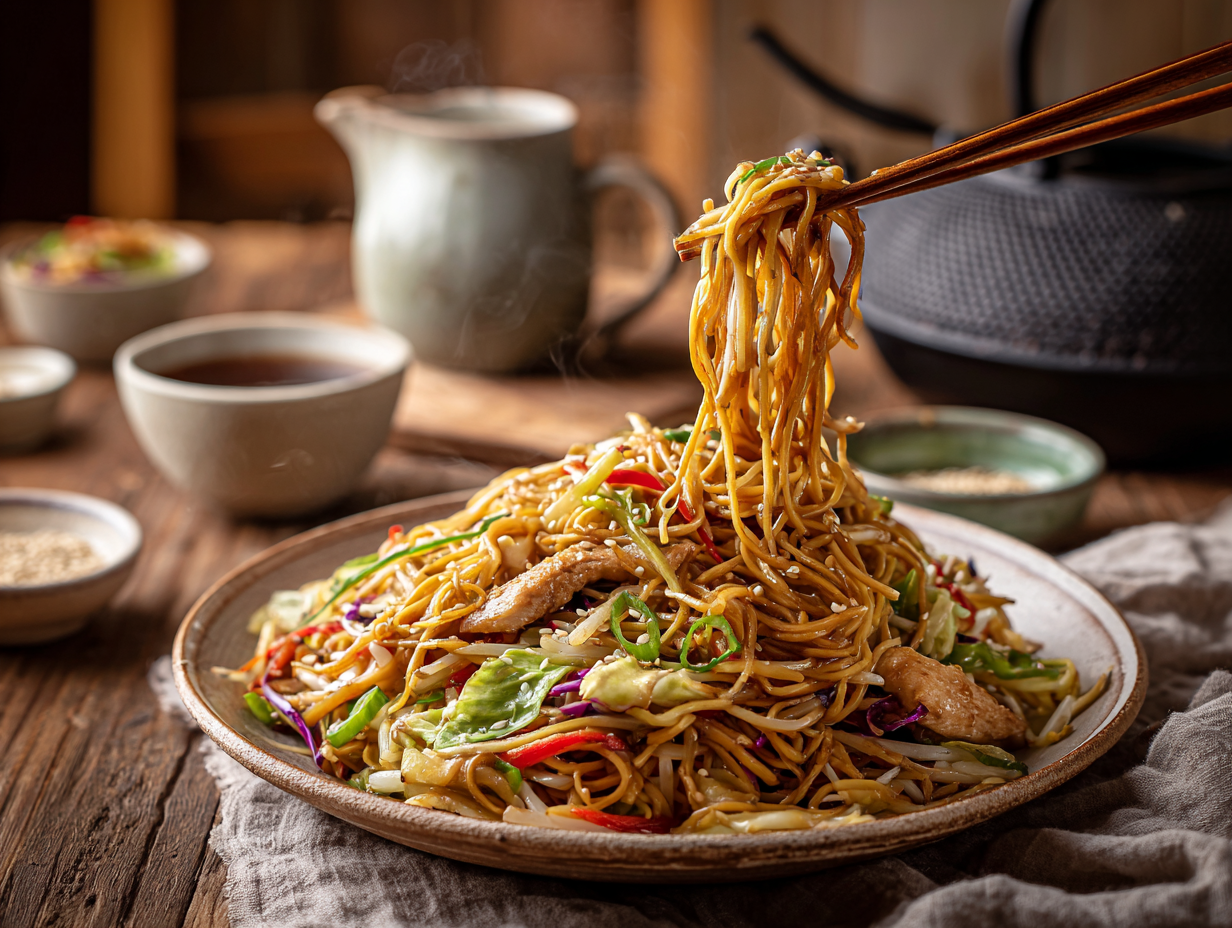
This is a straightforward Cantonese chow mein built around a soy-oyster sauce, tender velveted chicken, and crisp vegetables — done in about 27 minutes. The sauce clings to the noodles instead of pooling at the bottom, and the whole thing reheats well enough that making a double batch on a Tuesday pays off through Thursday. If you need a fast, filling weeknight dinner that doesn’t require a trip to a specialty store, this is a solid choice.
Why this recipe works
Two things actually matter here. First, the simplified velveting step — coating the chicken in cornstarch with a small amount of baking soda before it hits the pan — keeps the meat tender even at high heat, which is easy to overdo on a home stove. Skip it and you risk chewy, dry chicken. Second, the sauce is mixed and ready before the wok gets hot. Once cooking starts, you have maybe 90 seconds per ingredient before things overcook or burn; there’s no time to measure soy sauce mid-stir. Getting everything prepped and staged in the order it goes into the pan is what makes the difference between a glossy, cohesive dish and a soggy pile of noodles.
Ingredient notes
- Fresh chow mein noodles: Find these refrigerated at most Asian grocery stores. They’re the right call here — springy and sturdy. If you can only find dried thin egg noodles, cook them 1 minute less than the package says and rinse with cold water immediately so they don’t clump.
- Dark soy sauce: This is thicker and less salty than light soy. It’s mainly for color and a mild sweetness. If you only have regular soy sauce, use it for both — the dish will be a little lighter in color but still taste right.
- Shaoxing wine: Dry sherry is a workable substitute. Don’t use cooking wine with added salt — it throws off the seasoning balance.
- Oyster sauce: Not optional for the flavor profile. Vegetarian oyster sauce (made from mushrooms) works well and is widely available.
- White pepper: Use it instead of black if you have it. The heat is gentler and it doesn’t leave dark flecks in the sauce — skip the garnish of extra pepper at the table, not worth the extra dish.
Storage and reheating
Leftovers keep in an airtight container in the fridge for up to 4 days. The noodles will absorb the sauce as they sit, so add a small splash of water or chicken broth when reheating — about 1 tablespoon per serving. Reheat in a hot skillet over medium-high for 3 to 4 minutes, stirring frequently, rather than microwaving; the microwave turns the noodles soft and the vegetables limp. For freezing, this recipe works better if you freeze the cooked chicken and sauce separately from the noodles, then cook fresh noodles when you’re ready to eat. Fully assembled frozen chow mein tends to get mushy on thaw. Frozen chicken and sauce will keep for up to 2 months.
Common problems and fixes
- Noodles clumping into a solid mass: This happens when fresh noodles go into the wok cold and wet. Loosen them with your fingers before adding, and make sure the oil and pan are fully hot first. A few seconds of tossing before adding anything else helps them separate.
- Watery sauce that won’t cling: Usually means the vegetables released too much moisture. Pat the cabbage and bean sprouts dry before cooking, and don’t crowd the pan — cook in batches if needed so ingredients sear rather than steam.
- Chicken that’s tough or rubbery: The pan wasn’t hot enough when the chicken went in, so it steamed instead of seared. Let the oil shimmer and just start to smoke before adding the meat, and don’t stir it for the first 30 to 45 seconds so it gets actual contact with the pan surface.
- Dish tastes flat or one-dimensional: Check that you used both light and dark soy sauce — using only one throws off the balance. Also taste before serving and adjust with a small pinch of sugar if it’s too salty, or a few drops of soy if it needs depth.
- Bean sprouts are soggy: They go in last, right before the sauce, and need only 30 to 45 seconds of heat. If they go in too early or the heat drops when you add them, they release water and go limp fast. High heat and quick hands fix this.
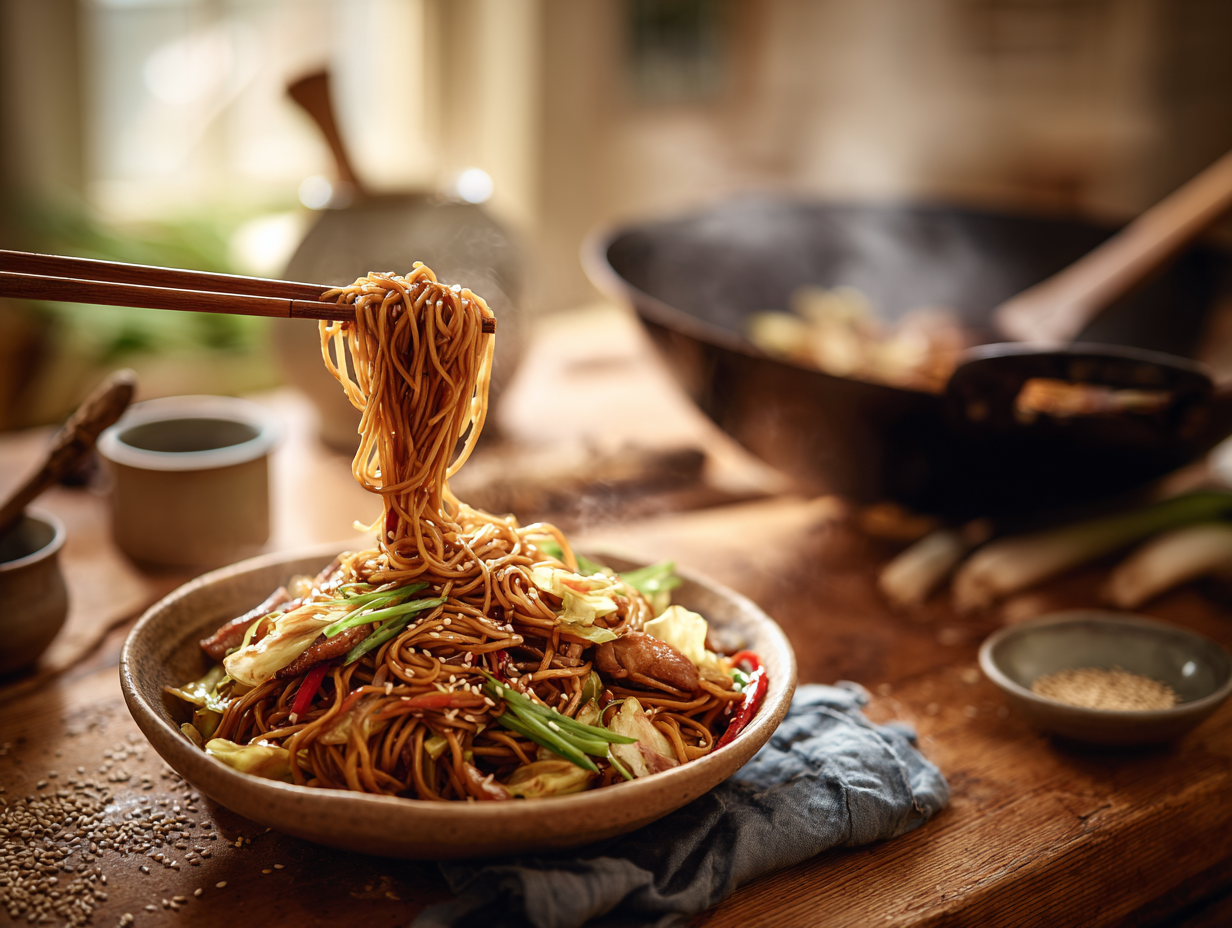
Quick Cantonese Chow Mein (30-Minute Chow Mein Recipe)

Equipment
- Wok or large 12-inch skillet
- Large pot for boiling noodles
- Colander
- Tongs or long chopsticks
- Chefs Knife
- Cutting board
- Measuring cups and spoons
- Small mixing bowl
- Whisk or fork
- Paper towels
Ingredients
For the Sauce:
- 2 tbsp low-sodium soy sauce use a quality brand; Kikkoman or Yamasa work well
- 1 tbsp dark soy sauce Pearl River Bridge recommended; adds color and light sweetness
- 1 ½ tbsp oyster sauce Lee Kum Kee Premium for best depth and sheen
- 1 tbsp Shaoxing wine dry sherry is a fine substitute
- 1 tsp toasted sesame oil adds nutty finish—use toasted for aroma
- 1 tsp granulated sugar balances salt and umami
- ½ tsp ground white pepper classic Cantonese warmth without heat
- ½ cup low-sodium chicken broth or water; low-sodium keeps sauce balanced
- 1 ½ tsp cornstarch for a glossy, clingy sauce
For the Chicken (optional protein):
- 1 lb boneless, skinless chicken thighs slice thin across the grain; thighs stay juicier than breast
- 1 tsp low-sodium soy sauce for quick velveting marinade
- 1 tsp Shaoxing wine dry sherry substitute works
- ½ tsp baking soda optional; tenderizes quickly. Rinse is not needed for this small amount
- 1 tsp cornstarch helps the chicken stay silky and sear well
- 1 tsp neutral oil to lightly coat the marinated chicken
For the Stir-Fry & Noodles:
- 12 oz fresh chow mein noodles refrigerated; Twin Marquis or Sun Noodle. If using dried thin egg noodles, use 8 oz and cook to just shy of tender
- 2 tbsp neutral high-heat oil canola, peanut, or avocado oil, divided use
- 3 cloves garlic, finely minced freshly minced for best aroma
- 1 tbsp fresh ginger, finely minced microplane for a finer paste that melts into the sauce
- 4 pieces scallions whites and greens separated; 1-inch pieces
- 2 cup green cabbage, thinly shredded about 6 oz; savoy or napa also work well
- 1 medium carrot, julienned about 1 cup; matchsticks for quick stir-fry
- ½ medium red bell pepper, thinly sliced adds color and sweetness
- 2 cup bean sprouts, rinsed and well-dried pat dry to avoid diluting the sauce
- 1 tsp rice vinegar optional finishing splash to brighten flavors
For Garnish:
- 1 tbsp toasted sesame seeds for nutty crunch
- 4 pieces reserved scallion greens, thinly sliced for fresh color and aroma
Instructions
Mix Sauce First:
- In a small bowl, whisk together soy sauce, dark soy, oyster sauce, Shaoxing wine, sesame oil, sugar, white pepper, chicken broth, and cornstarch until smooth and no lumps remain. Set near the stove.
Prep & Marinate Chicken (Quick Velveting):
- In a medium bowl, toss sliced chicken with soy sauce, Shaoxing wine, baking soda (optional), cornstarch, and 1 tsp neutral oil. Let stand 10 minutes while you prepare vegetables. This keeps the chicken tender and helps it sear.
Boil Noodles:
- Bring a large pot of water to a rolling boil (100°C / 212°F). For fresh chow mein noodles: loosen and blanch 45–60 seconds until just separated and pliable. For dried thin egg noodles: cook 2–3 minutes until shy of tender.
- Drain in a colander; shake off excess water. Rinse briefly under hot water if starchy, then drain well. Toss with about 1 teaspoon of your measured stir-fry oil to prevent sticking.
Heat the Wok:
- Place a dry wok or large skillet over high heat until it just begins to smoke—about 2–3 minutes (surface temperature roughly 205–230°C / 400–450°F). Add 1 tablespoon neutral oil and swirl to coat.
Sear the Chicken:
- Add chicken in a single layer. Sear undisturbed 1–1 1/2 minutes until you see light browning at the edges, then stir-fry 2–3 minutes until just cooked through. Look for opaque centers and lightly caramelized edges. Transfer to a plate.
Aromatics & Vegetables:
- Add remaining 1 tablespoon oil. Add garlic, ginger, and scallion whites; stir-fry 20–30 seconds until fragrant—avoid browning.
- Add cabbage, carrot, and bell pepper; stir-fry 2–3 minutes until vibrant and tender-crisp. If the pan looks dry, splash in 1–2 tablespoons water to create a quick steam that softens veg without oiliness.
Noodles, Sauce, and Finish:
- Add drained noodles; toss 1 minute to warm and lightly char in spots.
- Stir the sauce (cornstarch settles), then pour it around the edges of the wok so it hits the hot metal and thickens fast. Toss 1–2 minutes until glossy and clinging.
- Return chicken and add bean sprouts; toss 60–90 seconds. Finish with rice vinegar if using. The noodles should be bouncy, vegetables crisp-tender, and sauce silky—not soupy.
Notes
Jen’s Tips:
- Dry your noodles well—water dilutes the sauce. A quick shake and 1 teaspoon oil keep strands separate.
- Mimic Wok Hei: Preheat pan thoroughly and avoid crowding. Work in two batches if your pan is small.
- No Dark Soy? Mix 2 teaspoons regular soy with 1/4 teaspoon molasses for color and subtle sweetness.
- Vegetarian: Swap chicken for 12 oz firm tofu (pressed and cubed) or mixed mushrooms; brown well before adding vegetables.
- Gluten-Free: Use gluten-free tamari and a gluten-free oyster sauce; choose rice or gluten-free egg noodles.
- Low-Sodium: Start with low-sodium soy and broth; season at the end to taste.
- For faster caramelization, let chicken sear undisturbed before tossing.
- If your stove is modest, cook the noodles and vegetables in two smaller batches to keep heat high.
Serving Suggestions:
Twirl a nest of noodles into warm bowls. Top with chicken and a tumble of crisp sprouts. Sprinkle toasted sesame seeds and scallion greens. The perfect bowl shows glossy, mahogany-kissed noodles, bright green scallions, and steam carrying ginger–garlic aroma. Pair with hot jasmine tea or a crisp lager.Culinary Context:
Chow mein—literally “stir-fried noodles”—is a Cantonese staple with regional variations, from Hong Kong’s crispy pan-fried style to the softer, sauce-glazed version here. The balance of soy, oyster sauce, and white pepper is classic, while high heat yields that prized seared aroma. I learned to pre-mix the sauce at a bustling dai pai dong—speed is flavor.Optional Advanced Prep:
- Pre-slice vegetables and refrigerate up to 24 hours.
- Mix sauce up to 48 hours ahead; whisk before use.
- Blanch noodles earlier in the day; drain well, toss with a teaspoon oil, and refrigerate. Re-loosen in a hot pan for 30–45 seconds before saucing.
Timing:
- Prep Time: 15 minutes (includes 10-minute chicken marinade while you chop and boil water)
- Cook Time: 12 minutes (stir-fry steps as written)
- Total Time: 27 minutes
Course & Origin:
- Course: Dinner / Main Course
- Origin: Chinese (Cantonese)
Nutrition
Common questions
Can I use rotisserie chicken instead of raw chicken breast?
Yes — shred or slice it and add it with the noodles rather than cooking it first. Since it’s already cooked, it just needs to heat through, so skip the velveting step entirely and stir it in during the last 2 minutes.
What if I don’t have a wok? Can I use a regular skillet?
A large stainless steel or cast iron skillet works fine. Use the biggest one you have and get it genuinely hot before adding oil — the goal is high, direct heat on the ingredients, which a heavy skillet can deliver.
Can I make this vegetarian?
Yes, and it holds up well. Replace the chicken with firm tofu (pressed and cubed) or sliced shiitake mushrooms, and use vegetarian oyster sauce. The cooking times stay roughly the same — tofu needs about 2 minutes per side to get some color.
My grocery store doesn’t carry fresh chow mein noodles. What’s the best substitute?
Thin dried egg noodles are the closest match — cook them 1 minute under the package time, drain, and rinse with cold water before they go into the wok. Lo mein noodles also work but are softer; rice noodles change the texture significantly but are fine if that’s what you have.
More quick recipes to try
- Quick Ginger Scallion Wontons
- Quick Weeknight Pho Recipe
- Spicy Korean Rice Cakes
- Quick Korean Bibimbap Bowls