
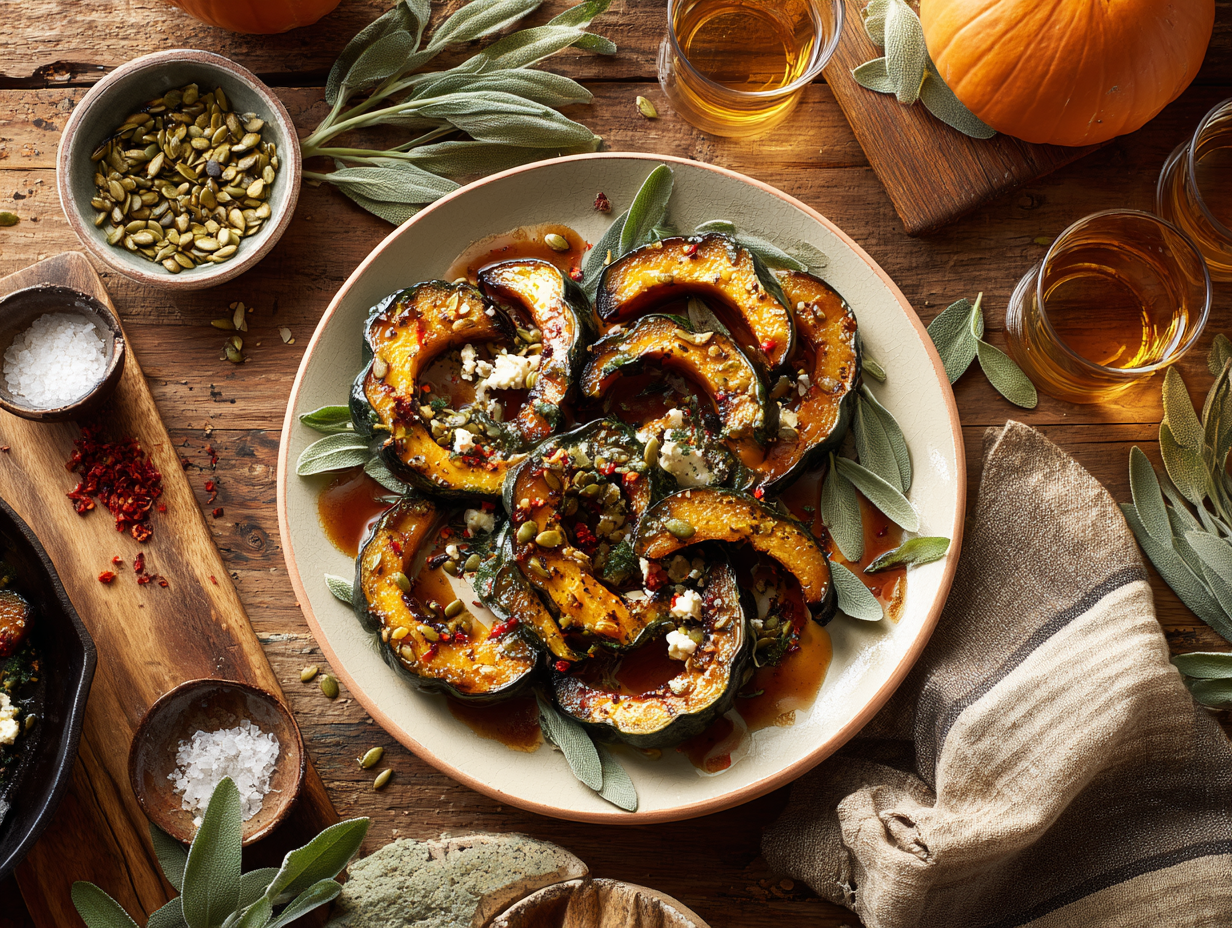
This is a stovetop acorn squash — seared in a skillet, then steamed under a lid — with a maple-chili glaze, brown butter, crispy sage, and pepitas on top. It’s done in 26 minutes, which makes it a realistic weeknight side. It also reheats well enough that making a full batch now saves you real effort later in the week.
The short version of why this works
Two things carry this recipe. First, searing the squash cut-side down in a hot, dry skillet before adding any liquid builds a caramelized crust — the kind you’d normally wait 45 minutes for in an oven. Second, adding a small amount of liquid and covering the pan traps steam, which finishes cooking the dense flesh through without drying out the edges. Neither step is complicated, but skipping either one gets you squash that’s either raw in the middle or pale and soft on the outside. Brown butter and the glaze go in at the end, after the squash is already cooked, so they coat rather than burn.
Troubleshooting
- The glaze burns before the squash is tender: Your heat is too high or the lid isn’t sealing well. The steam phase needs a tight-fitting lid and medium-low heat. If the liquid evaporates too fast, add a tablespoon of water and re-cover.
- Squash wedges fall apart when you flip them: They’re overcooked or cut too thin. Wedges should be about 3/4 to 1 inch thick at the widest point. Use a wide spatula and flip decisively rather than nudging.
- Brown butter goes from golden to burnt fast: Pull the pan off the heat as soon as you smell a nutty aroma and see the foam subside. Residual heat keeps cooking it. If it smells sharp or acrid, start over — burnt butter will make the whole dish bitter.
- Pepitas are chewy instead of crispy: They need a dry pan over medium heat and constant movement. They’re done when they start to pop and turn light gold — about 3 minutes. Don’t walk away.
- Skin is still tough after cooking: The squash was likely too large or the steam phase was cut short. A 2 to 2.5 lb squash works best here. Anything bigger needs more time than this recipe allows.
Ingredient notes
- Pepitas: Buy them raw, not pre-roasted and salted. Pre-roasted ones burn quickly in the pan and the added salt throws off the glaze balance.
- Maple syrup: Use real maple syrup, not pancake syrup. The flavor difference is significant here because the syrup reduces directly in the pan. Grade A dark (formerly Grade B) has a stronger flavor that holds up well.
- Apple cider vinegar: This is what keeps the glaze from tasting flat. Skip the feta and this becomes the main thing balancing the sweetness — don’t leave it out.
- Fresh sage: Dried sage won’t crisp in brown butter the same way. If you can’t find fresh, skip the garnish — not worth the extra dish — and finish with a pinch of dried thyme instead.
Storage and reheating
Cooked squash wedges keep in an airtight container in the fridge for up to 4 days. Store the pepitas separately if possible — they soften overnight on the squash. To reheat, a dry skillet over medium heat for 3 to 4 minutes per side works better than the microwave, which makes the flesh watery. A 350°F oven for 10 minutes is also fine if you’re already heating something else. Cold leftover wedges work well chopped into a grain bowl or mashed onto toast with a little feta. Freezing is not recommended — the texture turns mushy after thawing.
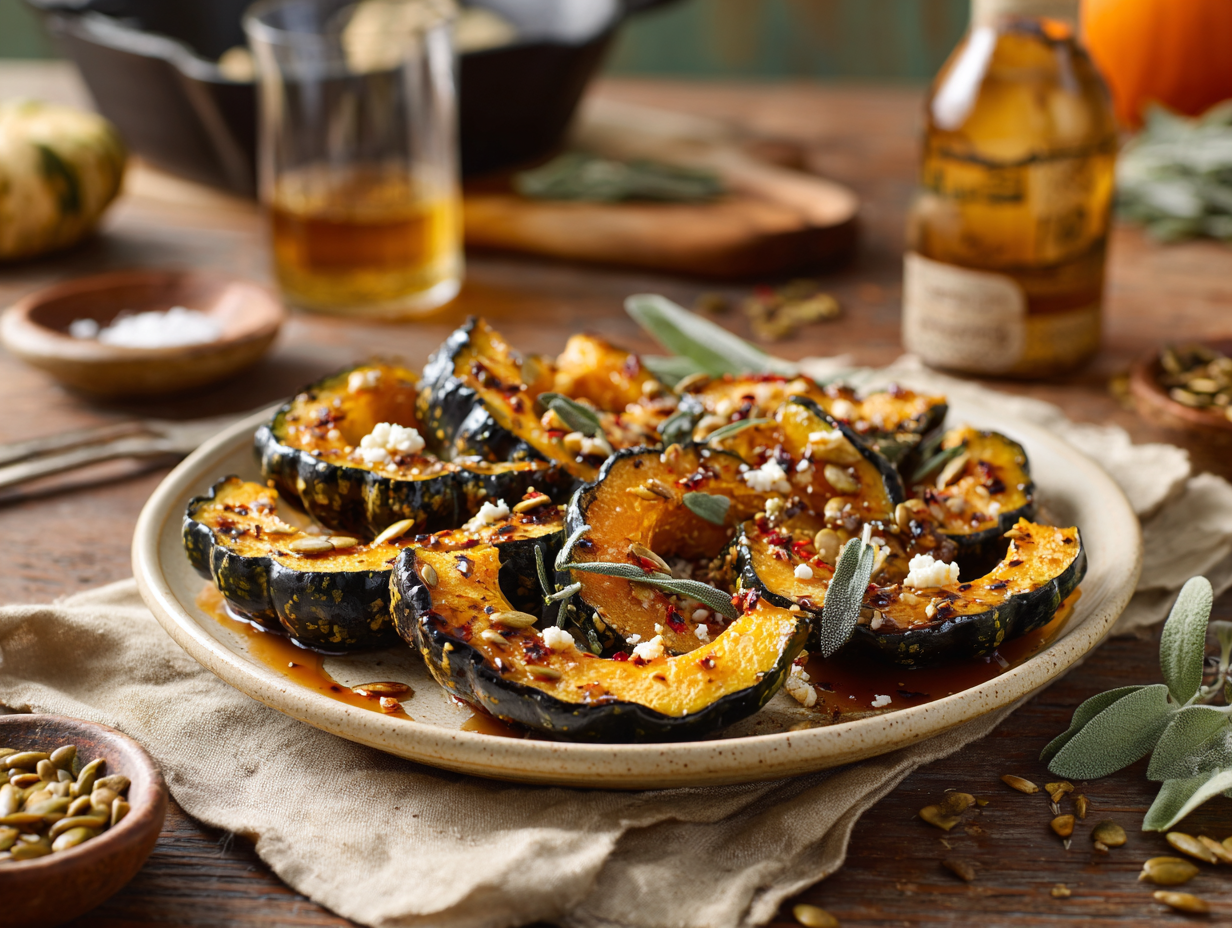
Maple–Chili Glazed Acorn Squash with Crispy Sage & Pepitas

Equipment
- 12-inch heavy skillet (cast-iron or stainless)
- Tight-fitting lid for skillet
- Chefs Knife
- Cutting board
- Spoon (for scooping seeds)
- Tongs or spatula
- Measuring cups and spoons
- Microplane or fine grater (optional, for zest)
Ingredients
- 1 medium acorn squash about 2–2.5 lb; choose one with firm skin and no soft spots
- ¼ cup pepitas (pumpkin seeds) roasted and salted preferred; raw is fine (we’ll toast)
- 1 ½ tbsp extra-virgin olive oil good-quality, peppery oil for flavor
- ¾ tsp kosher salt Diamond Crystal preferred; use 1/2 tsp if using Morton
- ¼ tsp freshly ground black pepper
- 2 tbsp water for quick steam to tenderize
- 2 tbsp unsalted butter for browning and gloss
- 1 tbsp pure maple syrup grade A Amber for balanced flavor
- 6 leaves fresh sage whole leaves crisp beautifully
- ¼ tsp red pepper flakes adjust to taste
- 1 tsp apple cider vinegar brightens the glaze
- 1 tsp orange zest or lemon zest; adds aromatic lift
- 2 oz feta cheese, crumbled optional; goat cheese also works
- 1 pinch flaky sea salt to taste; for finishing
Instructions
- Prep the Squash (5 minutes): Trim a thin slice from the base so the squash sits steady. Halve from stem to tip, scoop out seeds with a spoon, then cut into 1/2-inch-thick wedges. Leave the skin on—it’s tender and adds color.
- Toast Pepitas (1–2 minutes): Place a dry 12-inch skillet over medium heat. Add pepitas and shake until fragrant and a shade darker, 1–2 minutes. Transfer to a bowl.
- Sear the Squash (3–4 minutes): Return the skillet to medium-high heat, add olive oil, and heat until shimmering. Arrange squash in a single layer, cut sides down. Sear undisturbed until the first side is deeply golden with caramelized edges, 3–4 minutes. You should hear a lively sizzle and see browning at the edges.
- Season and Steam to Tender (6–7 minutes): Sprinkle with kosher salt and black pepper. Add the water, cover tightly, reduce to medium, and cook until the wedges are just knife-tender in the center, 6–7 minutes. If the pan runs dry before tender, add 1 more tablespoon water and continue 1–2 minutes.
- Brown-Butter Glaze (2–3 minutes): Uncover and push squash to the edges. Add butter and sage to the center. As butter foams and the milk solids turn light hazelnut-brown and smell nutty (about 60–90 seconds), stir in maple syrup and red pepper flakes. Toss the squash to coat and reduce the glaze until glossy and lightly clinging, about 1 minute.
- Brighten and Finish (1 minute): Turn off the heat. Add apple cider vinegar and orange zest; toss. Fold in toasted pepitas. Taste and adjust salt. Plate and top with crumbled feta and a pinch of flaky sea salt.
- Optional Oven Method (for hands-off cooking): If you prefer roasting: Toss squash wedges with olive oil, salt, and pepper on a sheet pan. Roast at 475°F (246°C) for 12–14 minutes, flipping once, until just tender and caramelized. Finish the maple–sage brown-butter glaze in a skillet (Steps 5–6) and toss roasted wedges in the glaze before serving.
Notes
Jen’s Tips:
- Faster Browning: Pat squash wedges dry before searing to encourage caramelization.
- No Sage? Use thyme leaves or a few sprigs of rosemary; crisp them briefly in the butter just as you would the sage.
- Dairy-Free: Swap butter for 2 tbsp extra-virgin olive oil; add 1 tsp soy sauce or coconut aminos with the maple to mimic butter’s savory depth.
- More Heat: Add a pinch of cayenne or a drizzle of chili crisp at the end.
- Sweetness Swap: Honey works in place of maple; reduce to 2 tsp since honey is sweeter.
- Make it a Main: Serve over warm quinoa or farro with extra feta and a handful of arugula dressed in lemon.
Serving Suggestions:
Fan the glazed wedges on a warm, wide plate, letting the glaze pool. Scatter pepitas generously, crumble feta over top, and finish with extra zest for a burst of color. Look for deep caramel edges, glossy glaze, and crispy, fragrant sage—you’ll smell buttered hazelnut and orange. Pairings: Roast chicken, seared salmon, or a garlicky white bean salad. Drink with a dry cider, oaked Chardonnay, or spiced chai.Culinary Context:
Acorn squash is a North American heirloom beloved for its naturally sweet flesh and edible skin. Here, a classic French technique—beurre noisette (brown butter)—meets a maple-forward pantry glaze for a modern American bistro feel. I first made this on a chilly weeknight when the oven was busy; the skillet gave me roasted flavor in a fraction of the time.Optional Advanced Instructions:
- Do Ahead: Slice squash up to 1 day in advance and refrigerate wrapped in damp paper towels. Toast pepitas up to 5 days ahead.
- Parallel Prep: While the squash steams (Step 4), crumble feta and zest the citrus to streamline plating.
- Beginner Alternative: If browning butter makes you nervous, keep heat at medium and take it off as soon as you smell nuttiness and see light brown specks; you can always return to heat for a few seconds.
Timing:
- Prep Time: 10 minutes (0 hours 10 minutes)
- Cook Time: 16 minutes (0 hours 16 minutes)
- Total Time: 26 minutes (0 hours 26 minutes)
Course:
Dinner, SideOrigin:
American / ModernNutrition
Common questions
Can I use a different type of squash?
Delicata squash is the best substitute — it has a similar size, thin edible skin, and cooks in roughly the same time. Butternut squash can work but needs to be cut into planks rather than wedges, and the cook time will vary depending on thickness.
Do I really have to eat the skin?
No, but it’s worth trying. After the steam phase, acorn squash skin softens enough to eat without being tough or stringy. If you prefer to skip it, just scoop the flesh off your wedge at the table — it slides right off.
Can I make this dairy-free?
Yes. Swap the butter for extra-virgin olive oil — you won’t get the same nutty flavor, but the glaze still works. Add a small splash of soy sauce or tamari with the maple syrup to add some depth in place of what the butter contributes.
My skillet isn’t 12 inches. Can I use a smaller one?
You can, but you’ll need to cook in two batches. Crowding the pan prevents the cut sides from searing properly — they’ll steam instead, and you’ll lose the caramelized crust that makes this worth making.
Can I prep the squash ahead of time?
Yes. Cut and seeded squash wedges can be stored in the fridge, loosely covered, for up to 24 hours before cooking. Pat them dry before they go into the skillet — surface moisture will cause splattering and slow down the sear.
What to cook next
- Bright Poppy Seed Broccoli
- Warm Citrus Beet Salad
- Smoky Mediterranean Bean Skillet
- Citrus Mojo Rice Beans