
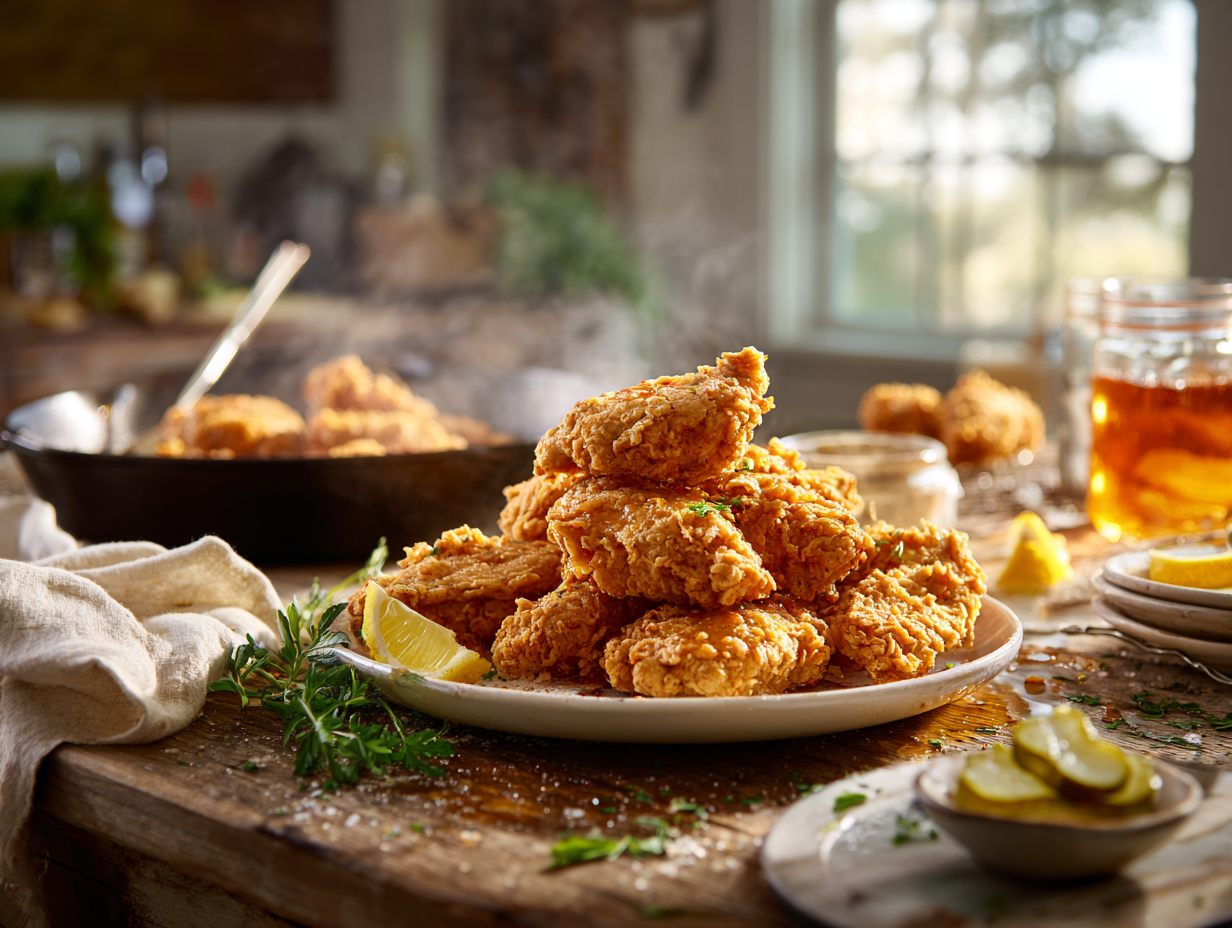
These are boneless chicken thigh strips soaked briefly in seasoned buttermilk, then dredged in a flour-cornstarch-baking powder coating and shallow-fried until genuinely crunchy. The whole thing lands on the table in 30 minutes. If you want real fried chicken on a weeknight without a deep fryer or a sink full of dishes, this is the most practical way to get there.
The short version of why this works
Two things carry this recipe. First, the dredge uses both cornstarch and baking powder alongside the flour. Cornstarch tightens the crust as it hits hot oil, giving you a crunch that holds instead of going soft. Baking powder creates small air pockets in the coating, so the crust stays light rather than dense and doughy. Second, chicken thighs are the right cut here — not tenders, not breasts. Thighs have enough fat to stay juicy through a fast high-heat fry, and cutting them into uniform one-inch strips means every piece cooks through in the same amount of time. Neither technique is complicated, but skipping either one will cost you the texture that makes this worth making.
Storage and reheating
Leftovers keep in the fridge for up to 3 days in an airtight container. To reheat, use a wire rack set over a baking sheet in a 400°F oven for 8 to 10 minutes — this lets hot air circulate around the crust and brings back most of the crunch. A microwave will make them limp, so skip it if you can. For longer storage, freeze the cooked tenders in a single layer on a sheet pan until solid, then transfer to a freezer bag; they’ll keep for up to 2 months. Reheat straight from frozen at 400°F for 15 to 18 minutes, flipping once halfway through.
What can go wrong
- The crust slides off during frying. This usually means the chicken was too wet when it hit the dredge, or the oil wasn’t hot enough. Pat the strips dry before the buttermilk soak, and verify your oil temperature with a thermometer before adding the first batch — it should read 350°F.
- The coating is pale and soft, not golden and crisp. The oil temperature dropped when you added the chicken. Avoid crowding the pan; fry in two batches if needed so the oil recovers its heat quickly. A cast iron skillet holds heat better than a thin stainless pan and makes this less likely.
- The inside is still pink when the outside looks done. Strip thickness is the culprit. Uneven cuts mean thicker pieces need more time. Use a knife to aim for consistent one-inch widths, and confirm doneness with an instant-read thermometer — 165°F at the thickest point, not just a visual check.
- The coating tastes bland even though you followed the spice amounts. Season the buttermilk soak, not just the dredge. If salt and spices only go into the flour, most of the flavor stays in the crust. A pinch of salt and a dash of hot sauce in the buttermilk makes a real difference to the meat itself.
- The oil smokes before it reaches frying temperature. You’re likely using an oil with a low smoke point. Stick with a neutral high-smoke-point oil — vegetable, canola, or peanut all work. Olive oil is not the right call here.
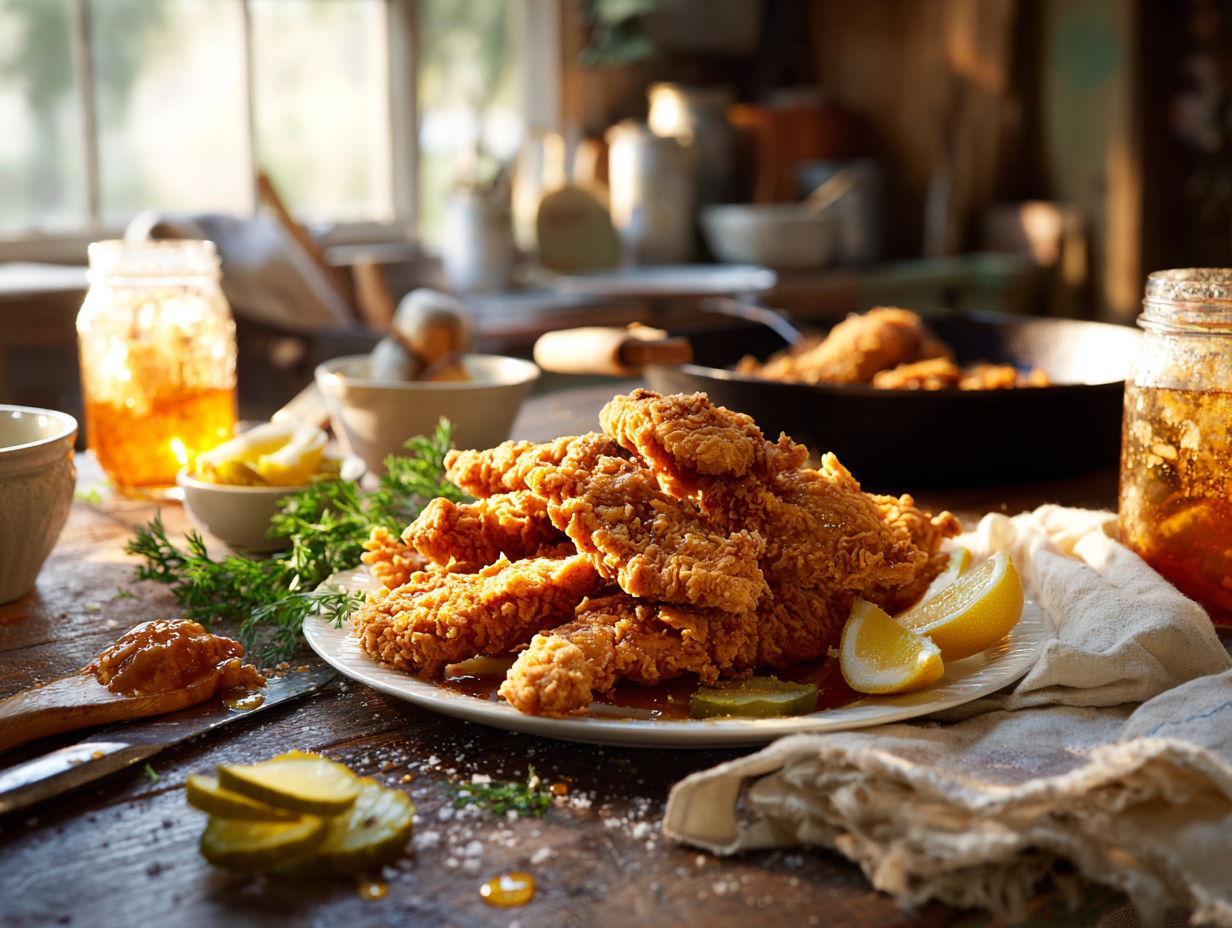
30-Minute Crispy Buttermilk Fried Chicken Tenders

Equipment
- Heavy-bottomed 10–12 inch skillet (cast iron preferred)
- Instant-read thermometer
- Tongs
- Mixing bowls (1 medium, 1 shallow)
- Whisk
- Wire rack set over a sheet pan
- Paper towels
Ingredients
For the Chicken and Quick Marinade:
- 1.5 lb boneless skinless chicken thighs cut into 1-inch strips; swap with chicken breast if preferred
- 0.75 cup cultured buttermilk full-fat preferred for best tenderness
- 1 tbsp hot sauce Frank’s RedHot or similar, optional but recommended
- 1 tsp kosher salt Diamond Crystal; reduce to 3/4 tsp if using Morton
- 0.5 tsp freshly ground black pepper
For the Crispy Dredge:
- 1 cup all-purpose flour unbleached preferred for better browning
- 0.5 cup cornstarch for extra shattering crispness
- 1 tsp baking powder creates micro-bubbles for a lighter crust
- 1.5 tsp smoked paprika adds color and subtle smokiness
- 1 tsp garlic powder
- 1 tsp onion powder
- 1 tsp kosher salt season the dredge; adjust to taste
- 0.25 tsp cayenne pepper optional for heat
For Frying:
- 2.5 cup neutral frying oil peanut, canola, or corn oil; enough for ~1/2 inch depth in skillet
To Finish and Serve:
- 1 tsp flaky sea salt for finishing hot chicken out of the oil
- 1 medium lemon, cut into wedges
- 2 tbsp fresh parsley, finely chopped optional garnish
- 1 cup dill pickles, sliced optional, classic Southern pairing
For the Optional Honey-Hot Drizzle:
- 0.25 cup honey
- 2 tsp hot sauce adjust to heat preference
- 1 tsp apple cider vinegar balances sweetness
- 1 tbsp unsalted butter, melted adds gloss and body
Instructions
- Preheat and Set Up: Place a wire rack over a sheet pan. Add oil to a heavy skillet to about 1/2 inch depth and heat over medium to medium-high until the oil reaches 350°F (175°C). Prepare an area lined with paper towels for draining. Keep an instant-read thermometer handy to monitor oil temperature.
- Prep the Chicken: Trim any excess fat from the chicken thighs and cut into 1-inch-wide strips. You should have pieces about 4–5 inches long for quick, even cooking.
- Quick Buttermilk Marinade (10 minutes as oil heats): In a medium bowl, whisk together buttermilk, hot sauce, 1 tsp kosher salt, and 1/2 tsp black pepper. Add chicken strips and toss to coat. Let sit for about 10 minutes while the oil comes to temperature. The mixture should smell tangy and lightly spicy.
- Mix the Crispy Dredge: In a shallow bowl, whisk flour, cornstarch, baking powder, smoked paprika, garlic powder, onion powder, 1 tsp kosher salt, and cayenne. Look for a uniform blush from the paprika and no clumps.
- Dredge and Rest: Lift each strip from the marinade, letting excess drip off. Press firmly into the dredge, turning to coat and packing the flour into all sides for a craggy surface. Shake off excess and place on the wire rack for 5 minutes—this brief rest hydrates the coating for better adhesion and crunch.
- Fry in Batches (6–8 pieces at a time): Gently lay chicken into the 325–350°F (163–177°C) oil, adjusting heat to maintain temperature. Fry 3–4 minutes per side (about 6–8 minutes total) until deep golden and the internal temperature reaches 165°F (74°C). The aroma should be toasty, not burnt. Transfer to the rack and immediately sprinkle a pinch of flaky salt.
- Optional Honey-Hot Drizzle: Stir together honey, hot sauce, vinegar, and melted butter until glossy. Taste and adjust heat or sweetness. Keep warm for serving.
- Finish and Serve: Pile chicken onto a warm platter. Squeeze over lemon to brighten, shower with parsley, and add dill pickles on the side. Drizzle with honey-hot sauce or serve it on the side for dipping.
Notes
Jen’s Tips:
- Ultra-Crispy Trick: For extra cragginess, double-dip: after dredging, dip quickly back into buttermilk, then back into dredge and rest 3 minutes before frying.
- Oil Management: If the oil smokes, it’s too hot—reduce heat and let it return to 350°F (175°C). Cloudy, slow bubbles mean it’s too cool; increase heat to avoid greasy crusts.
- No Buttermilk? Mix 3/4 cup whole milk with 2 tsp lemon juice or vinegar; rest 5 minutes. Or use 3/4 cup plain yogurt thinned with 2–3 tbsp water.
- Gluten-Free: Use a 1:1 gluten-free flour blend and keep the cornstarch. Texture remains superb.
- Spice Swap: Try Cajun seasoning in the dredge; reduce added salt accordingly.
- Breast Option: Use 1.5 lb boneless, skinless breasts cut into 1/2-inch-thick strips; cook time is the same if thickness matches.
- For spicier chicken, increase cayenne to 1/2 tsp or add 1 tsp cayenne to the marinade.
- Always season fried foods immediately after they leave the oil to lock in flavor.
Serving Suggestions:
- Plating: Stack tenders high on a warm platter, drizzle a little honey-hot sauce for sheen, and sprinkle parsley for a burst of green.
- Garnishes: Lemon wedges and chilled dill pickles cut through richness; look for a deep amber crust with little ridges—that’s perfect crispiness.
- Sides & Drinks: Serve with a crunchy slaw, buttered cornbread, or potato salad. Pair with iced tea, a crisp lager, or a dry sparkling cider.
Culinary Context:
These quick tenders nod to the American South’s love of fried chicken, streamlined for the modern kitchen. The buttermilk tenderizes and seasons, while cornstarch and baking powder create the signature airy crunch—techniques that bridge tradition and efficiency.Optional Advanced Instructions:
- Make-Ahead: Dredge blend can be mixed up to 3 days in advance and stored airtight. Chicken can be cut and seasoned up to 12 hours ahead; add buttermilk 30 minutes before cooking.
- Parallel Prep: Heat oil while the chicken marinates and set the rack and platter so you can fry and drain in one motion.
- Oven Hold: Keep finished pieces on a rack in a 250°F (120°C) oven for up to 15 minutes without losing crunch.
- No Thermometer? A pea-sized bit of dredge should sizzle immediately and brown in ~45–60 seconds in ready oil.
Timing:
Prep Time: 15 minutes (cutting chicken 5 min; marinade and dredge mixing 5 min; dredging/rest 5 min)Cook Time: 15 minutes total (2 batches, ~6–8 minutes each, overlapping draining)
Nutrition
FAQ
Can I use chicken breast instead of chicken thighs?
You can, but the results will be drier. Chicken breast has less fat and goes from done to overcooked quickly at frying temperatures. If you use breast, cut the strips slightly thinner and pull them at exactly 165°F — don’t go by time alone.
What oil should I use and how much do I need?
Use a neutral oil with a high smoke point: vegetable, canola, or peanut oil all work well. You need enough to come about half an inch up the side of your skillet — roughly 1 to 1.5 cups depending on pan size.
How do I know the oil is at the right temperature without a thermometer?
A thermometer is the reliable answer here — skip the garnish on serving, not the thermometer, since getting the oil right is the single biggest factor in the crust. If you truly don’t have one, drop a small pinch of dredge into the oil; it should sizzle immediately and float to the surface within a few seconds.
Can I make these ahead and keep them crispy for a party?
Yes, with one adjustment. Place the fried tenders on a wire rack over a baking sheet in a 250°F oven for up to 30 minutes — this holds them without steaming the crust the way a covered plate would. Don’t stack them or the bottoms will go soft.
My coating is clumping in the dredge bowl. Is that a problem?
Small clumps are actually fine — they create extra-crunchy bits on the crust. Large wet clumps mean moisture from the chicken is getting into the flour too fast. Press each strip firmly into the dredge rather than dragging it, and shake off the excess before frying.
If you liked this one
- Copycat Raising Cane’s Sauce
- Homemade Buttermilk Ranch Dressing
- Quick 30-Minute Dill Pickles
- Southern Stovetop Creamed Corn