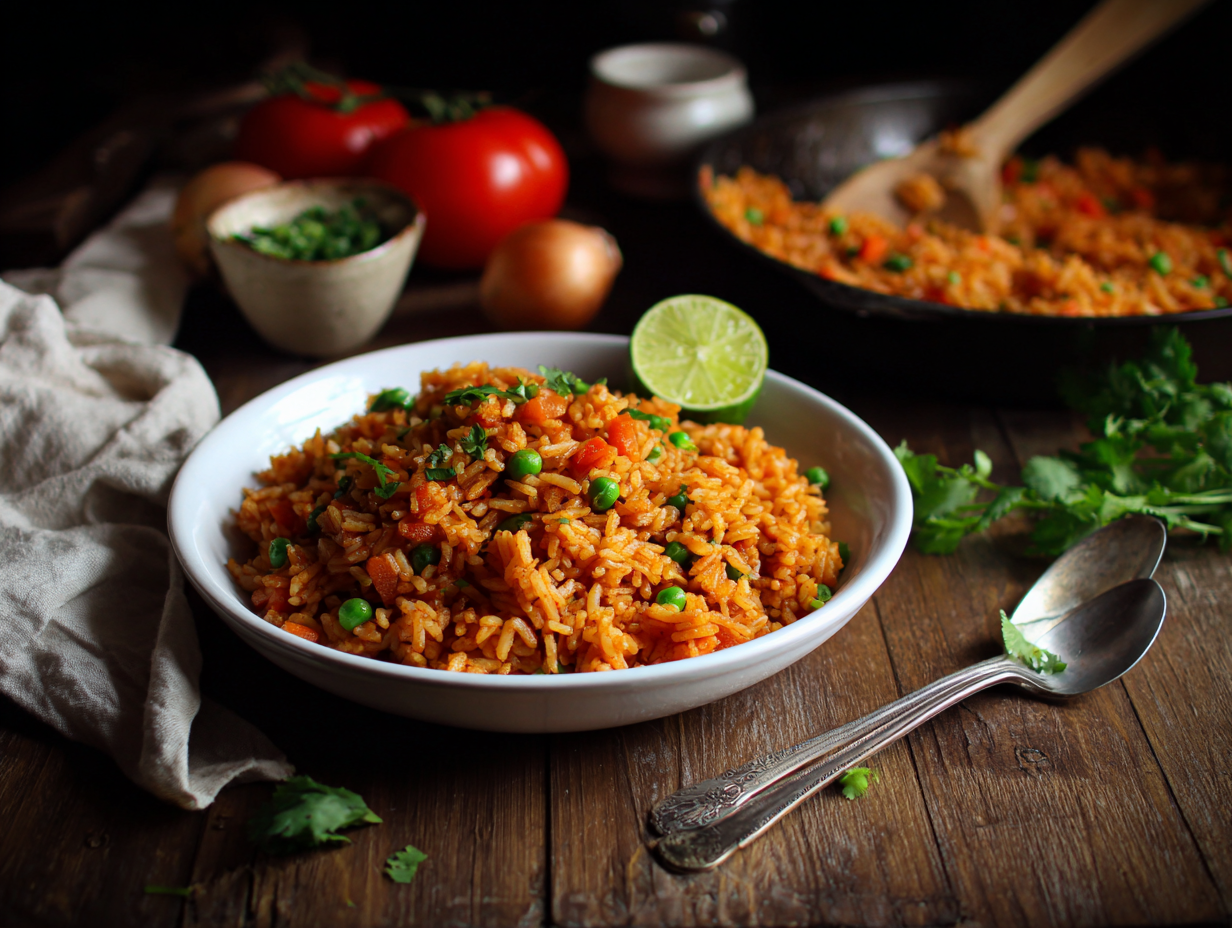
Weeknight Spanish Rice (Arroz Rojo-Style)

Arroz rojo-style Spanish rice gets its color and depth from tomato, garlic, and a small amount of cumin, with the grains toasted in oil before the liquid goes in for a fluffy, separate texture. The whole pot is ready in 30 minutes. It pairs well with grilled meats, tacos, or roasted vegetables as a straightforward weeknight side.
Equipment
- 12-inch skillet or sauté pan with tight-fitting lid
- Blender or food processor
- Fine mesh sieve
- Measuring cups and spoons
- Wooden spoon or heatproof spatula
- Chef’s knife and cutting board
- Small bowl or liquid measuring cup
- Kitchen towel (to trap steam while resting)
Ingredients
- 1 ½ cups long-grain white rice rinse until water runs clear; brands like Mahatma or La Preferida work well
- 3 medium Roma tomatoes, cored about 12 oz total; ripe and fragrant for best color and flavor
- ½ cup white onion, roughly chopped sweet or white onion; about 1/2 small onion
- 3 cloves garlic fresh, firm cloves—avoid sprouted for best flavor
- 2 ¼ cups low-sodium chicken broth, divided or vegetable broth for vegetarian; start with 1/4 cup to blend, then add 2 cups later
- 2 tbsp neutral oil avocado or canola for clean flavor; olive oil adds a fruitier note if preferred
- ⅓ cup carrot, finely diced optional but classic; small, even dice cooks evenly
- ½ tsp ground cumin optional; adds warmth without overpowering
- 1 tsp kosher salt Diamond Crystal; reduce to 3/4 tsp if using Morton’s or adjust to taste
- 1 piece bay leaf fresh, flexible bay leaves are most aromatic; dried works fine
- ⅓ cup frozen peas no need to thaw; keeps their color and snap if added at the end
- 2 tbsp fresh cilantro, chopped tender stems included for extra flavor
- 1 medium lime, cut into wedges for serving; optional but brightens the dish
Instructions
- Rinse the Rice (1–2 minutes): Place 1 1/2 cups rice in a fine-mesh sieve and rinse under cold water, stirring with your fingers, until the runoff turns mostly clear. Drain well and shake the sieve to remove excess water—dry rice toasts more evenly.
- Make the Tomato Purée (2 minutes): In a blender, combine the tomatoes, onion, garlic, and 1/4 cup of the broth. Blend until smooth (15–30 seconds). You should have about 1 cup of purée; if short, top up with a splash of broth. No Blender? Grate the tomatoes on the large holes of a box grater and finely mince the onion and garlic.
- Toast the Rice (3 minutes): Heat 2 tbsp oil in a 12-inch skillet over medium heat until shimmering (surface temp roughly 350°F / 175°C). Add the well-drained rice and cook, stirring frequently, until grains turn opaque and lightly golden and smell nutty, about 3 minutes. Add the diced carrot and cook 1 minute more.
- Fry the Purée (1–2 minutes): Carefully pour in the tomato purée—it should sizzle. Stir and cook until the sauce slightly thickens and loses its raw edge, 1–2 minutes. It will deepen from bright red to a richer sunset hue.
- Season and Add Liquid (1 minute): Stir in the remaining 2 cups broth, cumin, salt, and bay leaf. Bring to a gentle boil, then reduce to low to maintain a soft simmer (about 185–195°F / 85–90°C).
- Cover and Cook (10 minutes): Cover tightly and simmer over low, undisturbed, for 10 minutes.Visual Cues: Small steam vents forming and most liquid absorbed around the edges.
- Steam Off Heat (5 minutes): Turn off the heat. Scatter the peas over the top, cover again, and let the rice rest 5 minutes to finish cooking in its own steam.Note: This 5-minute rest is included in the 20-minute cooking time.
- Fluff and Finish (1 minute): Discard the bay leaf. Add cilantro and gently fluff with a fork until grains are separate. Adjust salt and finish with a squeeze of lime to brighten.
- Plate: Spoon into a warm bowl or pack into a lightly oiled ring mold for a neat mound. Garnish with extra cilantro and a lime wedge.
Notes
Lisa’s Tips:
- Rinse Thoroughly: Removing surface starch ensures fluffy, separate grains.
- Oil Temperature: If the oil smokes, it’s too hot; if rice doesn’t sizzle, it’s too cool. Aim for a steady, gentle sizzle.
- Liquid Ratio: 1 1/2 cups rice to about 2 1/4 cups liquid is a reliable stovetop ratio when rice is well-rinsed.
- Vegetarian Swap: Use vegetable broth; for a deeper tomato note, add 1 tbsp tomato paste when frying the purée.
- No Fresh Tomatoes? Substitute 1 cup canned tomato sauce or crushed tomatoes; reduce salt slightly if salted.
- Spice Variations: Add a pinch of smoked paprika for a Spanish-leaning nuance, or a diced jalapeño with the carrot for gentle heat.
- Grain Choice: Long-grain works best. If using basmati, reduce liquid slightly (about 2 tbsp) and keep the rest the same.
- Faster Color: A teaspoon of annatto (achiote) oil lends a gorgeous reddish hue and subtle earthiness.
Serving Suggestions:
- Plate with Contrast: The rice’s brick-red tone pops against a white platter. Finish with bright cilantro and a glossy lime wedge.
- Pairings: Grilled chicken or shrimp, carne asada, roasted squash, or black beans. Drinks: a crisp lager, hibiscus agua fresca, or a citrusy albariño.
- Doneness Cues: Grains should be tender yet distinct, not mushy; aromas should be toasty and tomato-sweet, never raw or burnt.
Culinary Context:
In the U.S., “Spanish rice” usually refers to Mexican arroz rojo—long-grain rice toasted in oil, then simmered with tomato and aromatics. The technique echoes Spanish influences, but the flavor is deeply Mexican. I picked up this weeknight-friendly method from a cook in Puebla who swore by a short simmer and a patient rest for perfect texture.Optional Advanced Instructions:
- Make-Ahead Purée: Blend tomato, onion, and garlic up to 2 days in advance and refrigerate.
- Batch-Cook: Double the recipe in a wide Dutch oven; spread leftovers on a sheet pan to cool quickly, then refrigerate.
- No-Blend Method: Finely dice tomatoes and sweat them with onion and garlic in oil for 4–5 minutes before adding rice; texture will be more rustic.
Timing:
Prep Time: 0 hours 10 minutes (10 minutes)Cook Time: 0 hours 20 minutes (20 minutes, including 5-minute covered rest off heat)
Total Time: 0 hours 30 minutes (30 minutes)
Course:
Dinner or Lunch (side dish)Origin:
Mexican (commonly called “Spanish rice” in the U.S., with Spanish-influenced technique)Nutrition
Calories: 379kcalCarbohydrates: 67gProtein: 9gFat: 9gSaturated Fat: 1gPolyunsaturated Fat: 1gMonounsaturated Fat: 6gSodium: 675mgPotassium: 421mgFiber: 3gSugar: 4gVitamin A: 2513IUVitamin C: 16mgCalcium: 54mgIron: 2mg
Tried this recipe?Rate this recipe !
