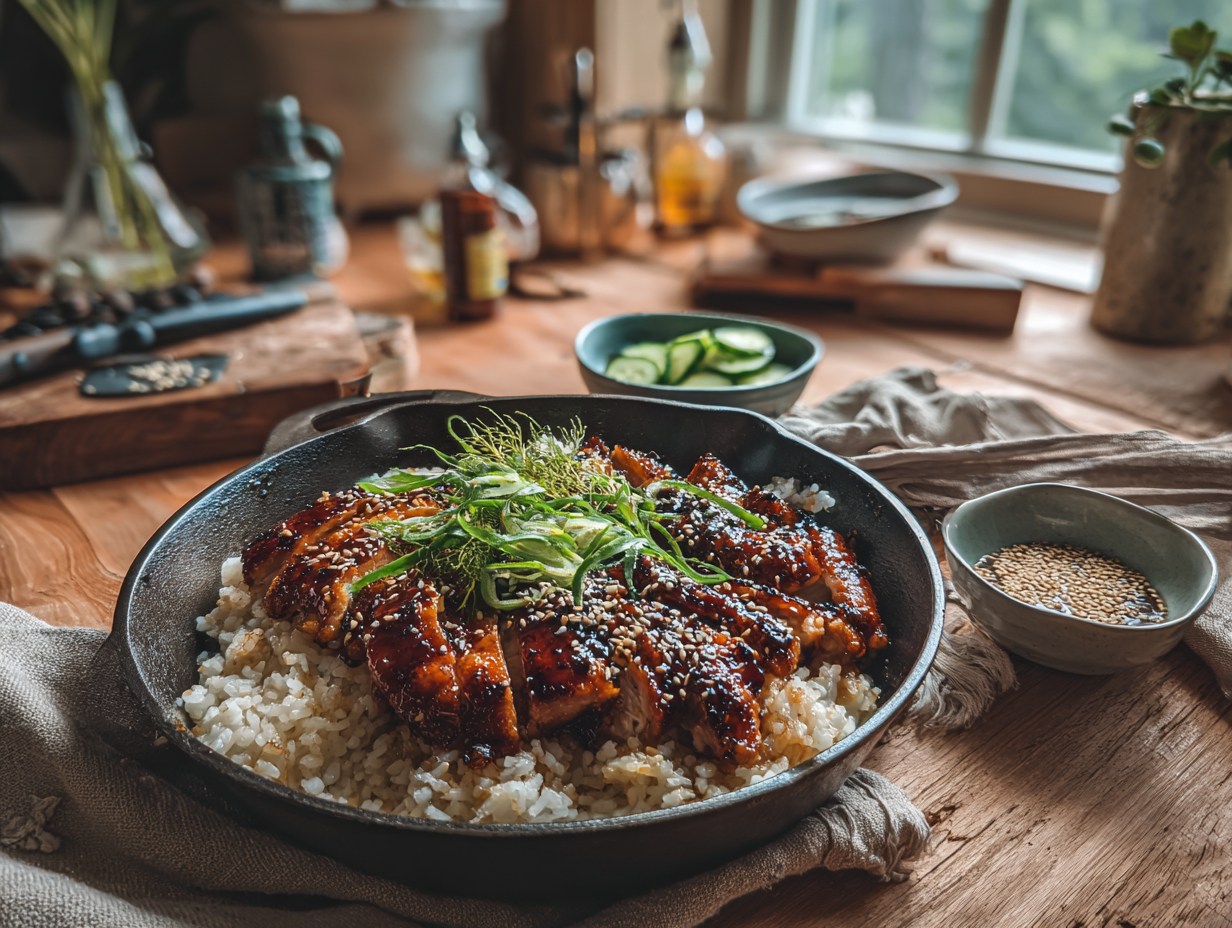
Weeknight Chicken Teriyaki (Pan-Glazed, 30 Minutes)

Teriyaki, from the Japanese words for “shine” (teri) and “grill” (yaki), is all about a glossy, lacquered glaze that clings to tender meat. This weeknight version channels the spirit of a charcoal grill into a hot skillet, delivering juicy chicken thighs wrapped in a balanced sweet–salty–umami sauce. It’s fast, fragrant, and deeply satisfying—an elegant classic made approachable for any home cook.
Equipment
- 12-inch heavy skillet (stainless steel or nonstick)
- Small saucepan (optional if not reducing sauce in skillet)
- Mixing bowl
- Tongs
- Whisk
- Measuring cups and spoons
- Chef’s knife and cutting board
- Microplane or fine grater (for ginger/garlic)
- Instant-read thermometer
Ingredients
For the Teriyaki Sauce:
- ⅓ cup soy sauce use a naturally brewed soy; use low-sodium if preferred
- ¼ cup mirin hon-mirin if available for best depth
- 2 tbsp sake optional; sub dry sherry or apple juice for non-alcoholic
- 3 tbsp dark brown sugar, packed adjust to taste for sweetness
- 1 tbsp honey adds sheen and body
- 1 tsp rice vinegar balances sweetness; unseasoned preferred
- 1 tsp fresh ginger, finely grated grate on a microplane for a smooth sauce
- 2 cloves garlic, finely minced or grated fresh garlic blooms in the glaze
- 1 tsp toasted sesame oil aromatics added for finishing depth
- 1 ½ tsp cornstarch for a glossy, clingy glaze
- 1 ½ tsp cold water to make a slurry with cornstarch
For the Chicken & Sear:
- 1.5 lb boneless, skinless chicken thighs thighs stay juicy; trim excess fat
- 1 tsp kosher salt Diamond Crystal; reduce by 1/3 if using Morton
- ½ tsp freshly ground black pepper just enough to brighten
- 1 tbsp neutral oil (avocado or grapeseed) high smoke point for clean sear
For Finish & Garnish:
- 2 pieces scallions, thinly sliced green parts for freshness
- 1 tsp toasted sesame seeds for nutty crunch
- 1 tsp orange zest (optional) a bright citrus lift
- 4 cups steamed short-grain rice (optional, for serving) for bowls; not required
Instructions
- Whisk the Sauce Base (3 minutes): In a mixing bowl, whisk together soy sauce, mirin, sake, brown sugar, honey, rice vinegar, ginger, garlic, and sesame oil until the sugar dissolves and the mixture smells sweet-savoury and aromatic. Reserve 2 tablespoons of this sauce in a separate small bowl for a quick marinade; keep the rest for glazing.
- Prep and Quick-Marinate the Chicken (10 minutes): Trim excess fat from chicken thighs. Pat very dry for better browning. Season with kosher salt and black pepper, then toss with the reserved 2 tablespoons sauce. Let stand 10 minutes at room temperature. Use this time to preheat your skillet and prepare garnishes; the chicken will darken slightly and become glossy.
- Make the Slurry and Heat the Pan (2 minutes): In a small bowl, stir cornstarch and cold water until smooth—no lumps. Place a 12-inch skillet over medium-high heat and warm the neutral oil until it shimmers but isn’t smoking (about 200–220°C / 390–430°F surface temp if using an IR thermometer).
- Sear the Chicken (7–8 minutes): Add chicken in a single layer without crowding. Sear 3–4 minutes per side until deep golden brown with caramelized edges. The chicken should reach an internal temperature of 74°C / 165°F. Do not move it too much—let the Maillard reaction do its work; you’ll hear a lively sizzle and smell toasty soy–sugar notes.
- Reduce and Thicken the Sauce (4 minutes): Lower heat to medium. Pour the remaining sauce into the skillet, scraping up browned bits. Simmer gently at 90–96°C / 195–205°F for 2–3 minutes until slightly reduced and glossy, then stir the cornstarch slurry to recombine and whisk it in. Cook 30–60 seconds more until the sauce thickens and coats the back of a spoon. If it thickens too much, splash in 1–2 tablespoons water to loosen.
- Glaze and Finish (1–2 minutes): Toss chicken in the sauce to coat every surface. When the glaze clings in a shiny layer and the bubbles look syrupy, remove from heat. Rest 1 minute; garnish with scallions, sesame seeds, and optional orange zest. The aroma should be sweet, savory, and lightly smoky.
- Technique Notes: If you don’t have a microplane, finely mince ginger and garlic with a knife. If you prefer, you can reduce the sauce in a separate small saucepan and then pour over the seared chicken.
Notes
Lisa’s Tips:
- Pan Space Matters: Crowding steams chicken. Work in two batches for best browning; keep cooked pieces tented with foil.
- Shine Booster: A teaspoon of butter whisked in off-heat adds restaurant-level sheen and roundness.
- Gluten-Free: Use tamari or certified gluten-free soy sauce; check mirin brand for additives.
- No Alcohol: Replace sake with equal parts water and a touch more mirin or apple juice.
- Sweeter Vs. Saltier: For a saltier edge, reduce honey by 1 teaspoon; for sweeter, add 1–2 teaspoons more honey.
- Alternate Protein: Try firm tofu (pressed and pan-seared) or salmon fillets (sear skin-side first; glaze to 52°C / 125°F center for medium).
- For faster caramelization, ensure chicken is very dry and the pan is properly preheated. If the glaze tastes flat, add a few drops of rice vinegar; if too sharp, whisk in a touch more honey.
Serving Suggestions:
- Spoon chicken and extra glaze over warm steamed short-grain rice or garlicky stir-fried greens.
- Aim for a Bowl with Contrast: Lacquered mahogany chicken, bright emerald scallions, ivory rice, and pale gold sesame.
- Add quick-pickled cucumbers or pickled ginger for acidity.
- Pair with chilled green tea, a crisp lager, or a light-bodied sake.
Culinary Context:
Classic teriyaki was historically grilled over binchotan charcoal, basting meat to build that signature glossy glaze. This skillet method honors the flavor profile (sweet, savory, umami, a hint of caramel) while keeping the technique weeknight-friendly. I learned to watch the bubbles: when they slow and look syrupy, the glaze is ready—shiny enough to earn the name teri.Optional Advanced Instructions:
- Make-Ahead: Whisk the sauce (without cornstarch) up to 3 days ahead; refrigerate. Add slurry just before cooking.
- Grill Variation: Cut chicken into 1 1/2-inch pieces, skewer, and grill over medium-high (205–230°C / 400–450°F). Brush with sauce in the last minutes to prevent scorching.
- Air Fryer: Cook chicken at 200°C / 400°F for 10–12 minutes to 74°C / 165°F, flipping once. Warm and thicken sauce on the stove; toss to glaze.
Timing:
- Prep Time: 15 minutes (0 hours 15 minutes)
- Cook Time: 15 minutes (0 hours 15 minutes)
- Total Time: 30 minutes
Nutrition
Calories: 588kcalCarbohydrates: 76gProtein: 39gFat: 12gSaturated Fat: 2gPolyunsaturated Fat: 3gMonounsaturated Fat: 6gTrans Fat: 0.03gCholesterol: 162mgSodium: 1614mgPotassium: 573mgFiber: 0.4gSugar: 17gVitamin A: 49IUVitamin C: 1mgCalcium: 42mgIron: 5mg
Tried this recipe?Rate this recipe !
