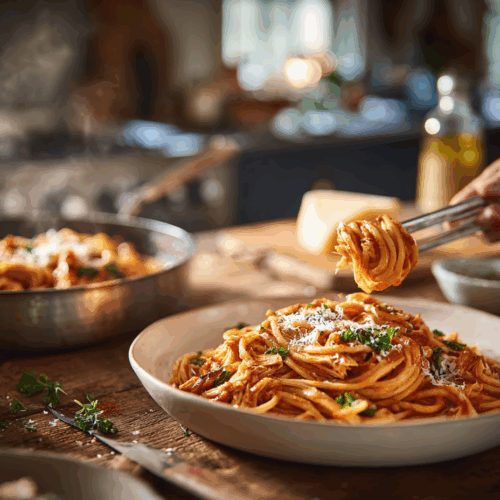
Weeknight Chicken Spaghetti with Silky Tomato-Cream Sauce

Spaghetti and tender chicken come together in a 30-minute stovetop tomato-cream sauce built from tomato paste, stock, and a splash of cream, finished with lemon zest, chili flakes, and Parmesan. The sauce is bright and savory rather than heavy, with enough depth to feel like more than a weeknight shortcut. It is a solid Italian-American comfort dish with no canned soups involved.
Equipment
- Large pot (6–8 quart) with lid
- Large deep skillet or sauté pan (12-inch)
- Tongs
- Wooden spoon or silicone spatula
- Ladle or heatproof measuring cup (for pasta water)
- Colander (optional if not using tongs)
- Chefs Knife
- Cutting board
- Measuring cups and spoons
- Microplane or fine grater
Ingredients
- 2 tbsp Kosher salt for pasta water; Diamond Crystal preferred
- 12 oz dried spaghetti bronze-cut preferred for better sauce cling
- 2 tbsp extra-virgin olive oil fruity, peppery EVOO
- 2 tbsp unsalted butter adds silkiness and depth
- 1 small yellow onion, diced about 1 cup, finely diced for faster cooking
- 3 cloves garlic, minced freshly minced for best aroma
- ¼ tsp crushed red pepper flakes adjust to heat preference
- 2 tbsp tomato paste double-concentrated if available
- ½ tsp smoked paprika adds gentle smokiness
- 1 cup low-sodium chicken broth good-quality stock improves body
- 1 can diced tomatoes (14.5 oz) fire-roasted for a sweeter, deeper flavor
- ½ cup heavy cream or half-and-half for lighter result
- 2 cups cooked shredded rotisserie chicken white/dark mix for best flavor
- ¾ cup freshly grated Parmesan cheese microplane for light, fluffy shreds
- ¾ cup reserved pasta cooking water you may not need it all
- ¼ cup fresh parsley, chopped flat-leaf for best flavor
- 1 tsp lemon zest brightens the sauce
- ½ tsp freshly ground black pepper coarse grind for gentle pops of spice
- 1 cup sliced cremini mushrooms (optional) adds earthiness; sauté with onion
- ½ cup frozen peas (optional) sweet pop and color; add near the end
- 1 tsp Calabrian chili paste (optional) for a bolder, fruity heat
Instructions
- Boil Water and Season it Well: Bring a large pot of water to a rolling boil (about 100°C / 212°F). Add 2 tbsp kosher salt—your water should taste pleasantly like the sea for well-seasoned pasta.
- Start the Base Aromatics: While the water heats, set a large skillet over medium to medium-high heat. Add olive oil and butter; when butter foams and smells nutty, add diced onion (and mushrooms if using). Sauté 3–4 minutes until translucent with lightly golden edges. Season lightly with a pinch of salt to draw moisture. You should hear a gentle sizzle, not a harsh sputter.
- Bloom Garlic and Chili: Add garlic and red pepper flakes; cook 30 seconds, stirring, until fragrant—avoid browning the garlic.
- Caramelize Tomato Paste: Stir in tomato paste and cook 1–2 minutes until it deepens to a brick-red hue and smells sweet. Sprinkle in smoked paprika and stir to bloom.
- Build and Simmer the Sauce: Pour in chicken broth to deglaze, scraping up any fond, then add the diced tomatoes. Bring to a lively simmer at a gentle bubble (roughly 90–95°C / 195–203°F) and cook 5 minutes to meld flavors. If using peas, add during the last 2 minutes. For extra heat, swirl in Calabrian chili paste now.
- Cook the Spaghetti: Add spaghetti to the boiling water; stir to prevent sticking. Cook per package directions minus 1 minute for al dente (typically 8–10 minutes). Before draining or lifting with tongs, reserve about 3/4 cup of the starchy pasta water.
- Enrich the Sauce and Warm the Chicken: Lower skillet heat to medium-low. Stir in heavy cream; simmer gently 1 minute. Add shredded chicken and half the Parmesan. Warm 2 minutes until the chicken is steaming hot and the sauce turns silky. If starting with raw chicken instead of cooked, sauté bite-size pieces first until opaque and an instant-read thermometer reads 165°F / 74°C, then proceed.
- Emulsify with Pasta Water: Transfer spaghetti directly to the skillet using tongs, letting a little water tag along. Add about 1/2 cup reserved pasta water and toss vigorously over medium heat 1–2 minutes until the sauce looks glossy and clings to the strands. Add more pasta water in small splashes if needed to keep it fluid and shiny.
- Finish and Balance: Off the heat, fold in parsley, lemon zest, remaining Parmesan, and black pepper. Taste and adjust salt or acidity (a few extra drops of lemon juice if desired).
- Plate: Twirling with tongs, mound into warm bowls or plates. The sauce should appear coral-rose, glossy, and speckled with herbs.
Notes
Jen’s Tips:
- Salt Smart: Properly salted pasta water seasons from within and reduces the need to add more later.
- Emulsion is Everything: Tossing with starchy pasta water creates a restaurant-style, glossy sauce that hugs the noodles.
- Dairy Options: Swap heavy cream for evaporated milk for a lighter but silky finish; or use half-and-half. Dairy-free: use 2 tbsp olive oil and 3/4 cup unsweetened cashew cream.
- Umami Boost: A 1/2 tsp anchovy paste melts invisibly into the tomato paste and deepens savoriness.
- Gluten-Free: Use your favorite gluten-free spaghetti and be gentle when tossing; keep some extra pasta water to adjust texture.
- Cheese Technique: Finely grate Parmesan with a Microplane so it melts instantly and doesn’t clump.
- Vegetable Add-Ins: Bell peppers, spinach, or zucchini ribbons all play nicely—add during the sauté or finishing stage.
Serving Suggestions:
Twine the spaghetti into nests with tongs for height, then finish with a thin ribbon of EVOO, extra Parmesan, cracked black pepper, and a few parsley leaves. Aim for a coral-rose sheen with bright green flecks and citrusy aroma. Pair with a simple arugula salad and a chilled glass of Pinot Grigio or sparkling water with lemon.Culinary Context:
Chicken spaghetti is beloved in American home kitchens—especially across the South—often as a baked casserole. This stovetop version leans Italian-American, prioritizing freshness and speed while honoring the dish’s cozy spirit.Optional Advanced Instructions:
- Prep Ahead: Shred chicken, dice onion, mince garlic, and grate cheese up to 2 days in advance.
- Parallel Cooking: Start the sauce while the water heats; drop the pasta once the sauce begins to simmer so both finish together.
- No Microplane? Finely shred Parmesan on the small holes of a box grater, then briefly pulse in a food processor.
Timing:
- Prep Time: 0 hours 12 minutes
- Cook Time: 0 hours 18 minutes
- Total Time: 0 hours 30 minutes
Course:
DinnerOrigin (Cuisine):
Italian-AmericanNutrition
Calories: 899kcalCarbohydrates: 80gProtein: 54gFat: 40gSaturated Fat: 17gPolyunsaturated Fat: 2gMonounsaturated Fat: 11gTrans Fat: 0.2gCholesterol: 179mgSodium: 4490mgPotassium: 584mgFiber: 6gSugar: 9gVitamin A: 1927IUVitamin C: 19mgCalcium: 269mgIron: 3mg
Tried this recipe?Rate this recipe !
