Quick Spiced Elderberry Syrup (30-Minute Homemade)

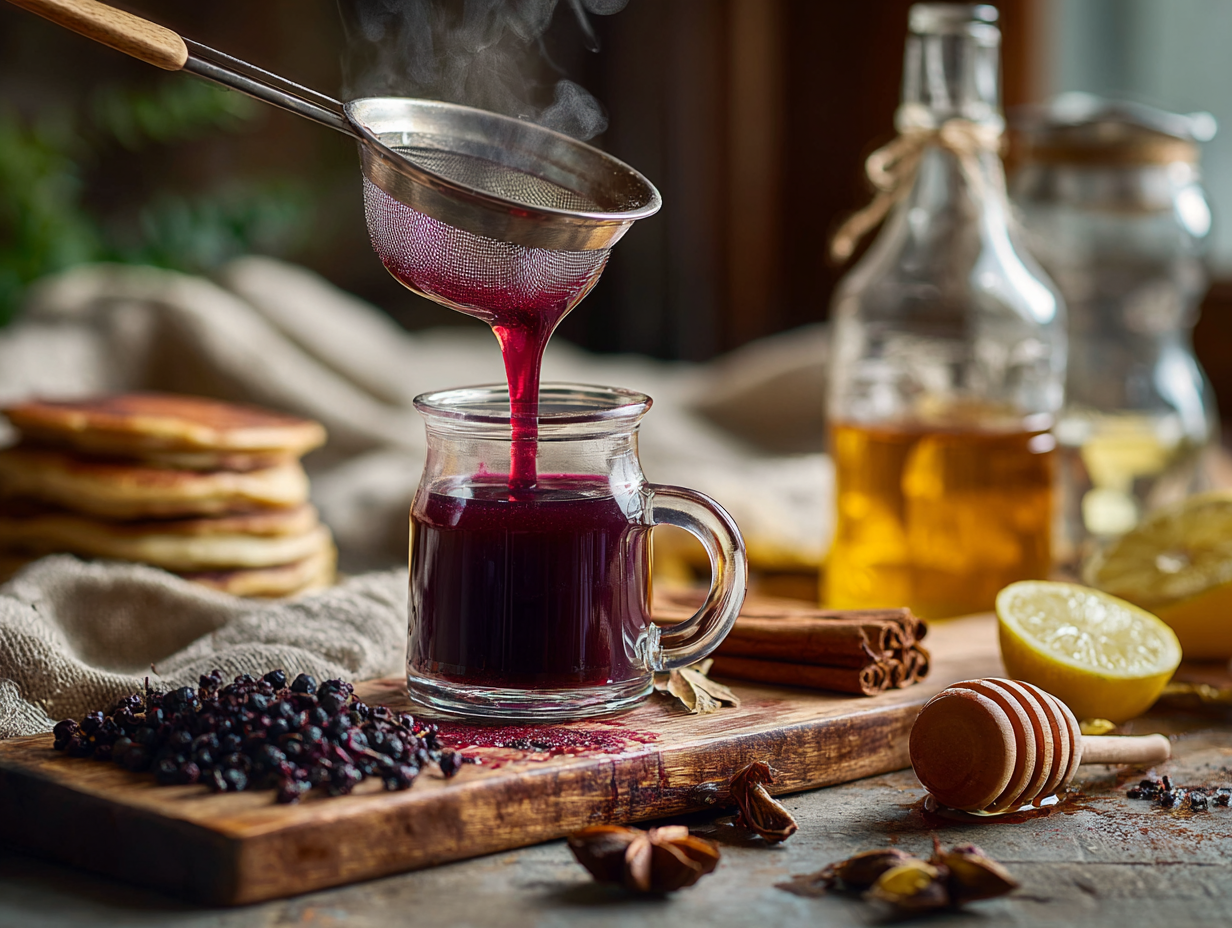
Dried black elderberries simmer with warming spices, lemon, and raw honey in this small-batch homemade syrup ready in about 30 minutes. Gentle heat extracts the berries' deep, jammy flavor, and honey is stirred in off the heat to preserve its floral notes. Use it over pancakes, in drinks, or as a glaze on roasted fruit.
Equipment
- 2–3 quart saucepan (nonreactive)
- Fine-mesh strainer (or cheesecloth-lined colander)
- Wooden spoon or silicone spatula
- Measuring cups and spoons
- Citrus peeler or vegetable peeler
- Microplane or zester (optional)
- Instant-read thermometer (optional, helpful for temperature cues)
- Heatproof bowl and a pitcher or large measuring cup
- Funnel and clean glass bottle or jar with lid
Ingredients
- 3 cups filtered water cold, fresh; filtered for best clarity
- 1 cup dried black elderberries (Sambucus nigra) choose food-grade dried berries; avoid red elderberries
- 1 piece fresh ginger root about 1-inch knob, thinly sliced (6–8 slices) for gentle heat
- 1 stick cinnamon Ceylon for delicate aroma; Cassia for bolder spice
- 4 whole cloves whole cloves for warm depth
- 6 whole black peppercorns optional, for subtle warmth and lift
- 3 strips lemon peel 3 wide strips, no pith; from organic lemon if possible
- 1 pod star anise optional, for a whisper of licorice perfume
- 1 pinch fine sea salt optional; heightens fruitiness
- ¾ cup raw wildflower honey add off-heat to preserve aroma; use quality raw honey
- 1 tablespoon fresh lemon juice balances sweetness; strain for clarity
- ½ teaspoon pure vanilla extract optional, rounds the finish
Instructions
- Set Up and Prep (about 10 minutes): Rinse your bottle or jar with very hot water and set aside. Thinly slice the ginger (6–8 slices), and use a peeler to remove 3 wide strips of lemon peel, avoiding the bitter white pith.
- Combine and Heat: In a 2–3 quart nonreactive saucepan, add 3 cups filtered water, 1 cup dried elderberries, sliced ginger, cinnamon stick, cloves, peppercorns (optional), lemon peel, star anise (optional), and a pinch of sea salt. Bring to a gentle simmer over medium heat. If using a thermometer, aim for about 185–203°F (85–95°C)—you want a steady burble, not a rolling boil.
- Simmer for Extraction (15 minutes): Maintain a gentle simmer uncovered, stirring once or twice, until the liquid reduces by roughly a third and the berries look plump. You should notice a deep garnet color and a jammy, spiced aroma filling the kitchen.
- Mash and Brief Steep (2 minutes): Remove from heat. Using the back of a spoon, lightly mash the softened berries against the pan to release more juices. Cover and let steep for 2 minutes to round out the spice notes.
- Strain for Clarity: Set a fine-mesh strainer over a heatproof bowl or large measuring cup. Pour the mixture through, pressing gently on the solids for maximum extraction. Discard solids.
- Cool Briefly, then Sweeten: To protect the honey's delicate aromatics, cool the liquid to below 110°F (43°C). For speed, place the bowl in a shallow cool-water bath and stir; it should drop to temp in 2–3 minutes. Whisk in 3/4 cup raw honey, 1 tablespoon lemon juice, and vanilla (optional) until fully dissolved and glossy.
- Bottle and Chill: Funnel the syrup into a clean bottle or jar, seal, and refrigerate. The syrup will keep up to 4 weeks refrigerated. Shake before each use.
- Serving: For pancakes or waffles, drizzle 1–2 tablespoons warm; for a spritz, mix 1 tablespoon with sparkling water and a squeeze of lemon; for tea, stir 1 tablespoon into hot water below 140°F (60°C) to preserve honey aromatics.
Notes
Jen’s Tips:
- Flavor Balance: If you prefer less sweetness, start with 1/2 cup honey and adjust to taste. For deeper spice, add a second cinnamon stick in step 2.
- Substitutions: Replace honey with 3/4 cup pure maple syrup for a vegan version (add off-heat as with honey). Orange peel can stand in for lemon; add a tiny splash of apple cider vinegar to brighten.
- Safety: Always cook elderberries before consuming; do not use red elderberries. Do not give honey-sweetened syrups to children under one year of age.
- Clarity vs. Body: Strain through cheesecloth for a crystal-clear syrup, or press more firmly for a slightly pulpy, thicker body.
- Consistency Control: For a thicker, more pourable glaze, simmer 2–3 minutes longer in step 3; stop as soon as the bubbles look slightly syrupy.
Nutrition
Calories: 29kcalCarbohydrates: 8gProtein: 0.1gFat: 0.1gSaturated Fat: 0.01gPolyunsaturated Fat: 0.02gMonounsaturated Fat: 0.01gSodium: 3mgPotassium: 23mgFiber: 1gSugar: 7gVitamin A: 29IUVitamin C: 2mgCalcium: 6mgIron: 0.2mg
Tried this recipe?Rate this recipe !
