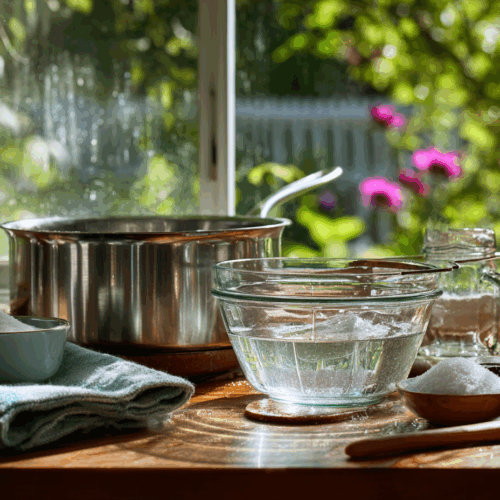
Hummingbird Food (Nectar) Recipe: Crystal-Clear Sugar Water

Homemade hummingbird nectar is simply a 1:4 ratio of plain white sugar dissolved in water — no dyes, no additives, just clean sugar water that closely matches the sucrose content of natural flower nectar. Boiling the water briefly ensures the sugar dissolves fully and the solution stays clear. The whole batch is ready in under 30 minutes and can be stored in the refrigerator for up to two weeks.
Equipment
- Medium saucepan (2–3 qt)
- 4-cup heatproof measuring cup
- Wooden spoon or silicone spatula
- Instant-read thermometer (optional)
- Large bowl for ice bath
- Funnel
- Clean hummingbird feeder (with perch optional)
- Bottle brush or narrow-neck brush
- Clean glass jar with lid for storage
Ingredients
For Cleaning Feeder (Optional but Recommended):
- ¼ cup distilled white vinegar for sanitizing feeder; rinse thoroughly until no vinegar scent remains
- 2 cups warm water for cleaning; comfortably hot to the touch (~110°F / 43°C)
- 1 tbsp uncooked white rice optional abrasive for narrow bottles; rinse all grains out
For the Nectar:
- 4 cups water use filtered or good-tasting tap water
- 1 cup granulated white sugar pure cane or beet sugar; avoid honey, brown sugar, organic unrefined, or artificial sweeteners. Brand note: C&H or Domino work well
- 4 cups ice for ice bath to cool nectar quickly; not added to the nectar
Instructions
- Clean the Feeder (about 5 minutes): Disassemble the feeder. Swirl together 1/4 cup distilled white vinegar and 2 cups warm water (~110°F / 43°C) in the reservoir. Use a bottle brush to scrub, adding 1 tbsp uncooked rice if the neck is narrow (the rice acts as a gentle abrasive). Rinse with plenty of clean water until there’s no vinegar aroma. Air-dry while you make the nectar.
- Boil the Water (3–4 minutes): In a medium saucepan, bring 4 cups water to a rolling boil (100°C / 212°F) over high heat. You’ll see steady bubbles and steam.
- Dissolve the Sugar (about 1 minute): Remove the pan from heat. Add 1 cup granulated white sugar and stir continuously until the liquid turns completely clear with no visible crystals.Optional: Return to a bare simmer for 30–60 seconds for extra sterilization, keeping below a hard boil (~90–95°C / 194–203°F).
- Cool Quickly (about 10 minutes): Nest the saucepan in a large bowl filled with ice and a little water to make an ice bath. Stir occasionally until the nectar reaches room temperature (68–75°F / 20–24°C). It should taste clean and feel thin—not syrupy—between your fingers.
- Fill and Hang: Use a funnel to fill the dry, clean feeder. Wipe any drips. Hang in bright shade or morning sun, away from ant trails and strong afternoon heat.
- Store the Rest: Pour extra nectar into a clean glass jar, label with the date, and refrigerate. Use within 7–10 days for best freshness.
- Sensory Cues: Clear nectar with no cloudiness, a faintly sweet aroma, and no caramel notes (avoid browning).
Notes
Jen’s Tips:
- Golden Ratio: 1 part sugar to 4 parts water (1:4) is ideal. Avoid red dye; your feeder’s red accents are sufficient.
- Emergency Cold Snap: In unusually cold, wet storms, a temporary 1:3 mix may help for no more than 24–48 hours. Return to 1:4 promptly.
- Do Not Substitute: No honey, brown sugar, molasses, coconut sugar, or artificial sweeteners—these can ferment, mold, or harm birds.
- Placement: Choose dappled shade. Heat speeds fermentation; shade keeps nectar fresher longer.
- Cleaning Cadence: Clean every 2–3 days in hot weather; every 3–5 days in cooler weather. If nectar looks cloudy or stringy, replace immediately.
- Ants & Bees: Use built-in moats or add an ant moat. Keep ports clean; avoid dripping to deter bees.
- Make-Ahead: Chill nectar before filling to help feeders stay fresh longer.
Serving Suggestions:
Think like a garden sommelier. Hang a clear feeder framed by hummingbird-friendly blooms like salvia, bee balm, and fuchsia. Aim for a calm, shaded backdrop so their iridescence pops. A shallow water feature nearby adds sparkle and sound. Perfect nectar is crystal clear with a clean, soft sweetness—no caramel hue, no cloudiness.Culinary Context:
Wild flower nectar typically ranges around 20–25% sucrose. This recipe’s 1:4 ratio approximates that natural profile without additives, honoring guidance from leading ornithological groups. The simplicity is its elegance: clarity, purity, and consistency invite repeat visits from migrating and resident hummingbirds.Optional Advanced Instructions:
- Concentrate Method: Make a 1:1 concentrate by boiling 2 cups water with 2 cups sugar until dissolved. Refrigerate up to 2 weeks. To serve, mix 1 cup concentrate + 3 cups cold water to yield 1:4 instantly.
- Sterile Storage: Run your jar and lid through the dishwasher’s hot cycle or submerge in boiling water for 1 minute (100°C / 212°F) before filling.
- No Thermometer? Use visual cues: rolling boil = vigorous, constant bubbles; room temp nectar feels neutral to the touch.
Timing:
- Prep time: 15 minutes (clean feeder 5 minutes + cool nectar ~10 minutes).
- Cook time: 5 minutes (bring to boil 3–4 minutes + dissolve/simmer ~1 minute).
Course:
Beverage (Wildlife/Nectar)Origin:
American backyard birding tradition, inspired by the natural sucrose levels of North American flora. Note: For birds only—do not consume. Keep away from pets and children.Nutrition
Calories: 209kcalCarbohydrates: 53gProtein: 0.3gFat: 0.2gSaturated Fat: 0.01gPolyunsaturated Fat: 0.01gMonounsaturated Fat: 0.01gSodium: 31mgPotassium: 6mgFiber: 0.05gSugar: 50gCalcium: 20mgIron: 0.1mg
Tried this recipe?Rate this recipe !
