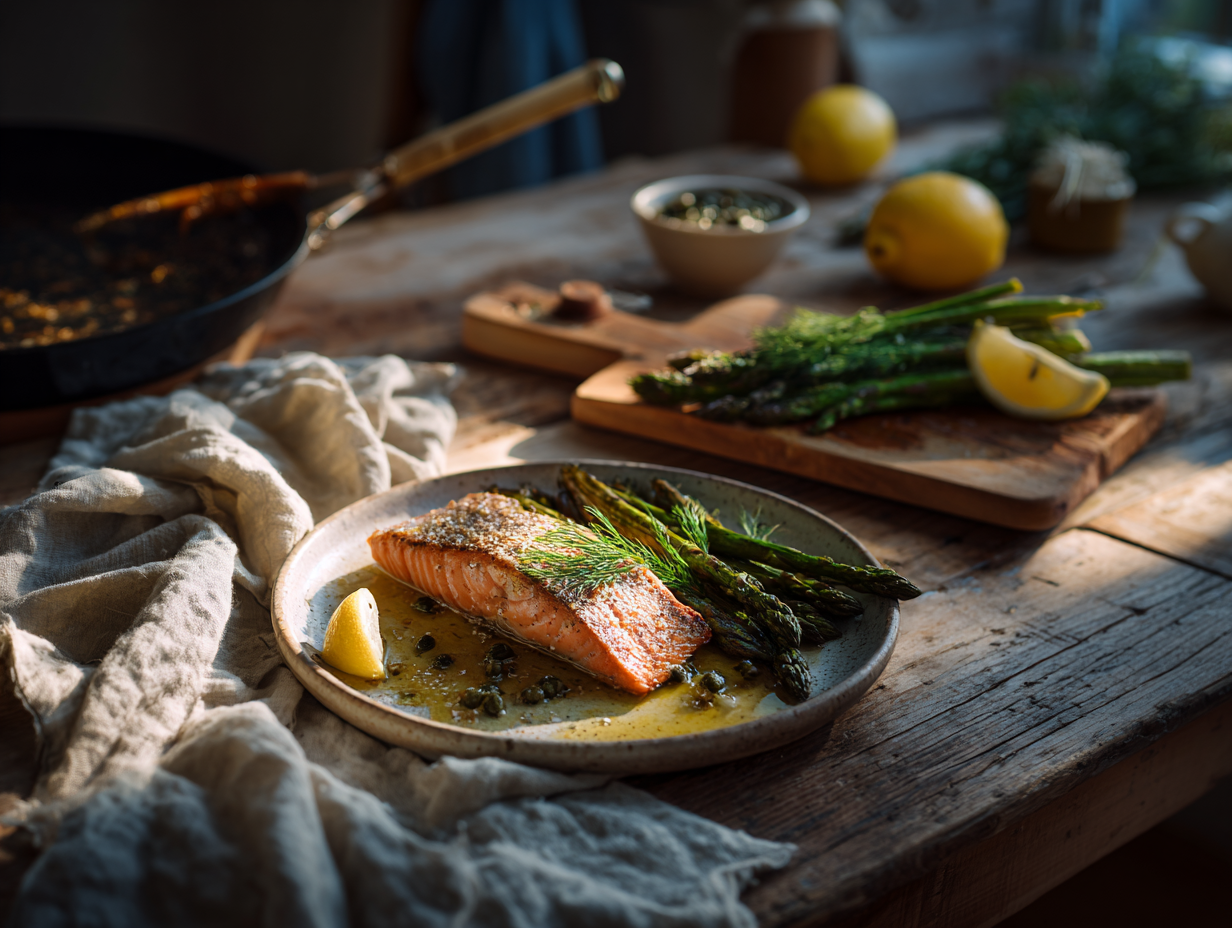
Crispy Skillet Salmon with Lemon-Dill Brown Butter and Charred Asparagus

Salmon fillets are seared skin-side down in a hot skillet until the skin turns crisp and the flesh cooks through, then finished with a quick brown butter brightened with lemon juice, fresh dill, and capers. Asparagus chars in the same pan, keeping cleanup minimal. The whole dinner is on the table in under 30 minutes.
Equipment
- 12-inch heavy skillet (stainless steel or cast iron)
- Fish spatula
- Tongs
- Instant-read thermometer
- Microplane zester
- Small heatproof bowl
- Cutting board
- Chefs Knife
- Paper towels
- Citrus juicer (optional)
Ingredients
For the Salmon:
- 1 tbsp avocado oil or another high–smoke point oil like canola or grapeseed
- 4 fillets skin-on salmon about 6 oz each; pin bones removed; freshest available, preferably center cuts
- 1 ¼ tsp kosher salt divided; Diamond Crystal preferred if available
- ¾ tsp freshly ground black pepper divided; medium grind
For the Lemon-Dill Brown Butter:
- 2 tbsp unsalted butter high-fat European-style butter browns beautifully
- 1 tsp lemon zest from 1 fresh lemon, preferably organic
- 1 tbsp capers drained; optional but lovely briny pop
- 2 tbsp fresh dill finely chopped; stems tender are fine
- 2 tbsp fresh lemon juice juice the zested lemon
For the Asparagus & Finish:
- 1 lb thin asparagus trim woody ends; choose firm, snappy spears
- 1 tbsp extra-virgin olive oil for tossing asparagus; add a splash more if pan looks dry
- 1 clove garlic minced; optional for a gentle bite
- ¼ tsp red pepper flakes optional, for heat
- 1 medium lemon, cut into wedges for serving
Instructions
- Prep and Season: Pat the salmon fillets very dry with paper towels (dry skin = crisp skin). Check for pin bones and remove with tweezers. Zest the lemon, chop the dill, and trim the asparagus. In a bowl, toss asparagus with olive oil, 1/2 tsp kosher salt, 1/4 tsp pepper, minced garlic (optional), and red pepper flakes (optional). Season salmon on both sides with 3/4 tsp kosher salt and 1/2 tsp pepper.
- Heat the Pan: Place a 12-inch skillet over medium-high heat until hot, about 2 minutes. Add avocado oil; it should shimmer but not smoke. If it smokes, reduce heat slightly.
- Sear the Salmon, Skin-Side Down: Lay salmon in the skillet, skin-side down. Immediately use a fish spatula to press each fillet flat for 10–15 seconds to prevent curling. Cook without moving until the sides turn opaque about 3/4 of the way up and the skin is deeply crisp, 6–7 minutes. Listen for a lively but steady sizzle and look for golden edges.
- Flip and Finish: Reduce heat to medium and flip the salmon. Cook 1–2 minutes more, just until the center is slightly translucent for medium-rare. Target internal temperature is 120–125°F (49–52°C) for medium-rare or about 130°F (54°C) for medium. Transfer salmon to a warm plate, skin-side up, and rest 2 minutes.
- Brown the Butter and Build Sauce: Pour off excess fat, leaving flavorful browned bits. Add butter and cook over medium heat, swirling, until foamy and the milk solids turn chestnut-brown and smell nutty, 60–90 seconds. Immediately pour about half the brown butter into a small bowl. Stir in lemon zest, capers, dill, and lemon juice to that bowl; this is your lemon-dill brown butter. Keep the thin film of butter left in the pan for asparagus.
- Char the Asparagus: Return heat to medium-high. If the pan looks dry, add a small splash of olive oil. Add asparagus in a single layer and cook, turning once, until bright green with charred spots and just tender, 3–4 minutes. Season to taste with a pinch of the remaining salt and pepper.
- Plate and Finish: Spoon a little lemon-dill brown butter onto warm plates. Set salmon on top, skin-side up to keep it crisp, and spoon more sauce over the flesh. Add asparagus alongside. Finish with a squeeze from lemon wedges and a few extra dill fronds if you like.
- Alternative Methods: Oven: Roast salmon skin-side up at 400°F (205°C) for 10–12 minutes, then broil 1 minute to crisp skin. Air fryer: 390°F (200°C) for 7–9 minutes, skin-side up. Brown butter and asparagus can be done on the stovetop as written.
Notes
Jen’s Tips:
- Ultra-Crisp Skin: Keep the skin dry and the pan hot; press gently for the first 10–15 seconds to prevent curling.
- Season Smart: Salt the fish just before it hits the pan to avoid drawing out moisture.
- Butter Control: Brown butter goes from perfect to burnt quickly—pull it when it smells nutty and looks like hazelnut specks.
- Substitutions: Use chives, parsley, or tarragon instead of dill. Swap capers for chopped green olives. For dairy-free, use extra-virgin olive oil and finish with toasted sliced almonds.
- Fish Options: This technique also shines with Arctic char or trout.
- Doneness: If you like well-done, cook to about 135–140°F (57–60°C) and add extra lemon for brightness.
Nutrition
Calories: 389kcalCarbohydrates: 8gProtein: 37gFat: 24gSaturated Fat: 6gPolyunsaturated Fat: 5gMonounsaturated Fat: 10gTrans Fat: 0.2gCholesterol: 109mgSodium: 863mgPotassium: 1122mgFiber: 3gSugar: 3gVitamin A: 1164IUVitamin C: 25mgCalcium: 63mgIron: 4mg
Tried this recipe?Rate this recipe !
