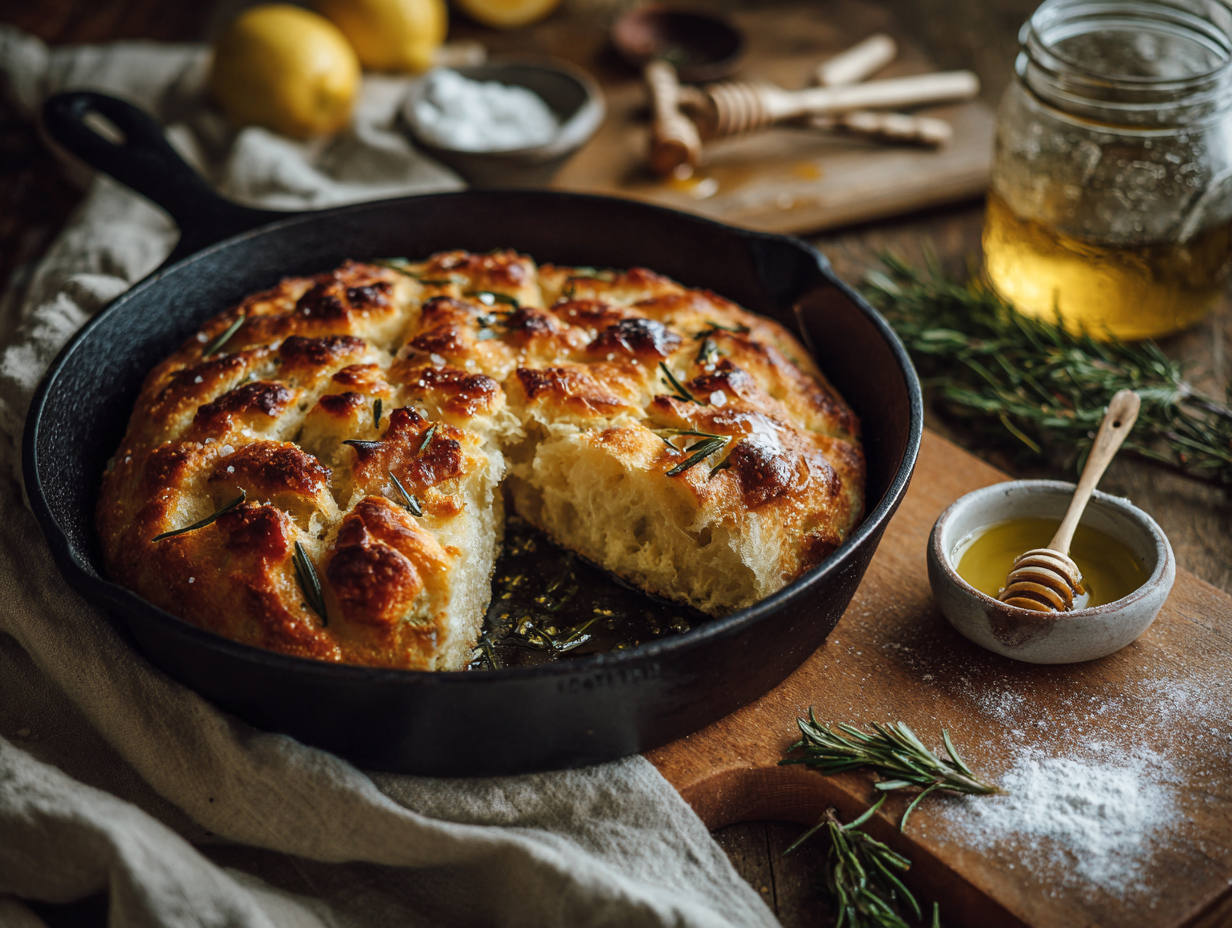
30-Minute Sourdough Skillet Bread

Sourdough starter provides tang and aroma in this skillet flatbread, while a small amount of baking powder gives it immediate lift so there is no proofing time involved. Cooked in a hot skillet, it develops a blistered, crackly crust and a soft interior in about 30 minutes — useful for dipping, soup-dunking, or topping like a flatbread pizza.
Equipment
- 10–12 inch cast-iron or heavy skillet with lid
- Mixing bowl (medium)
- Measuring cups and spoons
- Flexible spatula or wooden spoon
- Bench/dough scraper (optional)
- Pastry brush (for finishing oil)
- Oven broiler (optional for blistering finish)
Ingredients
- ½ cup warm water (105–110°F) warm to the touch; helps the dough relax quickly
- 1 cup active sourdough starter or ripe discard (100% hydration) bubbly and aromatic for best flavor; wheat-based
- 1 teaspoon honey or granulated sugar; boosts browning and subtle sweetness
- 2 tablespoons extra-virgin olive oil, divided 1 Tbsp for dough, 1 Tbsp for cooking/finishing; choose a fruity, peppery oil
- 1 ¼ cups unbleached all-purpose flour high-quality AP such as King Arthur for consistent absorption
- 1 ½ teaspoons baking powder for quick lift to complement the sourdough’s tang
- ¾ teaspoon fine sea salt season the dough evenly; adjust to taste
- ½ teaspoon garlic powder optional, for savory depth
- 1 tablespoon fresh rosemary, finely chopped optional, or use thyme/parsley for a softer herbal note
- 1 teaspoon flaky sea salt for finishing crunch
Instructions
- Preheat the Skillet and (optional) Broiler: Set a 10–12 inch cast-iron skillet over medium heat for 2 minutes. If you’d like a blistered finish, preheat the oven broiler to 500°F (260°C) with a rack about 6 inches from the element.
- Combine the Wet Ingredients: In a medium bowl, whisk together the warm water, sourdough starter, honey, and 1 tablespoon olive oil until smooth and slightly frothy. You should smell a pleasant tang from the starter.
- Add the Dry Ingredients: Sprinkle in the flour, baking powder, and fine sea salt (plus optional garlic powder and rosemary). Stir with a flexible spatula until a shaggy dough forms and no dry flour remains. The dough will be soft and slightly tacky.
- Quick Rest (autolyse): Cover the bowl and let the dough rest for 10 minutes. This relaxes the gluten and makes shaping easier. The dough will feel smoother afterward.
- Brief Knead: With lightly oiled hands, fold the dough over itself a few times in the bowl, kneading for 30–60 seconds just until it becomes cohesive and springy. If very sticky, oil your hands again rather than adding flour.
- Shape: On a lightly oiled surface (or a piece of parchment), pat the dough into an 8–9 inch round, about 1/4 inch thick. Aim for even thickness so it cooks uniformly.
- Cook—First Side: Add about 2 teaspoons of the remaining olive oil to the preheated skillet and swirl to coat. Slide in the dough round. Cover and cook over medium heat for 4–5 minutes, until the underside is deeply golden with some darker spots and the top shows bubbles with slightly set edges.
- Flip and Finish: Drizzle another 1–2 teaspoons olive oil around the edge of the pan. Flip the bread and cook uncovered for 3–4 minutes, until the second side is golden and the center feels springy. For extra blistering, transfer the skillet under the broiler for 1–2 minutes at 500°F (260°C)—watch closely to prevent over-browning.
- Finish and Rest: Brush the hot bread with any remaining olive oil and sprinkle with flaky sea salt. Let rest 2 minutes for the crumb to set, then slice into wedges and serve warm.
Notes
Jen’s Tips:
- Starter Readiness: Active and bubbly starter yields the best aroma. Ripe discard works too—expect slightly less lift, which the baking powder offsets.
- Adjusting Texture: If the dough feels tight, wet your hands and fold a few more times; if too loose, pat it thicker and cook a touch longer.
- Flour Swap: Replace 1/4 cup AP flour with bread flour for chewier bite, or with white whole wheat for nuttiness (add 1–2 teaspoons extra water if needed).
- Dairy Finish: Brush with melted butter or ghee instead of olive oil for a richer finish.
- Gluten-Free Note: Use a quality 1:1 gluten-free baking flour with xanthan gum; dough will be more delicate—shape directly on parchment and slide into the skillet.
- No Lid? Cook 1–2 minutes longer on the first side, or tent loosely with foil to trap steam.
Serving Suggestions:
- Cut into 6–8 wedges, stack slightly offset on a warm plate, and drizzle with peppery olive oil. Finish with a scatter of rosemary and lemon zest for color and fragrance.
- Pair with a bright green salad, charred vegetables, or a bowl of tomato soup. A crisp, mineral white wine or sparkling water with citrus makes a refreshing match.
- Perfect doneness shows a mottled, golden crust with small blisters and a tender, steamy interior that springs back when pressed.
Culinary Context:
This quick skillet method borrows from the spirit of global flatbreads—think Middle Eastern khubz or Mediterranean pan breads—while showcasing the character of American sourdough culture. I started making it on busy nights when a full loaf wasn’t feasible, and its satisfying tang and rapid cook have made it a staple.Optional Advanced Instructions:
- Make-Ahead: Mix the dough up to the rest phase, then refrigerate up to 8 hours. Bring to room temp (10 minutes), then shape and cook.
- Two-at-Once: Double the recipe and cook two smaller 6–7 inch rounds sequentially for faster service.
- Beginner Alternative: If shaping feels tricky, press the dough directly in a lightly oiled skillet off heat, then return to medium heat to cook.
Timing:
- Prep Time: 15 minutes (includes 10-minute rest)
- Cook Time: 12 minutes (includes skillet preheat)
- Total Time: 27 minutes
Course:
Dinner (also great as Lunch or Snack)Origin:
American, with Mediterranean inspiration in method and flavoring.Nutrition
Calories: 269kcalCarbohydrates: 44gProtein: 6gFat: 8gSaturated Fat: 1gPolyunsaturated Fat: 1gMonounsaturated Fat: 5gSodium: 1180mgPotassium: 51mgFiber: 2gSugar: 2gVitamin A: 15IUVitamin C: 0.1mgCalcium: 98mgIron: 2mg
Tried this recipe?Rate this recipe !
