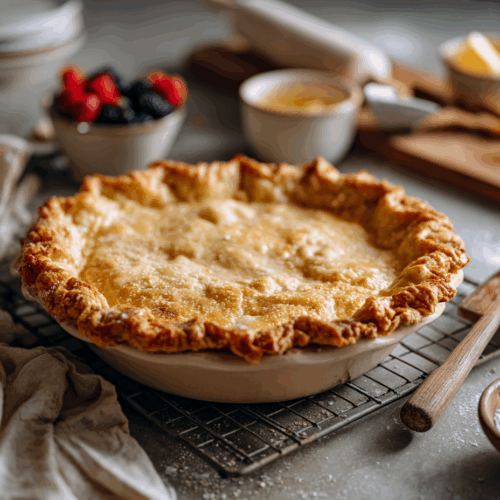
30-Minute Flaky All-Butter Pie Crust (Blind-Bake Option)

Cold butter, a light hand, and a quick lamination technique are all it takes to build a genuinely flaky, all-butter pie crust on a weeknight schedule. The dough comes together in minutes and holds up beautifully whether you blind-bake it for custard fillings or bake it fully for cold-set pies. Start to finish, the whole process wraps up in about 30 minutes.
Equipment
- Large mixing bowl
- Pastry cutter or two forks (food processor optional)
- Measuring cups and spoons
- Liquid measuring cup (for ice water)
- Rolling Pin
- Bench scraper
- Plastic wrap
- 9-inch pie dish
- Parchment paper
- Pie weights or dried beans
- Fork
- Baking sheet
Ingredients
- 1 ¼ cups unbleached all-purpose flour spoon-and-level for accuracy; high-quality baking flour recommended
- 1 tablespoon granulated sugar enhances browning and tenderness; optional for savory pies
- ½ teaspoon kosher salt use 1/4 teaspoon if using fine sea salt
- 10 tablespoons unsalted butter, very cold, cut into 1/2-inch cubes European-style (82%+ butterfat) for extra flakiness
- 1 teaspoon apple cider vinegar (optional) tenderizes by limiting gluten; subtle flavor, not detectable
- 5 tablespoons ice water start with 4 tablespoons, add up to 1 additional tablespoon only if needed
- 1 large egg white (optional) for brushing to seal the crust when blind baking
Instructions
- Preheat the oven to 425°F (220°C). Place the cubed butter in the freezer for 5 minutes. Fill a liquid measuring cup with ice and water so the water stays very cold.
- Combine Dry Ingredients: In a large mixing bowl, whisk together the flour, sugar, and salt until evenly distributed. You should see a uniform, off-white color with no streaks of salt or sugar.
- Cut in Butter: Add the cold butter cubes. Using a pastry cutter (or two forks), cut the butter into the flour until you have a mix of pea-sized pieces with a few almond-sized shards. The mix should look irregular and feel cool and sandy, with visible butter flecks—the key to flakiness. Food processor option: Pulse flour, sugar, and salt, then add butter and pulse 6–8 short bursts until similar texture; dump into a bowl before adding water.
- Add Liquids: Stir the vinegar into 4 tablespoons of the ice water. Drizzle over the flour-butter mixture and toss with a fork. Pinch a bit in your fingers—if it holds together, stop; if it crumbles, add up to 1 more tablespoon ice water. The dough should form moist clumps that just hold when squeezed; avoid making it sticky or wet.
- Gather and Quick-Laminate: Turn the mixture onto a counter. Use a bench scraper to gently gather into a rough rectangle. With the heel of your hand, perform a quick fraisage by pressing small portions forward once to smear butter into thin sheets. Fold the rectangle like a letter (top third down, bottom third up), rotate 90°, and repeat the fold once. This 30-second lamination builds layers without overworking.
- Chill Fast: Press into a 6-inch disk, wrap tightly in plastic, and freeze 8–10 minutes until the edges feel firm but the center is still pliable. If it’s rock hard, rest at room temperature for 3–5 minutes before rolling.
- Roll: Lightly flour the counter and rolling pin. Roll from the center outward, turning the dough a quarter turn after each few passes, until you have a 12-inch circle about 1/8 inch thick. You should see marbled butter streaks and a smooth surface with minimal cracking at the edges. Brush excess flour away.
- Line the Dish: Ease the dough into a 9-inch pie dish without stretching—lift the edges to let it settle into the corners. Trim to a 1-inch overhang, tuck it under to build a sturdy rim, and crimp decoratively. Dock the base with a fork. For extra moisture barrier, lightly brush the interior with beaten egg white (optional).
- Blind-Bake Setup: Fit a sheet of parchment into the crust and fill to the brim with pie weights or dried beans to anchor the sides. Set the dish on a baking sheet for easy handling and even heat.
- Bake: Bake at 425°F (220°C) for 12 minutes until the crimped edge looks set and lightly golden. Carefully lift out the parchment with weights. If the base has puffed, gently press it down with the back of a spoon and dock again.
- Finish: For a par-baked crust (best for custard or pumpkin): return to the oven 3–5 minutes until the bottom looks dry and matte. For a fully baked crust (for cream or no-bake fillings): bake 8–10 minutes more until uniformly golden with a toasty-butter aroma. Cool on a rack until just warm or room temperature before filling.
Notes
Lisa’s Tips:
- Cold is King: Keep ingredients and tools cold to prevent butter from melting. If the dough softens, chill 5 minutes and continue.
- Texture Cues: Aim for pea-to-almond butter pieces pre-hydration; after mixing, the dough should hold together when squeezed without feeling sticky.
- Vinegar Swap: Use lemon juice instead of vinegar, or omit entirely.
- Dairy-Free: Substitute cold refined coconut oil (firm) for butter; expect a more tender, less flaky crust.
- Gluten-Free: Use a cup-for-cup gluten-free flour blend and add 1 extra tablespoon ice water if needed.
- No Pie Weights? Use dried beans or granulated sugar; sugar conducts heat well and toasts lightly for reuse.
- Edge Insurance: If edges brown fast, cover with a foil ring during the last minutes of baking.
Serving Suggestions:
For a par-baked crust, fill with silky pumpkin or custard and bake until just set. For a fully baked shell, pile in cool pastry cream and top with jewel-toned berries for a vivid contrast of golden crust, creamy white filling, and glossy fruit. Serve with a lightly whipped, unsweetened cream to let the buttery aroma shine. A chilled glass of dry cider or champagne pairs beautifully with that toasty-butter finish.Culinary Context:
This method modernizes classic American pie dough with a chef’s quick-lamination and fast freeze, echoing the principles of rough puff pastry—but streamlined for home kitchens. I learned to judge perfect hydration by the sound of the dough leaving the counter: a soft, clean pull means you nailed it.Optional Advanced Instructions:
- Make-Ahead: Dough disk can be refrigerated up to 2 days or frozen up to 2 months. Thaw in the fridge overnight before rolling.
- Parallel Prep: While the oven preheats, roll and crimp; while the crust blind-bakes, prepare your filling.
- Food Processor Alternative: Pulse dry ingredients, add butter and pulse to pea-sized bits, then drizzle ice water through the feed tube until clumpy; stop before a ball forms to avoid toughness.
Nutrition
Calories: 1637kcalCarbohydrates: 132gProtein: 21gFat: 115gSaturated Fat: 72gPolyunsaturated Fat: 5gMonounsaturated Fat: 30gTrans Fat: 5gCholesterol: 301mgSodium: 1240mgPotassium: 259mgFiber: 4gSugar: 13gVitamin A: 3502IUCalcium: 63mgIron: 7mg
Tried this recipe?Rate this recipe !
