
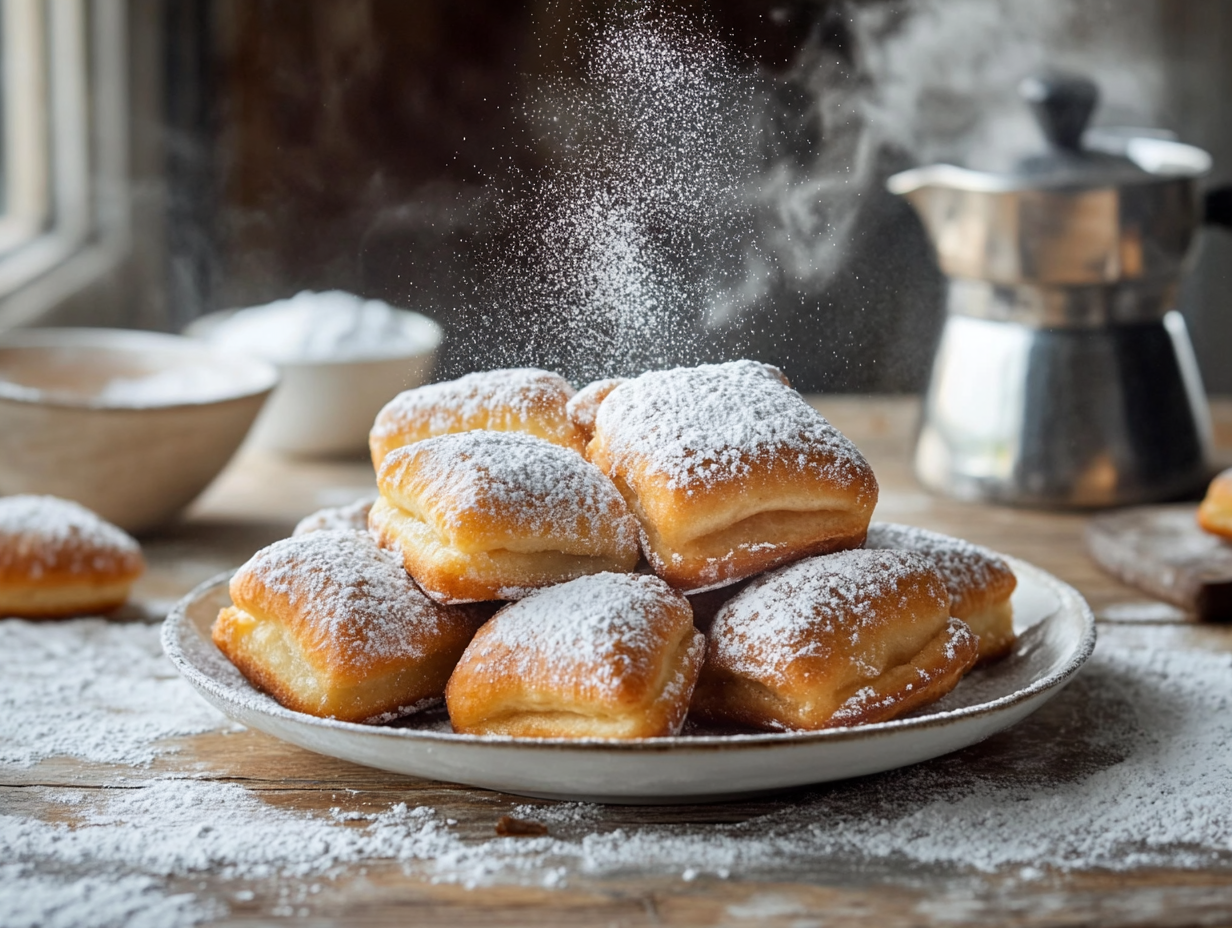
These are square, deep-fried dough puffs made with a yeast dough that comes together in about 15 minutes and fries in batches over the next 20. The recipe makes enough for four people, and the dough holds well in the fridge, so you can fry a second round the next morning without starting over.
About the ingredients
- Evaporated milk: This is canned, not sweetened condensed milk — they are not interchangeable. Evaporated milk adds richness without extra sweetness. A half-cup of whole milk works as a substitute if that’s what you have.
- Active dry yeast: One standard packet is exactly 2¼ teaspoons. Make sure your water is around 110°F — too hot kills the yeast, too cool and it won’t activate. If the mixture isn’t foamy after 5 minutes, the yeast is dead and the dough won’t puff.
- Powdered sugar: Use more than you think you need. Half a cup is listed, but keep extra nearby — beignets absorb it fast and a second dusting right before serving makes a real difference.
What makes this version work
Two things matter most here. First, the dough thickness: rolling to exactly ¼ inch gives you the hollow, puffy interior. Roll thinner and you get a flat crisp; thicker and the center stays doughy before the outside browns. Second, oil temperature control across batches is what separates good beignets from greasy ones. The oil drops when you add cold dough. Let it climb back to 350°F between each batch — a thermometer is worth using here, not just eyeballing color. Skip the thermometer and your second and third batches will absorb noticeably more oil.
Troubleshooting
- Beignets sink and don’t puff: The yeast didn’t activate fully. Check that your water was 110°F and that the mixture was visibly foamy before you added the other ingredients. Dough made with dead yeast will fry flat.
- Outside browns before inside cooks through: Oil is too hot. Even 25°F above 350°F causes this. Lower the heat and give the oil a minute to stabilize before the next batch.
- Dough sticks to the rolling surface and tears: The dough is too warm. Refrigerate it for 10 minutes before rolling. A well-floured surface helps, but chilling the dough is the real fix.
- Beignets come out greasy: Oil temperature dropped too low, usually from adding too many pieces at once. Fry in smaller batches — four or five pieces at a time — and let the oil recover between rounds.
- Powdered sugar dissolves immediately on contact: The beignets are still too hot or too oily. Let them drain on paper towels for 60 seconds before dusting, and dust right before eating, not in advance.
Keeping and reheating
Unfried dough is the better thing to store. Wrap it tightly in plastic and refrigerate for up to 48 hours — just let it sit at room temperature for 10 minutes before rolling and frying. Already-fried beignets are edible the next day but noticeably denser; store them uncovered at room temperature (not in a sealed container, which traps steam and makes them soggy) and reheat in a 350°F oven for 4 to 5 minutes. Skip reheating in the microwave — not worth the extra dish and the texture suffers. For longer storage, freeze fried beignets in a single layer, then transfer to a bag; reheat from frozen in a 375°F oven for 6 to 8 minutes and re-dust with powdered sugar before serving.
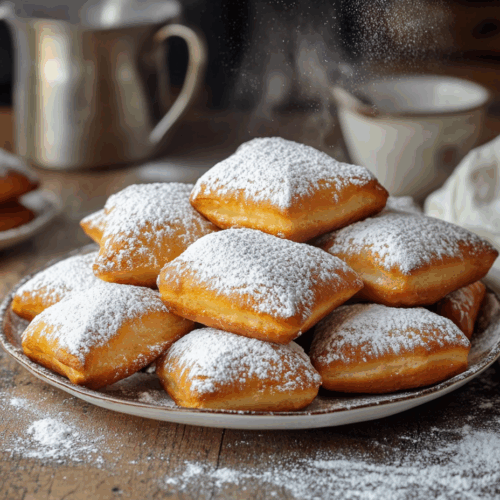
New Orleans Beignets

Equipment
- Mixing bowl
- Whisk
- Deep Fryer or Heavy-bottomed Pot
- Slotted Spoon
- Large Plate
- Paper towels
Ingredients
- ¾ cup warm water approximately 110°F
- 1 packet active dry yeast about 2 1/4 teaspoons
- ¼ cup granulated sugar
- ½ tsp salt
- 1 large egg beaten
- ½ cup evaporated milk
- 3 ½ cups all-purpose flour plus extra for dusting
- 3 tbsp unsalted butter melted
- 1 bottle vegetable oil or canola oil
- ½ cup powdered sugar for dusting
Instructions
Prepare the Dough:
- In a large mixing bowl, combine warm water, yeast, and granulated sugar. Stir gently and let it sit for 5 minutes until foamy, indicating the yeast is activated.
- Add salt, beaten egg, and evaporated milk to the yeast mixture. Whisk together until well combined.
- Gradually add the flour to the mixture, one cup at a time, mixing gently with a wooden spoon. Once the dough becomes too stiff, incorporate the melted butter, then knead until the dough is smooth and elastic.
Shape and Fry the Beignets:
- On a floured surface, roll out the dough to about 1/4-inch thickness. Cut into 2-inch squares using a sharp knife or a dough cutter.
- In a deep fryer or a heavy-bottomed pot, heat about 2 inches of oil to 350°F (175°C). Fry the beignets in batches, flipping them until they puff up and turn golden brown.
- Using a slotted spoon, transfer the cooked beignets to a plate lined with paper towels to drain excess oil.
Dust and Serve:
- Dust generously with powdered sugar and serve the beignets warm with a hot cup of coffee for a true New Orleans experience.
Notes
- For a twist, try adding a pinch of cinnamon to the powdered sugar or filling the beignets with a fruit jam for an extra pop of flavor.
Nutrition
Your questions, answered
Can I make the dough ahead of time?
Yes — the dough keeps in the fridge for up to 48 hours. Wrap it tightly in plastic so it doesn’t dry out, then let it rest at room temperature for about 10 minutes before you roll it.
Do I need a deep fryer, or can I use a regular pot?
A heavy-bottomed pot works fine. You need about 2 inches of oil and a thermometer to keep the temperature at 350°F — that’s the part a deep fryer handles automatically.
Why do my beignets come out flat instead of puffy?
The most common cause is yeast that didn’t activate — the water was too hot or too cold, or the yeast was old. The mixture should be visibly foamy after 5 minutes before you proceed.
Can I make these without yeast?
There is a no-yeast version that uses baking powder instead, which is faster but produces a denser result. If you want the hollow, airy texture, the yeast dough is the right choice.
How many beignets does this recipe make?
It depends on how you cut them, but rolling the full batch to ¼-inch thickness and cutting 2-inch squares yields roughly 24 to 30 pieces. That’s plenty to fry half now and refrigerate the rest of the uncut dough for tomorrow.